

Promotional first aid kits














Treat your clients and employees!

FAQ - Branded first aid kits
Trusted by 1,000+ companies
Pocket and mini promotional first aid kits for high-volume handouts
A freshers' fair handing out 2,000 custom first aid kits needs a body that costs little, weighs almost nothing and slips into a lanyard pouch or a tote. That is the brief the mini first aid kit answers. The format is a slim zip pouch or a flat tin holding a handful of plasters and a wipe or two. It is sized to ride in a coat pocket or a small bag rather than sit on a shelf.
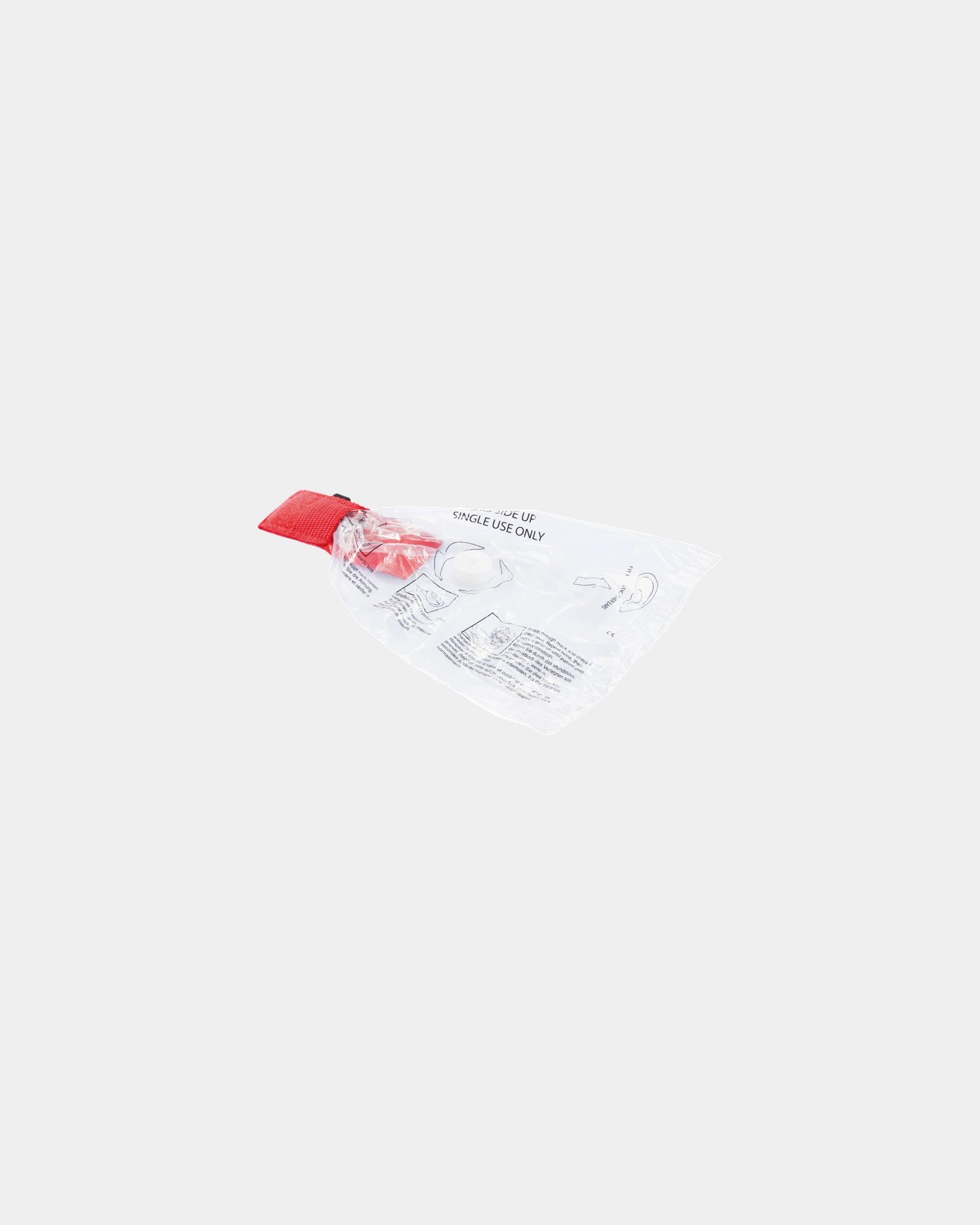
The keyring kit shrinks the idea further. It is a sealed mini pouch or a tiny tin on a split ring, the supplied pack usually a few plasters and an antiseptic wipe as the maker lists them. It clips to a bag zip or a set of keys, so the brand travels to the gym, the commute and the campus rather than waiting in a drawer. Personalised keyrings such as Personalised keyrings sit in the same low-cost, clip-on giveaway tier.
At this size the marking area is the constraint, not the contents. A keyring tin gives a circle barely wider than a coin, so a wordmark or a stripped-back logo reads where a detailed crest would fill with ink. Brief a single-colour mark and confirm the proof against the real lid diameter before the run.
Pocket kits suit the handout where reach matters more than depth: a stand giveaway, a delegate bag filler, a campus welcome pack. The unit price stays low enough to order in the thousands. The custom first aid kit still does the one job a flyer cannot, which is to be useful enough that nobody bins it on the way out.
| Format | Typical supplied pack | Best fit |
|---|---|---|
| Keyring mini | A few plasters, one wipe | Clip-on handout, campus pack |
| Pocket pouch | Plasters, wipes, plasters strip | Delegate bag, stand giveaway |
| Travel kit | Plasters, wipes, tape, gauze | Conference, travel reward |
| Car kit | Pack plus hi-vis or foil blanket | Fleet, dealership, motor event |
| Home / workplace | Fuller listed contents in a case | Office welcome, H&S week |
Travel and car Custom first aid kits for events on the move
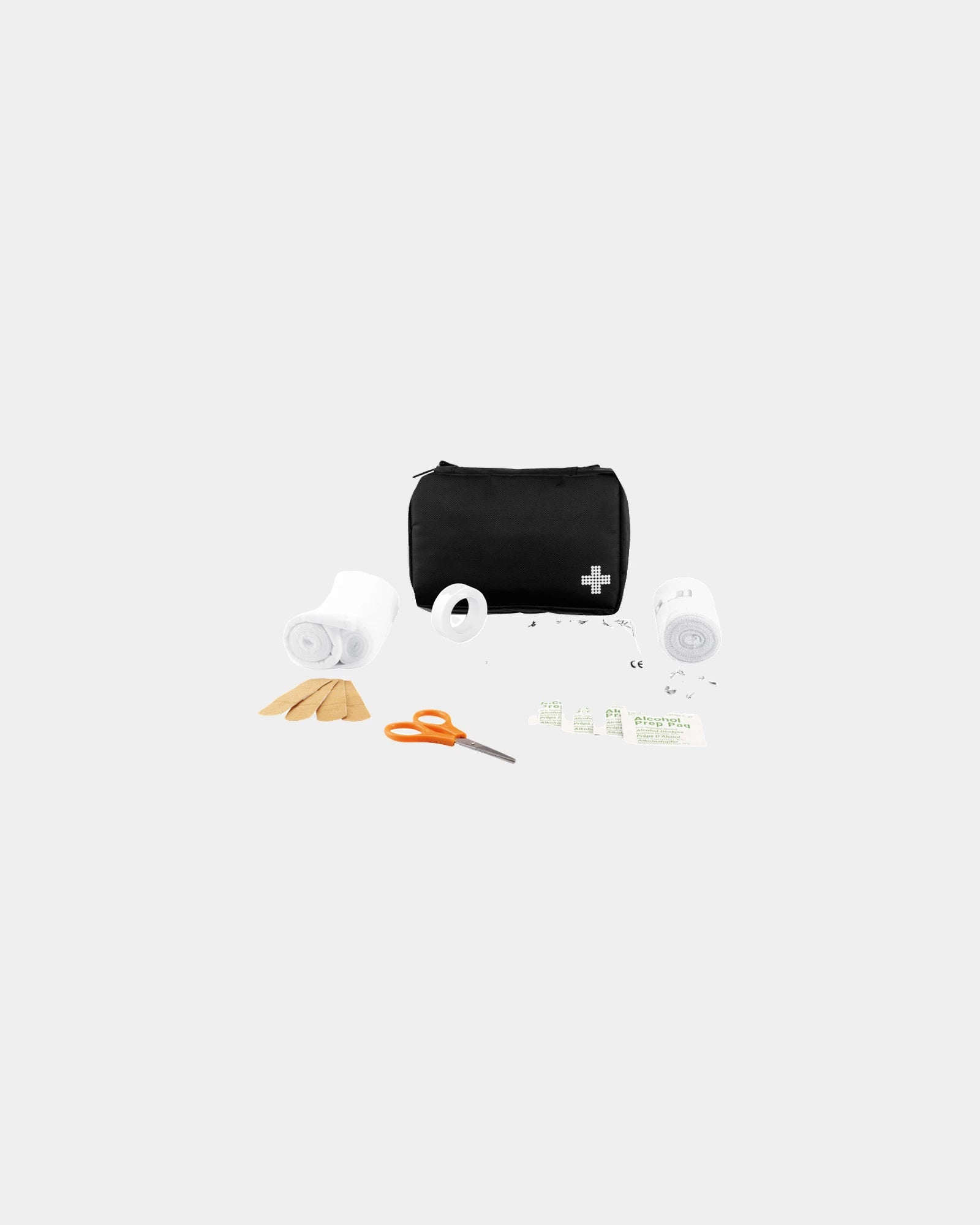
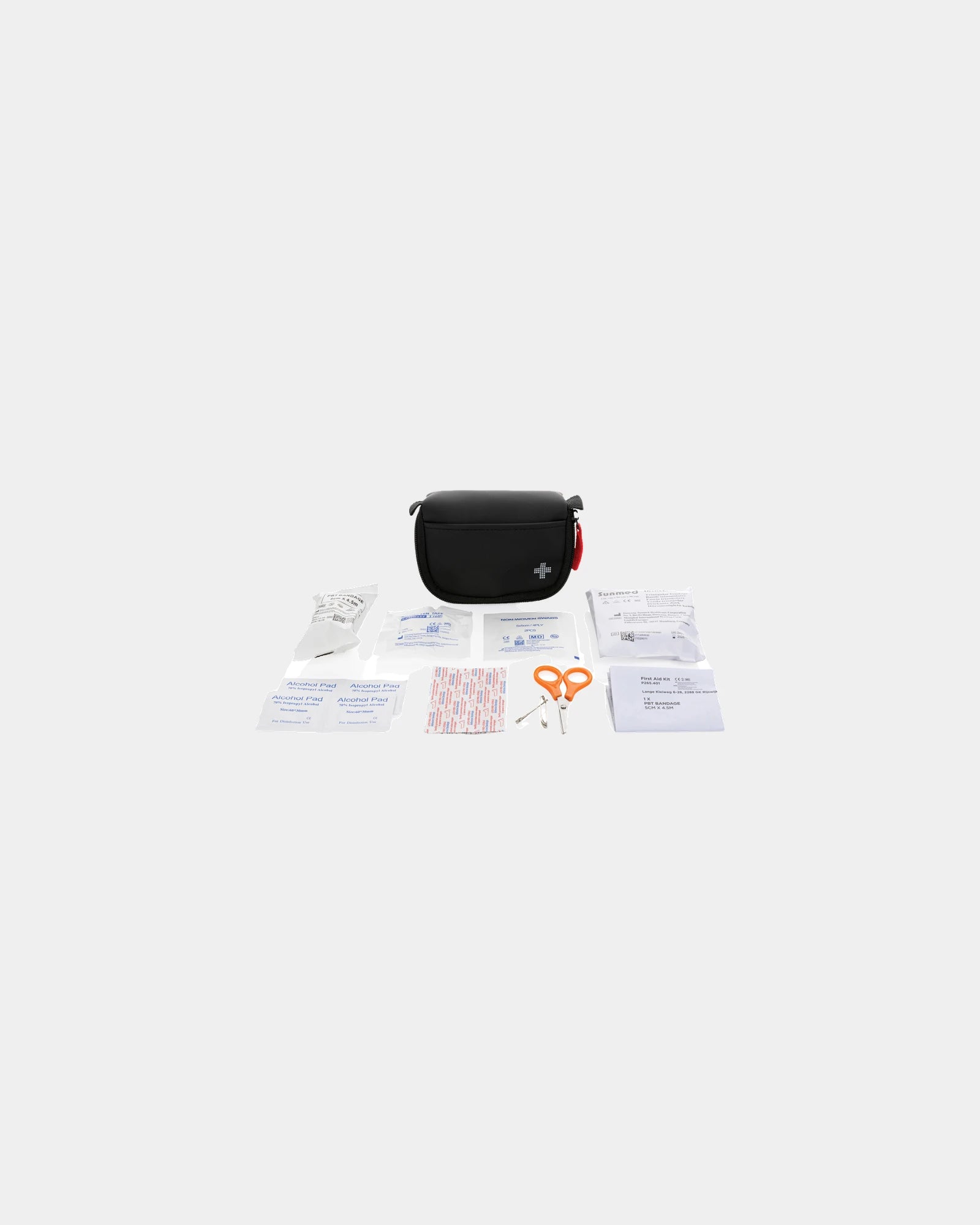
A travel kit carries a fuller supplied pack than a pocket pouch while staying flat enough for a wash bag or a laptop sleeve. The manufacturer's list typically runs to assorted plasters, antiseptic wipes, a length of tape and a folded gauze pad. A pair of small scissors or tweezers rounds out the supplied pack, all packed in a zip case. It suits a conference reward or a travel-themed campaign where the recipient is away from home.
The car kit is the variant tuned for the glovebox, and it is where a fleet or a dealership giveaway lands. Alongside the standard plasters and wipes, the supplied pack often adds a foil emergency blanket and a hi-vis element, as listed by the maker. It rides in the door bin or the boot and keeps a logo in front of a driver every time they reach for it.
Travel gifts pair naturally here. A custom first aid kit tucks into Branded travel bags as a wash-bag insert, so a journey reward arrives as a packed bag with the kit already inside rather than two loose items.
Match the body to the journey, not to a fixed spec. A flat zip case wins where the custom first aid kit shares a packed bag; a moulded car box wins where it lives in a glovebox and gets knocked about. State whether the recipient is on foot or behind a wheel and the case format follows from that one fact.
Home and workplace custom first aid kits as practical desk gifts
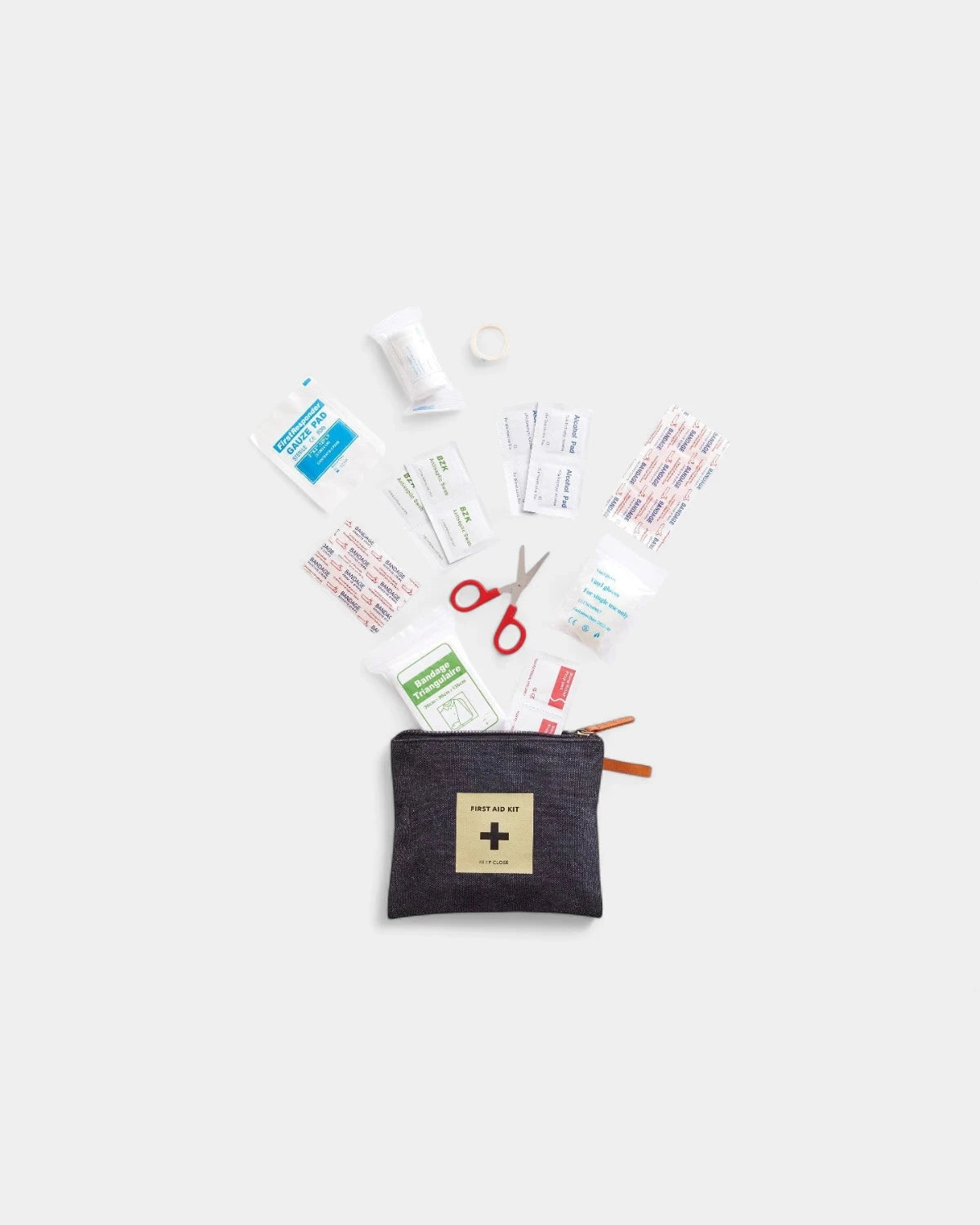
A home kit is the format among custom first aid kits a recipient keeps in a kitchen drawer or a bathroom cabinet, so it carries the fullest supplied pack of the consumer range. The maker's list usually extends to graduated plaster sizes, several wipes, a larger gauze dressing, tape, safety pins and scissors in a wallet or a hard case. It reads as a genuine household item, which is why it survives the cull a novelty gift does not.
The workplace kit is the same idea sized for a desk, a kitchen shelf or a van. It suits an office welcome pack, a new-starter handover or a facilities-team handout, where a useful branded item beats another mug. The case stands up in a drawer and the lid faces out, so the print stays visible each time it is opened.
These fuller kits sit beside other practical desk lines a brand hands out. Branded hand sanitiser is the common companion on a wellbeing handout. Both are kept within arm's reach, and both carry a logo onto the same desk for months at a time.
None of the listed contents implies a clinical claim. The custom first aid kit is a convenience pack of consumables as the manufacturer specifies them, not a workplace compliance kit to a regulated checklist. Where a buyer needs a specific schedule of contents, state it in the brief and we confirm which models' supplied packs match before quoting.
What is in the pack: contents on custom first aid kits
Reading the supplied pack on custom first aid kits
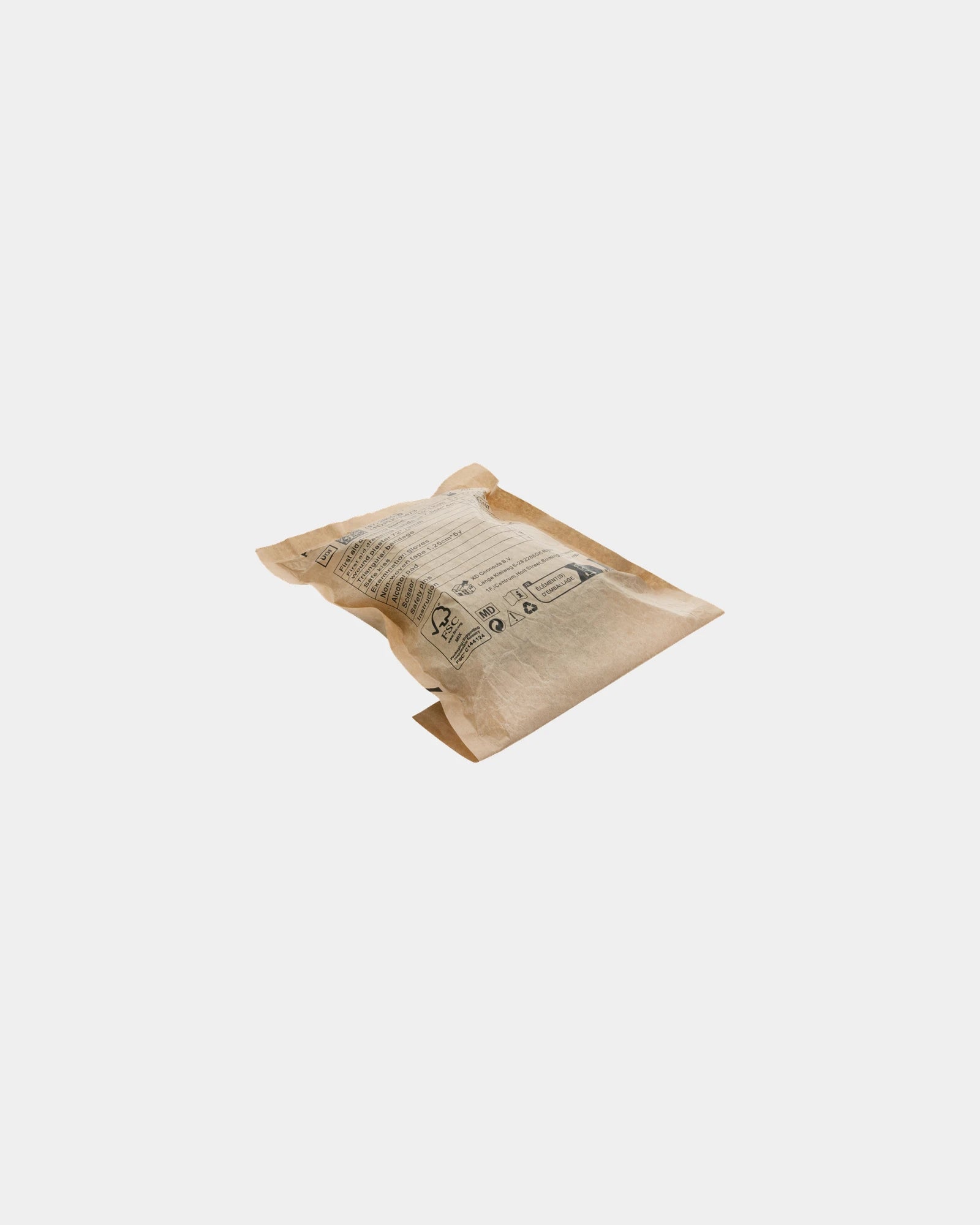
On custom first aid kits the contents are fixed by the model, so read the maker's pack list before the marketing. A typical mid-range kit is supplied with assorted washproof plasters, antiseptic cleansing wipes and a roll of microporous tape. The pack usually adds one or more gauze dressings, a triangular bandage, safety pins and a small pair of scissors. Smaller pocket and keyring kits drop down to plasters and a wipe or two.
Quantities scale with the case. A keyring tin might hold five plasters and a single wipe, a pocket pouch a dozen items, and a home wallet thirty to fifty pieces across the categories above, model-dependent. The figure that matters to a buyer is the piece count and the plaster size mix, so we list both per model rather than quoting a generic range.
Treat the supplied list as the spec, not as advice. We describe what the manufacturer packs; we do not claim what any item treats or how well it performs. The product page for each kit carries its own contents table, and that list is the single source of truth for what a recipient actually receives.
Consumables run down, which is the one ongoing point a custom first aid kit raises that a static gift does not. Restocking is covered further down, because for a kit that gets used the refill question decides whether the brand keeps working past the first scraped knuckle.
- Washproof plasters in assorted sizes as supplied
- Antiseptic cleansing wipes, count varies by model
- Microporous tape and folded gauze dressings
- Triangular bandage and safety pins in fuller kits
- Small scissors or tweezers where the pack lists them
- Foil blanket and hi-vis element in car-kit variants
- Refill packs available to restock used consumables
Sealing and durability on personalised first aid kits
A kit that lives in a glovebox or a rucksack lid meets heat, grit and a crush long before it meets a scraped knuckle. The seal is what keeps the consumables clean until then. A zip pouch closes with a continuous run that resists dust on a worksite. A tin shuts with a press-fit lid that pops open one-handed but lets in more grit over time.
A hard zip case earns its higher cost where the kit takes a beating. Its moulded shell stops the contents being squashed flat in a packed bag, and the zip seam keeps grit out better than a tin's loose lid. For a car or outdoor recipient, that protection is the difference between a kit that survives a year and one that splits in a month.
Wipes are the contents most sensitive to a poor seal, since they dry out once air reaches the sachet. A kit that will sit unused for months wants a tighter close, which steers an outdoor or fleet order toward a zip body over a press-fit tin. Name how long the kit waits between uses and the seal choice follows.
This durability point pairs with how the kit travels. The same logic that picks a crush-resistant case also picks the bag it rides in. A rugged kit and a sturdy Personalised travel gifts handout then make a consistent outdoor set rather than a mismatched one.
| Closure | Grit and air resistance | Best fit |
|---|---|---|
| Continuous zip | Tight, keeps dust and air out | Outdoor, fleet, long storage |
| Press-fit tin lid | One-handed, loosens over time | Desk, frequent daily use |
| Hard-case zip seam | Crush and grit resistant | Glovebox, rucksack, site |
Pouch, tin or zip case: choosing the body of your personalised first aid kits
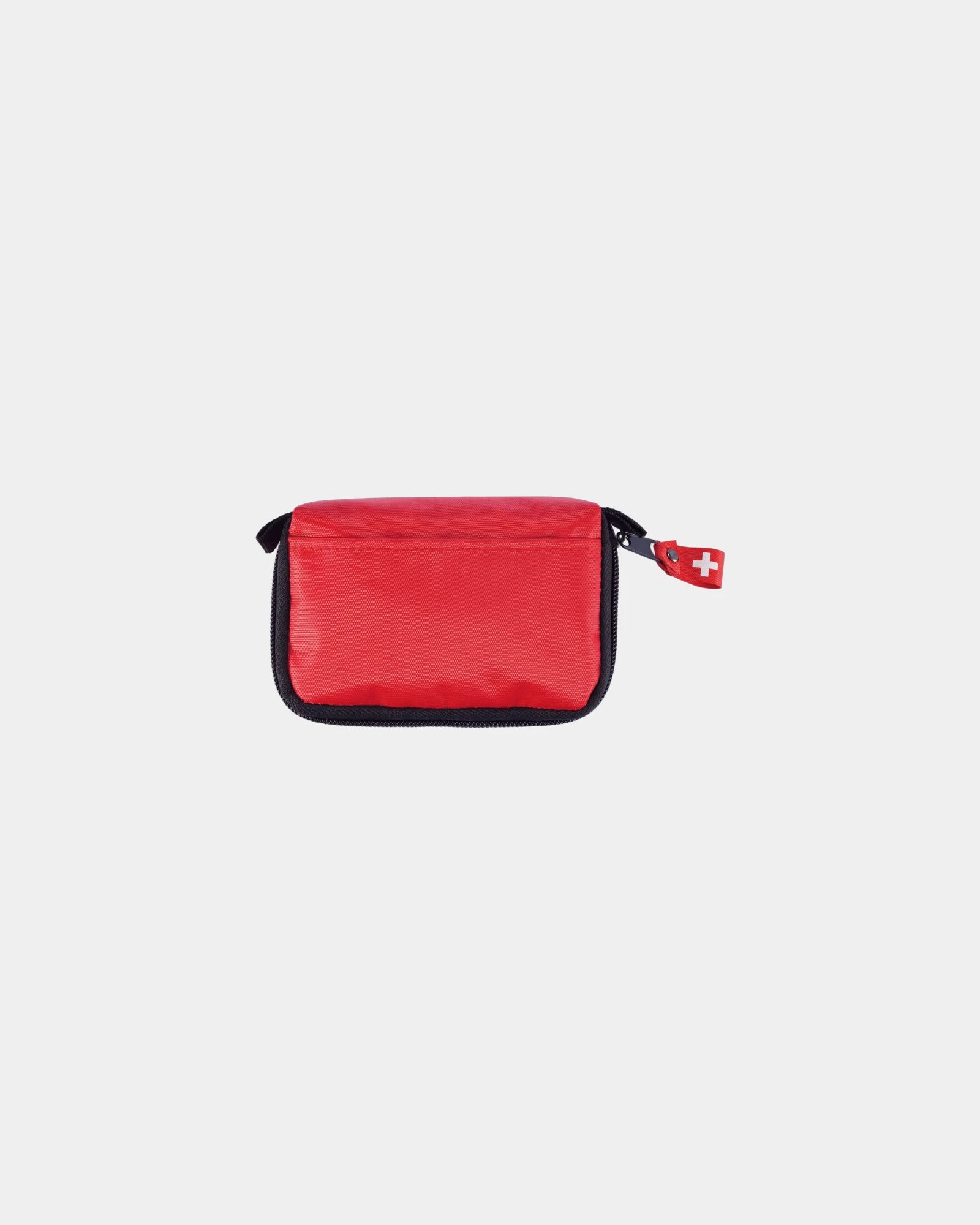
The case is the product the recipient sees, holds and brands, so it is the decision to settle before the contents. Three bodies cover almost every kit. A nylon zip pouch is soft, light and flexible, the default for travel and pocket kits where it packs flat. It takes a printed or embroidered logo on its face and squashes into a bag without a fuss.
A metal tin is the rigid option with the most retail feel. Its flat lid is a clean, hard surface that holds a crisp print, and it stacks and stands well on a shelf or a desk. The trade-off is that a tin fixes its capacity, so the supplied pack is set by the tin size rather than flexing the way a pouch can.
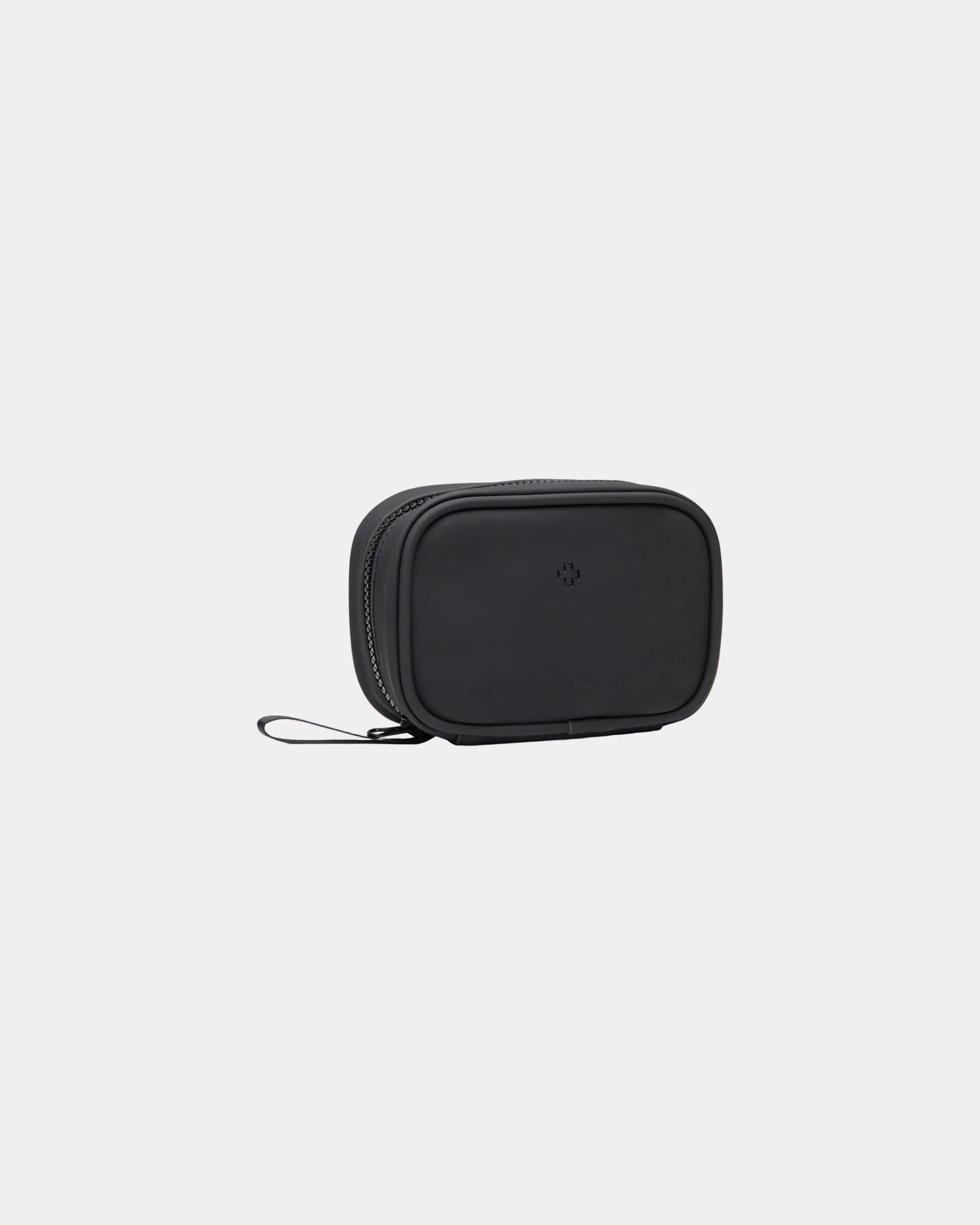
A hard zip case, a moulded EVA or plastic shell with a zip seam, is the protective middle ground. It guards the contents from a crush in a glovebox or a rucksack and gives a broad, slightly domed lid for a large print. It costs more than a pouch and weighs more than a tin, which is the balance to weigh against where the kit will live.
Pick the body for the environment, then the print method follows. A soft pouch invites embroidery as readily as print; a tin and a hard case want a flat-surface process. Name where the kit travels and how protected it must be, and the choice between the three narrows to one before artwork begins.
| Body | Feel and protection | Print surface |
|---|---|---|
| Nylon zip pouch | Soft, light, packs flat | Printed or embroidered face |
| Metal tin | Rigid, retail feel, fixed size | Flat lid, crisp print |
| Hard zip case | Moulded shell, crush-resistant | Broad domed lid |
The print surface: getting your logo onto Promotional first aid kits
Matching the print method to each lid on personalised first aid kits
Each case body presents a different surface, so the marking method is chosen from the lid in front of you, not from a house default. A flat tin lid takes a sharp pad print or a screen print for a bold one or two-colour mark. The metal can also be debossed for an understated, no-ink finish that reads as a quality item.
A nylon pouch opens a route the hard bodies cannot. The woven face accepts a screen print for a flat colour, or an embroidered logo stitched straight into the fabric. Embroidery lifts a travel kit from a printed giveaway to a finished product. A hard zip case wants a pad print or a UV digital print across its domed lid, where full colour and gradients sit cleanly on the shell.
The marking area is small on every kit and tiny on the keyring tins, so a logo that survives reduction matters more here than on a larger gift. A solid wordmark or a simplified crest holds; fine serifs and thin rules clog at coin scale. We turn a placement proof around within 24 hours, so the mark is signed off against the exact lid before any kit is printed.
Send vector artwork with Pantone references, since a stitched pouch and a printed tin render the same colour differently and the proof reconciles the two. The lid is the only branded face most of these kits offer, so the whole campaign rides on getting that one surface right.
Case colour and material choices on custom first aid kits
On a kit the case colour does almost as much brand work as the printed lid. A pouch or a tin moulded in a house colour reads as your own product, not a stock item wearing a logo. The familiar red-cross green-and-white is the recognised default, but a case in a brand shade lets the kit match the rest of a handout rather than stand apart from it.
Stock colours vary by body. A nylon pouch offers the widest run of woven shades, a tin a smaller set of powder-coated finishes, and a hard case the fewest, since the shell is moulded. Confirm the colourway early, because the option you want may be tied to a single case format rather than the whole range.
The recognisable first aid look is worth keeping where a recipient must spot the kit fast in a drawer or a glovebox. A white cross or a green flash on the lid signals the kit's purpose at a glance. A buyer can brand the case in a house colour while keeping that one cue legible. Decide whether recognition or brand match leads before fixing the colourway.
Material sets the feel as much as the colour. A coated tin reads as a quality item, a nylon pouch as practical and light, and a moulded hard case as rugged. The base also limits the eco route: any recycled content is verified per model and printed on that line's spec label, not inferred from how the case looks.
| Body | Colour range | Typical feel |
|---|---|---|
| Nylon pouch | Widest woven shades | Practical, light |
| Metal tin | Powder-coat finishes | Quality, retail |
| Hard zip case | Moulded, fewer shades | Rugged, protective |
Promotional first aid kits as a workplace, event and health-and-safety-week giveaway
Picture a Health and Safety Week stand handing a branded kit to every person who walks past. The item ties straight to the theme and is useful enough to keep. The logo then sits in a desk drawer across the building for the rest of the year. That fit between message and object is why the kit outperforms a generic handout at a wellbeing event.
At an outdoor event, festival or sports day, the kit reads as thoughtful rather than promotional, because minor scrapes are part of the day. It earns goodwill at the moment a recipient actually needs a plaster, which is a stronger first impression than a pen or a tote ever lands.
In the workplace itself the kit suits a new-starter pack, a facilities handover or a team safety briefing. It sets the kit apart from the usual desk gadgets a company hands out, the kind found among Branded tech gadgets. It is the item a recipient is glad to find rather than one more thing for the drawer.
The use-case sets the spec. A festival handout leans on a cheap pocket pouch in volume. A Health and Safety Week giveaway justifies a fuller workplace case with a clear lid print, while a client-facing kit warrants a tin or hard case that reads as bought. Fix the occasion and the format and contents resolve around it.
Restocking and refills: keeping personalised first aid kits in service
Refill packs that keep custom first aid kits working
Unlike a static gift, custom first aid kits that get used empty, and the restock decision is what keeps a logo working past the first use. Many models are supported by refill packs of the same consumables, so a recipient tops up the plasters and wipes rather than retiring the case. For an internal programme, that turns a one-off handout into a kit that stays on the desk for years.
Refills also reframe a larger order. A buyer running kits across a fleet or an office can spec the branded cases once. Reordering plain refill packs as the consumables run down spreads the cost and keeps the branded shell in service. Confirm refill availability per model, since not every kit is designed to be reopened and restocked.
Where a kit is a pure giveaway rather than a kept tool, restocking is irrelevant and the cheapest sealed pocket format wins. The refill question only matters on the home, car and workplace kits a recipient actually keeps. State which the order is and the model shortlist narrows accordingly.
For a premium internal handover, a kit can sit inside a wider gift set rather than ship alone. A branded case nested into Corporate Gift Boxes such as Corporate Gift Boxes reads as part of a considered welcome pack. The kit becomes the practical anchor among the contents.
Where custom first aid kits sit among your promotional range
A custom first aid kit is distinct from the rest of a promotional range because it is bought to be used, not displayed. A mug sits on a desk and a tote carries shopping, but a kit waits unopened until a moment of need, then proves its worth in that instant. That delayed usefulness is what makes it stick in a drawer rather than a bin.
It also occupies the practical-wellbeing slot rather than the gadget or apparel slot. Where a tech gift competes on features and a garment on fit, the kit competes only on whether the supplied pack and the case suit the recipient's life. That keeps the buying decision simple: format, contents, print surface, quantity.
The kit pairs rather than overlaps with the rest of a handout. It complements a sanitiser on a wellbeing table, a travel bag on a journey reward and a desk gadget in a new-starter pack, each doing a separate job. Run them together and a single campaign covers more of a recipient's day without two items saying the same thing.
For a buyer building a mixed giveaway, the kit is the line that earns goodwill at a vulnerable moment rather than at a celebratory one. That emotional register, helpfulness over flash, is the reason it belongs in a range built to be remembered for the right reason rather than the loudest one.
Use cases for Personalised first aid kits by sector
Different buyers reach for a kit at a different moment, and the format follows the moment. A fleet operator wants a crush-resistant car kit for the glovebox. A facilities team wants a fuller workplace case for a new-starter pack. A campus or festival hands out a sealed pocket pouch in volume. Reading the sector first sets the case body, the supplied pack and the print surface before any colour is chosen.
The table below pairs each sector with the build that tends to suit it. Treat it as a starting point rather than a fixed rule, since a client gift and a mass giveaway order very different bodies from the same range. Any model-dependent contents detail is confirmed in writing against the chosen kit, since the pack is set by the manufacturer and not flexed per order.
| Sector | Typical build | Why it fits |
|---|---|---|
| Fleet and dealerships | Hard-case car kit, foil blanket | Survives the glovebox, logo by the driver |
| Workplace and facilities | Fuller zip case, clear lid print | Useful on a desk for months |
| Campus and festivals | Sealed pocket pouch in volume | Low unit cost, kept not binned |
| Client and VIP gifts | Coated tin, debossed lid | Reads as bought, not a freebie |
Quantity, lead time and ordering your Custom first aid kits
Quantity sits at opposite ends for this line. A pocket-kit handout runs into the thousands, while a tin or hard-case client gift may run to a few hundred. The case format moves the unit price far more than the contents do. Minimum orders are low enough that a pilot of a single model proves the kit in a real bag before a full run commits.
Lead time runs around three weeks from artwork sign-off, and the print method moves it. A single-colour pad print on stock tins clears faster than embroidery on a pouch run or a full UV wrap on a hard case. Leave room for the 24-hour proof step before an event date, so the lid is approved before production starts.
Settle four things before you request a quote: the format, the supplied pack you need, the case body and the quantity tier. Any contents detail that is model-dependent should be confirmed in writing against the chosen kit, since the pack list is set by the manufacturer and not flexed per order.
For a recipient who carries the kit daily, the keyring and pocket formats keep the brand mobile. For one who keeps it in a drawer or a glovebox, the fuller home and car kits keep it in service. Brief who receives the kit and where it will live, and we narrow the model, the case and the print before the quote.

