

Custom scarves
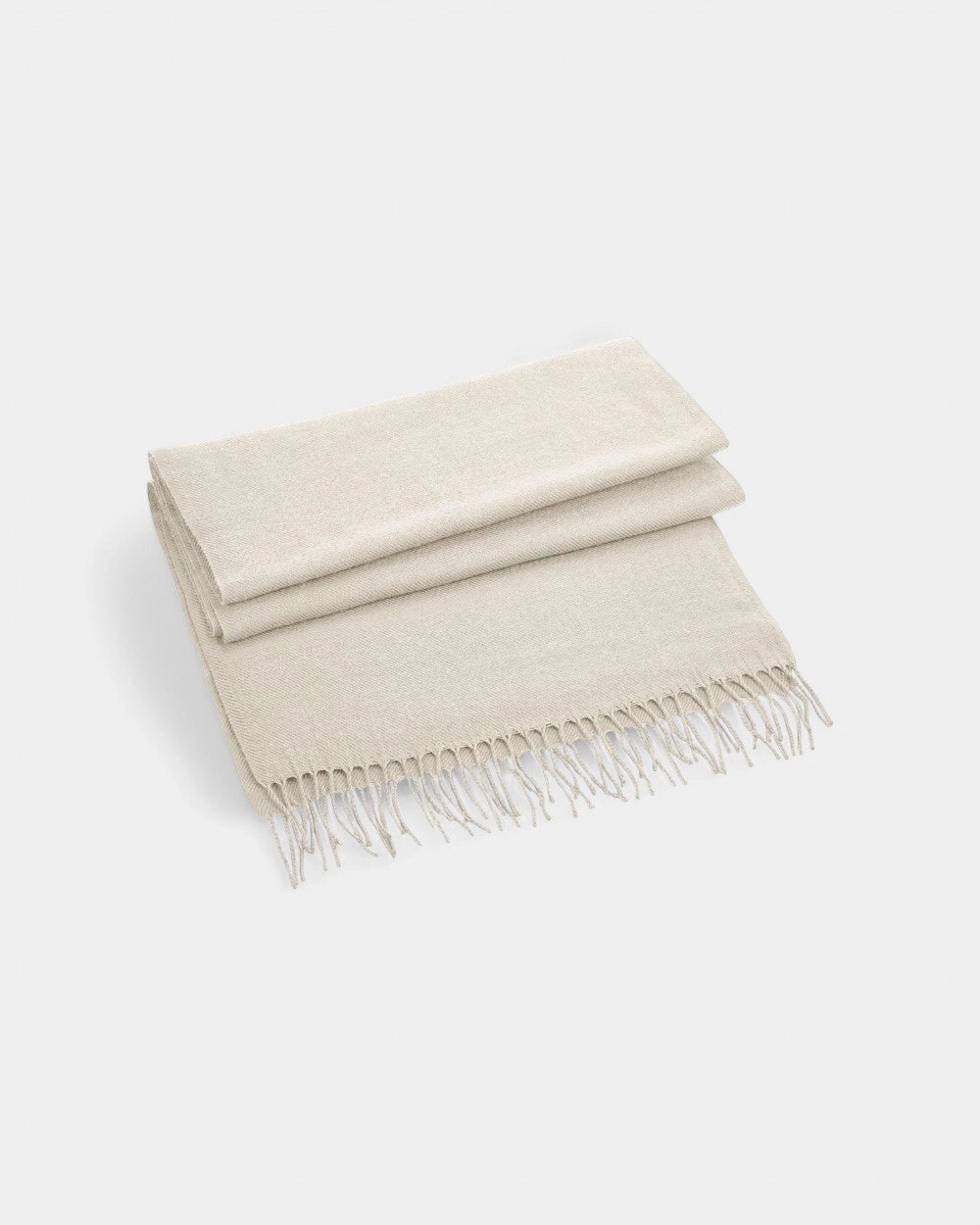


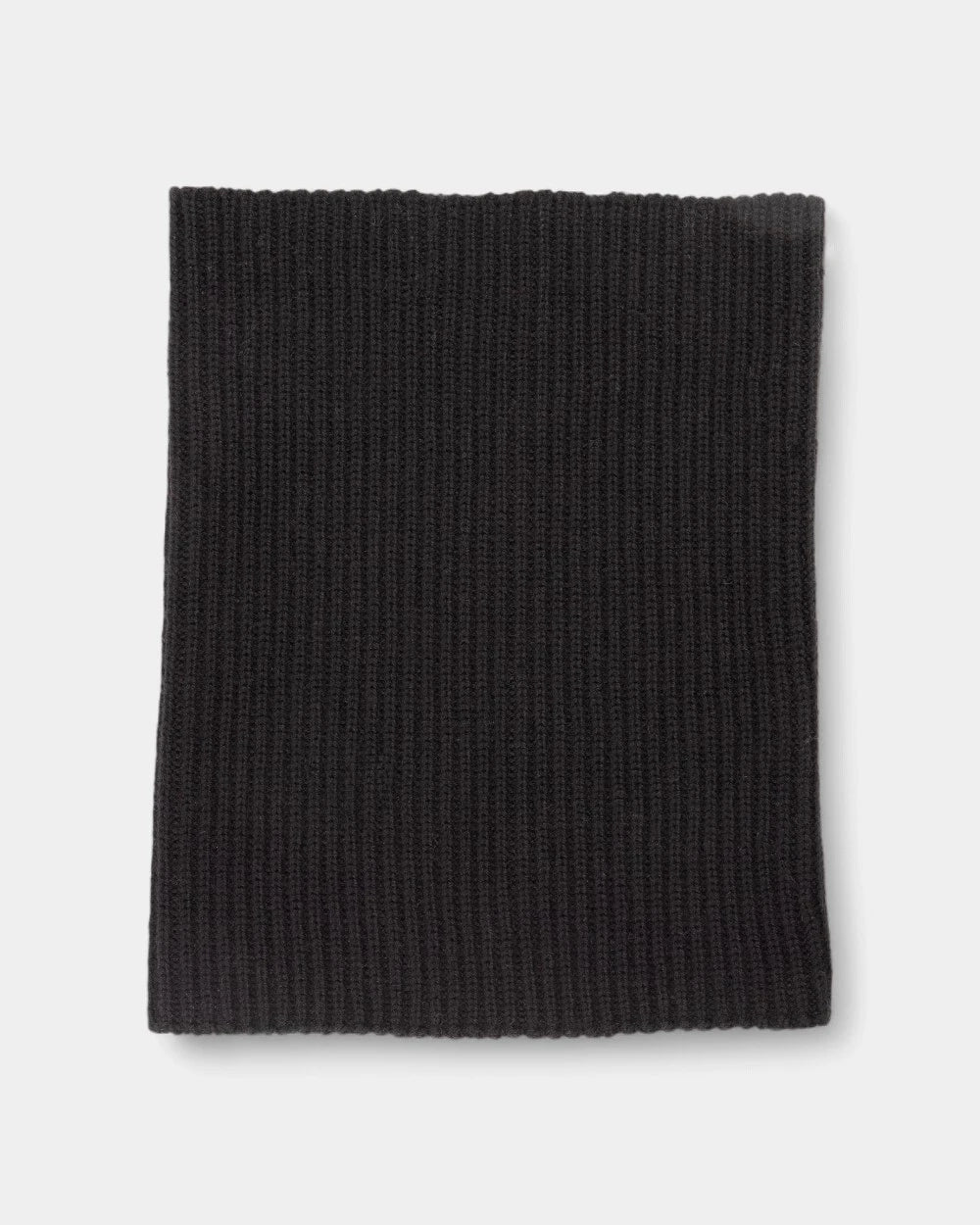


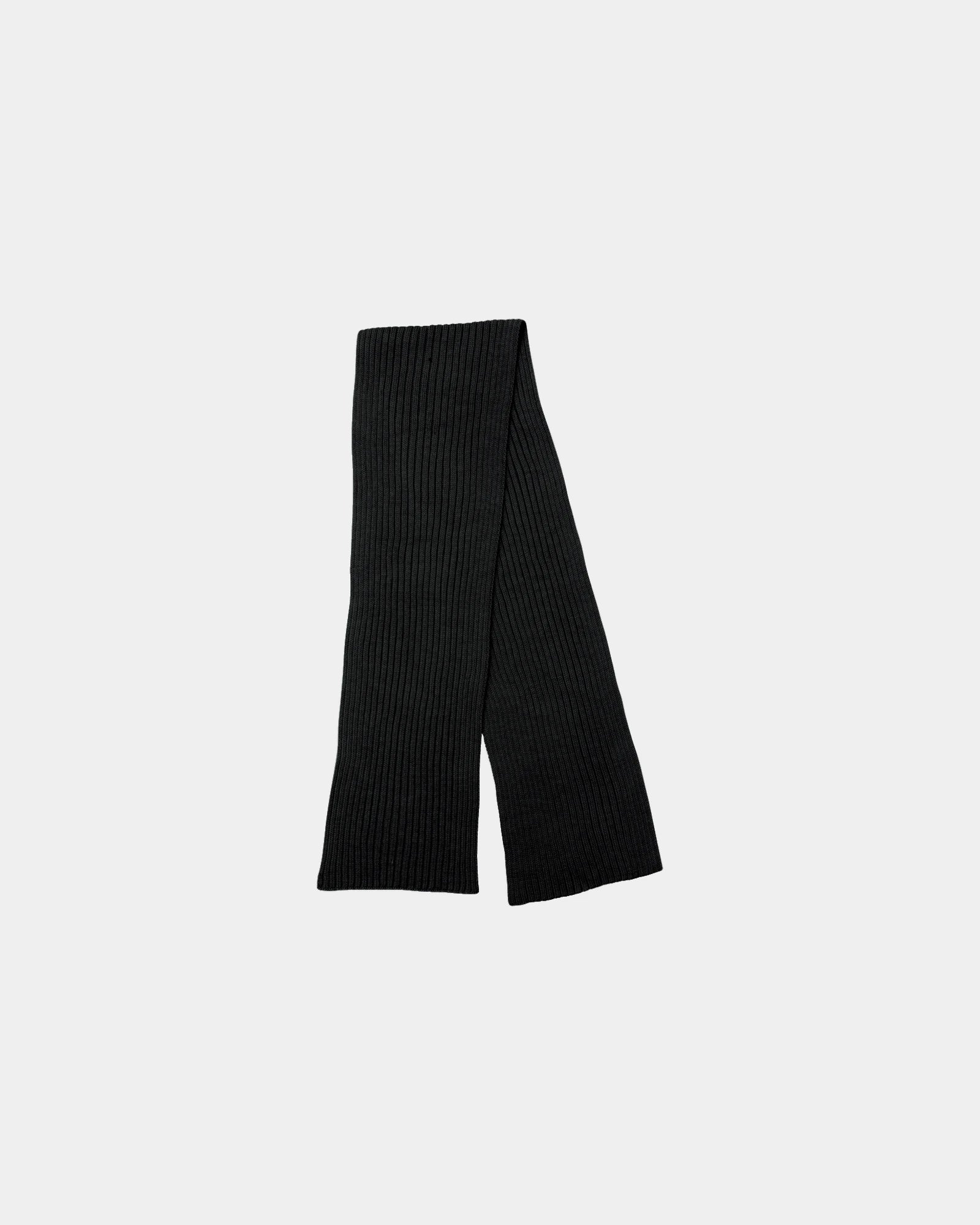


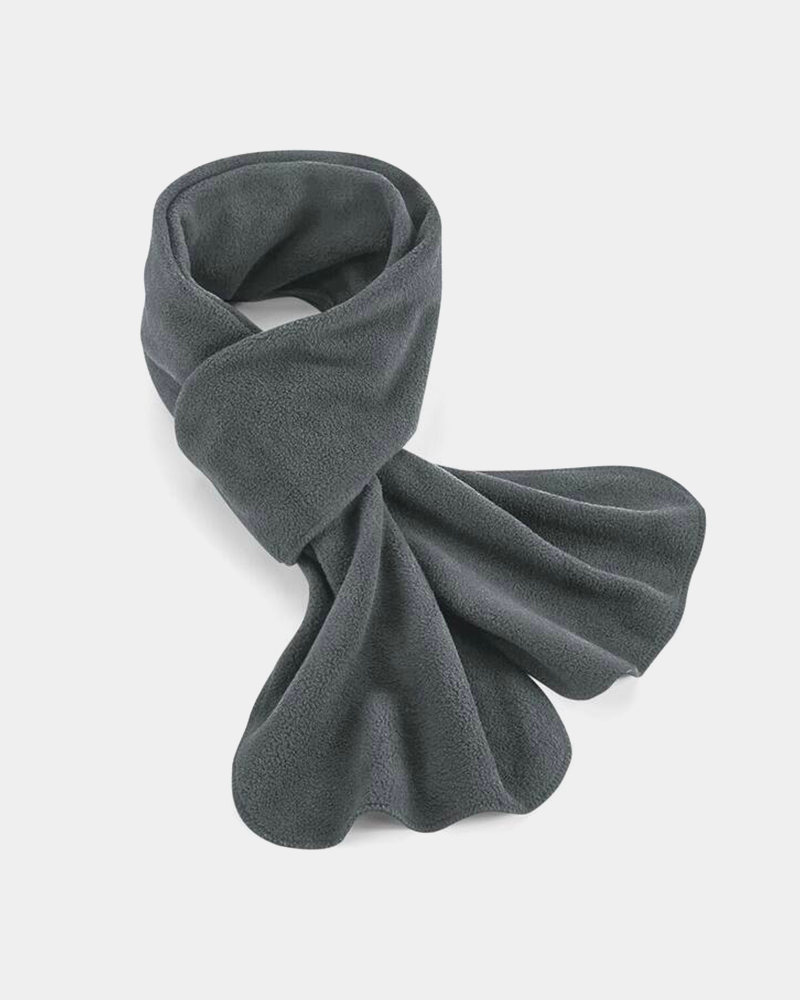






Treat your clients and employees!

FAQ - Custom Scarves
Trusted by 1,000+ companies
Acrylic Or Wool: The Yarn Behind Custom Scarves
Yarn sets the cost, the warmth and the drape of custom scarves, so it is the decision every other choice hangs off. Standard acrylic is the terrace and giveaway workhorse. It holds a bright dyed colour, shrugs off cold and damp, washes without felting and costs least per unit across a large run. For a football crowd or a several-thousand-unit promotion, acrylic is almost always the right call.
Wool blends for premium custom scarves
An acrylic-wool blend lifts the hand feel for a retail-style or corporate gift scarf, adding a softer, warmer drape without the price jump of pure wool. Lambswool and merino sit at the top: naturally warm, breathable and soft against the neck. They suit a smaller executive run where the feel justifies the spend. Each fibre takes a knitted-in pattern and a stitched logo differently.
Recycled yarn options for printed scarves
Recycled-content yarns, usually a recycled-polyester or recycled-acrylic blend, now cover most formats for a lower-footprint brief. The recycled percentage is printed on each scarf's own data sheet rather than quoted as one figure across the range of custom scarves. Any claim you pass to your buyers then matches the exact line you ordered. Embroidered fleeces sit in the same winter wardrobe when a brief wants a layer as well as a scarf.
| Yarn | Feel | Best for | Note |
|---|---|---|---|
| Standard acrylic | Warm, bright, hard-wearing | Football crowds, large giveaways | Lowest unit cost, washes easily |
| Acrylic-wool blend | Softer, fuller drape | Retail and corporate gifts | Mid step on feel and price |
| Lambswool | Traditional, warm, soft | Premium gift runs | Takes fine embroidery well |
| Merino wool | Soft, breathable, no itch | Executive smaller runs | Highest hand feel |
| Recycled polyester blend | Light, smooth, lower-footprint | Sustainability-led briefs | Recycled share on the data sheet |
Bar, Jacquard And Stripe Formats Of Custom Scarves
Custom scarves are not one product but a handful of knitted formats, and the format decides how the branding lives in the fabric. The bar scarf is the football staple: a wide, bold horizontal band of club or brand colour with the name knitted across it. It is designed to be held up and read in a stand. The jacquard scarf knits a two-colour or multi-colour design directly into both faces, so crests, patterns and lettering become the fabric itself.
A vertical or horizontal stripe scarf builds the brand from colour blocks alone, the simplest and often cheapest knitted-in route, and reads cleanly from distance. For a photographic crest, a gradient or a sponsor wall of many logos, sublimation print or an HD-woven panel carries detail that two-colour knitting cannot. Each format suits a different artwork and a different budget, so the design leads the choice rather than the other way round.
Most scarves run roughly 145 to 160 cm long and 17 to 23 cm wide, with the bar format sitting at the wider end. Those dimensions are model-dependent, and we confirm the exact length and width against your design before the run. Custom beanies knit in the same colourway when a club or staff kit wants a matched hat-and-scarf pair.
| Format | How the brand sits | Detail level | Best for |
|---|---|---|---|
| Bar scarf | Wide colour band, name knitted across | Bold, two to six colours | Football terraces, supporter clubs |
| Jacquard scarf | Pattern knitted into both faces | Crests, lettering, multi-colour | Clubs, heritage and gift ranges |
| Stripe scarf | Colour blocks only | Simple, no fine detail | Budget runs, bold brand colours |
| Sublimation print | Photographic dye onto knit | Gradients, photos, many logos | Sponsor walls, complex artwork |
| HD woven panel | Fine woven badge or panel | Sharp small detail | Detailed crests on a knit |
Fine Or Chunky Gauge In Custom Scarves
Gauge is the thickness of the stitch, and on custom scarves it sets both the warmth and how sharp a knitted-in logo can be. A fine gauge uses thinner yarn and a tighter stitch, giving a smoother, lighter scarf and enough stitch resolution to knit small lettering and a detailed crest cleanly. It reads neat and premium, and suits a corporate gift or a club crest with fine elements.
A chunky gauge uses thicker yarn and a looser, more open stitch for a heavier, warmer, more lifestyle scarf with real bulk. The trade-off is resolution. A coarse stitch cannot hold fine knitted-in detail, so a chunky scarf leans on bold colour blocks, simple lettering or an applied badge rather than an intricate jacquard. A ski-resort or winter-market brief that wants visible warmth usually points to the chunkier end.
Gauge also changes the drape and the weight in the hand, which matters for a gift that needs to feel substantial. We knit a sample at your chosen gauge and yarn before the main run, so you judge the warmth, the weight and the logo sharpness on the real fabric. A low minimum order means that first sample run is genuinely viable before you scale to a larger reorder.
Yarn Quality And Pill Resistance In Custom Scarves
A scarf bought for a cup run should still look right two seasons later, and that longevity is decided by the yarn grade, not the design. Pill-resistant acrylic is spun and finished to resist the small bobbles that cheaper yarn forms where the scarf rubs against a coat collar. A budget yarn may knit the same pattern but fuzz and bobble within weeks, which reads as a tired scarf however good the crest.
Weight is the other quality signal a buyer feels in the hand. A heavier knit, often quoted in grams, drapes with presence and reads as a proper club or gift scarf; a thin, light knit reads cheap even in the right colours. The gauge and the yarn together set that weight, so we name the grade and the approximate finished weight at quote rather than leaving it to the sample alone.
Selvedge edges, the neat self-finished sides of a knitted scarf, stop the long edges curling or fraying through wear and washing. A well-finished scarf holds a flat, clean edge season after season. We confirm the yarn grade, the pill-resistance finish and the edge treatment on the spec before knitting. The scarf that arrives then wears like the sample rather than degrading after the first cold snap.
Knit-In Versus Patch: The Logo On Custom Scarves
The single biggest branding decision on custom scarves is whether the logo is built into the weave or applied to the surface. A jacquard knit-in logo becomes part of the fabric on both faces. It never peels, never cracks and reads as a properly made club or brand scarf rather than a printed blank. It carries solid two-colour or multi-colour shapes well, which is why football and heritage scarves almost always go this route.
Embroidered and woven logos on custom scarves
An applied mark suits artwork the knit cannot reproduce. An embroidered logo stitched onto the scarf end carries fine lettering and a tight crest with a premium thread finish. A woven badge captures sharper multi-colour gradients on a sealed tab, and a sublimation-printed panel handles a photograph or a busy sponsor block. These ride best on the flat scarf end rather than the body, where they sit stable and read straight.
Most briefs combine the two: a knitted-in club name down the body with an embroidered date or a woven sponsor badge at the fringe. We approve the artwork and send a free digital proof before production, confirming thread shades and badge placement against your yarn colour first. Custom gloves take the same embroidered badge when a full cold-weather kit is in scope.
| Method | How it works | Strength | Best artwork |
|---|---|---|---|
| Jacquard knit-in | Design knitted into both faces | Never peels, reads as a real scarf | Solid two to six colour shapes |
| Embroidery | Thread stitched onto the end | Premium, fine lettering | Names, dates, tight crests |
| Woven badge | Design woven on a sealed tab | Sharp multi-colour detail | Detailed or gradient crests |
| Sublimation print | Dye fused into the knit | Photographic, unlimited colour | Photos, sponsor walls |
Fringed And Tasselled Ends On Printed Scarves
The ends finish the scarf, and the choice there is more visible than buyers expect because it frames every photo of the product held up. A knotted fringe, the classic terrace finish, ties a row of tassels at each end for a traditional, sporty look that says match-day. Fringe length is a real variable: a short fringe reads tidy and corporate, a long fringe reads bold and supporter-led.
A tasselled or twisted-tassel end dresses the scarf up for a gift or retail range, with the tassels matched or contrasted to the body colour. A clean hemmed or folded end, with no fringe at all, gives the most minimal, modern finish and suits a sharp corporate scarf where the brand wants restraint. Each finish changes the perceived character before anyone reads the logo.
The fringe is also a quiet branding surface in its own right. A contrast-colour fringe against the body, knitted in the second brand colour, frames the scarf without any extra decoration cost. We set the fringe style, length and colour at proof alongside the logo, so the ends and the body read as one designed piece rather than an afterthought stapled on.
Colourway As The Brand Lever On Custom Scarves
On custom scarves the colour is dyed through every stitch, not printed on top, so the colourway is the strongest and cheapest branding lever you have. A two-colour bar scarf in exact club or corporate shades reads as a brand from clear across a stand before a single letter is decoded. Because the yarn is solid-dyed, those colours never wash out or crack the way a surface print can.
Knitted formats carry deep stock palettes, so a close match to a brand colour is usually possible from standard yarn. We confirm it against your reference before the run rather than guessing on screen. Multi-colour jacquard scarves commonly carry up to six colours including white, which is enough for most crests and dual-sponsor designs. A contrast reverse face, a different colour on each side, doubles the design space at no print cost.
Colour also does the heavy lifting on warmth-of-feeling for a Christmas gift. A festive red-and-green or a brand-toned heathered marl photographs well and reads as a considered present rather than a throwaway. Personalised Christmas gifts often pair a branded scarf with smaller stocking items to round out a seasonal hamper.
| Use case | Format | Yarn | Finish |
|---|---|---|---|
| Football terrace | Bar or jacquard | Standard acrylic | Knotted fringe, bold colours |
| Supporter club merch | Jacquard knit-in | Acrylic blend | Long fringe, crest both faces |
| Ski resort or winter market | Chunky stripe | Acrylic-wool blend | Tasselled end, warm bulk |
| Corporate gift | Fine jacquard | Lambswool | Hemmed end, embroidered name |
| Christmas staff gift | Jacquard or stripe | Acrylic blend | Twisted tassels, festive colourway |
Length, Width And The Reversible Custom Scarves Question
Dimensions decide how custom scarves wear and how much branding real estate you have, so they are worth setting deliberately. A standard adult scarf runs roughly 145 to 160 cm long, which wraps once with both ends hanging or twice for a closer winter wrap. A longer cut suits a chunky lifestyle scarf or a double-wrap look; a shorter cut suits a child or youth range for a family-facing club.
Width, typically 17 to 23 cm, trades warmth against neatness. A wider bar scarf carries a bolder knitted name and more presence held aloft; a narrower scarf reads sharper and sits flatter under a coat collar for a corporate look. The two dimensions together set how the logo scales, so we map the artwork onto the chosen length and width at proof rather than after the yarn is committed.
Most scarves are double-faced, meaning the jacquard design knits through to both sides, so there is no wrong way to wear it and the brand shows however it falls. A two-sided scarf can carry the club name on one face and a sponsor or date on the reverse. We confirm whether your design runs the same both sides or splits across the two faces.
Matching Custom Scarves To Terraces, Clubs And Gifting
A non-league club kitting out its supporters for a cup run is the clearest case for a custom scarf, and it shapes every spec. It wants a bold bar or jacquard scarf in exact club colours, a knotted fringe and the crest knitted into both faces. A low enough minimum order suits a small fan base. Standard acrylic keeps the unit price where a volunteer-run club can afford a proper run.
Beyond the terrace, the scarf flexes across winter scenarios that share its long, visible shape. Ski resorts and Christmas markets brand chunky warm scarves for staff and retail. Corporate teams hand fine jacquard scarves as year-end gifts that feel considered. Festival and music brands run scarves fans choose to wear off-site. Universities and societies carry the same heritage-scarf tradition that clubs do.
Staff winter kit is the steady year-round driver, where a branded scarf keeps outdoor crews warm and uniform on a cold forecourt or event gate. Custom Hoodies layer under the same scarf when a brief wants a full branded winter uniform rather than a single accessory.
- Bar scarf: wide colour band, name knitted across, terrace staple
- Jacquard scarf: crest knitted into both faces, no peel
- Stripe scarf: colour blocks only, simplest knitted-in route
- Chunky gauge: thicker yarn, more warmth, bold detail only
- Knotted fringe: classic match-day end, length adjustable
- Reversible knit: design shows on both faces, no wrong side
Mini, Car And Child Custom Scarves For Wider Ranges
The standard scarf has useful relatives that broaden a club or brand range without a new design. A mini scarf, a short pennant-style version, hangs from a rear-view mirror or a bag and works as a low-cost supporter keepsake or stadium giveaway. It carries the same knitted-in colours and crest as the full scarf at a fraction of the yarn, so the brand stays consistent across the set.
A child or youth scarf knits the adult design at a smaller length and width for family-facing clubs, school ranges and junior supporter packs. It keeps the fringe and the crest but scales the proportions so the scarf sits right on a smaller wearer. We adjust the dimensions rather than just cutting the adult pattern shorter, so the design stays balanced.
These variants reuse the same jacquard or stripe artwork, so adding them to an order costs design time once and yarn per piece after. A club can run a full adult scarf, a mini for the car and a child size from a single approved design. We confirm the proportions of each variant on the proof before the combined run is set.
From Brief To Finished Printed Scarves: Artwork And Proofing
A clear brief turns a club badge into a sample on your desk quickly. Tell us the format, the rough quantity, the deadline, your exact brand colours and how many colours the design needs. We translate that into a yarn, a gauge and a knit-or-apply route without a dozen emails. Because a knitted-in design works in solid colour blocks, we flag early if a gradient logo needs a printed or woven panel instead.
Send vector artwork where you have it, since clean shapes translate into a jacquard pattern far better than a logo lifted from a website. Yarn colours are matched to a standard reference, not a screen, so we confirm the closest stock shades before knitting. That matters most when a bright crest sits on a dark body. A two-colour bar scarf needs different artwork handling from a six-colour jacquard crest.
Once the brief is set we return a digital proof showing the colours, the format and the logo placement. You sign it off, and production runs to roughly a three-week lead. A physical knitted sample on your chosen yarn settles any doubt about colour and weight before the full run of custom scarves commits. That is why the low minimum order matters on a first project.
Custom Scarves Across The Cold-Weather Season
A scarf brief reads differently depending on the moment it serves. A cup run lands on one weekend and wants a bold terrace scarf at a club-friendly price. A staff winter kit runs across every cold forecourt shift from October to March. A Christmas gift drop needs a considered, festive feel that photographs well. Naming the moment first keeps the yarn and format choices honest.
Map the scarf to the wearer rather than the longest spec on the page. A supporter holds a bar scarf aloft and wants a name readable from a stand. An office contact unwraps a fine jacquard scarf and judges it by the hand feel. A market-stall worker wants chunky warmth above fine detail. Each audience rewards a different gauge, yarn and finish, so brief the wearer before the catalogue.
Budget split across a mixed run usually beats spreading the spend evenly. Put the lambswool jacquard scarves in the hands of named clients, and route the standard acrylic bar scarves to the wider supporter giveaway. The table below pairs a common cold-weather moment with the format, yarn and end finish that tend to suit it best.
| Moment | Suggested format | Yarn | End finish |
|---|---|---|---|
| Cup-run terrace | Bar or jacquard | Standard acrylic | Knotted fringe |
| Staff outdoor kit | Stripe or jacquard | Acrylic-wool blend | Hemmed end |
| Christmas gift drop | Jacquard | Lambswool | Twisted tassel |
| Ski or winter market | Chunky stripe | Acrylic-wool blend | Long fringe |
| Executive year-end gift | Fine jacquard | Merino | Embroidered name |
Get the match right at the point of handover and the scarf keeps your name in view across the whole season. The wearer keeps a piece that feels right. A mismatched yarn or gauge gets retired after one cold snap, which wastes the run.
Care And Longevity Of Your Custom Scarves
Custom scarves that hold their shape and colour keep doing their job for many winters, and a little care goes a long way. A cool hand-wash or a gentle cool machine cycle protects both the yarn and the knitted-in design. A hot wash can felt a wool scarf and pull an acrylic one out of shape. Drying flat rather than hanging stops the long body stretching under its own wet weight.
Because the logo is knitted through the fabric rather than printed on it, the colour stays solid through repeated washes with no cracking or peeling. That is the lasting advantage of a jacquard scarf over a surface print. An applied embroidered or woven badge holds up just as well to cold and damp; a sublimation panel keeps its colour but should avoid a hot wash. Light pilling on a softer acrylic lifts off with a fabric comb.
We tuck a care note into every order covering cool washes and flat drying, because a scarf lives outdoors in winter weather where guidance matters more than on indoor kit. A bar scarf bought for a cup run then survives to be worn season after season. Corporate Gift Boxes present a premium scarf in a way that protects it from the first day.

