

Personalised Ekomodo Products
- Price, low to high
- Price, high to low












- B corporation
 Made in Spain
- Eco-friendly








- B corporation
- Made in Spain
- Eco-friendly


- B corporation
- Made in Spain
- Eco-friendly


Treat your clients and employees!

FAQ - Personalised Ekomodo products
Trusted by 1,000+ companies
Why personalised Ekomodo products survive a procurement review
Most recycled promotional items are described in adjectives. Ekomodo describes its range in units: a sleeve is not simply sustainable, it is fifteen bottles. A wallet is one bottle. A basket is twelve to twenty. That difference matters the moment a buyer has to justify a line in a corporate social responsibility report rather than in a marketing deck.
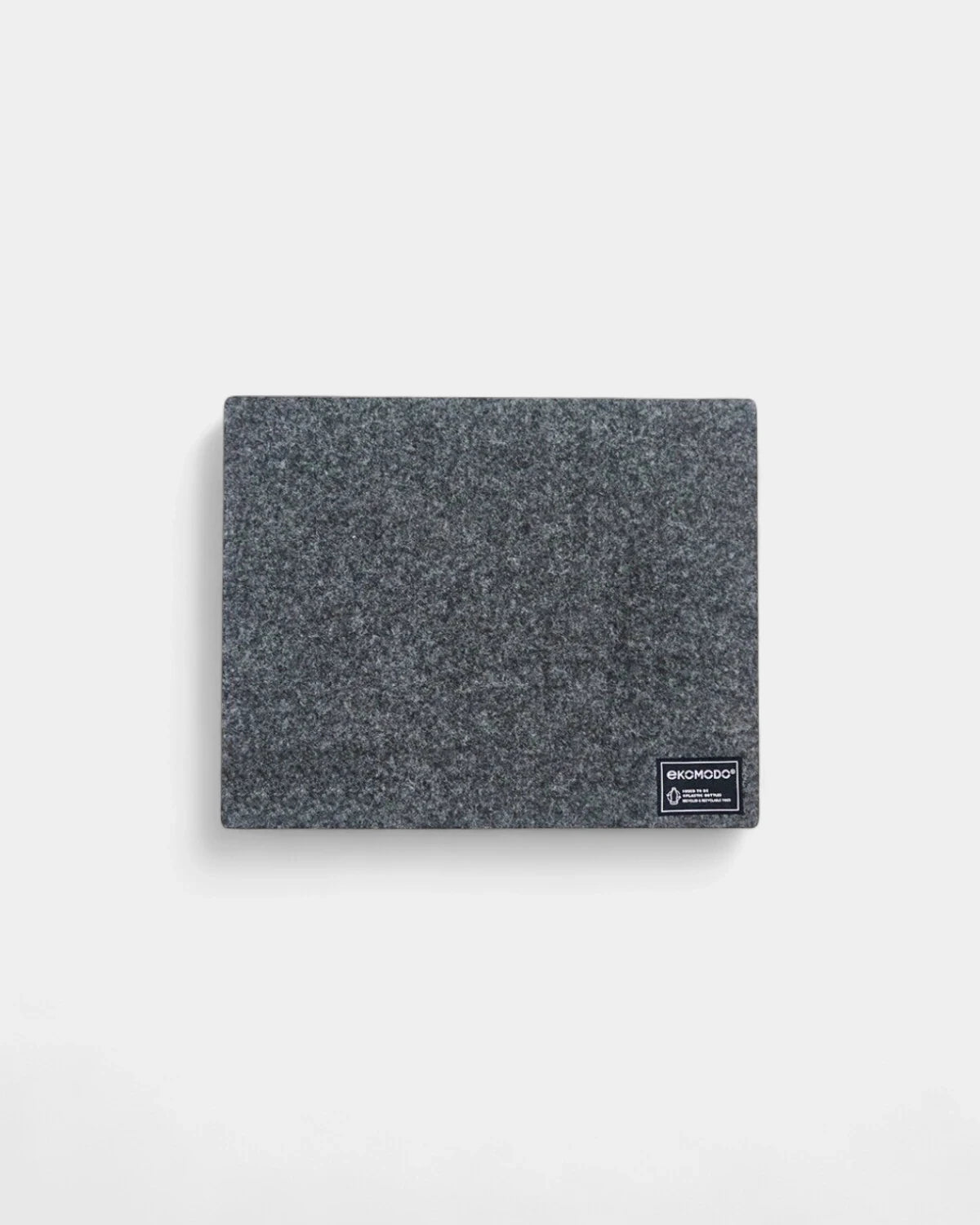
The range sits in the categories that a business actually orders in volume, which is why it belongs with our branded eco products rather than in a novelty aisle. Laptop sleeves, wash bags, coasters, wallets, eyewear cases and a desk stand cover the working day of an office employee end to end, and every one of them takes a logo without a redesign.
There is a second reason these references hold up. Ekomodo is a Basque company and the products are made in Spain, so the supply chain is short, European and auditable. When a client asks where the goods came from, the answer is a country, not a region of the world.
What the recycled materials in the range actually are
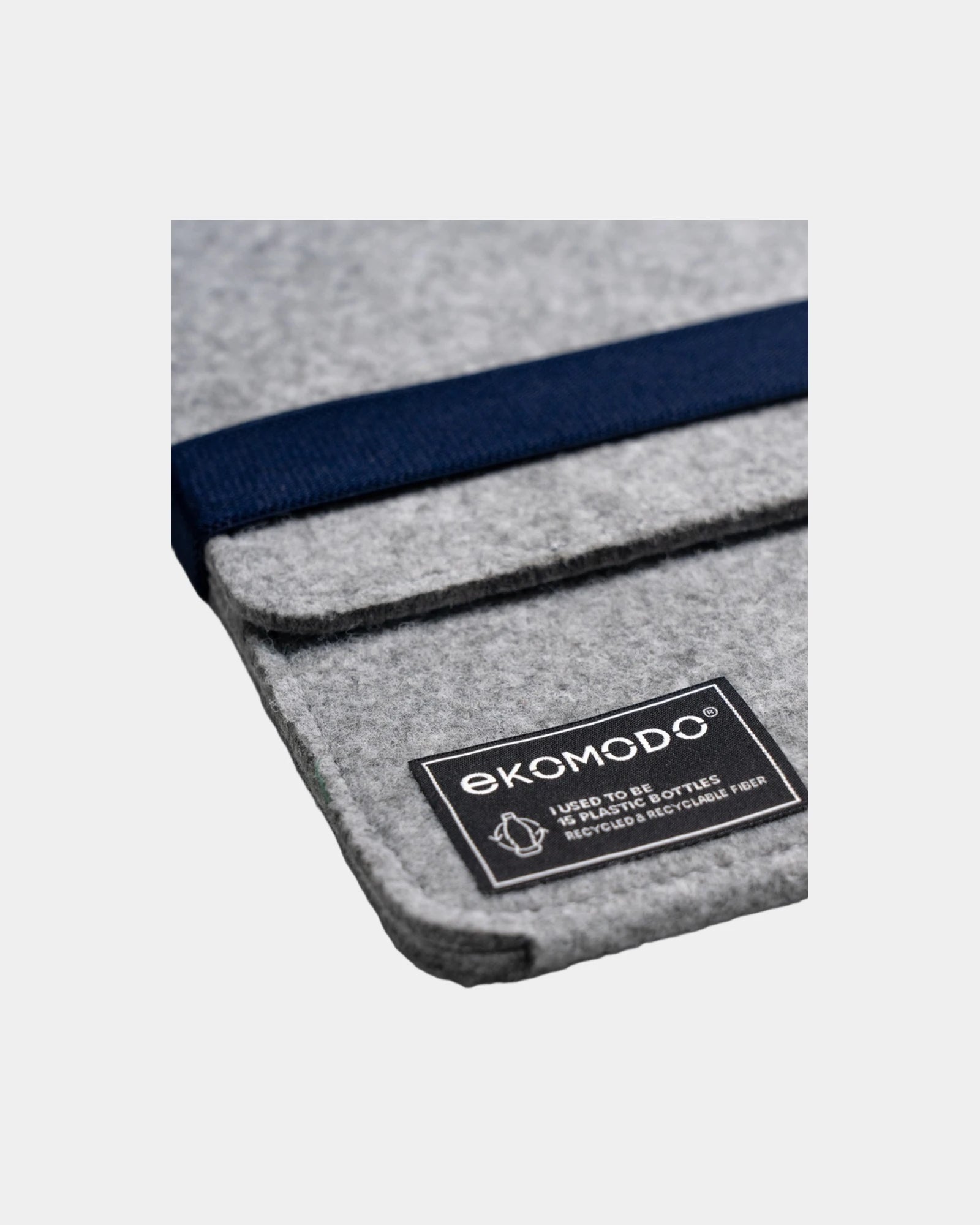
Three families run through the catalogue. The first is recycled PET, spun back into a textile fibre from post-consumer bottles. The second is recycled felt, a denser non-woven made from the same feedstock, used where a product needs body rather than drape. The third is recycled wood, reclaimed from pallets that have reached the end of their logistics life.
Each family behaves differently under a marking head, which is the practical consequence for you. Recycled PET textile takes embroidery and transfer. Recycled felt takes embroidery particularly well because the material is thick enough to hold a stitch without puckering. Recycled wood takes laser engraving, and the contrast depends on the grain of the specific plank.
One certification point deserves care. Ekomodo states Global Recycled Standard traceability for the Jaso basket. We do not extend that statement to every reference in the range on your behalf. If a certificate has to be attached to your tender, tell us which reference you are quoting and we will ask for the document that covers it specifically.
The recycled PET laptop sleeves: Hazi, Lapatx and Apar
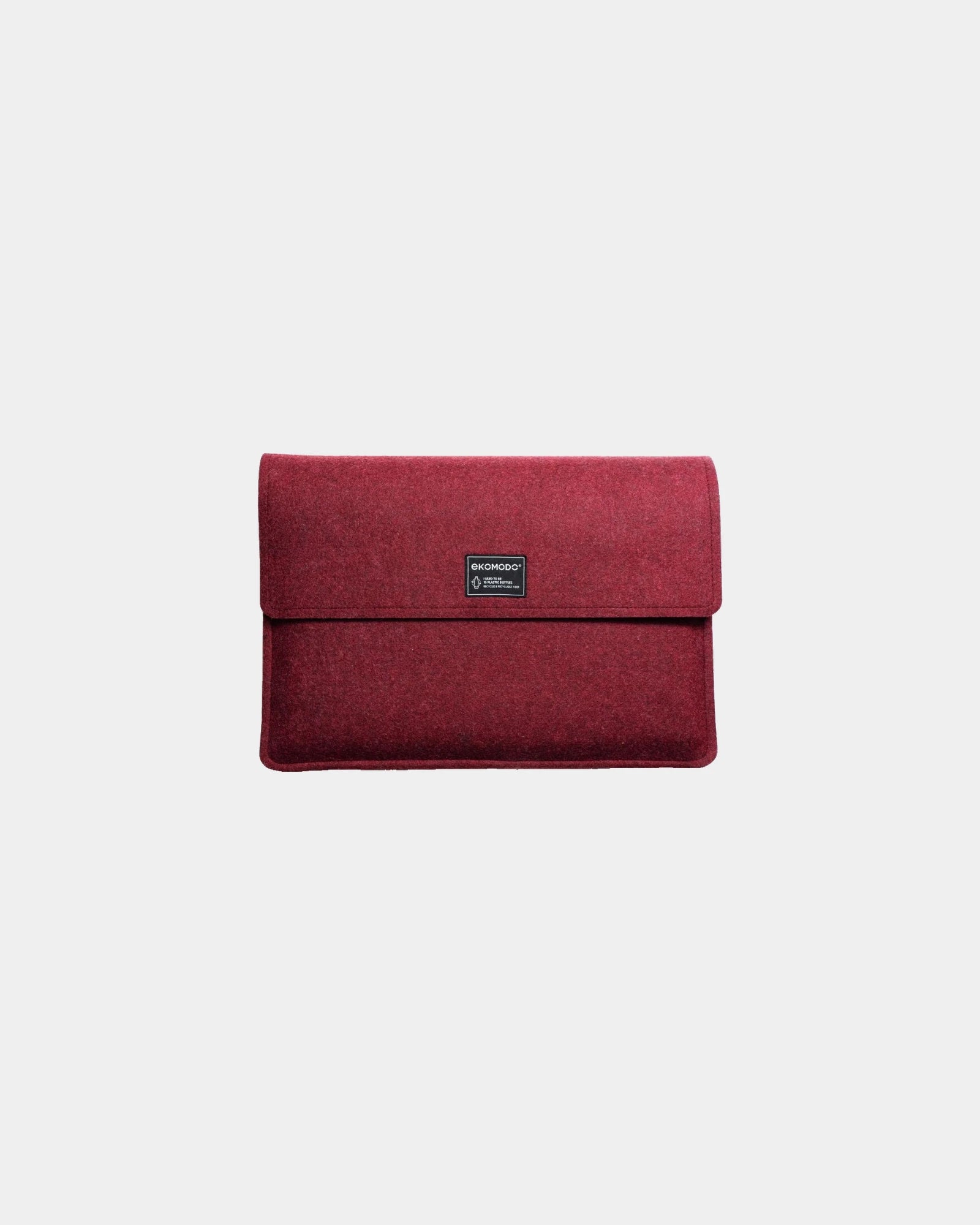
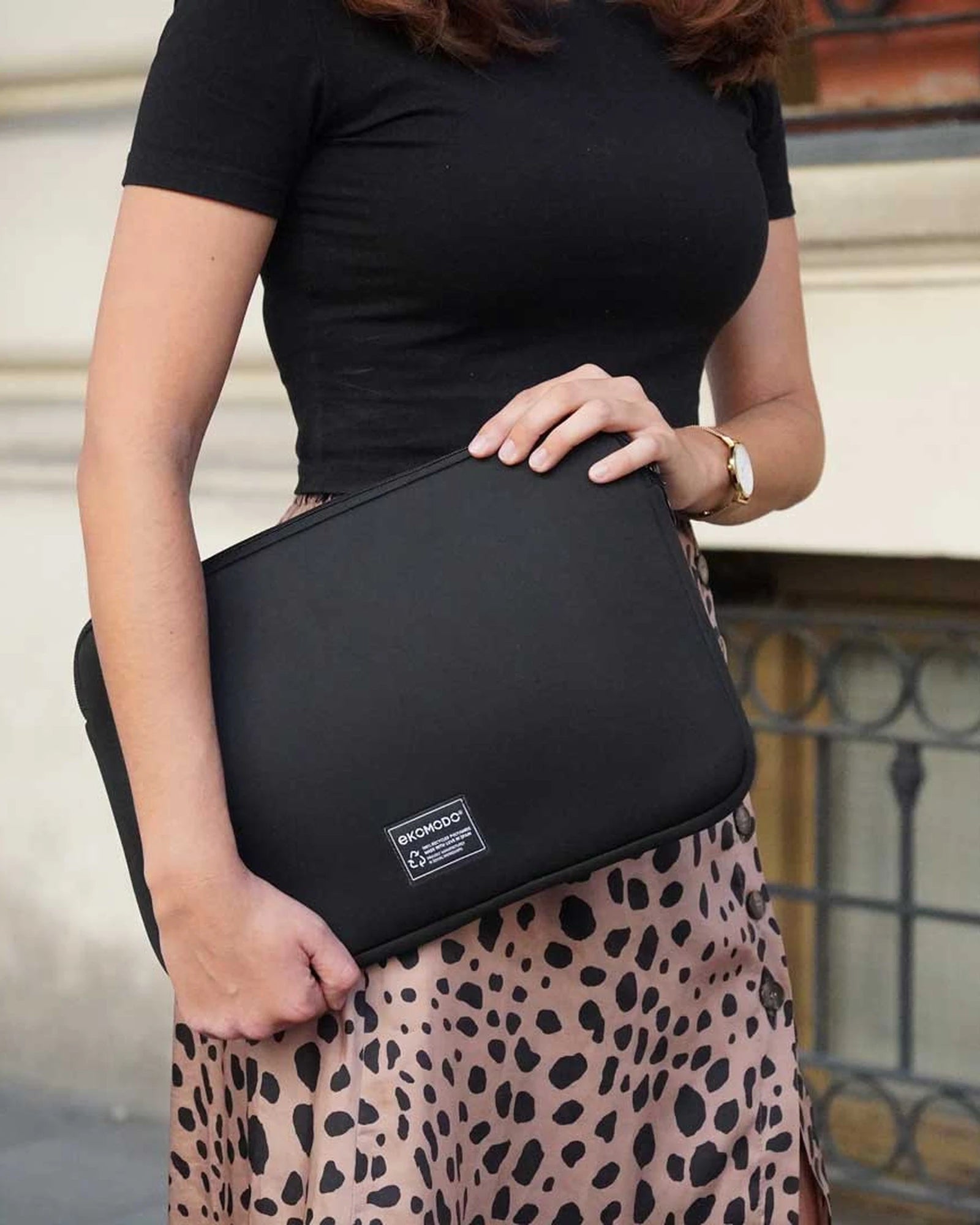
Three 13 inch sleeves share a slot and differ in fibre. The Hazi is 100% recycled PET built from fifteen plastic bottles. The Lapatx is a 100% recycled polyester fibre, also fifteen bottles. The Apar is recycled polyamide, a different polymer with a smoother hand and a tighter weave.
Ekomodo states that the manufacture of the Hazi and the Lapatx uses 20% less water and 50% less energy than the conventional equivalent. Those two figures belong to those two references, and we quote them that way rather than spreading them across the catalogue. They are the kind of number a communications team can use without overstating anything.
Colour choice is where the three separate for a corporate order. The Apar runs to seven colours including navy, black, red, deep blue and purple. The Hazi runs to six, the Lapatx to four greys and garnets. If your brand palette is fixed, start from the sleeve that already carries your colour, then choose the marking. Our branded laptop cases show how these sit beside the rest of the range.
Lehor: the water-repellent recycled polyester sleeve
The Lehor is the technical one. It is built from 900D recycled polyester, a heavy denier that gives the shell its structure, and the fabric is water-repellent. For a laptop that travels between a car park and an office door in the rain, that is a real difference rather than a specification sheet flourish.
It comes in black only, which simplifies the branding conversation. A single colour means a single proof, and a fleet of identical sleeves handed out at an onboarding session reads as an issued piece of equipment rather than as a giveaway.
One honest limitation applies here and we would rather say it before the order than after. Embroidery perforates the shell. On a water-repellent fabric, every needle penetration is a hole in the barrier, so the repellency is locally compromised where the thread sits. If the water-repellent property is the reason you chose the Lehor, ask us for a transfer or a digital print instead.
Recycled felt in the range: the Biru basket and the Tanta coasters
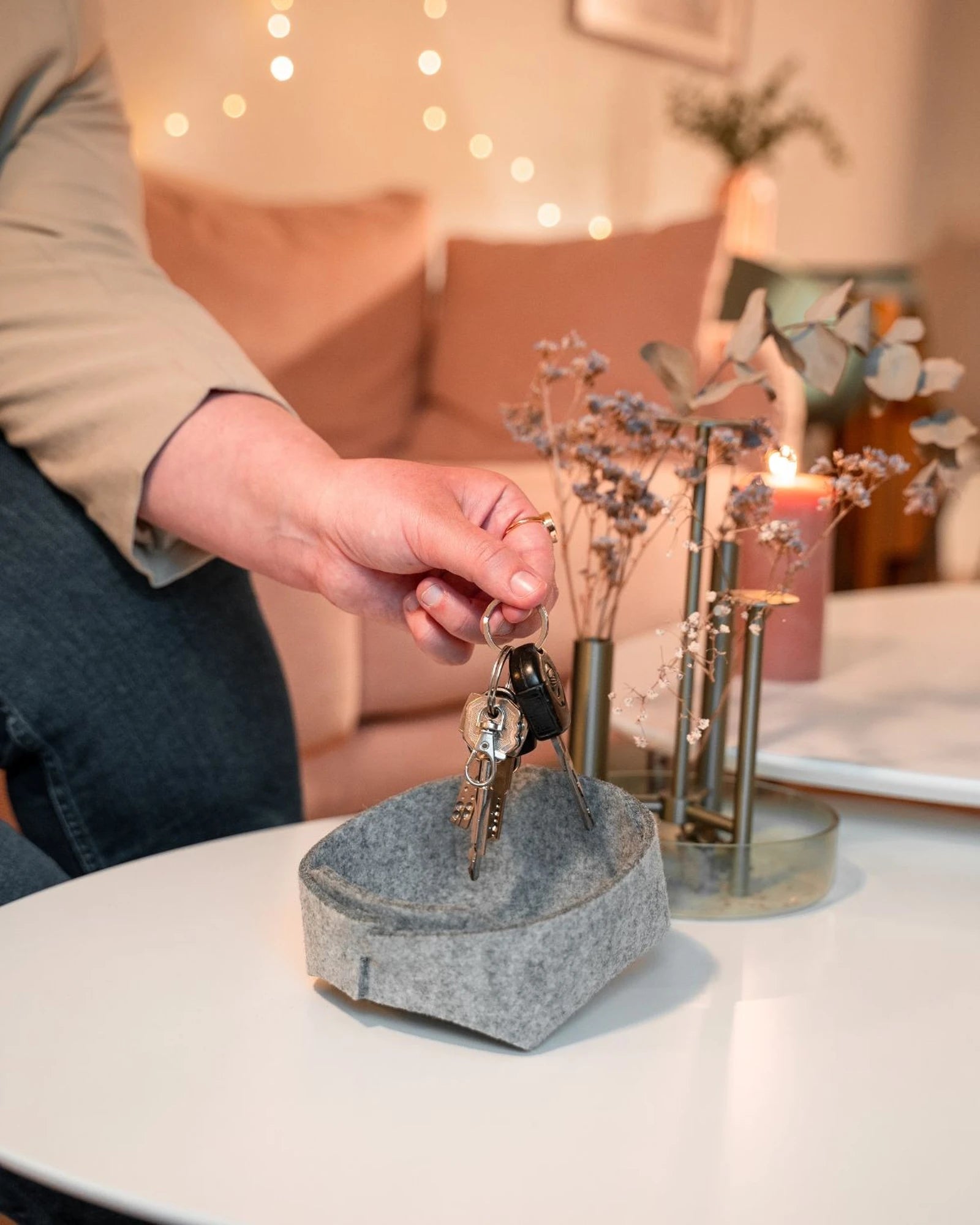
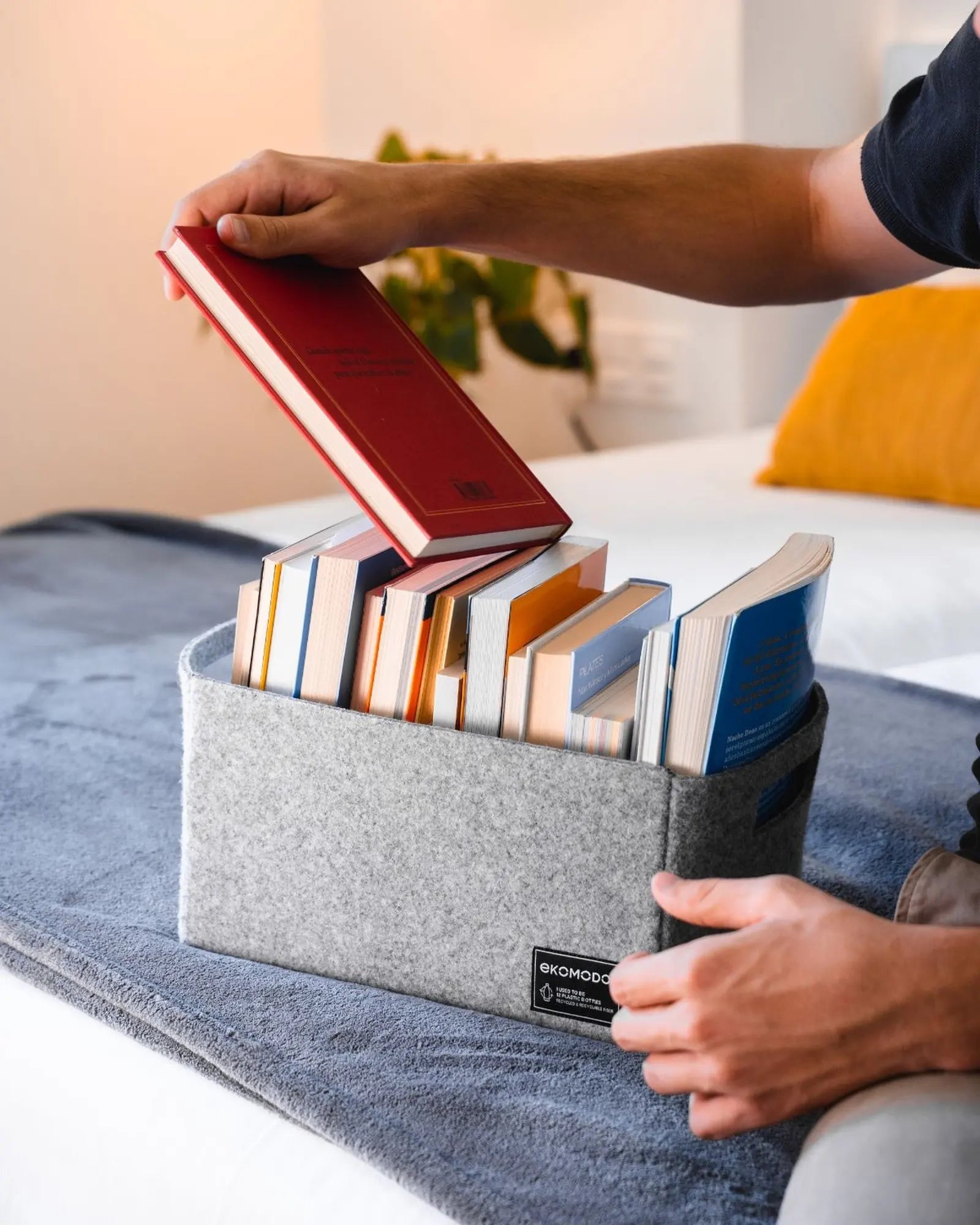
Felt is the material people underestimate. The Biru basket is a recycled felt storage piece made from post-consumer bottles, light enough to sit on a shelf and rigid enough to hold its shape when full. It works as a desk tidy, a cable box or the container that holds the rest of a welcome pack together.
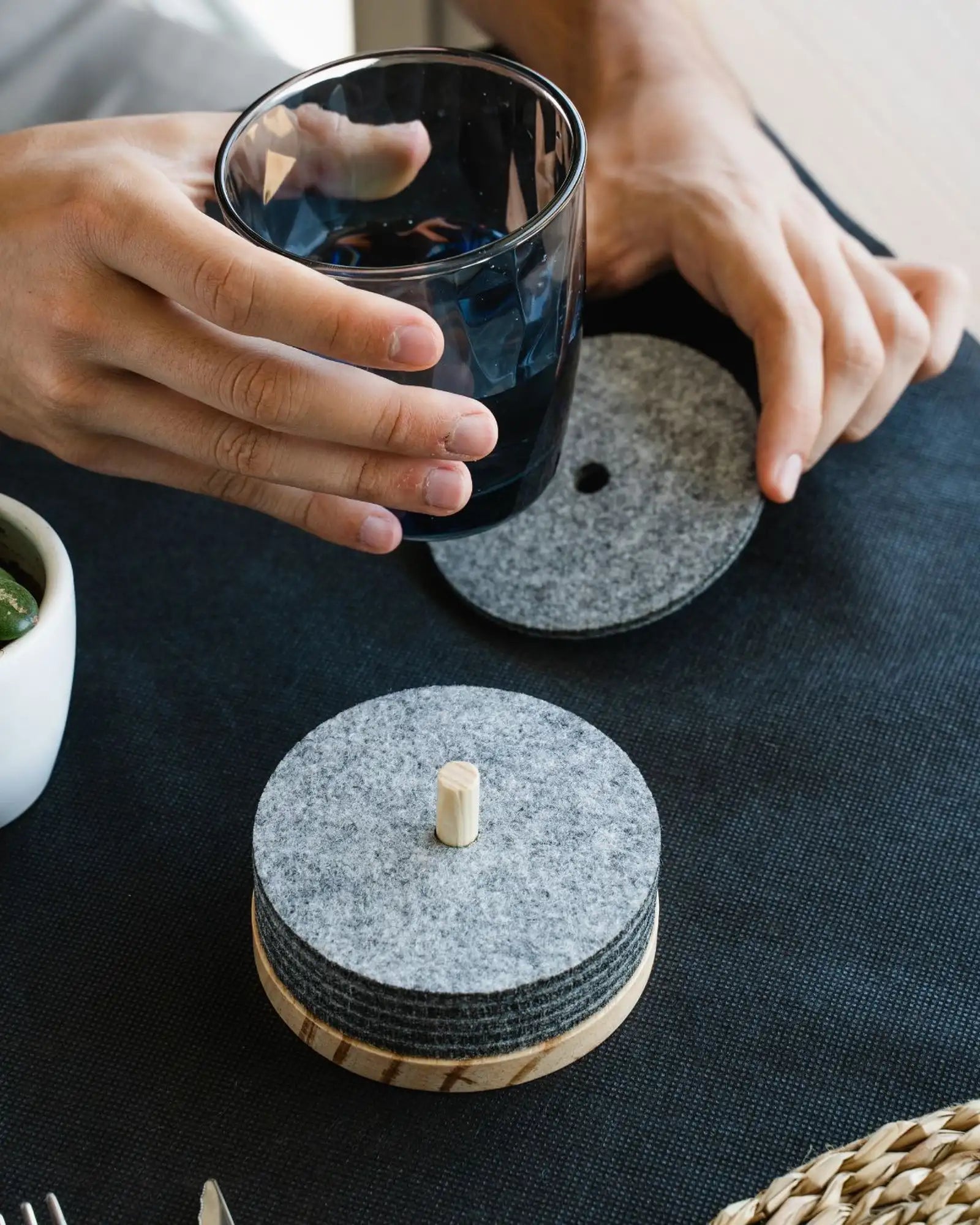
The Tanta coasters combine recycled felt with recycled wood taken from discarded pallets. That pairing is the whole point of the piece: two waste streams, one object, and a marking surface on each material. They are the smallest item in the range and often the one that stays on a desk longest.
Both take a generous print area. Felt is forgiving of a large logo because the surface is matte and holds ink without spread, and it is equally forgiving of embroidery. If your mark is a fine serif wordmark, embroidery on felt will thicken it slightly, so a print keeps the letterforms truer.
Altxa: the recycled wood laptop stand for hybrid desks
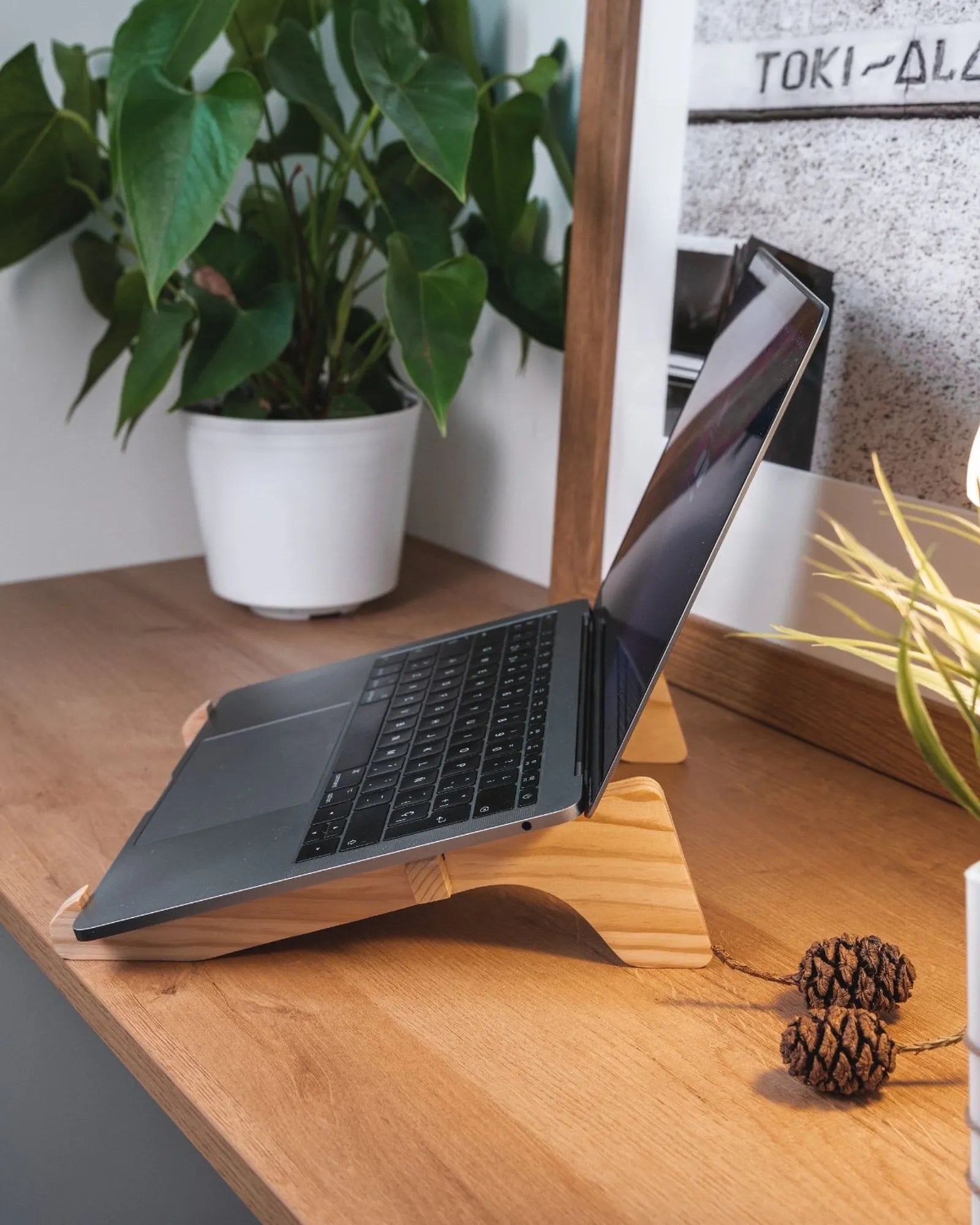
The Altxa raises a laptop screen towards eye level and is made from recycled wood reclaimed from discarded pallets. It is the piece in the range that a company can justify on ergonomics as well as on sustainability, which is a rare combination in promotional product.
Because it folds flat, it ships in an envelope-sized footprint rather than a box, and that changes the economics of a national mailing to home workers. It is also the reference most often ordered on its own, outside a pack, by companies equipping a hybrid workforce. It sits naturally with our branded eco laptop stands for buyers comparing formats.
Laser engraving is the natural mark on this one. The beam removes a shallow layer of timber and leaves a permanent burnt-in logo that cannot rub off, which suits an object handled every working day. Grain varies from plank to plank because the raw material is reclaimed, so the tone of the engraving will vary slightly across a batch. That variation is inherent to reclaimed timber and we would call it character rather than a defect, but you should see a physical sample before signing off a large run.
Small branded Ekomodo accessories: Diru, Begi, Apain and Jaso
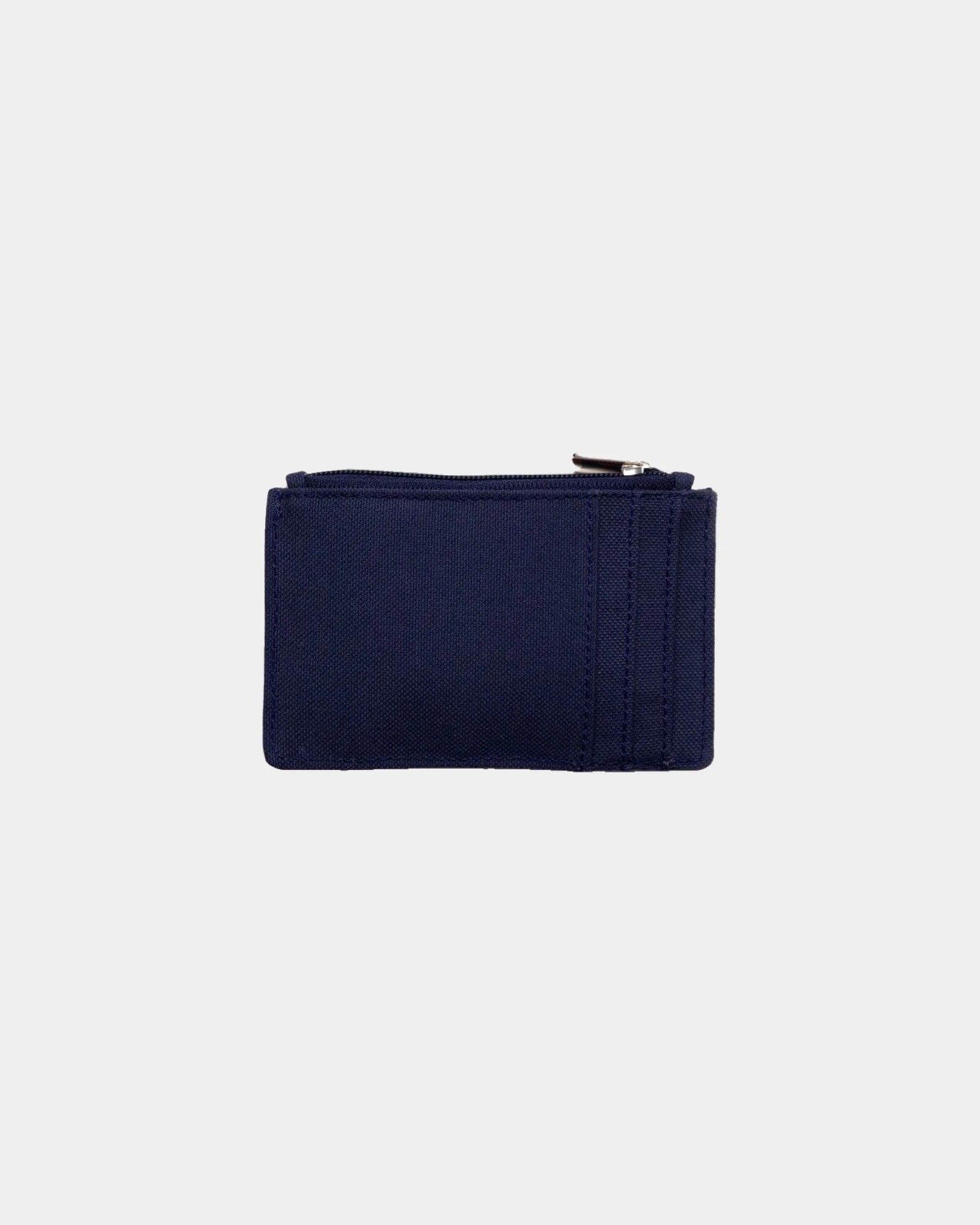
The Diru wallet is 100% recycled polyester made from a single plastic bottle, and it runs to seven colours: navy, black, yellow, green, garnet, clear blue and brown. It is compact, light and cheap enough to work as a volume item at a trade show without feeling disposable.
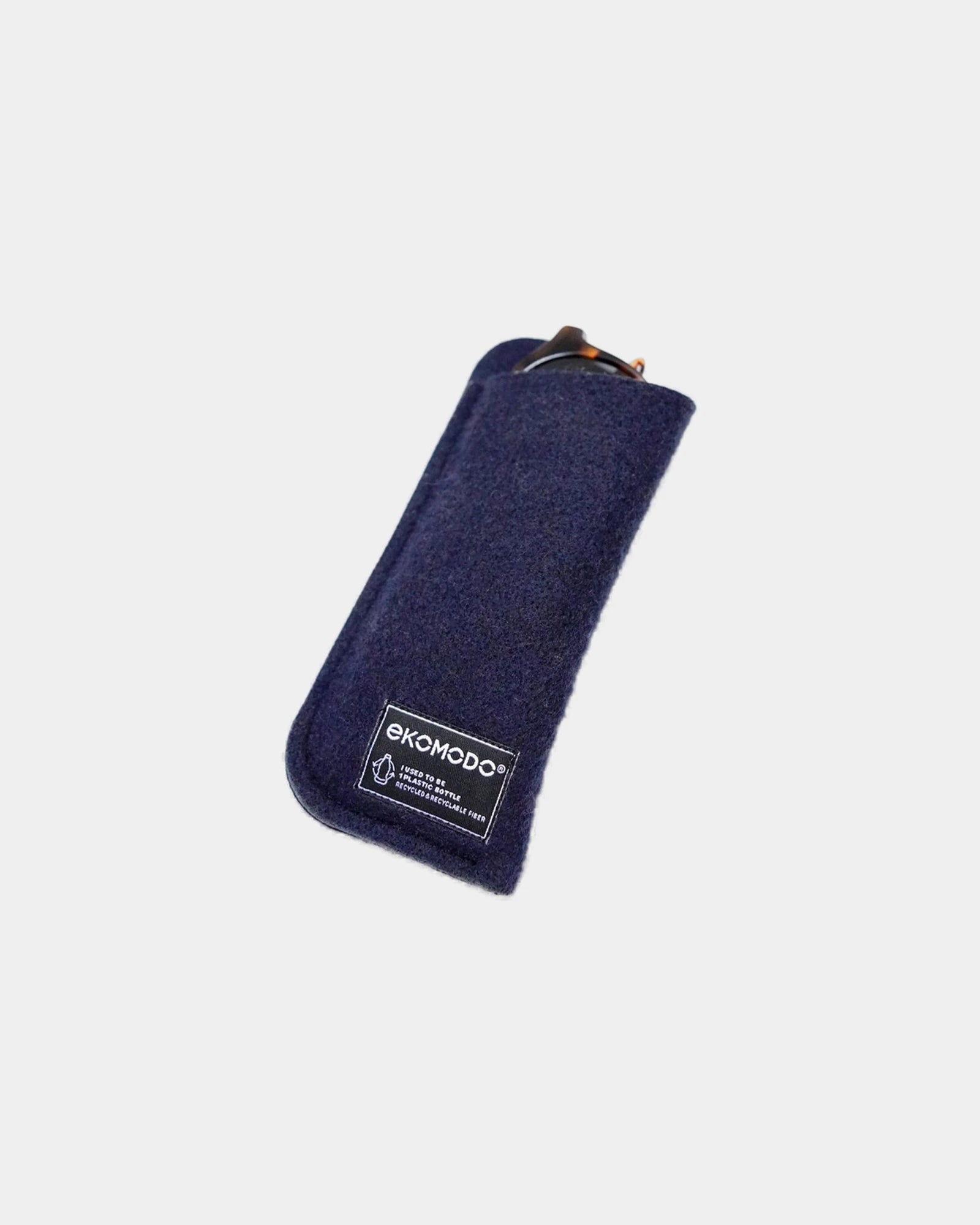
The Begi eyewear case is 100% recycled PET, with recyclable rubber detailing and a recycled label. It protects a pair of glasses in a bag, which makes it one of the few promotional items with a genuine daily function for the half of your audience who wear them.
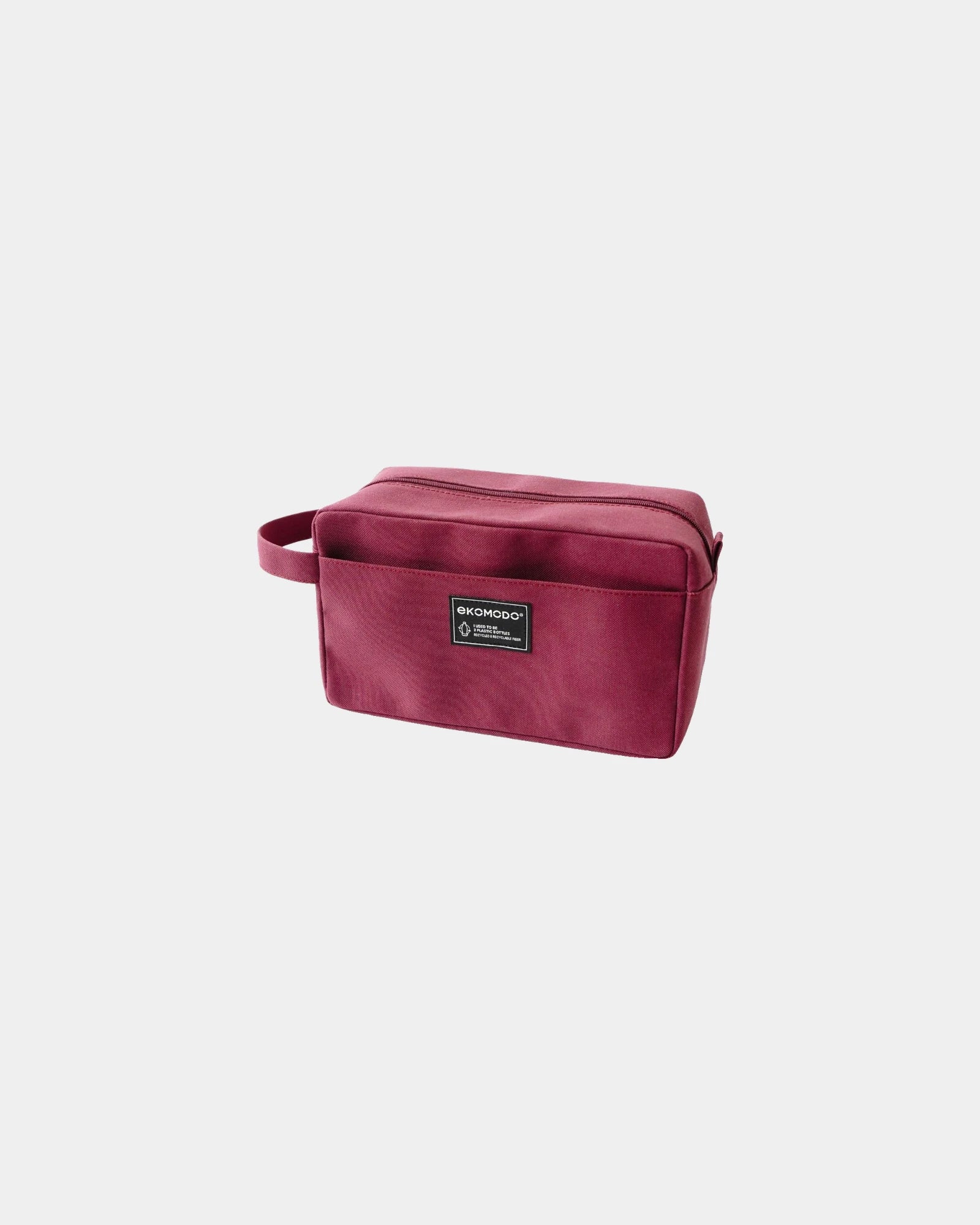
The Apain wash bag is 100% recycled PET built from four plastic bottles, in navy, garnet or green. It is the travel piece of the range and a natural companion to our European made wash bags. The Jaso basket, in 100% recycled PET from twelve to twenty bottles, is the largest, and the one Ekomodo backs with Global Recycled Standard traceability.
Marking methods that work on recycled materials
The table below sets out what each reference is made from and which waste stream it comes from. Use it as the basis for a specification, and ask us for the marking recommendation reference by reference.
| Reference | Material stated by Ekomodo | Waste it comes from |
|---|---|---|
| Hazi 13in sleeve | 100% recycled PET | 15 plastic bottles |
| Lapatx 13in sleeve | 100% recycled polyester fibre | 15 plastic bottles |
| Apar 13in sleeve | Recycled polyamide | Post-consumer polyamide |
| Lehor 13in sleeve | 900D recycled polyester, water-repellent | Post-consumer polyester |
| Apain wash bag | 100% recycled PET | 4 plastic bottles |
| Jaso basket | 100% recycled PET | 12 to 20 plastic bottles |
| Diru wallet | 100% recycled polyester | 1 plastic bottle |
| Altxa laptop stand | Recycled wood | Discarded pallets |
Embroidery is the premium finish on the textile references. It reads as a garment mark, it survives years of handling, and on recycled felt it holds a stitch cleanly. Digital transfer covers the cases where a logo has gradients or more colours than a thread chart can carry, and it leaves the fabric unperforated. Laser engraving belongs to the Altxa stand and to the wooden element of the Tanta coasters.
Pad printing has a narrower role here: the rubber detailing on the Hazi accepts a coloured mark, which is how Ekomodo itself finishes that reference. It is a small surface, so it suits a logo mark rather than a full lockup with a strapline.
What we do not claim about branded Ekomodo items
Recycled feedstock is not colour-stable in the way virgin fibre is. Bottle stock varies by collection batch, so a colour can shift slightly between one production run and the next. We will not promise you an exact Pantone match across two orders placed six months apart, and any supplier who does is guessing.
We do not state a laundering or abrasion rating for these references, because Ekomodo does not publish one and we will not invent it. If your specification requires a tested figure, that has to come from the maker in writing before you commit.
Global Recycled Standard traceability is stated for the Jaso basket. It is not a blanket claim across the range, and we will not let it be presented as one in your internal documentation. Ask reference by reference and you will get an answer reference by reference.
Building a welcome pack around personalised Ekomodo products
A first-day pack has to do two things: equip the new joiner and communicate what the company values. The range does both at once, because the sustainability story is in the object itself rather than on a card beside it.
The combination that works most often is a 13 inch sleeve, the Altxa stand and the Tanta coasters. That covers the laptop, the posture and the desk, and the three pieces read as a set because they share a material language. Add the Diru wallet if the budget allows a fourth item. Our branded welcome packs hold the boxes and the assembly.
For a client-facing gift rather than an internal pack, the Jaso basket works as the container: fill it, brand the felt, and the packaging becomes the second gift instead of becoming waste. That approach sits with our branded eco gift sets and it removes a layer of cardboard from the equation.
Lead times and quantities for a branded Ekomodo order
Plan on four to five weeks from artwork approval for a standard marked order, and longer in the September to December window when every buyer in the country is queuing for the same embroidery machines. If your delivery date is fixed by an event, tell us the date first and we will work backwards from it.
Minimum quantities differ by marking method rather than by product. Embroidery is viable from small runs because the cost sits in the digitising of the file, which is paid once. Screen and transfer work benefit from volume. Laser engraving on the Altxa is economical from modest quantities because there is no tooling to make.
We produce a proof before anything is marked. On reclaimed wood in particular, a physical sample is worth the two days it costs, because a digital mock-up cannot show you how the grain will read under the engraving. Buyers comparing these against other formats often look at our branded computer accessories at the same time.
A Basque brand: where Ekomodo products are made
Ekomodo is a Basque company and its products are made in Spain. That is the whole of the origin claim and we do not stretch it further, because a supply chain statement is only useful if it is exact.
For a British buyer the practical consequences are short transport distances inside Europe, a single regulatory environment for the materials, and a manufacturer who can be contacted in the same working day. Compared with a container arriving from another continent, that shortens the response time when a batch has to be re-run.
It also makes the recycled claim easier to trust. Post-consumer bottles collected and reprocessed within Europe do not travel around the world to become a laptop sleeve, and the arithmetic of the fifteen bottles stays local. That is the argument we would put in front of a sustainability committee, and it is the argument that tends to close the file. Buyers pairing these with electronics often review our branded tech gadgets before finalising a pack.

