

Branded jute bags
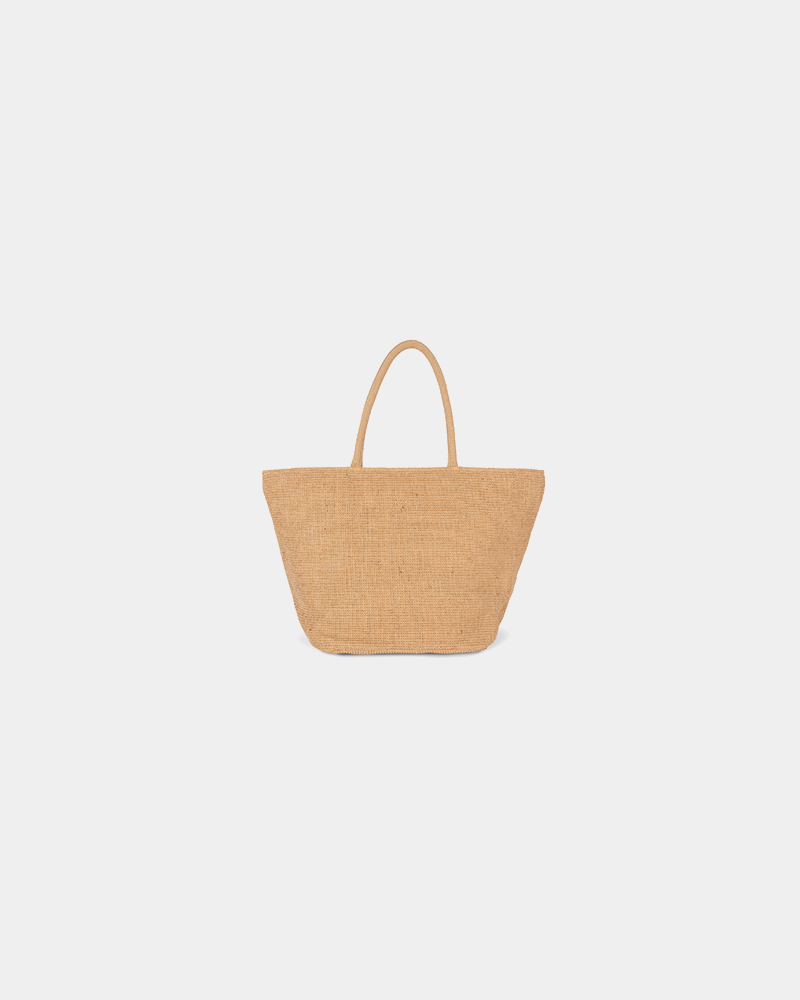


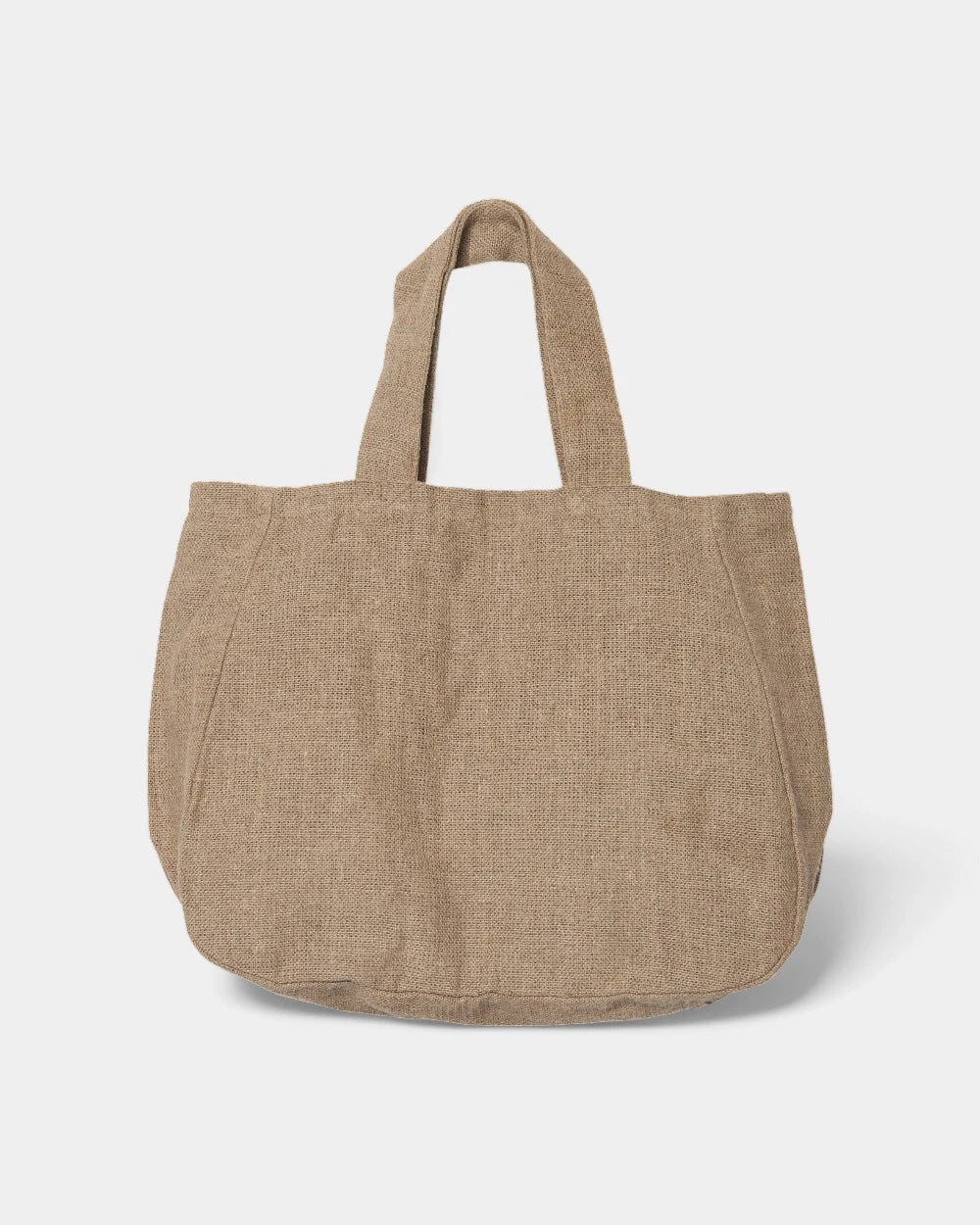


Treat your clients and employees!

FAQ - Personalised jute bags
Trusted by 1,000+ companies
What jute is, and why it suits Promotional jute bags
Jute is a bast fibre spun from the stalk of the jute plant, woven into the rough hessian, or burlap, you know from sacks and garden twine. That coarse weave is exactly why a deli, a farm shop or a wholefoods brand reaches for it: the cloth looks honest and rustic on a counter.
The trade-off sits in the weave. Jute is thicker and more open than cotton, so it carries weight and structure well but resists fine detail under a screen. A bold, simple logo lands cleanly; a four-point serif or a thin gradient fights the texture.
Juco, a jute-and-cotton blend, smooths the surface a little and softens the hand, which is worth knowing before you commit. We talk through the fibre first because it decides almost everything downstream, from the print method to the handle the bag can take.
Laminated or unlined: the structural choice for Custom jute bags
What a PP lamination adds and costs on custom jute bags
A market trader selling loose veg and a wedding planner filling favour bags want opposite things from the same fibre. The deciding spec is the lining. A laminated jute bag carries a thin PP film bonded to the inside face. That film stiffens the panel, keeps the weave from shedding and wipes clean of a spilled jam jar.
Unlined natural jute is softer, more breathable and the more obviously eco option, since there is no film to consider at end of life. It suits dry goods, gifting and favours where the bag is admired rather than scrubbed.
Personalised luggage tags finish a laminated jute travel or welcome bag neatly, tying a name to the carrier without printing extra detail onto the coarse weave itself.
Lamination also changes how the bag prints and stands. The filmed surface holds a screened logo crisper and lets the bag keep its shape on a shelf; unlined jute slumps a touch and reads softer. We mock both on one proof so you judge structure and finish together, not in the abstract.
| Build | Surface | Best for | Eco note |
|---|---|---|---|
| Laminated PP | Stiff, wipeable | Food retail, weekly shop | Film complicates recycling |
| Unlined natural | Soft, breathable | Gifting, favours, dry goods | Simplest end of life |
| Juco blend | Smoother weave | Premium retail, crisper print | Cotton softens the fibre |
| PP-backed base | Reinforced bottom | Heavy loads, standing open | Adds rigidity, small weight |
Handles change how your Promotional jute bags carry and read
Picture a customer walking out of a farm shop with a full bag of jars and a loaf, the kind of load promotional jute bags are built to take. That load wants a thick rope handle, twisted from natural cordage, which grips the hand and matches the rustic look. Rope is the signature jute closure for a reason.
Cane or bamboo handles lift a jute bag into gift and boutique territory, giving a rigid, basket-like top that suits a hamper or a homeware brand. Cotton webbing handles, by contrast, sit flatter and quieter for a plainer promotional shopper.
Short handles around 28-30cm are hand-carry only and tidy on a favour bag. Longer rope or webbing near 55-65cm clears a shoulder and a coat for an event giveaway. We match the handle to the load and the setting rather than defaulting to one style.
| Handle | Look | Carry | Best for |
|---|---|---|---|
| Natural rope | Rustic, twisted | Grips under load | Farm shop, weekly shop |
| Cane / bamboo | Rigid, basket-like | Top-carry, structured | Hampers, homeware gifting |
| Cotton webbing | Flat, understated | Even, comfortable | Plain promotional shoppers |
| Self-fabric jute | Matches the body | Lighter loads | Favours, gift pouches |
Printing on the coarse weave of Custom jute bags
Holding a logo on the open weave of promotional jute bags
Screen printing is the workhorse for promotional jute bags. It pushes opaque ink across the surface and the plate cost spreads thin above a few hundred units, so the price per bag falls fast on a real run. The catch is the texture: the open weave swallows fine lines and tight registration.
That coarse surface sets honest limits. Hold logos to bold shapes and solid blocks, keep lettering generous, and treat two well-chosen spot colours as the sweet spot. A four-colour crest with hairline detail will not hold on jute the way it does on smooth paper.
Printed Cotton Bags are the better base when artwork carries photographic colour or very fine type, since cotton takes detail the jute weave simply cannot resolve.
On unlined jute, a light ink on the natural golden ground gives the highest contrast and the most authentic look. Where a brand needs a tighter, sharper mark, a printed cotton patch can be sewn to the front panel, carrying the fine detail while the bag keeps its hessian body.
| Method | Surface | Detail it holds | Best quantity |
|---|---|---|---|
| Screen print, natural | Unlined weave | Bold blocks, large type | 200-2,000+ |
| Screen print, laminated | PP film face | Crisper edges | 200-2,000+ |
| Sewn cotton patch | Smooth cotton | Fine type, gradients | 50-1,000 |
| Woven label | Tape or fabric | Small repeat logo | 100-1,000 |
Natural versus dyed Custom jute bags on the shelf
The default jute bag is its own undyed golden-brown, and for most rustic brands that raw colour is the selling point. It reads artisanal next to a deli counter and needs nothing but a one-colour logo to look finished.
Jute can be piece-dyed to a requested shade, typically above a 500-unit threshold, when a brand colour has to run right through the cloth. Stock coloured options in natural, black and a few core tones cover smaller runs without the dye minimum.
Contrast decides the pairing. A black-dyed jute bag with a white logo cuts through a busy market; a natural bag with a deep brand-coloured mark stays soft and boutique. We match the base and ink to the setting the bag will sit in, not to a house default.
Sizes and capacity across the Promotional jute bags range
A wedding favour pouch and a weekly-shop carrier are the same fibre at very different scales. Small jute gift bags run roughly 15 x 20cm for a few sweets or a soap. Mid shoppers sit near 30 x 35cm. Large jute shoppers reach about 35 x 40cm with a deep base for a full grocery load.
A bottom gusset of around 10-15cm gives the bag depth, lets it stand open on a stall and turns it into a genuine reusable rather than a flat carrier. The deeper the base, the more the bag behaves like a basket.
Personalised backpacks take over when the contents need a structured, hands-free carry for tech or a commute, which a soft-bodied jute shopper is not built to offer.
We size to the loaded contents, not the empty outline. Tell us the heaviest realistic load, from a paperback and a candle up to a weekend's veg, and we spec the dimensions, the gusset and the handle to suit it.
| Format | Approx. size | Gusset | Best for |
|---|---|---|---|
| Favour pouch | 15 x 20cm | Slim | Weddings, sweets, soaps |
| Gift bag | 20 x 25cm | Small | Hampers, retail gifting |
| Mid shopper | 30 x 35cm | Medium | Everyday branded carrier |
| Large shopper | 35 x 40cm | 10-15cm base | Weekly shop, market hauls |
Care, shedding and the working life of Custom jute bags
Promotional jute bags that lose fibres over the first fortnight feel cheap, so the build matters more than the brochure shot. A tightly woven, well-finished jute bag sheds little; a loose, cheap weave leaves golden lint on dark clothing.
Jute does not love water. The fibre weakens when soaked and can mark, so an unlined bag is a dry-goods carrier first. A laminated face is the practical answer where damp produce or a leaking jar is a real risk on the weekly shop.
Sunlight slowly fades undyed jute over months of a sunny windowsill or a market stall, which is worth flagging for a bag that lives outdoors. None of this rules jute out; it simply sets where each build belongs, and we steer the spec to the bag's real working life.
Promotional jute bags as a retail and loyalty product
A wholefoods shop selling a branded jute bag at the till has turned packaging into a small margin and a walking advert at once. The natural fibre justifies a retail price in a way a thin plastic carrier never could, and the customer reuses it on every return trip.
Personalised Tote Bags sit alongside jute when a campaign wants a cotton, canvas or recycled rPET option to compare against the hessian look on the same brief.
Consistency is what protects a retail line. We keep an approved reference bag from the first run, so a reorder is checked for weave, colour and print placement against a physical object rather than a memory. That single step removes most of the drift brands notice between batches.
The eco story on Branded Eco jute bags, honestly framed
Grown as a fast annual crop, jute gives an unlined Branded Eco jute bag a credible answer to single-use plastic. Natural jute is biodegradable and compostable as a raw fibre, which is the genuine basis of its green appeal.
The honest caveat is lamination and ink. A PP-laminated jute bag carries a plastic film that complicates that end-of-life picture, and printing inks vary, so a blanket compostable claim does not hold across every build. We state what is true for the spec you choose, not a slogan.
Any certification appears only where the supplier documents it, on request and stated in the product spec. Juco and organic-cotton-blend variants are available the same way. We will not print a green claim we cannot evidence on a specific bag.
Promotional jute bags at event and giveaway volume
A 1,000-bag run for a food festival or a sustainability summit is where Promotional jute bags earn their keep. The natural fibre signals the values of an eco or artisan event better than a plastic carrier, and a delegate keeps it well after the day.
At this scale, a lighter unlined jute with a one or two-colour screen holds the unit price down. The bag still carries a programme, a sample and a water bottle through a long day. The bag then outlives the event and keeps the logo moving for months on a commute or a shop run.
Personalised lanyards commonly run in the same event kit, so a delegate carries the jute bag on the shoulder and the badge at the chest under one identity.
We can run a free sample so you check the weave, the handle and the print on a real bag before committing the full quantity. On a large jute order that single step removes most of the guesswork.
Wedding favours and welcome Custom jute bags
A hotel welcome desk handing each guest a small jute bag of local treats sets the tone before the first event begins. Favour-size jutes, printed with a couple's names or a date, have become a fixture of rustic and outdoor weddings precisely because the fibre matches the aesthetic.
Personalised sweets fill these favour bags neatly, pairing a branded confection with a hessian pouch a guest is happy to keep and reuse.
Scale and handle matter at this size. A rope-handled 15 x 20cm pouch suits a single favour; a slightly larger gusseted bag holds a full welcome pack of snacks, a map and a schedule. We keep the print bold so names stay legible on the coarse weave at small dimensions.
Quantities, lead time and durability for Promotional jute bags
Promotional jute bags reward volume the way most screen-printed products do. The plate cost spreads thinnest above a few hundred bags, while smaller runs stay viable on stock natural blanks with a one-colour mark. A low minimum keeps a small deli or a single wedding in reach.
Standard production runs to delivery in around three weeks. The timeline stretches as quantity climbs, and as piece-dyeing or a sewn cotton patch is added to a plain screen job. A 250-bag natural run clears faster than a 1,000-bag dyed order.
Durability tracks the handle join and the base. A rope handle bar-tacked into a reinforced bottom takes a loaded weekly shop for years; a lightly stitched favour bag is built for one gentle outing. We specify the reinforcement to match how hard the bag will work.
- Bold spot logos hold best on the coarse jute weave
- Laminated PP face wipes clean and stiffens the panel
- Rope, cane or cotton-webbing handles to suit the load
- Piece-dyeing typically needs 500+ units, stock colours fewer
- Sewn cotton patch carries fine detail jute cannot
- Gusset of 10-15cm lets a shopper stand open
Custom jute bags as a plastic-free packaging swap at the counter
A retailer moving away from single-use plastic carriers reaches for jute because the fibre reads as a credible alternative on a counter. A natural jute shopper hands a customer something worth keeping, where a thin plastic bag is binned within the day. The bag then doubles as a walking advert on every return trip, so the swap earns its keep beyond the checkout itself.
The build follows how the bag will be loaded. A laminated face wipes clean after a leaking jar and stiffens the panel so the bag stands open at the till, which suits a deli or a wholefoods counter. An unlined natural bag reads more obviously eco for a dry-goods or gift purchase. We steer the spec to the goods the bag carries rather than defaulting to one build for the whole shelf.
Consistency protects a packaging line that a customer sees every week. We hold an approved reference bag from the first run, so a reorder is checked for weave, colour and print placement against a physical object rather than a memory. That single step removes most of the batch-to-batch drift a retailer would otherwise notice on a recurring counter line.
Reinforced Promotional jute bags for heavy and repeat use
A bag sold as reusable has to survive a loaded weekly shop, so the reinforcement matters more than the brochure shot. The handle join and the base take the strain. A rope handle bar-tacked into a stitched, reinforced bottom carries jars and produce for years, while a lightly stitched favour bag is built for one gentle outing. We specify the reinforcement to match how hard the bag will work.
A bottom gusset and a PP-backed base do double duty here. The gusset gives the bag depth so it stands open like a basket, and a reinforced base stops a heavy load sagging the seam. On a market or grocery brief that rigidity is the difference between a genuine reusable and a bag that gives up after a month. We confirm the base build against the heaviest realistic load.
Weave quality decides shedding and the working life of the bag. A tightly woven, well-finished jute sheds little, where a loose cheap weave leaves golden lint on dark clothing and feels disposable. A free sample lets a buyer handle the weave, the handle and the base before committing. On a large order that removes most of the guesswork about how the bag will wear.

