

Promotional Canvas Jackets




Treat your clients and employees!

FAQ - Printed Canvas Jackets
Trusted by 1,000+ companies
What makes Branded canvas jackets different from a softshell or bomber
Printed canvas jackets are woven, not bonded. A softshell sandwiches a membrane and a bomber leans on a ribbed-hem fashion cut. A canvas jacket is one heavyweight cotton cloth that draws its toughness from a tight weave. That difference decides everything that follows, from how it ages to how it takes a print.
Cotton duck is the canvas of choice for workwear. The two warp yarns woven over a single weft give a dense, abrasion-resistant face that shrugs off a tool belt and a ladder rung. A 280 gsm canvas reads light and shirt-jacket; a 470 gsm duck reads proper site outerwear that stands up on its own.
The unlined build is the other marker. Most chore-cut canvas jackets carry no quilting and no lining, so they layer over a hoodie in autumn and strip back to a single shell in spring. That range is why a trade crew can wear one across three seasons.
The chore-coat cut and why the square shape suits Custom chore jackets
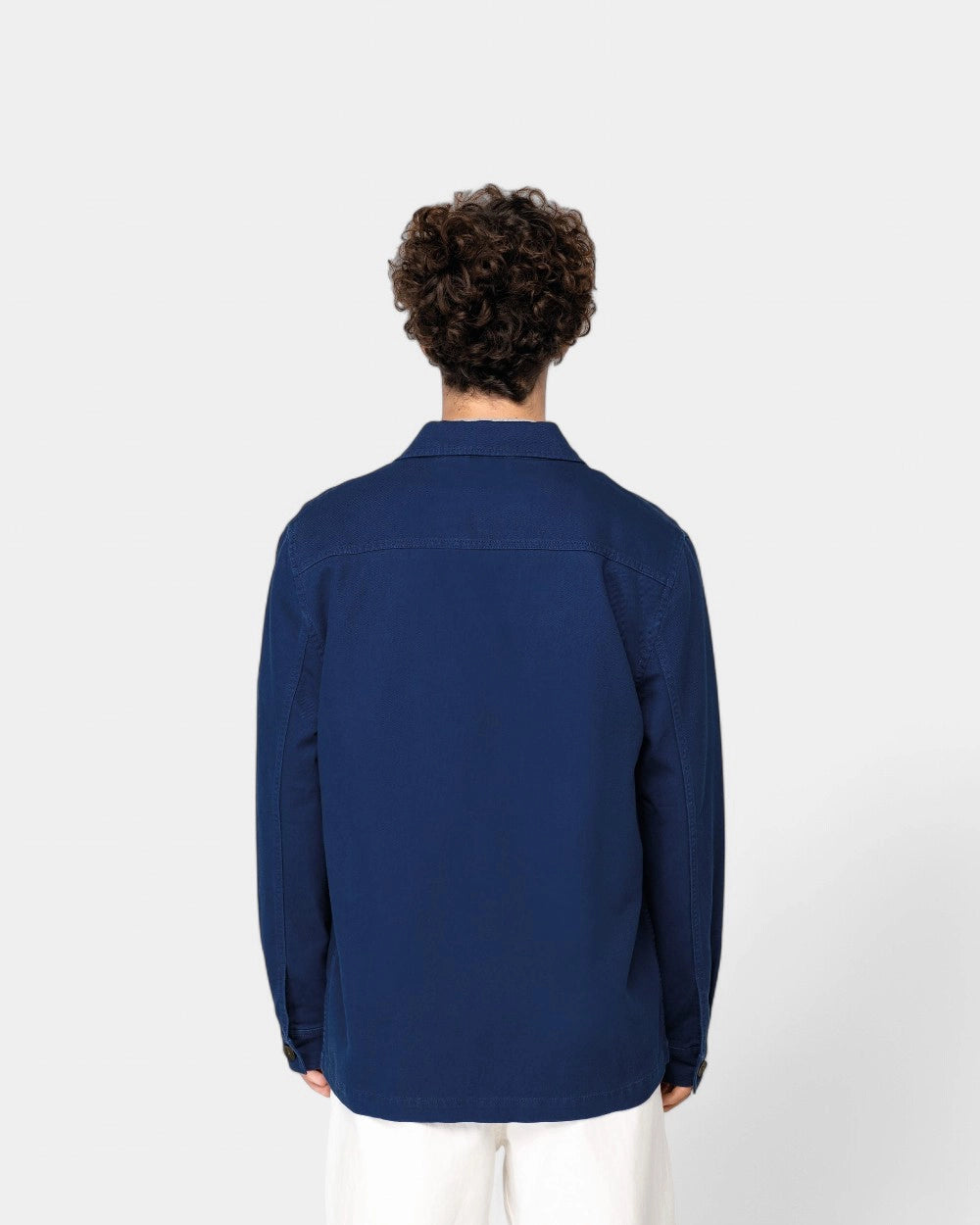
The chore coat kept the honest shape it was born with: a straight body, a flat collar, a button or stud front and a generous armhole. That armhole lets a fitter reach overhead without the hem riding up. The square cut is what separates a canvas jacket from a tailored corporate shell.
Roominess is deliberate, not loose tailoring. The cut is sized to go over a mid-layer, so a 470 gsm duck chore worn over a fleece needs the room a slim shell never offers. Size the team curve one step up if your crew layers heavily through winter.
Because the front panels are flat and the collar sits low, the chore coat presents a clean canvas for branding from chest to hem. Embroidered Jackets sit alongside this cut when a brief mixes a canvas chore coat for the workshop with a softshell for the client-facing half of the team.
| Canvas weight | Hand and drape | Best use |
|---|---|---|
| 280-320 gsm cotton drill | Soft, shirt-jacket feel | Hospitality, retail floor, events |
| 330-400 gsm cotton canvas | Firm, holds its shape | Light trades, studio, heritage brands |
| 410-470 gsm cotton duck | Stiff, stands alone | Joinery, groundwork, hard-wear sites |
| Waxed cotton (over canvas) | Weighted, weatherproofed | Outdoor crews, estate and event work |
Utility pockets and the hardware that signals working Personalised canvas jackets
A chore coat lives by its pockets. The classic layout runs two large lower patch pockets sized for a notebook or a tape measure, plus a chest patch or napoleon pocket for a phone. A sleeve or interior pencil pocket often joins them. Patch pockets sit flat on the cloth, so they take a small badge cleanly.
Hardware reads as much as the cut. Corozo or metal buttons, a stud front or a chunky moulded zip tell a wearer the jacket is built for the workshop, not the wardrobe. A triple-stitched or bar-tacked pocket mouth is the detail that stops a loaded pocket tearing out on month two.
Pocket placement also steers decoration. A chest patch pocket carries a left-chest logo or a name tab neatly, while keeping the broad back free for the larger mark. Embroidered workwear pairs with the chore coat when a site crew needs matching trousers and hi-vis under the same brand.
The broad back panel: the best print surface on Branded canvas jackets
Why the vent-free back suits Branded canvas jackets
The flat, wide back of a chore coat is the single largest uninterrupted surface in branded outerwear. No vents, no bonded seams and no ribbing cross it. A back design of 25 to 35 cm therefore reads as full signage across a workshop floor or a festival build crew.
Cotton canvas is a forgiving substrate. Screen printing lays down dense, opaque colour on the smooth duck face, which is why a bold single-colour trade logo prints sharp and durable on canvas. The natural fibre holds the ink rather than sitting it on a slick technical face.
Embroidery suits the heavier ducks particularly well, because the firm cloth supports a dense stitch without puckering. A worked back logo on a 470 gsm canvas holds its shape through years of laundering, where the same stitch on a thin shell would distort. Branded canvas jackets earn their best return from this back panel, since no other outer layer offers the same uninterrupted field.
| Method | Best for | Notes on canvas |
|---|---|---|
| Screen print | Bold logos, back panels, large runs | Dense opaque ink on smooth duck face |
| Embroidery | Chest badges, names, heritage look | Firm 400 gsm-plus canvas supports stitch |
| DTG / digital | Photographic or multi-colour art | Suits lighter 280-320 gsm drill faces |
| Heat-applied tab | Sleeve names, small numbers | Press carefully on waxed finishes |
The waxed-cotton option and what it adds to Branded canvas jackets
A waxed finish turns a fair-weather chore coat into a genuine outdoor jacket. The cotton is impregnated with a paraffin or beeswax dressing that beads off rain and blocks wind. An estate team or an event build crew then gets weather cover without a synthetic shell.
Wax changes the care and the look. The finish develops a lived-in patina and can be re-waxed every season or two to restore the water repellency. That makes a waxed canvas jacket a re-proofable garment rather than a disposable one. State the brief and we confirm whether the base is wax-ready before stitching.
Heat-applied marks need care on a waxed face, so a printed or embroidered logo is the safer route on this finish. Branded Padded Jackets cover the colder, wetter end of a winter brief when a waxed chore coat alone runs short on warmth.
Where Personalised canvas jackets fit: trades, heritage retail and hospitality
Three buyer worlds drive orders for Printed canvas jackets. A joinery or landscaping firm wants a 470 gsm duck that survives a working week. A heritage or craft-led retail brand wants the chore-coat silhouette as a styled uniform. A bar, brewery or food-market crew wants a mid-weight canvas that reads characterful behind a counter.
Event and festival build crews are the fourth case, and the broad back earns its place there. A 200-strong build team in branded chore coats turns the back panel into wayfinding signage that a lanyard never matches across a busy site.
The chore coat also crosses into trade-show staffing for brands that want a maker, not a corporate, look. Embroidered fleeces sit under an unlined canvas jacket as the warm mid-layer when a stand runs cold. Custom chore jackets read as a craft uniform on a stand, which is precisely the look a maker-led brand wants over a corporate softshell.
| Team | Recommended canvas | Branding lead |
|---|---|---|
| Joinery and groundwork | 410-470 gsm cotton duck | Back logo plus chest name |
| Heritage and craft retail | 330-400 gsm canvas | Subtle embroidered chest badge |
| Bar, brewery, food market | 280-320 gsm drill | Printed chest plus apron match |
| Event and festival build | Waxed or 400 gsm canvas | Large printed back panel |
Durability: why Custom chore jackets outlast a technical shell on site
Cotton duck wears in rather than wears out. A bonded technical shell delaminates once the membrane fails. A canvas jacket has no membrane to fail, so it softens and frays gracefully across years of laundering instead of giving up at once.
Reinforcement points decide the lifespan. Bar-tacked pocket corners, a double-layer elbow or shoulder yoke on the heavier ducks, and a triple-stitched main seam matter most. These construction details keep a working canvas jacket on the back rather than in the bin. Order a free sample first and inspect the seam build on the actual cloth ahead of committing a run.
Cotton does shrink on a first hot wash, so the team curve should plan for it. We advise a cold wash and a hang dry, which keeps both the fit and a screen print intact for the working life of the jacket. Branded canvas jackets outlast a bonded shell on site precisely because there is no membrane to delaminate.
Breathability and the all-day comfort of natural-fibre Personalised canvas jackets
Printed canvas jackets breathe where a bonded shell traps heat. A worker on a warm site or a chef on a busy line stays comfortable in canvas because the natural fibre wicks and vents. The chore coat then stays on rather than coming off by mid-morning.
That comfort is why the unlined chore coat suits indoor-to-outdoor roles. A brewery floor, a workshop and a market stall all swing between warm and cold across a shift. A single breathable canvas layer copes better than a sealed technical jacket that needs taking off indoors.
Where canvas gives ground is a hard, open wind. A dry, unwaxed duck blocks a breeze but lets a strong gust cut through, so an exposed moving role wants the waxed base or a fleece beneath. We raise this whenever a brief points to open ground instead of shelter.
| Layer | Strength | Where it falls short |
|---|---|---|
| Cotton-canvas chore coat | Tough, breathable, big print area | Not rainproof unless waxed |
| Softshell | Wind and shower resistant | Smaller print area, no heritage look |
| Padded jacket | Warmest, traps loft | Bulky, baffles complicate print |
| Fleece | Soft mid-layer warmth | No wind block, no structure |
Colour, raw canvas and keeping a logo legible on Custom chore jackets
Canvas takes a brand palette in muted, workwear-honest tones. Natural ecru, stone, sand, olive, navy and black are the dependable chore-coat shades, and a raw undyed canvas reads craft and heritage where a bright shade would read corporate.
Contrast is what carries the badge. A tonal embroidery on stone canvas looks discreet and considered, while a high-contrast back print on navy duck reads as signage from across a yard. The fibre content and any organic-cotton or finish claim is printed on each canvas base's tech pack, and we send that document for the exact line you pick.
A raw or garment-dyed canvas will shift slightly batch to batch, which is part of the natural-cotton character rather than a fault. Flag a strict corporate-match brief early and we steer you to a stable dyed base instead.
Sizing a mixed crew in Branded canvas jackets and the unisex question
The chore coat is built as a unisex block in most ranges, cut straight through the body. That suits a mixed trade crew, but a styled retail or hospitality uniform may want a tailored women's option, so confirm whether the line offers both before sizing.
Layering drives the curve. A canvas jacket meant to sit over a hoodie should be sized against the real winter kit beneath it. A 470 gsm duck for site work runs a size up from the summer shirt-jacket fit. Custom Hoodies make the natural mid-layer under an unlined chore coat for a cold-weather crew.
Sleeve length matters more on a working jacket than a corporate one, because a fitter reaching overhead needs the cuff to stay at the wrist. A buttoned or studded cuff lets staff adjust that themselves across a shift.
Quantity, runs and how a Branded canvas jackets order scales from a crew to a fleet
For Printed canvas jackets, a ten-piece order for a craft brewery and a five-hundred-piece order for a festival build are different jobs. A small run centres on getting the chore-coat fit and a clean chest badge right on a characterful garment. A large run turns on holding enough depth in every size and printing one identical mark across hundreds of back panels.
Screen-print setup is a one-off screen charge per colour, so the per-jacket cost on a big single-colour back logo falls sharply as the run grows. Embroidery digitising is a one-off too, after which the badge repeats identically on every coat. Expect a three-week window on stock-colour canvas from the moment artwork is signed off.
For a seasonal trade brief, the practical move is to lock artwork and sizing in late summer. A winter site crew then has its 470 gsm ducks before the cold sets in. Branded canvas jackets scale cleanly from a ten-piece brewery run to a five-hundred-piece build fleet on a single screen charge.
How we decorate your Personalised canvas jackets without compromising the cloth
Cotton canvas is a forgiving substrate, but a chore coat still earns its toughness from the weave, so we set the mark to suit the cloth rather than override it. The broad back takes a screen print or a worked embroidery, while the chest pocket carries a smaller badge. We keep the heavier work on the firm ducks that support it, so the branded canvas jackets you sign off still wear in rather than stiffen up.
Each method is matched to the canvas weight in front of it. Branded canvas jackets take the heavy work on the firm ducks that support it, never on a face too light to hold it. Screen print lays dense opaque colour on a smooth duck face for a bold back panel. Embroidery suits a 400 gsm-plus canvas that holds a dense stitch without puckering. DTG handles photographic art on a lighter 280 to 320 gsm drill. A heat-applied tab needs a careful press on any waxed finish, since the wax dressing reacts to heat. We confirm the route against your chosen base before a screen or a needle touches the cloth.
Caring for Custom chore jackets so the cloth and the badge both last
A canvas jacket rewards a gentler wash than its toughness suggests. Hot water shrinks raw cotton and fades a screen print, so a cold cycle protects both the fit and the logo. The cloth is meant to soften and patina, not to look box-fresh forever. Personalised canvas jackets keep both the cloth and the badge intact for years on this gentler routine.
- Wash cold and inside out to protect a screen-printed back panel
- Skip fabric softener, which flattens the canvas hand
- Hang dry rather than tumble to limit cotton shrinkage
- Re-wax a waxed canvas jacket each season to restore water beading
- Spot-clean a working jacket between full washes to spare the print
- Iron a chore coat warm, avoiding any embroidered or printed area
These habits keep a working canvas jacket honest across several years, which is what makes the chore coat the strongest-value layer a trade or craft team owns. Corporate Gift Boxes turn a branded chore coat into a presented welcome gift when a new starter or a partner crew joins the brand.

