

Branded fans
- Price, low to high
- Price, high to low


Treat your clients and employees!

FAQ - Personalised fans
Trusted by 1,000+ companies
Three powered formats inside the Printed fans range
The powered side of promotional fans breaks into three builds, and each suits a different moment in a recipient's day. A handheld unit travels in a bag, a neck unit frees both hands, and a clip-on desk unit settles by a monitor.
Handheld USB fans are the all-rounder. They weigh little, fold or telescope to pocket size on many models, and double as a torch or a small charge-out port on certain units. A commuter pulls one out on a packed train and your mark sits in full view.
Hands-free neck fans drape over the shoulders like headphones and push air up towards the face from twin vents. Site staff, festival crews and warehouse teams favour them because the wearer keeps both hands working through a long shift.
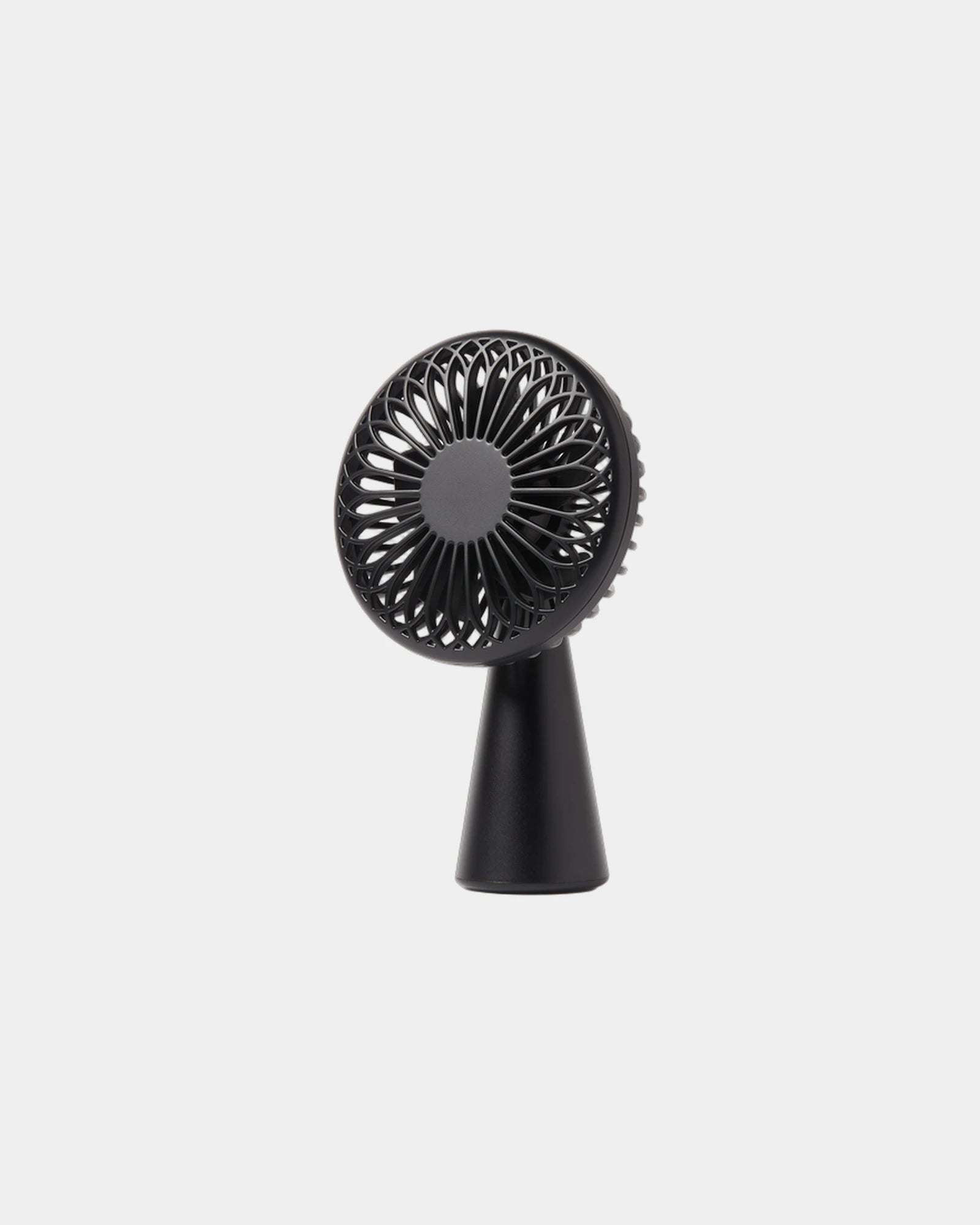
Clip-on and stand desk fans grip a shelf edge or sit on a base, aimed at one person at a workstation. This is the format that turns a summer mailer into months of steady desk visibility. If a fully analogue handout fits the brief better, the folding and rigid Custom Hand Fans route covers paper-leaf and card-paddle cooling instead.
| Trait | Powered mini fans | Folding or paddle fans |
|---|---|---|
| Logo dwell time | Weeks to months | Minutes to an hour |
| Typical minimum | A few hundred | Low thousands |
| Unit cost | Higher | Lowest |
| Print area | Compact logo block | Full leaf, both sides |
| Power source | USB-rechargeable cell | None, hand-waved |
Blade count, motor and airflow on promotional fans
Airflow is the spec a recipient judges first, and on these promotional fans it tracks blade count, blade pitch and motor speed together. A three-blade rotor moves air with a lower hum; a seven or nine-blade rotor pushes a softer, broader stream.
Handheld bladeless-style and ducted units exist too, drawing air through a shrouded impeller so no exposed blade reaches a child's finger. That guard matters when the fan goes to a family audience at a public open day.
Motor pitch sets the noise floor. A brushless motor on a mid-range unit runs quieter at full tilt than a cheap brushed one. That gap is worth checking if the fan will sit on a desk in a quiet office. We confirm the measured airflow band and noise figure on your chosen model before you order.
| Format | Worn or held | Typical blades | Best for |
|---|---|---|---|
| Handheld USB | Held or pocketed | 3 to 7 | Commuters, on-the-move gifts |
| Neck-hung | Worn on shoulders | Bladeless twin-vent | Festival crews, site staff |
| Clip-on desk | Clipped to a shelf | 5 to 9 | Office perk, workstation gift |
| Foldable handheld | Folds to stand | 3 to 5 | Dual desk-and-bag use |
USB charging, battery life and run time on branded mini fans
Battery capacity and run time on branded mini fans
Every powered unit here charges over USB-C or micro-USB from a laptop, a wall plug or a power bank, so a recipient tops it up anywhere. No proprietary dock means nothing to lose and nothing to replace.
Battery capacity sets the run time, and it spans a wide band by model. A small 1200mAh handheld might give a couple of hours on full power and far longer on its lowest setting. A 4000mAh neck unit can run most of a working day.
Charge time runs roughly two to four hours from flat on the common cells. Ship the units near-charged so the first impression at an event is a fan that works, not a flat one waiting on a cable.
Some handheld models add a pass-through port and act as a small emergency phone charger, a feature worth flagging to a commuter or festival audience. Branded power banks take that charging angle further when portable power is the real point of the gift.
Speed settings and controls across the Promotional fans line
On promotional fans, speed steps separate a token gift from a usable one. Entry units offer a single on-off, and mid-range gives two or three fixed speeds. Better neck and desk models add a stepless dial or a wind-simulation mode that pulses the airflow.
A worked case: a conference wants a VIP desk fan that stays unobtrusive during talks. That points to a three-speed clip unit with a near-silent low setting and an oscillation toggle, not a single-speed handheld that only roars.
Oscillation appears on some desk and stand units, sweeping the air across a wider arc so one fan serves a small group at a shared table. Touch buttons and a battery-level LED round out the controls on the upper models.
Build quality and the common failure points on cheap Printed fans
Common failure points on cheap branded mini fans
A powered fan that dies in week three damages the brand it carries, so build quality is not a luxury here. The first thing to fail on a budget unit is the USB socket, worked loose by repeated charging on a flimsy solder joint.
The second is the switch, which on the cheapest handhelds wears out after a few hundred presses. A recessed touch control or a sealed rocker lasts far longer than a bare push-button proud of the housing.
Blade rattle is the third, where a loose rotor buzzes against the guard once the bushing wears. We steer bulk orders towards units with a brushless motor and a moulded one-piece guard, since those outlast the throwaway tier a recipient quietly bins.
Lanyard, clip and stand options that extend Promotional fans
The mounting hardware decides how promotional fans are actually used, so it is part of the spec, not an afterthought. A wrist strap or a lanyard loop keeps a handheld to hand at a festival without a pocket.
A spring clip lets a desk unit grab a monitor edge, a shelf or a pram bar. A fold-out foot turns the same body into a free-standing fan. Many handhelds now fold at the neck so the head tilts up as a mini desk fan on a table.
A neck unit needs no mount at all, which is its whole pitch, but the band tension and the weight set how long a wearer tolerates it. Check the strap width and the gram weight on the model if the fan will ride a recipient's shoulders all day.
Desk versus handheld versus neck: matching Printed fans to the user
The three powered fans serve three postures, and picking wrong wastes the gift. A desk unit suits someone seated all day, a handheld suits movement and travel, and a neck unit suits a job that needs both hands free.
Cost climbs roughly in that order too. A basic handheld is the cheapest entry into powered fans. A twin-vent neck unit with a larger cell costs more, and an oscillating desk fan with a stepless dial sits at the top. Match the spend to who receives it.
Audience seals the call. A press list or a board gift suits a low-noise desk unit; a field crew suits a rugged neck unit; a mass commuter mailer suits a slim folding handheld. The recipient's day decides the format before any spec does.
The print surface on a moulded Promotional fans body
Print methods for a moulded Printed fans body
Unlike a paper leaf, a powered fan presents a small, curved, moulded-plastic body, so the artwork works as a compact logo block rather than a full-bleed scene. Plan a clean one or two-colour mark sized to the housing, not a photographic spread.
Pad print suits the curved handle and base, laying ink onto a contoured surface that a flat process cannot reach. A wrapped vinyl label carries a multi-colour logo on the flatter barrel of a handheld or the band of a neck unit.
UV digital print handles a sharper, full-colour mark on the larger flat faces of a desk fan housing. Each method ties to the exact surface and curvature, so we match the process to your model and your logo's colour count.
Where a flat sticker reads better than a printed housing, a die-cut decal wraps the barrel cleanly. Custom stickers use the same vinyl logic if you have ordered branded labels before. Artwork approval lands within 24 hours of your files arriving, so colour is signed off before any run starts.
| Surface | Method | Colours | Note |
|---|---|---|---|
| Curved handle or base | Pad print | 1 to 2 | Reaches contoured plastic |
| Flat barrel or neck band | Wrapped label | Full colour | Carries a photographic logo |
| Flat desk-fan face | UV digital | Full colour | Sharpest large mark |
| Metal trim or clip | Laser mark | Tonal | No ink, permanent |
Summer events and office use that suit powered Printed fans
A delegate clips a branded desk fan to a monitor on the Monday after your trade show, and it runs there until September. That is a season of workstation exposure bought from one stand giveaway.
For an outdoor brief, the neck fan wins. Hand a festival pit crew or a marshalling team hands-free cooling and your logo rides every shoulder through a multi-day weekend in the sun. Branded lanyards often clip to the same crew kit, carrying accreditation beside the fan.
Indoors, a clip desk fan makes a strong summer staff perk or a client mailer that does not gather dust in a drawer. The use-case decides the format, and the format then decides the battery, the blade count and the print area in turn.
Lithium battery transport and safety for branded mini fans
Every powered fan holds a small lithium cell, so it ships under standard lithium-battery carriage rules rather than as a loose battery. We declare the watt-hour rating on the chosen unit and pack each one accordingly for freight.
Keep stock and shipments clear of extreme heat, and never store a flat unit long-term, since cells sit happiest part-charged. We supply the standard battery-care leaflet with bulk orders so recipients treat the fan correctly.
For a recipient on a long commute or an outdoor shift, run time is the deciding spec, so check it against the model before you commit a quantity. Custom Clothing shares the same summer-stand brief when crews need branded uniform alongside their cooling kit.
| Format | Typical capacity | Run time low speed | Charge time |
|---|---|---|---|
| Handheld USB | 800 to 1500mAh | Up to ~6 hours | 2 to 3 hours |
| Neck-hung | 2000 to 4000mAh | Most of a work day | 3 to 4 hours |
| Clip-on desk | 1500 to 3000mAh | A full afternoon | 2 to 4 hours |
| Foldable handheld | 1200 to 2000mAh | Several hours | 2 to 3 hours |
Greener choices and recycled content in Promotional fans
A powered fan is a kept object, so its sustainability case rests on durability and recharging rather than disposability. One well-made unit recharged all season replaces a stack of single-use throwaways at a desk.
Some housings now use recycled ABS or a wheat-straw composite, and packaging strips back to recycled card with no plastic blister on request. The recycled percentage shifts from mould to mould, so it is printed on each model's own tech card rather than quoted across the range.
- Recycled-ABS housing on selected handheld units
- Wheat-straw composite body for a low-plastic brief
- USB-C charging that reuses an existing cable
- Plastic-free recycled-card packaging on request
- Replaceable cell on certain desk models
- Laser mark that adds no ink to the housing
Use cases for Printed fans by sector
Different buyers reach for a powered fan for a different moment, and the format follows the moment. A conference team wants a quiet desk unit that earns months of workstation dwell. A festival operator wants a rugged neck unit that frees a crew's hands through a long shift. A commuter mailer wants a slim folding handheld that slips into a bag. Reading the sector first sets the battery band, the blade count and the print method before any colour is chosen.
The table below pairs each sector with the build that tends to suit it. Treat it as a starting point rather than a fixed recipe, since a small VIP run and a mass summer giveaway order very different formats from the same range. We confirm the run time and the noise floor against the use before the order is locked, so the fan reads as a working product rather than a token.
| Sector | Typical build | Why it fits |
|---|---|---|
| Conferences and events | 3-speed clip desk fan | Quiet low setting, season of dwell |
| Festivals and site crews | Twin-vent neck fan | Hands-free cooling on a long shift |
| Commuter and mass mailer | Slim folding handheld | Pockets small, travels in a bag |
| Office staff perk | Oscillating desk fan | Steady workstation visibility |
Quantity, proofing and freight planning for a Promotional fans order
Powered fans carry a higher unit cost than a paper handout, alongside a smaller, more realistic minimum. A run of a few hundred for a VIP or staff list is workable without festival-scale volume. Cost eases as the order climbs, though never to paper-fan levels.
Full-colour branded units usually need around two weeks from approved artwork, plus your shipping window, with longer lead on a recycled-housing or custom-colour run. Send print-ready vector files at the right size and approve the digital proof before any tooling moves.
Weight and bulk drive the freight here, since a powered fan with its cell is heavier and chunkier than a flat-packed leaf. Budget for higher carriage on a large run and factor it into the per-head figure early. Corporate Gift Ideas help you weigh a powered desk keepsake against a higher-volume handout when both compete for the same summer budget.
A late artwork change is the most common reason a fan order slips its event date, so lock the colour breakdown at proofing. Free samples of stock powered units are available, letting you test the airflow, the noise and the feel before you commit a full run.

