

Printed shirts
- Price, low to high
- Price, high to low
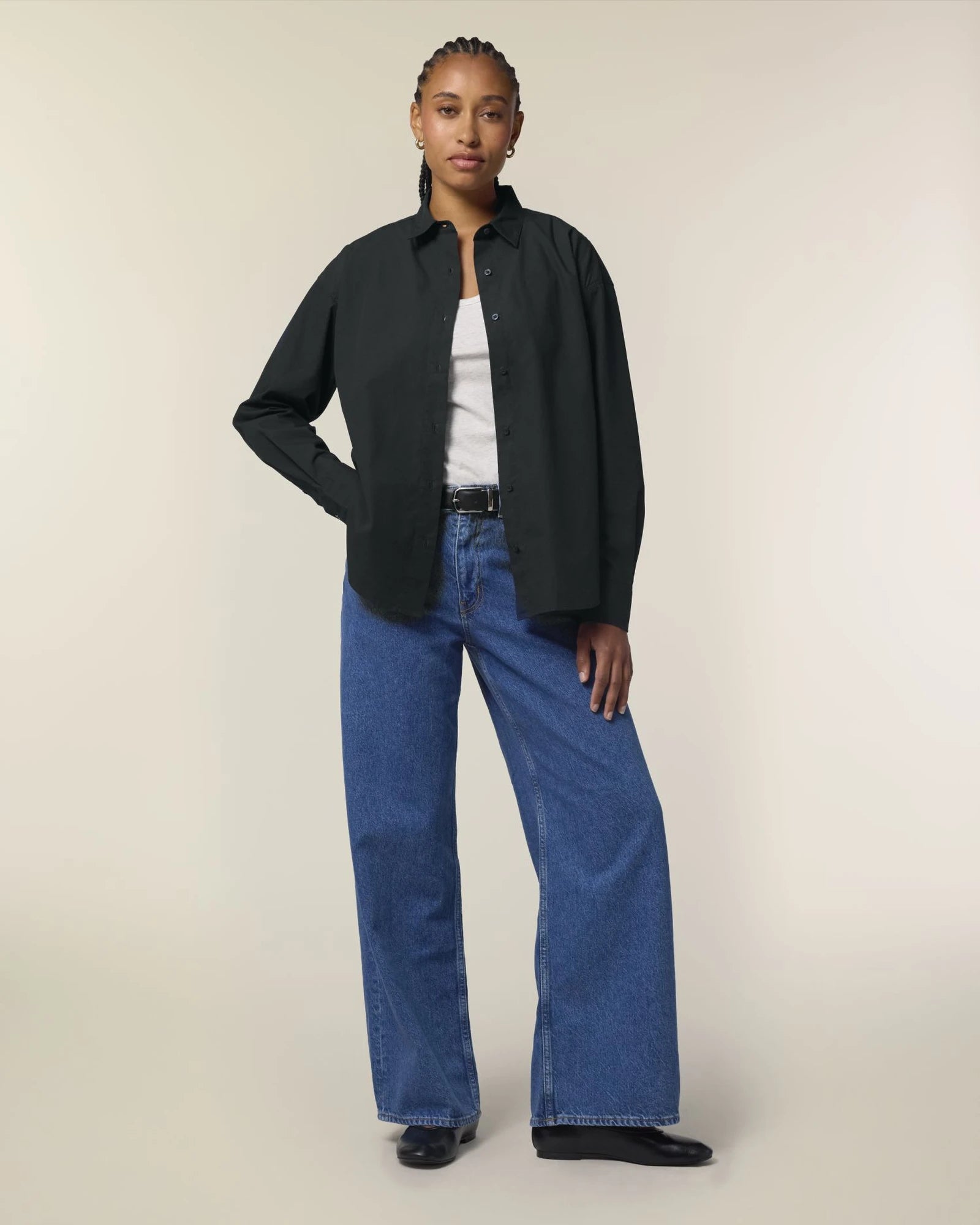


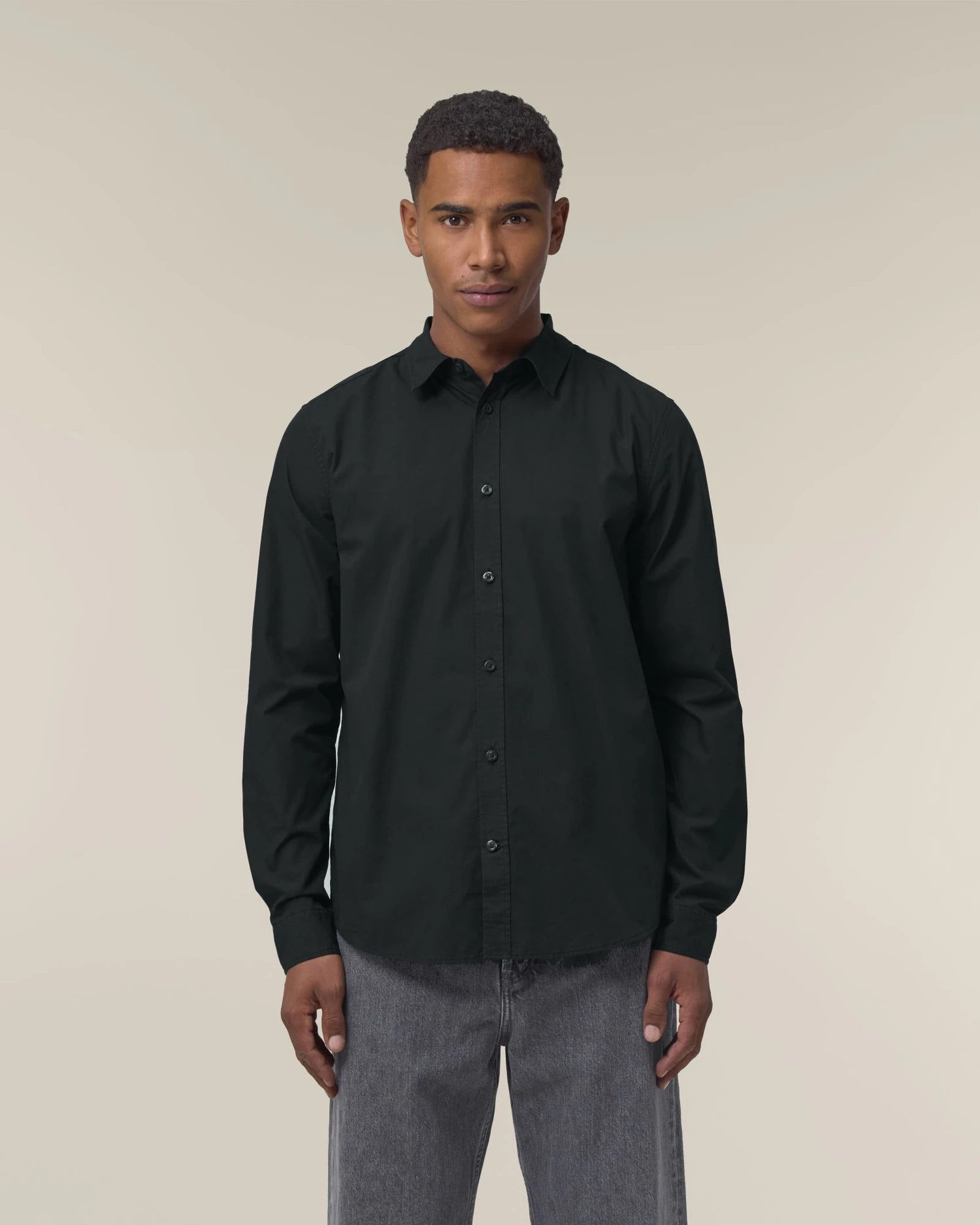


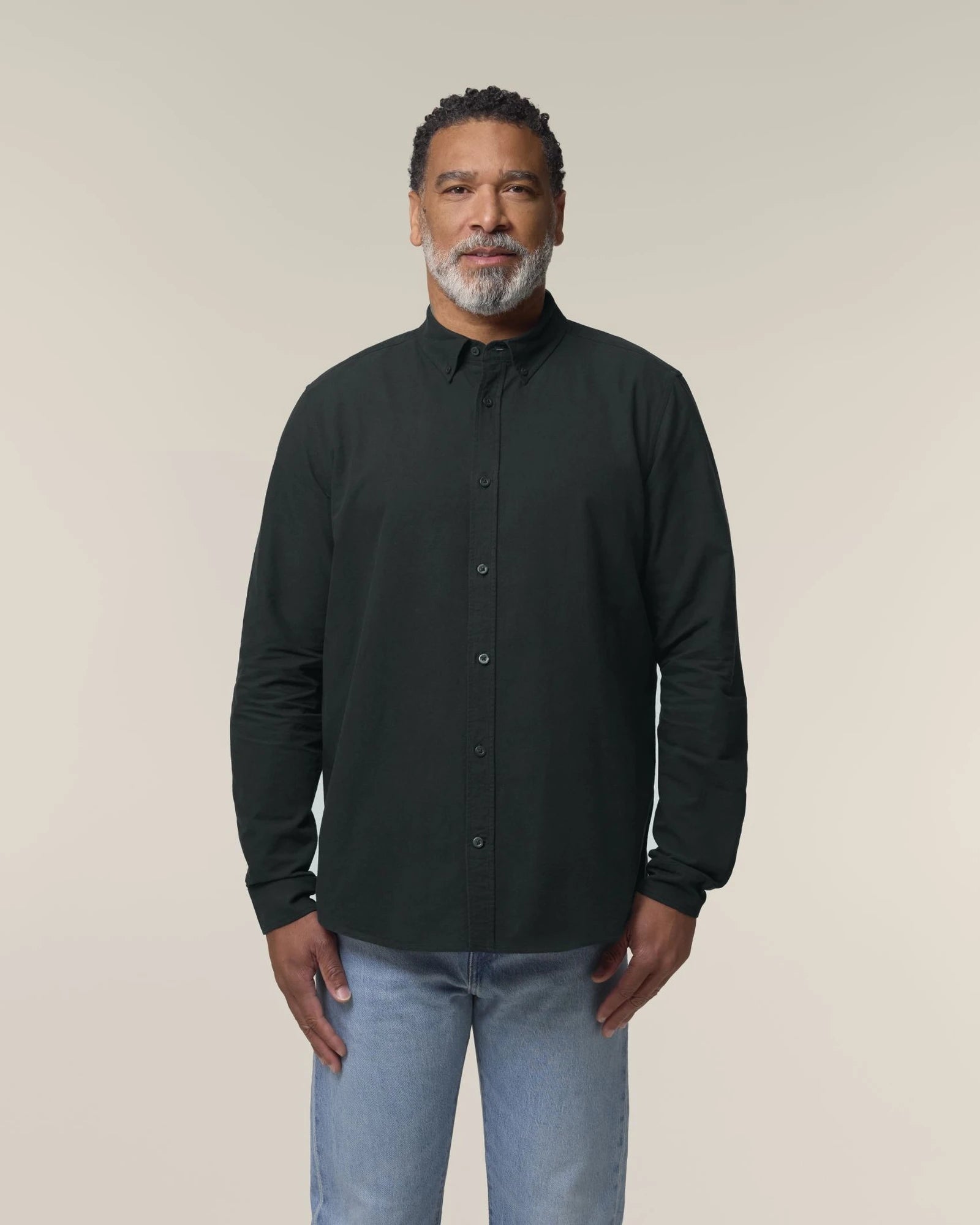


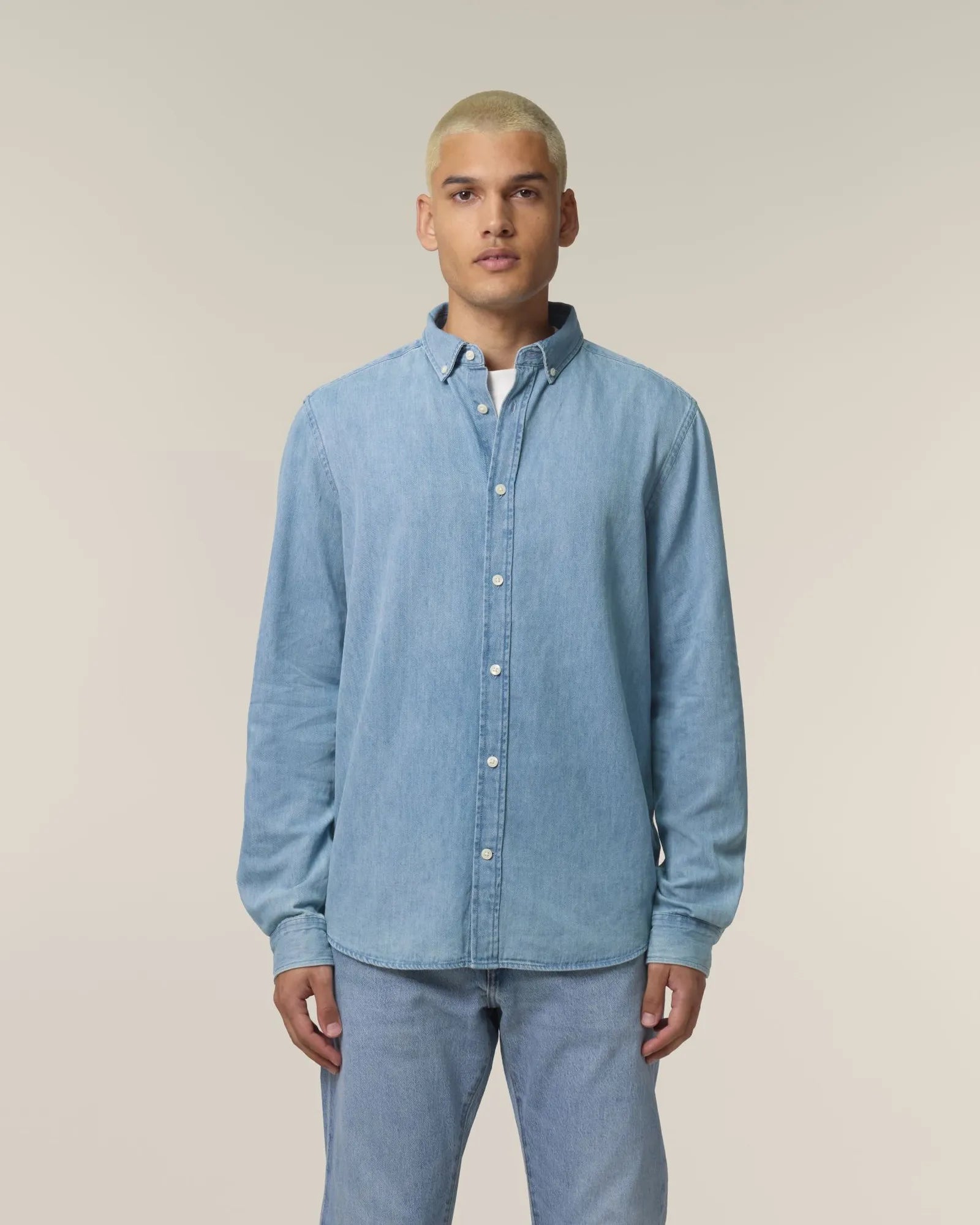


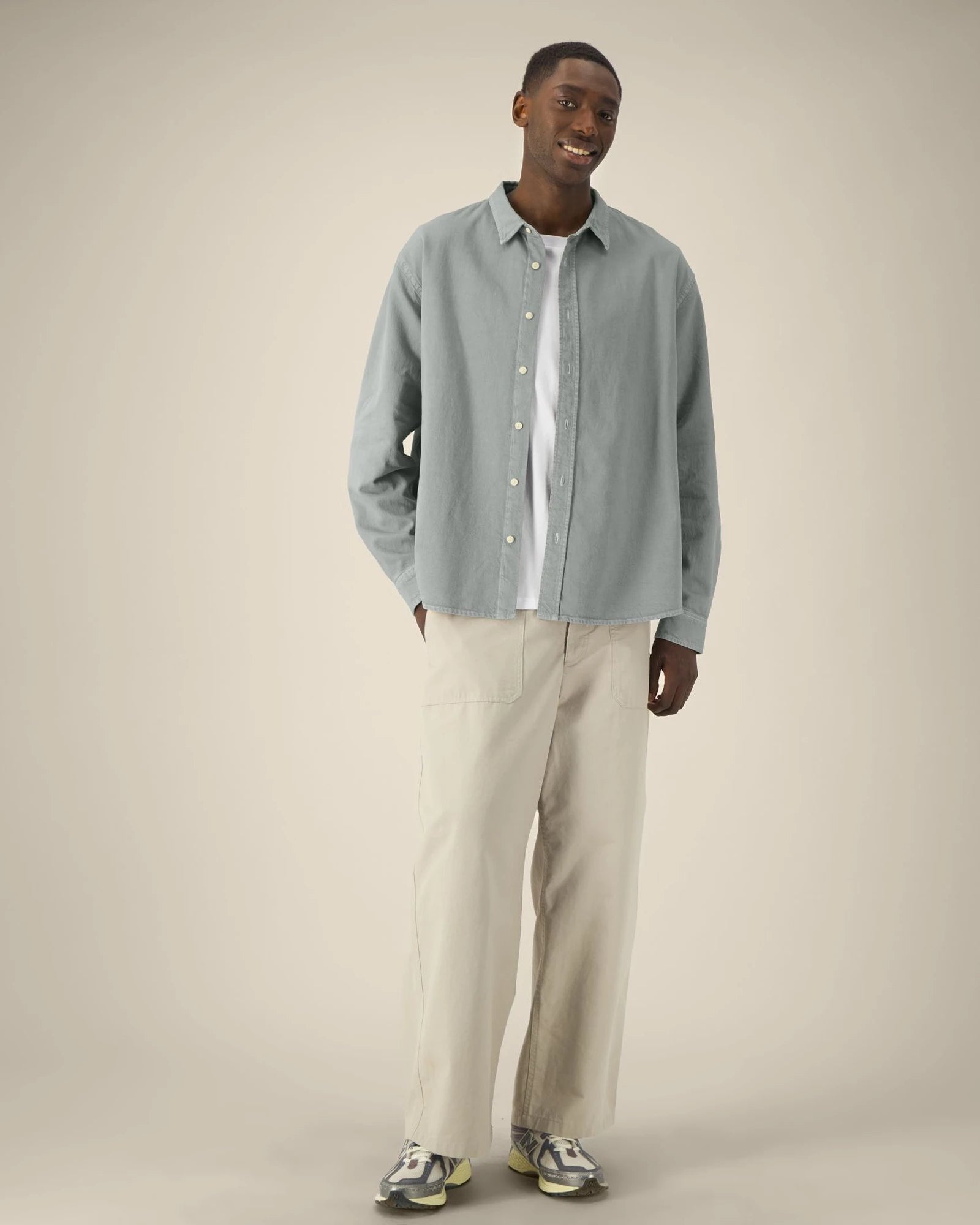


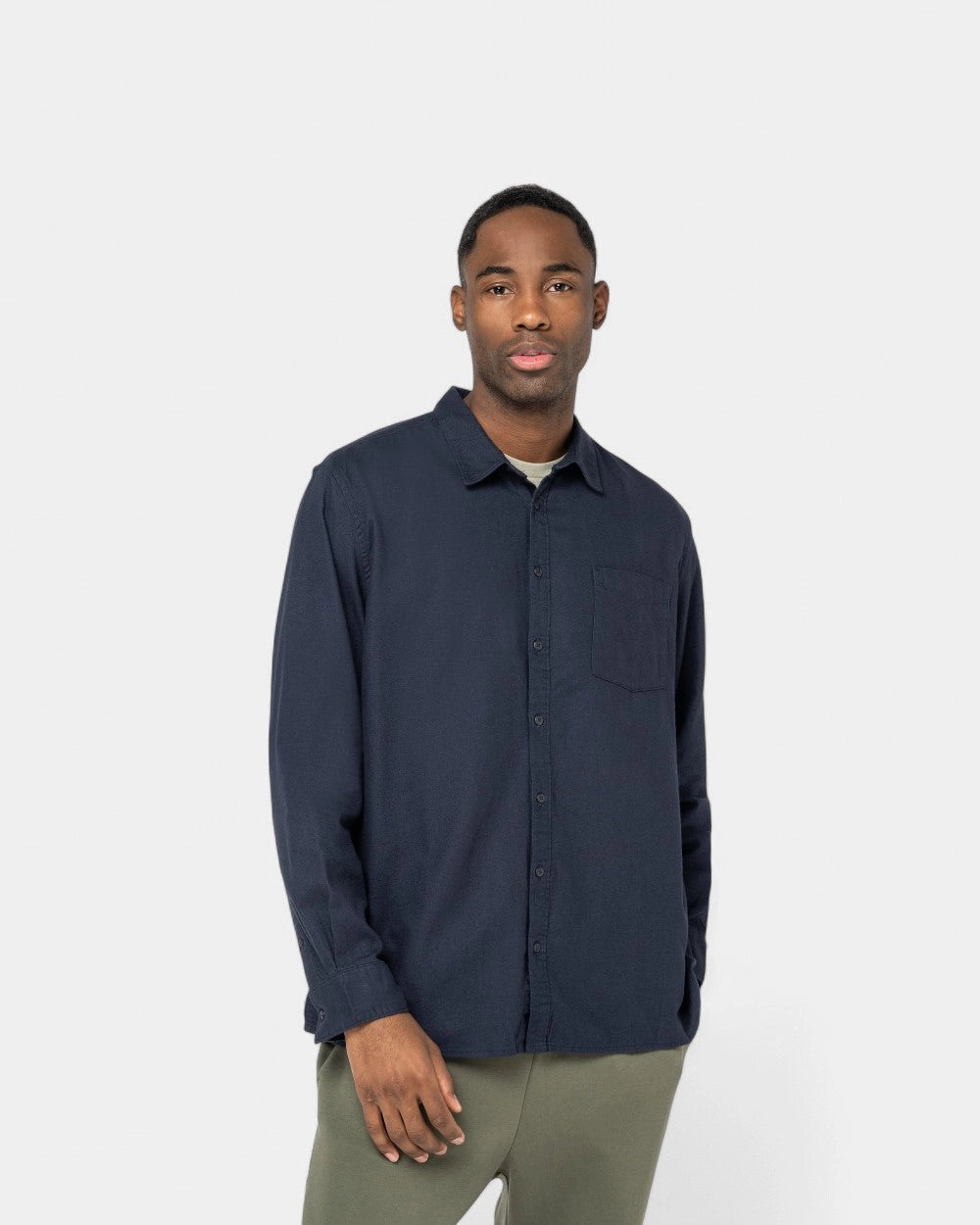


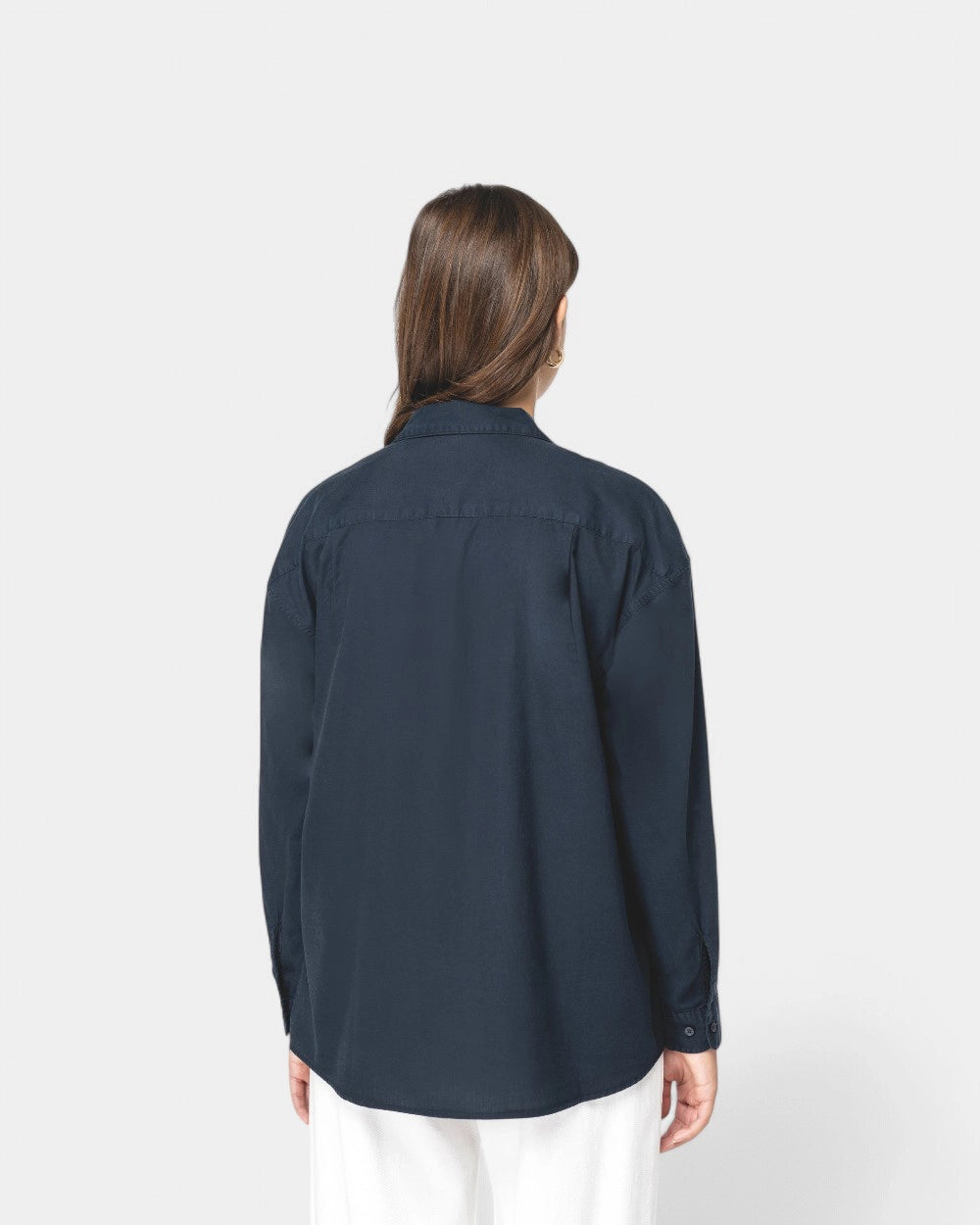


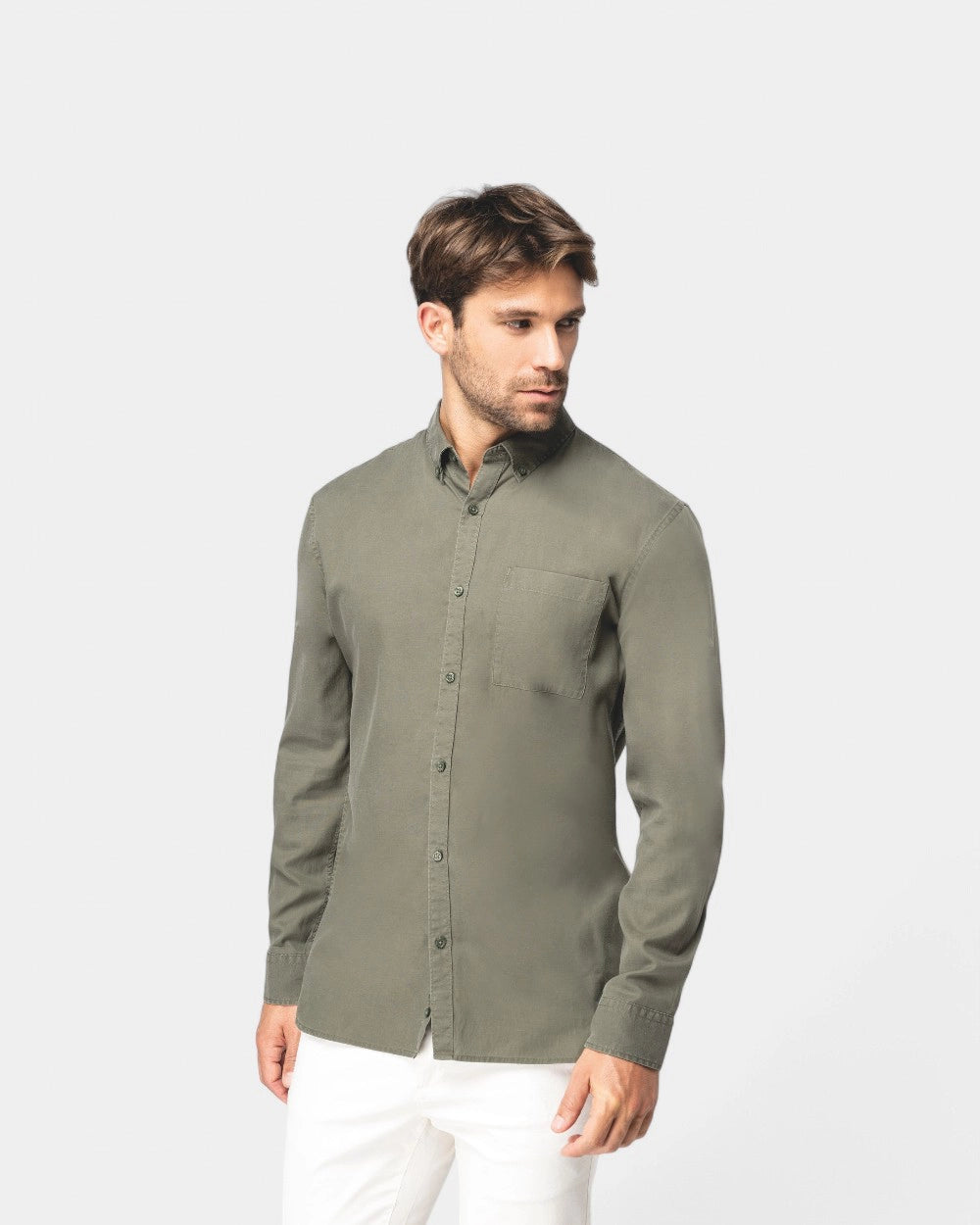




 Made in Portugal
- Eco-friendly







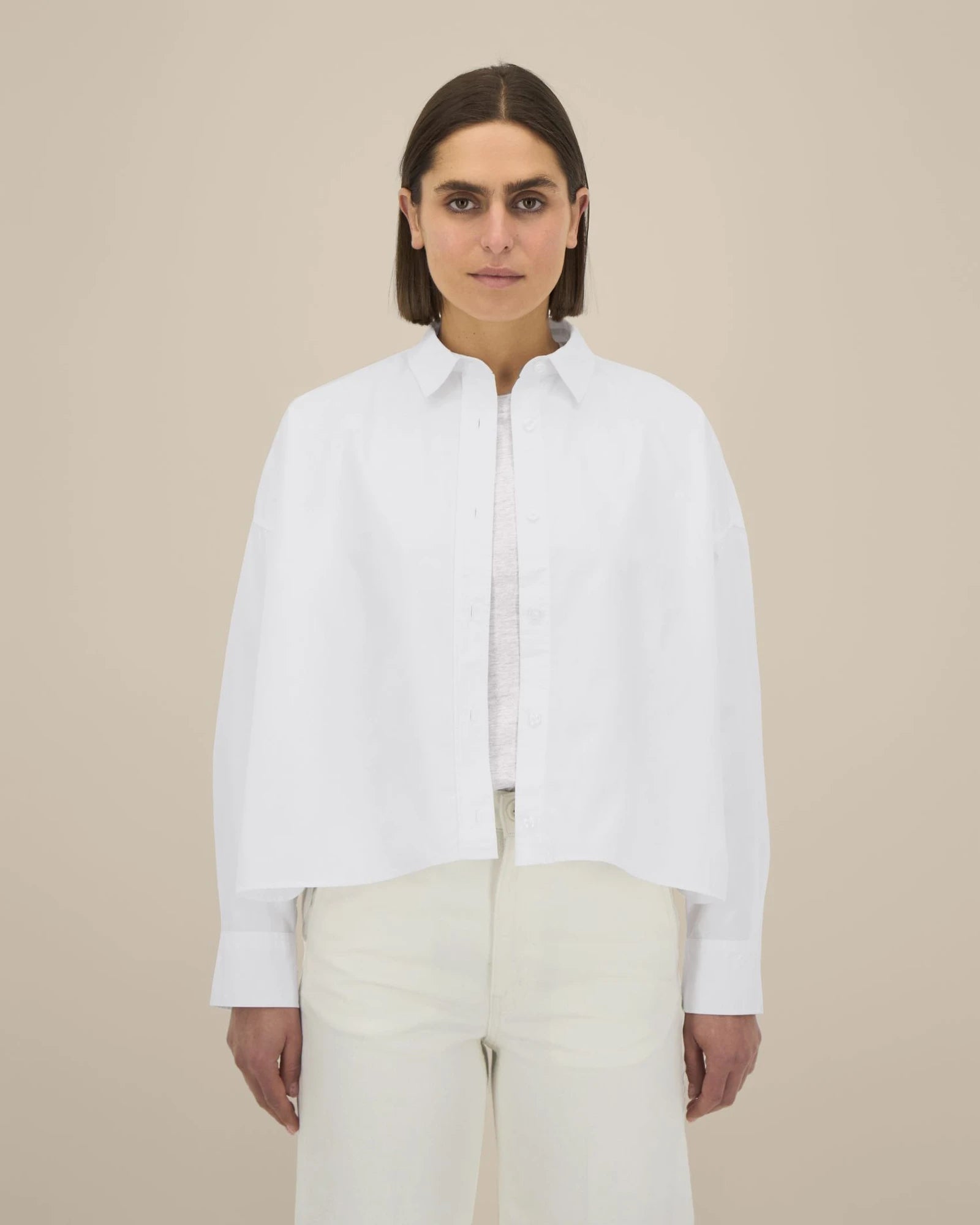


Treat your clients and employees!

FAQ - Custom shirts
Trusted by 1,000+ companies
A Bank-Branch Rollout: How We Spec Corporate Shirts
Picture a high-street bank refreshing the uniform across thirty branches at once. Counter staff, advisers and the duty manager all need the same crisp Oxford shirt, in men's and women's fits, with a discreet stitched logo above the left breast pocket. That is several hundred shirts on one purchase order, and every one has to read identically from Aberdeen to Exeter.
We plan that order from the cloth outwards rather than the logo inwards. The weave sets the formality, the collar style decides how the embroidered shirt sits under a tie, and the fit covers a real mix of body shapes. A fused collar and a barrel cuff suit daily counter wear, while a softer collar reads relaxed on an open-neck adviser.
That logic shapes this whole page on Corporate shirts. We open on the cloth weave, because a poplin and an Oxford read as different levels of formality before any logo is added. Then we move through decoration, collar and cuff detailing, men's and women's fits, sector use and sizing, so a procurement lead can brief a full programme without a catalogue.
Oxford, Poplin And Twill: The Weave Behind Your Embroidered Shirts
Reading formality off the weave on corporate shirts
The weave on a custom shirt signals its formality before any logo lands. A smooth poplin reads boardroom, a textured Oxford reads hard-wearing front-of-house, so the cloth decides the tone the uniform sets at the counter.
The weave is the first decision on any formal shirt, and it sets the tone before colour or logo. Oxford uses a basketweave that gives a slightly textured, hard-wearing face, which is why it suits customer-facing roles that take daily wear. Poplin is a tighter plain weave that presses to a smoother, dressier finish for boardroom and banking settings.
Twill weaves the yarn on a diagonal, giving a soft drape and a subtle sheen that hides creases better than a flat poplin. Pinpoint sits between Oxford and poplin, a fine Oxford weave that keeps texture while reading smarter. We match the weave to how formal the role is and how much wear the embroidered shirt takes each week.
Weight matters as much as weave on a Custom shirt that gets worn five days a week. A lighter cloth around 110 to 130 g/m² breathes well for a warm reception floor, while a heavier 140 to 160 g/m² fabric holds its shape and presses sharper. We confirm the weight band against your interior climate before you commit a full run.
| Weave | Surface | Formality | Best for |
|---|---|---|---|
| Oxford | Textured basketweave, hard-wearing | Smart-casual to business | Daily customer-facing roles |
| Pinpoint | Fine Oxford, slight texture | Business | Advisers and offices |
| Poplin | Tight plain weave, smooth | Most formal | Banking and boardroom |
| Twill | Diagonal weave, soft drape | Business, crease-resistant | Long shifts, travel |
| Herringbone | Subtle V pattern, tonal | Smart, characterful | Boutique hospitality |
Embroidered Shirts: The Stitched Left-Chest Mark
Why stitch beats print on embroidered shirts
Embroidery is the default mark on a branded shirt because it reads as tailored rather than promotional. Thread holds its colour through years of laundering, so a stitched crest outlasts the embroidered shirt where a print on poplin can look out of place by the second season.
On embroidered shirts, the stitch is the default mark, not the upgrade. A bank or law firm wants a discreet stitched logo above the breast pocket, sized around 7 to 9 cm wide, that reads as tailored rather than promotional. Thread holds its colour and shape through repeated laundering, where a printed mark on poplin can look out of place.
Stitch density is the quiet driver of how clean embroidered shirts look. A left-chest mark on a business shirt typically runs a few thousand stitches, and we add a backing stabiliser so fine text stays sharp on lighter poplin. We digitise your logo into a stitch file first, then approve a sewn-out sample before the run.
Embroidered shirts also carry a mark on the cuff for a subtler signature, a single initial or a small monogram near the buttoned edge. Where a door team layers over the embroidered shirt, matching embroidered jackets take the same crest at the same chest height. The mark then does not jump when the jacket goes on. Stitching onto a woven collar needs a denser satin edge than a flat chest, because the collar's fold and interlining can pull a loose outline. A contrast buttonhole thread can echo the crest colour for a quiet, finished touch.
Easy-Care, Non-Iron And Poly-Cotton Promotional Shirts
A reception team cannot iron forty shirts before every shift, so easy-care fabric is the practical choice for a worn uniform. A poly-cotton blend, often around 65% polyester to 35% cotton, resists creasing and dries fast, holding a tidy line through a long day on its feet. Pure cotton feels more luxurious but needs pressing to stay crisp.
Non-iron cotton is the middle path, treated so it releases creases as it dries on the hanger. It reads as a genuine cotton shirt while sparing staff the ironing board, which is why hotel and airline uniforms lean on it. We name the exact blend and any easy-care treatment per garment, so the care promise you repeat to staff is accurate.
Stain-release finishes earn their place in food service and busy receptions. The treatment helps a coffee splash or biro mark lift in a normal wash rather than setting into the weave. Where a kitchen needs more protection than an embroidered shirt alone gives, embroidered workwear takes the same stitched crest onto a tougher outer layer worn over it. Any eco or organic-cotton option is stated on request, named in that product's own specification, never as a blanket claim across the range.
| Fabric | Typical weight | Care | Best for |
|---|---|---|---|
| Pure cotton | 120-160 g/m² | Needs pressing, premium feel | Boardroom and formal events |
| Non-iron cotton | 120-150 g/m² | Releases creases on the hanger | Hotel and airline desks |
| Poly-cotton 65/35 | 110-150 g/m² | Easy-care, fast-dry | High-wear reception teams |
| Stain-release cotton | 120-150 g/m² | Marks lift in a normal wash | Food service and busy desks |
| Brushed cotton | 140-170 g/m² | Soft, warmer hand | Winter and cooler interiors |
Collar, Placket And Cuff Detailing On Branded Shirts
The small construction details separate a smart business shirt from a casual one. A fused collar holds a firm, structured shape that sits well under a tie, while a soft collar reads relaxed for an open-neck reception look. We advise the collar style against whether your team wears ties and how formal the setting needs to feel.
The placket is the strip of fabric down the button line, and it changes the embroidered shirt's character. A standard stitched placket reads classic and tidy, while a concealed placket hides the buttons for a cleaner, dressier front favoured in luxury hospitality. Either way, we keep the embroidered chest mark clear of the placket seam so it sits flat.
Cuffs come as a single barrel cuff with one or two buttons, or a double French cuff worn with links for formal events. Most corporate programmes use a barrel cuff for daily practicality. A short-sleeve summer shirt drops the cuff entirely, which we cover when we plan a seasonal split across the team.
Men's And Women's Fits And Blouses In Your Branded Shirts
A uniform programme has to fit a real mix of people, so men's and women's cuts both matter on a formal shirt. Men's shirts run classic or slim, with the slim fit tapered through the body for a tailored line. Women's shirts and blouses are shaped through the bust and waist, with darts that keep the silhouette clean.
Collar sizing follows neck measurement on men's shirts, typically running from a 14.5 to an 18.5 inch collar, while women's blouses size on a dress scale. We share the flat measurements, half-chest and body length, so you map a chart to your team rather than guessing. A spread of sizes prevents the classic shortfall of too many mediums.
The cut differs in more than shaping. A women's blouse is built on a separate block, with the buttons running right-over-left and the placket narrower than a men's shirt. The dart placement and a slightly shorter point collar change where a chest mark sits cleanly. Where an outdoor branch team wears the embroidered shirt open-collar in summer, matching custom caps take the same stitched crest, so the look holds from collar to brim.
| Fit | Cut | Sizing | Note |
|---|---|---|---|
| Men's classic | Roomier through body | 14.5-18.5 collar | Default for mixed male teams |
| Men's slim | Tapered, tailored line | 14.5-17.5 collar | Younger or formal brands |
| Women's fitted | Shaped at bust and waist | Dress size 8-22 | Darts for a clean silhouette |
| Women's blouse | Softer, draped cut | Dress size 8-22 | Open-neck reception look |
| Short sleeve | No cuff, summer cut | Both ranges | Seasonal version of the same shirt |
Personalised Shirts For Estate Agents, Hotels And Events
An estate agency uniform is a clear case for a Personalised shirt over a printed tee. Negotiators meet clients on doorsteps and in offices, so a smart poplin shirt with a stitched logo signals a credible firm before a word is spoken. The same shirt photographs well for staff profiles on the agency website.
A hotel reception runs a different brief again. Front-desk staff need a shirt that holds a pressed collar through a ten-hour shift and survives a nightly wash, often in a darker colour that hides marks. We spec a non-iron poly-cotton there, with the property crest stitched discreetly so it reads as hospitality, not high-street retail.
A conference exhibitor team is the third common scenario, and it leans on visibility over formality. Branded shirts in a bold company colour help a stand team stand out across a busy hall, with a larger embroidered logo and sometimes a printed back. The same bold-colour shirt scales up into Corporate wear for the build crew and the drivers, keeping one brand across the whole multi-day operation.
| Sector | Recommended shirt | Why it fits | Mark |
|---|---|---|---|
| Banking | White or blue poplin | Most formal, pressed look | Discreet left-chest stitch |
| Estate agency | Pinpoint Oxford | Smart and credible on doorsteps | Stitched logo and name |
| Hotel reception | Non-iron poly-cotton | Holds a collar all shift | Tonal property crest |
| Events exhibitor | Bold-colour Oxford | Reads across a busy hall | Larger logo, optional back print |
| Estate office | Twill business shirt | Crease-resistant for travel | Left-chest embroidery |
Branded Shirts: Colour, Contrast And Brand Consistency
Colour is where a shirt either matches your brand or fights it. A logo embroidered in a single thread colour reads cleanest, so we pick a thread that holds your brand colour against the shirt cloth. A pale-blue Oxford with navy stitch reads sharp, while a white poplin gives the most formal, neutral base for any logo.
Contrast detailing lifts a plain shirt without shouting. A contrast inner collar stand, a coloured button thread or a tonal placket adds a designed touch that a customer half-notices. We keep these subtle on a corporate shirt, since the point of a formal uniform is consistency, not a statement that competes with the embroidered mark.
Brand consistency across a programme is the real prize. The stitched logo is digitised once, the thread colours are locked, and every reorder pulls the same file, so a shirt bought next year matches this year's batch. Free artwork approval within 24h means you sign off the sewn-out logo before a single shirt enters production.
Short Sleeve, Long Sleeve And Seasonal Promotional Shirts
Sleeve length is a seasonal call that a year-round uniform has to plan for. A long-sleeve shirt reads the most formal and suits autumn and winter, worn with or without a tie. A short-sleeve shirt keeps a reception or warehouse-office team comfortable through summer while still looking smart against a counter.
Many programmes issue both, a long-sleeve shirt for cooler months and a short-sleeve version for summer. A short sleeve is usually hemmed rather than cuffed, and on a non-iron cloth that hem can curl slightly until it is pressed once. We steer warm-weather shirts toward a fuller poly-cotton so the placket holds a flat line through the day.
A short-sleeve Custom shirt changes the embroidery slightly, since there is no cuff to carry a secondary mark. The logo stays on the left chest, sized to match the long-sleeve version so the two read as one uniform. Buyers running both sleeve lengths should hold the chest mark at a single size. Short-sleeve and long-sleeve staff then line up cleanly at the counter.
Sizing A Corporate Shirts Order Across A Team
Sizing a shirt programme is more exact than sizing a tee, because a collar that gapes or pulls is immediately visible on a customer-facing role. We start from a real headcount and a size return from each team member, not an estimate, since a half-inch collar difference changes how professional the shirt looks.
A practical rollout offers a fitting sample in two or three sizes before the full order, so staff can confirm their collar and body fit on the actual garment. Ordering a sensible spread, weighted to your team's true sizes plus a few spares at the extremes, avoids a pile of unworn mediums and a shortage of larger fits.
- Take a neck measurement for collar size, not a guess
- Offer men's slim and classic plus women's shaped blouses
- Spec non-iron cloth for teams who cannot press shirts
- Keep the stitched logo clear of the placket seam
- Choose a fused collar for tie-wearing teams
- Plan long and short sleeve versions for year-round wear
- Order a few spare shirts at the size extremes
One quirk worth flagging on a worn uniform is how non-iron finishes age. The crease-release treatment is a resin cure that softens slowly over many hot washes, so a two-year-old shirt presses a little less crisply than a new one. Buying a small reserve at launch keeps the look even. For a cold reception floor, spec a warm layer that takes the shirt's crest at matching height. Matching embroidered sweatshirts mean a member of staff who covers up still reads as uniform.
Subtle Print Versus Embroidery On Personalised Shirts
Print has a narrow but real place on embroidered shirts, even though stitch leads. A heat-applied or screen-printed mark suits a large back design on an exhibitor shirt. It also handles a soft, fine print where a delicate gradient logo cannot be reproduced cleanly in thread. We advise print only where stitch genuinely cannot do the job.
On a smooth poplin, a subtle print can sit flatter than a raised embroidery, which some luxury brands prefer for a near-invisible tonal logo. The trade-off is durability, since thread outlasts most prints through repeated hot washes. For a uniform that sees daily laundering, we steer toward stitch and reserve print for back graphics or one-off event runs.
Many shirts combine the two on one garment, a stitched chest crest with a printed back message for an event team. custom T-Shirts for casual Fridays can share the very same embroidered chest mark as the formal shirts, so a team moves between dress codes without breaking the brand. We quote both elements together so the budget is clear.
A Quick Reference For Specifying An Embroidered Shirts Programme
A uniform brief touches weave, fit, finish and mark all at once, which is easy to lose track of across a multi-site rollout. The checklist below pulls the recurring decisions into one place, so a procurement lead can confirm a spec before requesting a sample of the custom shirt.
| Decision | Default choice | When to vary it |
|---|---|---|
| Weave | Poplin for formal desks | Oxford for high-wear front-of-house |
| Finish | Non-iron poly-cotton | Pure cotton for boardroom feel |
| Collar | Fused for tie-wearing teams | Soft for open-neck reception |
| Mark | Left-chest embroidery | Add back print for event crews |
| Sleeve | Long for year-round | Short-sleeve split for summer |
Treat the defaults as a baseline, not a rule. A bank counter and a summer events stand sit at opposite ends of this grid. Yet both can carry the same digitised crest. The brand stays consistent even where the cloth and the cut diverge by role.
Briefing Artwork And Lead Time For Corporate Shirts
A clean brief turns a shirt programme into a sample on your desk fast. Tell us the role, the rough headcount, the weave and colour you picture, and any brand colours, and we translate that into a spec without a dozen emails. Sharing the date you need the shirts by lets us protect your preferred weave rather than defaulting to stock.
Supply embroidery artwork as vector, because a crisp outline keeps fine detail like a crest or serif initials sharp when it is stitched small on a collar, cuff or chest. If you only hold a raster file, we will tell you honestly whether it digitises cleanly at chest size before anyone commits. The same file then drives the chest, the cuff and any collar mark, so detailing stays consistent across the shirt.
From there the path is short on a Custom shirt order: digitised logo, a sewn-out sample for sign-off, then production with delivery in around three weeks. A new starter's first shirt can be cut and stitched ahead of the main run. It is then ready for a start date that falls before the full programme lands. The clearer the brief, the closer the first sample lands to what you pictured.

