Our markings and personalisation techniques
Custom marking turns a neutral object or textile into a branded medium in your image. From laser engraving to embroidery, Atelier Box masters every personalisation technique, produced in European workshops, to elevate your corporate gifts and goodies, whatever the material, volume and budget.
-
![engraving branding]()
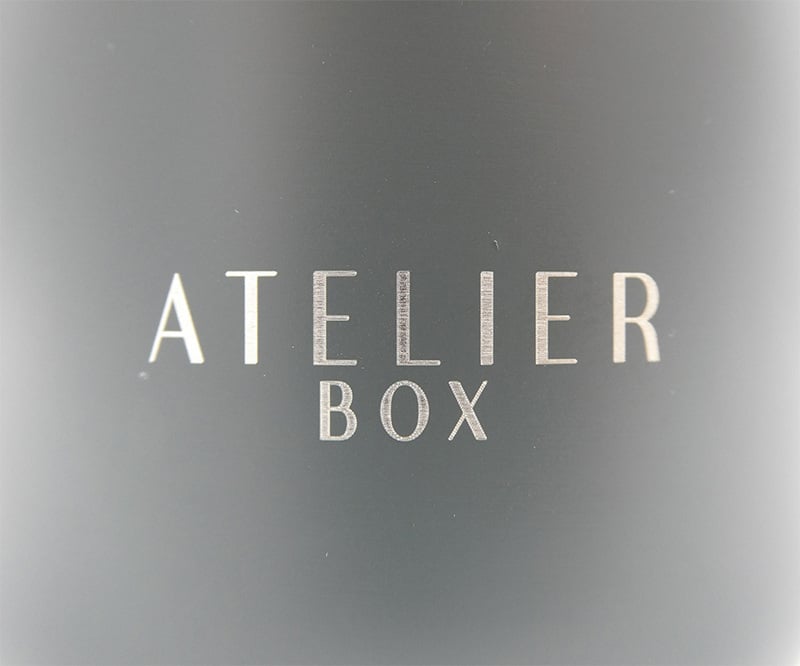
Mechanical engraving: a mark cut into the material
Classic engraving, or mechanical engraving, marks the surface of a material using the rotating movement of a milling cutter. Letters and motifs are milled deep, directly into the rigid plastic or metal object. The result is a recessed mark, tactile to read, carrying an immediately recognisable artisanal signature. No ink, no film: the material itself receives the design, which explains its exceptional longevity.
-
![laser engraving branding]()
Laser engraving: precision and durability with no chemicals
Laser engraving involves no chemicals: it burns the top layer of the material with a light beam (YAG laser) or a gas beam (CO2 laser), for a crisp, highly detailed result. The fibre laser, set to a wavelength of 1,060 nm, interacts strongly with metals and is ideal for engraving stainless steel, anodised aluminium or brass. The CO2 laser, at 10,600 nm, is absorbed by organic materials such as wood, leather, glass or acrylic.
-
![pad printing branding]()
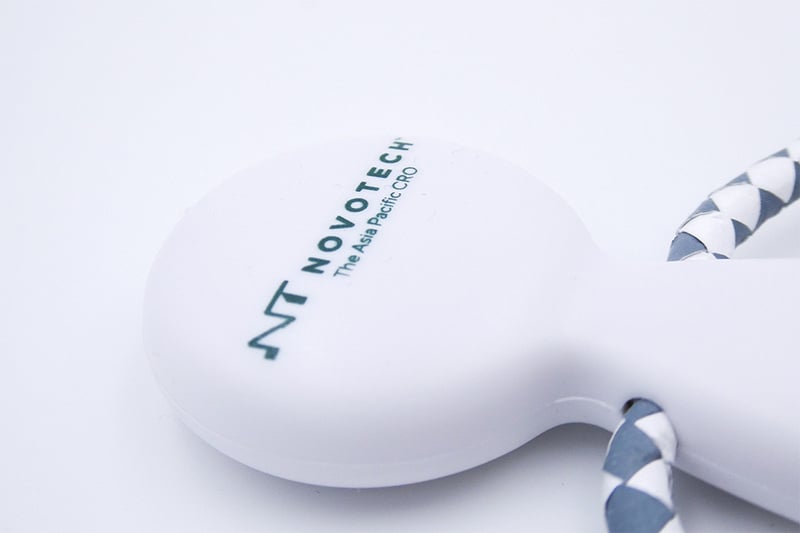
Pad printing: marking objects and curved surfaces
Pad printing transfers ink using a silicone pad that picks up the design from the recess of an engraved plate, then lays it onto the object. It prints any type of surface, including uneven ones: curves, handles, caps, concave or convex shapes. Its line precision is very fine, on the order of a micron, with colour registration of up to four Pantone shades placed to ±0.1 mm. Inks are formulated to PMS reference to match your brand guidelines as closely as possible.
-
![sublimation branding]()
Sublimation: colour printed into the heart of the fibre
Sublimation prints by transfer under a hot press. Under the action of heat (190 to 205 °C, forty-five to sixty seconds), the ink laid on a specific paper turns to gas and penetrates directly into the heart of the fibre. The design then becomes one with the material, with no thickness or relief perceptible to the touch. It passes from a solid to a gaseous state with no liquid phase, which explains this perfect integration into the material.
-
![screen printing branding]()
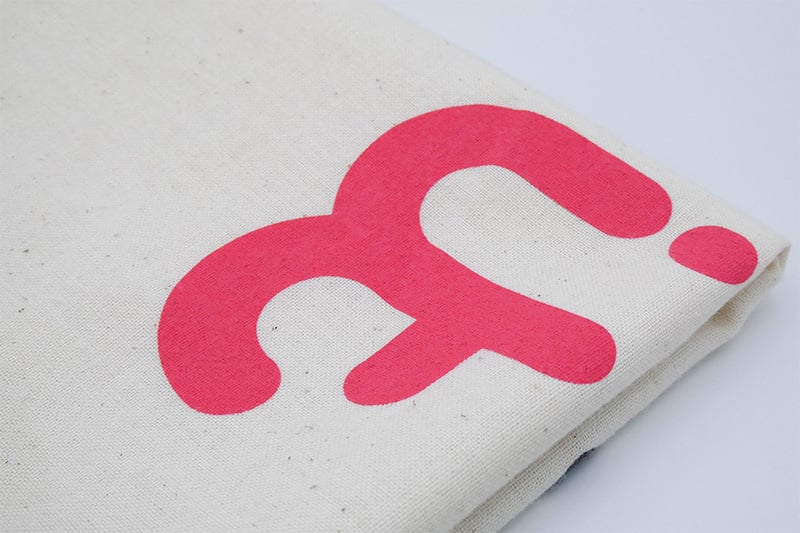
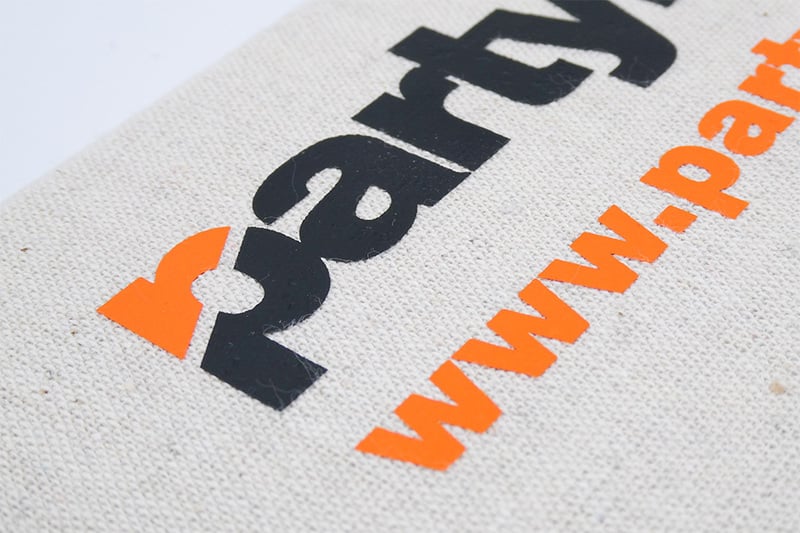
Screen printing: the benchmark for batch textile marking
Screen printing pushes ink through a stencil to lay it directly into the mesh of the fabric. It is the historic technique of custom textile, ideal on a t-shirt, sweatshirt or tote bag. Plastisol ink, cured with heat at around 160 °C, stays on the surface and holds Pantone colours as closely as possible, including on dark fabric. Water-based ink penetrates the fibre for a matte, ultra-soft result, more eco-responsible and particularly suited to cotton.
-
![360 screen printing branding]()
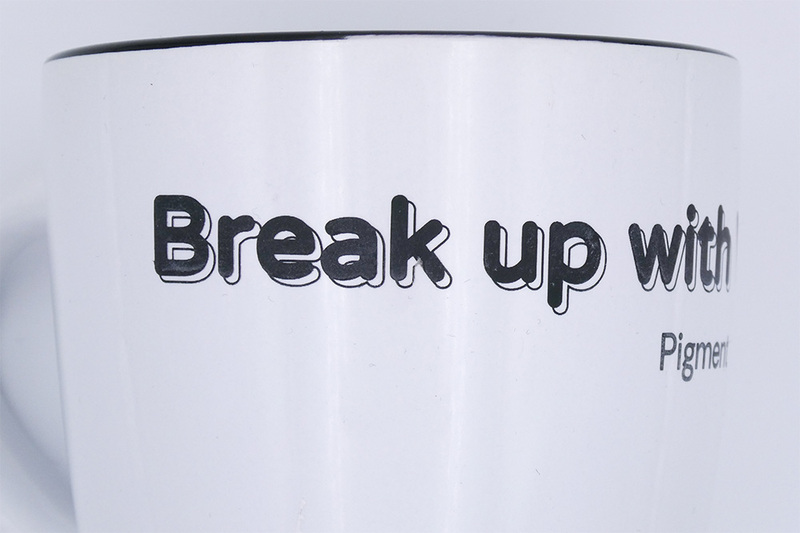
360 screen printing: continuous marking on cylindrical objects
360 screen printing, known as rotary, takes the quality of classic screen printing and applies it across the whole curved surface of an object. The item rotates during printing, allowing continuous marking with no break, over three hundred and sixty degrees. The design can go all the way around the product, with no visible join, up to four Pantone colours placed with precision.
-
![embroidery branding]()
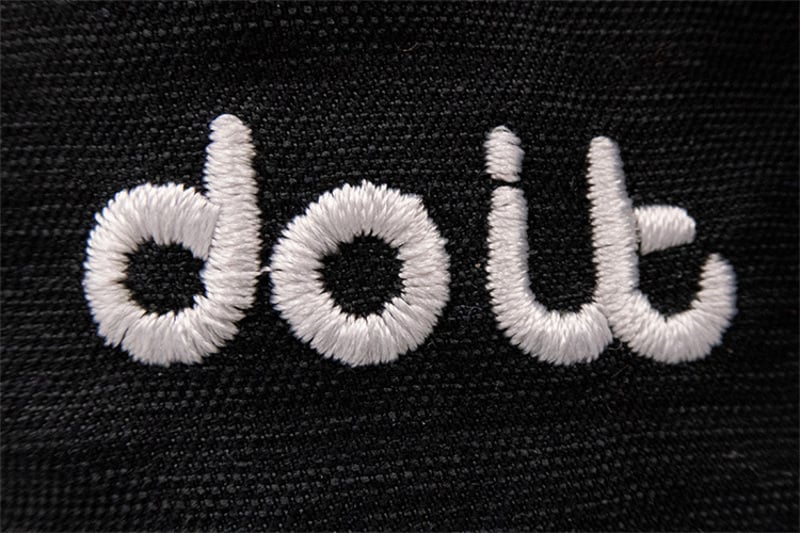
Embroidery: the premium signature of branded textile
Embroidery lays a motif of stitched threads onto the textile. The digital logo is first redrawn, or digitised, to define the number, density and direction of the stitches, then embroidered onto the piece. The result conveys an immediate high-end perception, with a relief and texture that printing cannot reproduce. A standard chest embroidery generally fits within a format of about eight centimetres, crisp and durable.
-
![digital printing branding]()
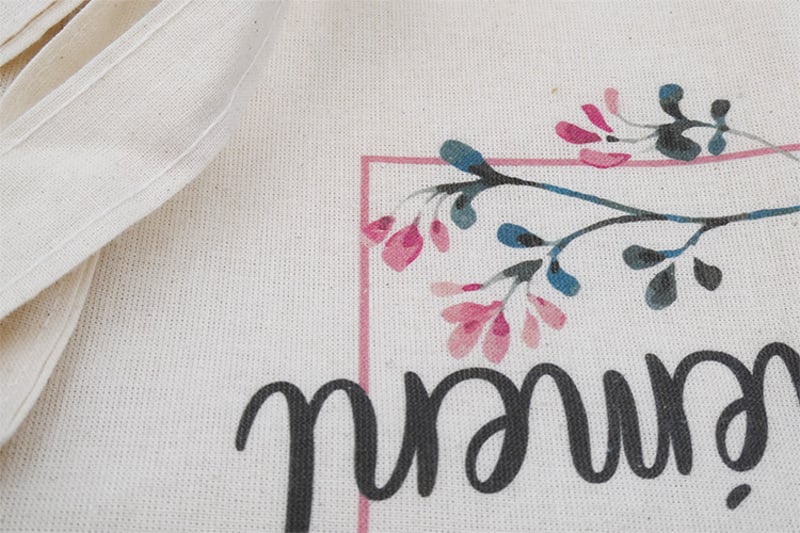
Digital printing (DTG): photo-quality printing on cotton
Digital printing, or DTG (Direct to Garment), prints directly onto the garment with water-based inkjets, in four-colour process. It reproduces gradients and even photographs, with a finesse impossible to achieve in screen printing on small quantities. The water-based ink sets into the cotton fibre, for a soft feel and a matte finish, with no perceptible added thickness on the garment.
-
![transfer printing branding]()
Transfer and DTF: agile marking for small runs
Transfer heat-applies a text or a logo onto a textile or object. Its modern variant, DTF (Direct to Film), prints the artwork onto a PET film coated with a thermo-fusible adhesive powder, then transfers it fully under a press (160 to 170 °C, ten to fifteen seconds). It reproduces vivid colours and fine details on almost any material, with a dense layer of ink that covers even dark backgrounds.
-
![3D embroidery branding]()
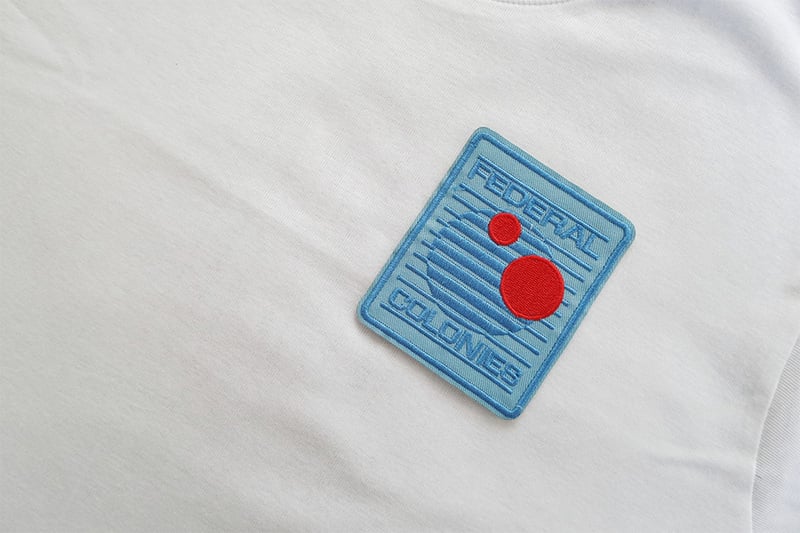
3D embroidery: high-end relief on thick textile
3D embroidery places a foam between the fabric and the thread, embroidered over the top to create a visible, tactile relief of two to three millimetres. A dense PE foam is used on structured caps, softer on sweatshirts and soft fabrics. On thick textiles, it offers remarkable hold and an ultra-premium result, legible from afar, that immediately catches the eye on a logo brought into volume.
-
Flocking: crisp edges and velvet relief on textile
Flocking heat-applies a pre-cut design onto the textile, in one or two colours. In its flex version, a coloured heat-transfer vinyl is plotter-cut to the exact shape of the logo, then heat-pressed at around 150 to 160 °C, for ultra-crisp edges. In its velvet version, or flock, fine fibres raised on an adhesive backing are transferred under a press, leaving a soft, matte relief to the touch, a high-end felted effect.
.jpg?v=1701278056830&options=)