

Personalised Nalgene Products
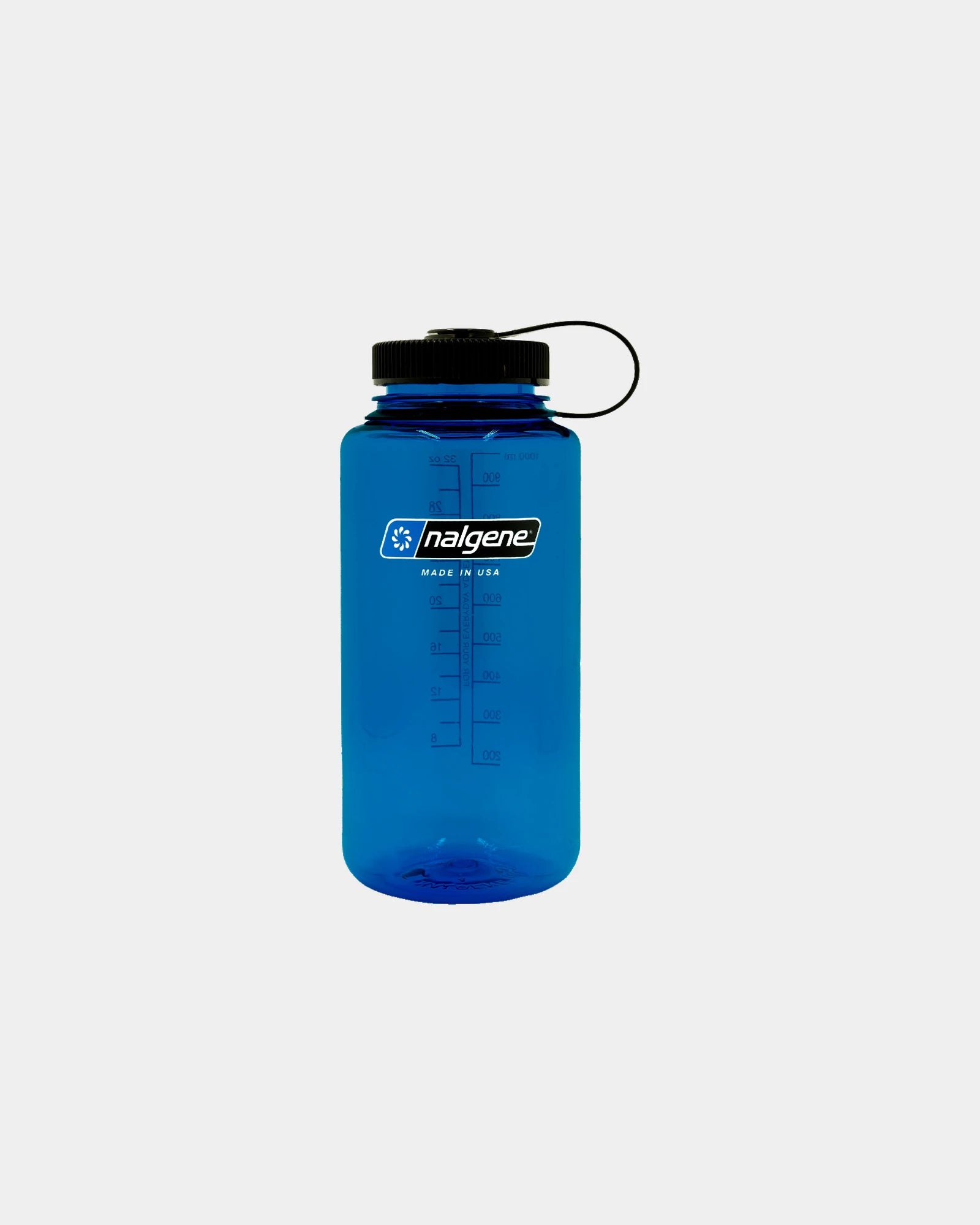


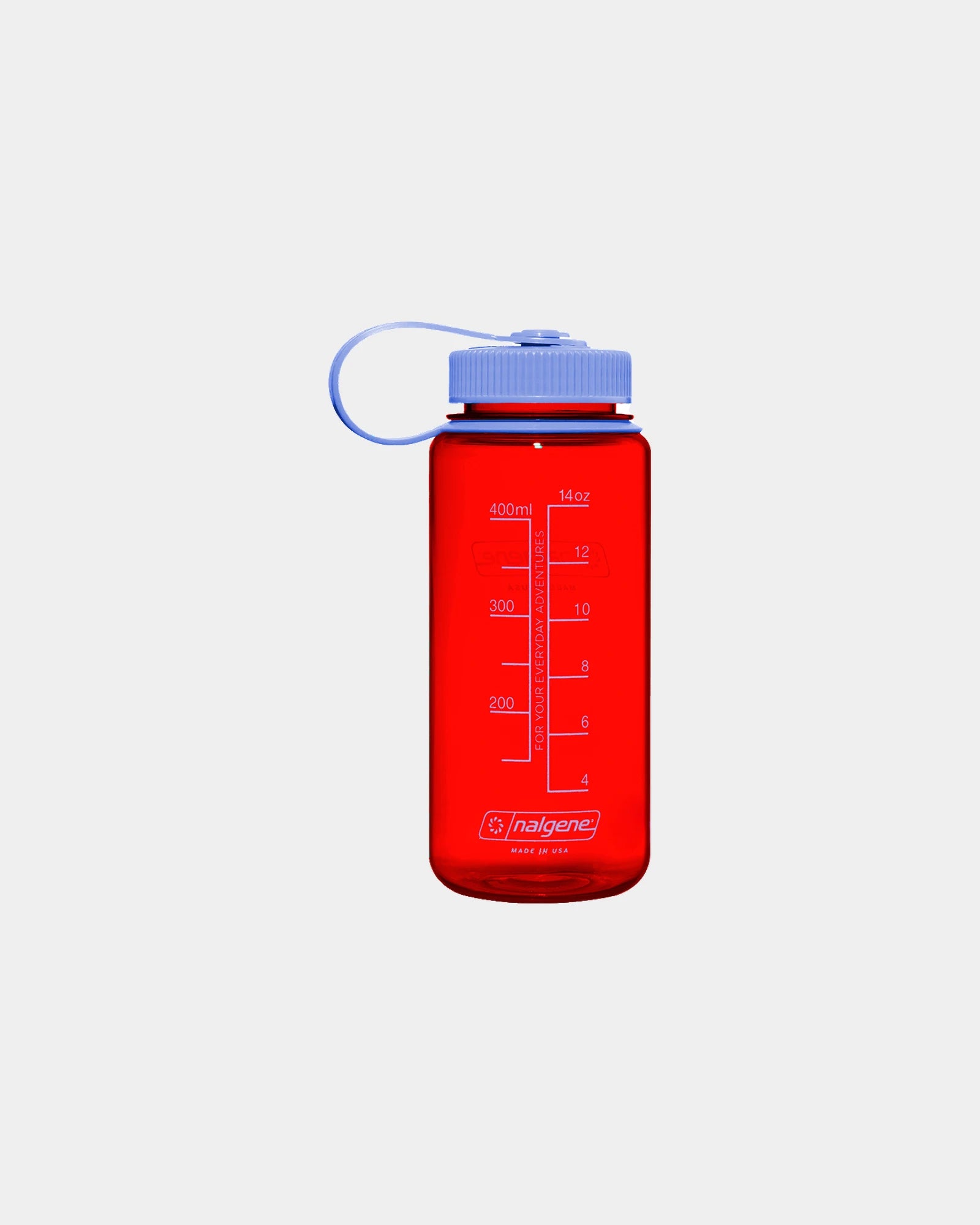


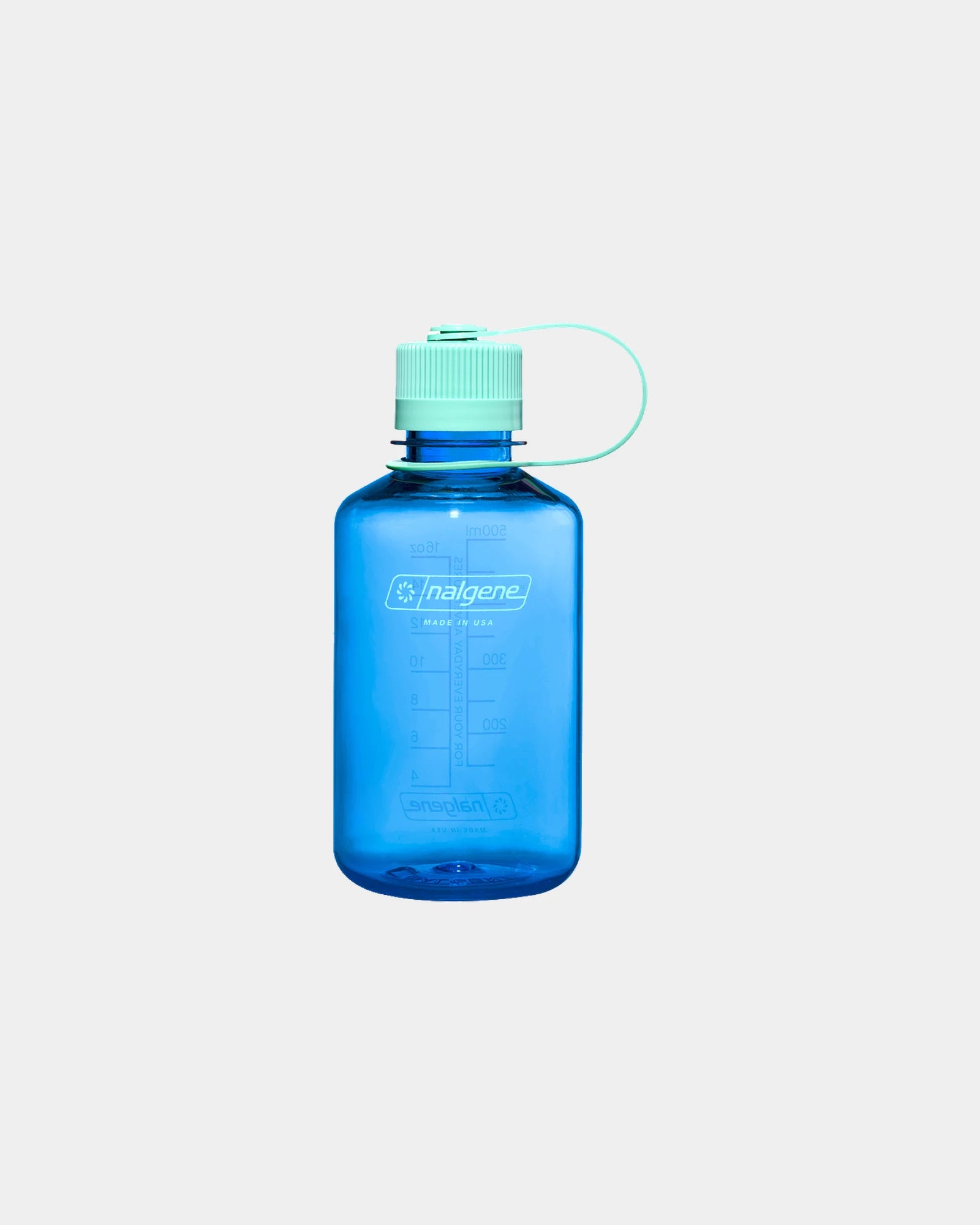


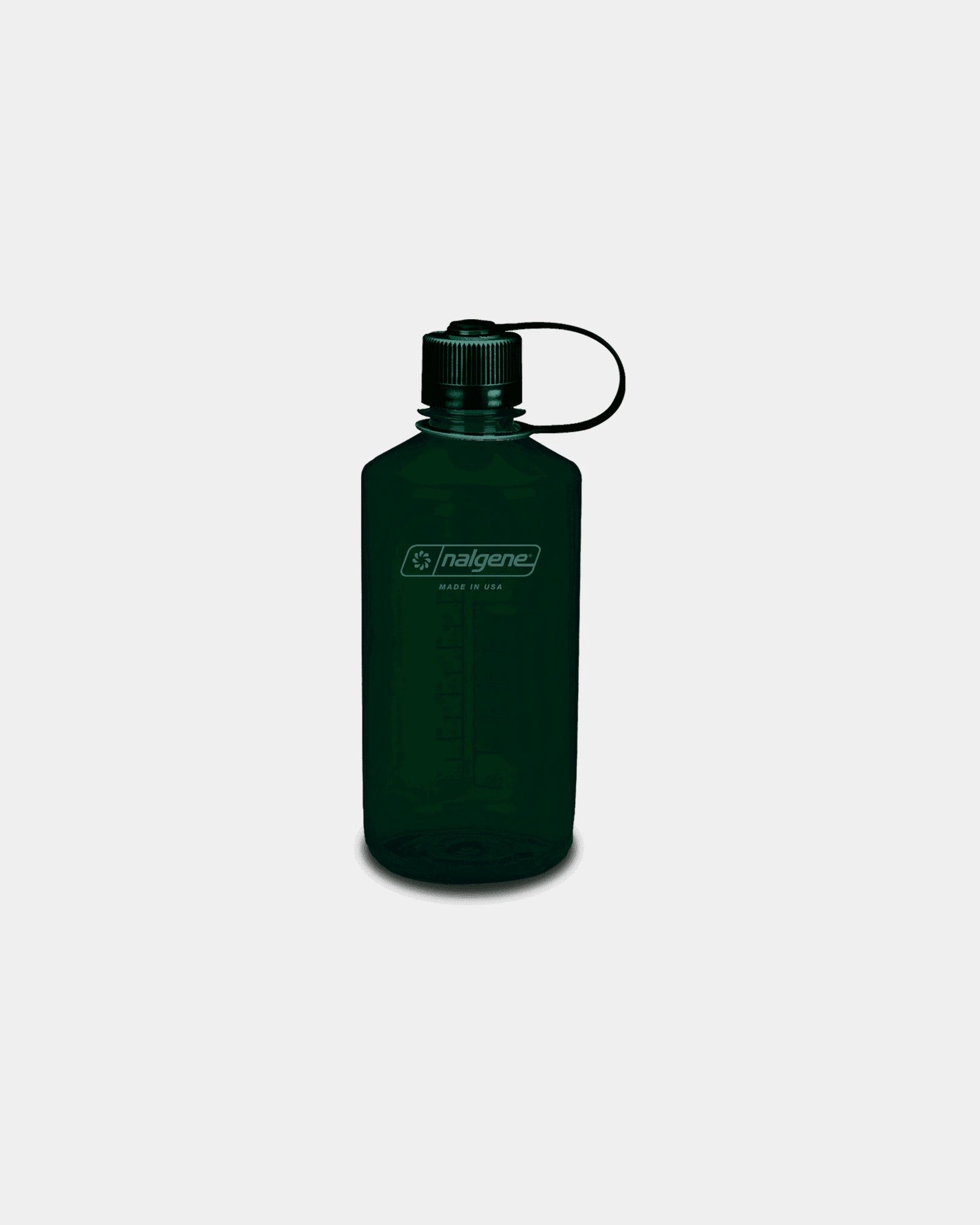






Treat your clients and employees!

FAQ - Personalised Nalgene products
Trusted by 1,000+ companies
Why a branded Nalgene bottle survives the two-year test
The question that matters on a bottle rollout is not the unit price. It is how many are still in use two years later.
Plenty of reusable bottles given out at work end up in a drawer after a cracked wall, a cap that leaks or a lid that goes missing. This brand built its reputation on the opposite: thick copolyester walls, wide threads and caps tethered to the neck.
That lifespan changes the arithmetic of your spend. An item still in service after six years puts your mark in front of people hundreds of times, whereas one replaced every year takes your logo with it. Our branded water bottles cover the wider range.
One caveat is worth stating. Longevity only counts if the bottle is attractive enough to be carried. Heavy branding cancels that advantage as surely as a manufacturing fault does.
That is one reason a discreet mark usually outperforms a large one here. The exposure comes from repetition over years, not from the size of the artwork on day one.
Tritan Renew and 50 per cent recycled plastic
One material runs through the whole selection and carries most of the environmental case, so it deserves an explanation rather than a slogan.
Tritan Renew is a copolyester made, according to the manufacturer, with 50 per cent recycled plastic content. It keeps the clarity, rigidity and impact resistance of the original material.
It also keeps the taste neutrality, which matters more than any other property here. A bottle that gives water a flavour stops being used within weeks, whatever else it does well.
The material is further stated to contain no BPA or BPS. That claim covers those two compounds specifically, not additives in general and not behaviour at high temperature. Our branded eco water bottles bring together the references chosen on this basis.
One further point on intended use: these bottles are made for cold or ambient drinks, and dishwasher treatment follows what the specific reference states rather than a general habit.
What ISCC certification covers on Tritan Renew
A technical mention accompanies this material and answers the question a procurement team will ask first.
ISCC works on a mass balance principle. An independent body verifies that the declared volume of recycled material genuinely enters the manufacturer's production flow.
It does not certify that a given bottle physically contains that proportion of recycled plastic, because recycled and virgin material are blended upstream of moulding.
Word it that way and the claim holds. A more flattering version collapses the moment a buyer asks a precise question, whereas the accurate statement stands on its own without qualification.
The strongest environmental argument on this range sits elsewhere in any case. A bottle that lasts eight years replaces several that do not, and that reasoning needs no certificate at all.
Wide mouth or narrow neck on a branded bottle
Neck diameter decides day-to-day satisfaction far more than capacity does, and it splits the range in two.
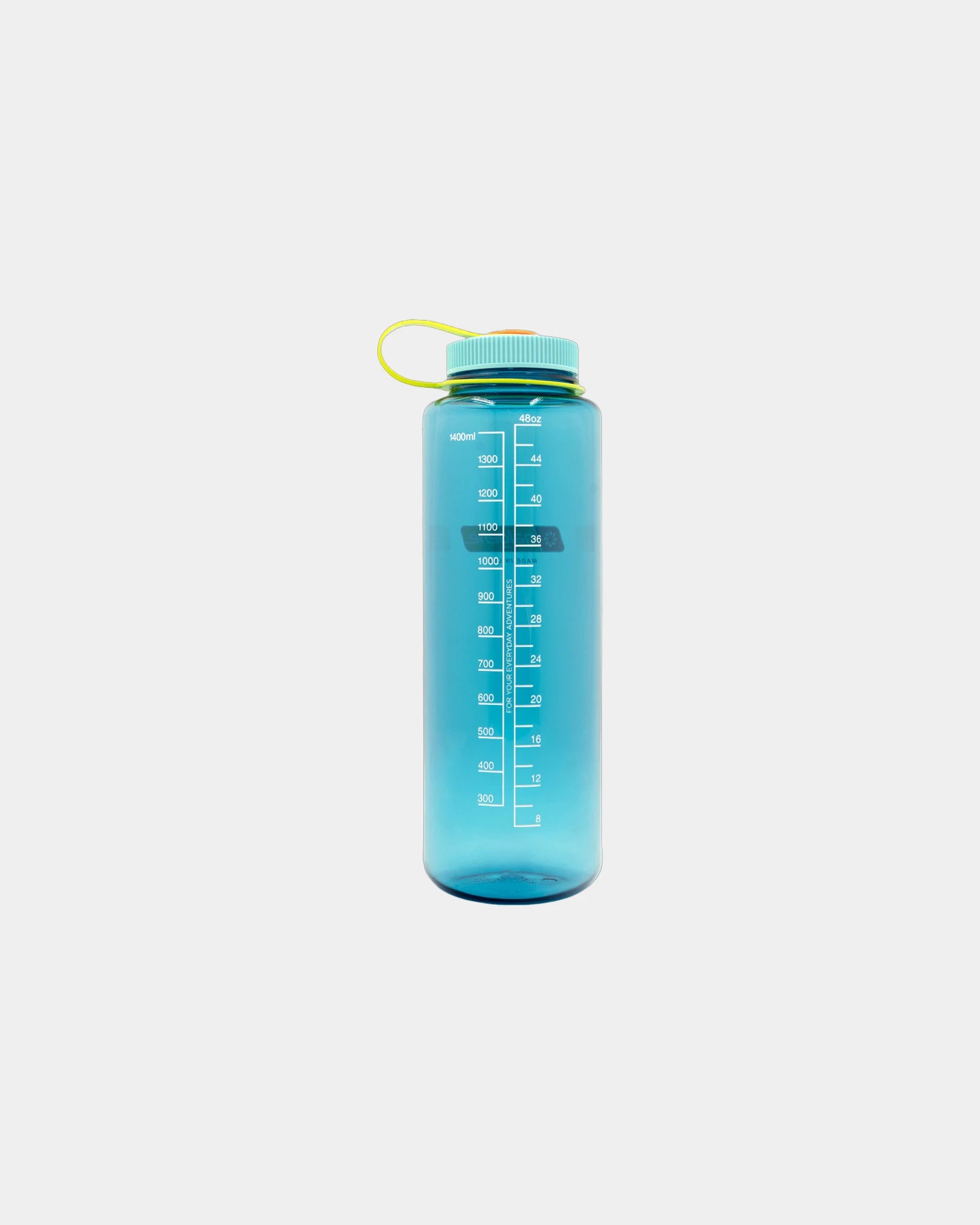
A wide mouth takes ice cubes, fruit slices and a bottle brush, fills under any tap, and dries out completely when turned upside down. A narrow neck traps moisture for days and becomes the source of a smell that never quite leaves.
That difference shows up after a month of real use, not on the day of the handover, which is why wide-mouth models dominate rollouts meant to last.
The trade-off is well known: drinking on the move takes care, since the flow arrives without restraint. The Sustain one-litre model answers exactly that point with a narrower neck, at the cost of a less convenient clean.
Nothing forces you to settle on one neck across a whole team. Offering both within the same line keeps the visual unity while leaving people with the habit they already have.
Capacities from 0.5 to 1.5 litres and what they weigh
Choosing a capacity means choosing a weight, a figure that product sheets consistently leave out.
Water weighs a kilogram per litre. The largest model therefore adds roughly a kilogram and a half to a bag that is already loaded, and that tells on a station platform or a walk across a car park.
| Capacity | Weight when full | Opening | Best suited to |
|---|---|---|---|
| 0.5 litre | Around 500 g | Wide mouth | Desk work near a tap |
| 700 ml | Around 700 g | Locking cap | Car, train, cup holder |
| 1 litre | Around 1 kg | Wide or narrow | General use |
| 1.5 litre | Around 1.5 kg | Wide mouth | Outdoors, site work |
Start from the distance to the nearest tap rather than from assumed thirst. A desk within reach of a water point has no need of a large capacity, whereas a day on site does.
Measure the space it has to fit as well, whether that is a locker, a fridge door shelf or a side pocket. Going up in capacity widens the base as much as it lengthens the body, and the room it takes up often exceeds expectations.
The 700 ml bottle and the cup holder
One reference exists for a purely dimensional reason that the others ignore.
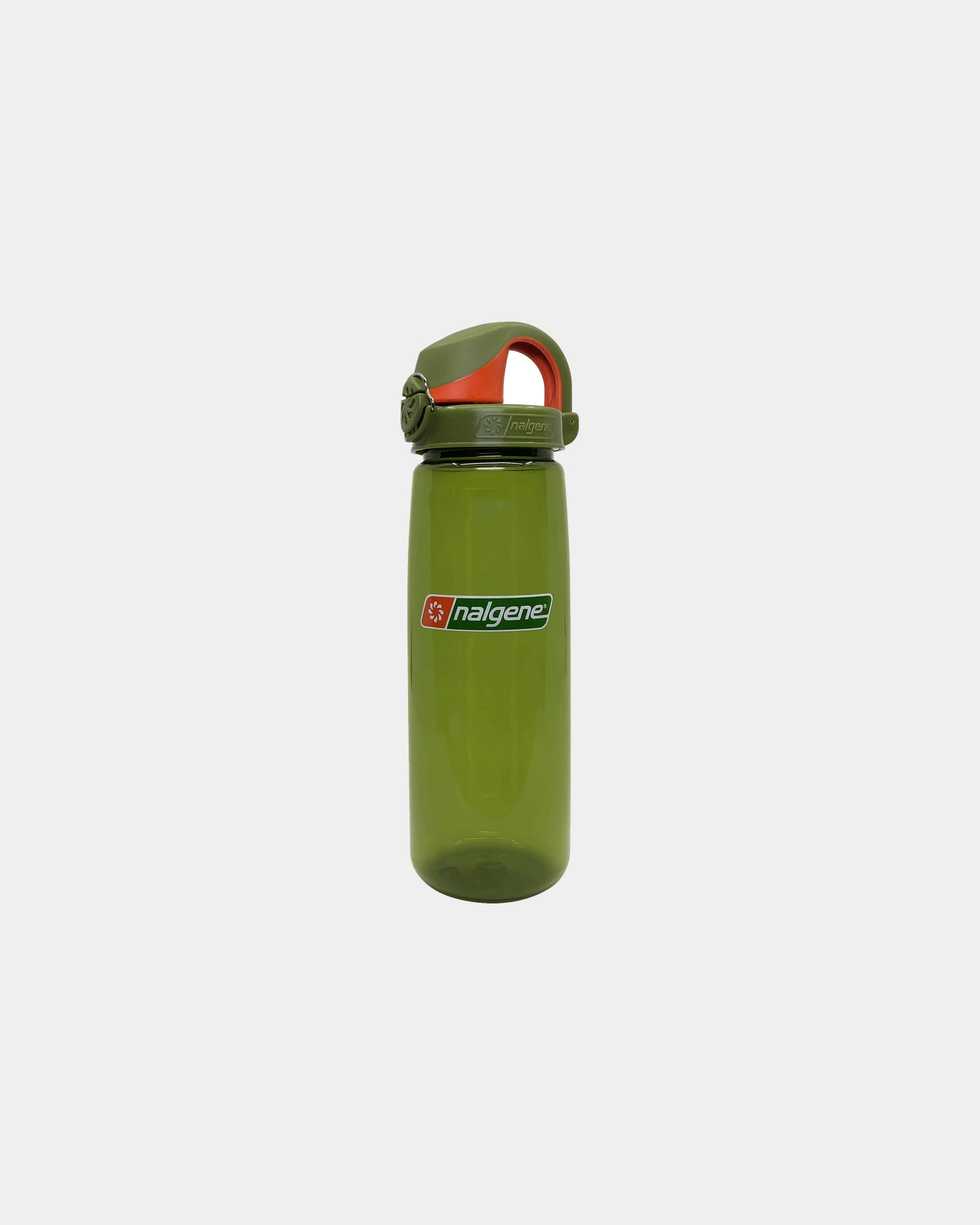
The On-The-Fly format was sized around standard vehicle cup holders and side pockets on rucksacks, where a wide-mouth litre simply will not fit. Its reinforced locking cap opens and closes with one hand.
For anyone driving, walking or carrying a folder in the other hand, the benefit registers on the first journey.
The mechanism does have more parts than a plain thread, so more places where residue can settle, and it asks for a slightly more careful rinse. Our branded sports gifts complete a rollout aimed at people on the move.
Check the holders your teams actually use before ordering, since diameters vary between vehicles. A measurement taken beforehand avoids discovering the problem on delivery.
Printing a logo on a translucent bottle
The shape and the material point towards two processes, and the choice comes down to the size of the artwork and the run.
Rotary screen printing turns the bottle under the screen and allows a design to wrap the full circumference in several colours. Each colour needs its own screen, a fixed cost that only pays back on a substantial run.
Pad printing places a precise mark on a defined area and suits shorter runs and gently curved surfaces better.
Translucency adds a complication of its own: the design reads against a background that changes with the contents. Opaque ink and a simplified mark are the sensible answer, prepared before the proof rather than improvised at production.
We check the result on the exact reference and colour before starting a run, because the shade of the body changes how the mark reads more than most people expect.
Bottle colours and telling one from another
A practical difficulty appears as soon as a whole team receives the same bottle, and it is settled at the order stage.
Lined up on a meeting table, identical bottles are indistinguishable, and your engraving does not help since it is the same on every piece.
The range answers this at no cost: at least eight colours per reference, with several models pairing a body and a cap in different shades. Letting people choose their own colour closes the question.
Watch the contrast with the print colour, though. A pale mark on a pale body disappears, and an on-screen proof never warns you of it. Our branded glasses for business cover the wider glassware range for shared spaces.
A second route is a removable tag carrying a first name, which costs a fraction of engraving each bottle individually and solves the same problem.
Impact resistance and what wears out on a bottle
This brand's reputation rests on something measurable rather than on image: the bottles very rarely break.
Thick copolyester walls, wide threads and caps tethered to the neck explain a survival rate few containers reach. A drop onto a hard floor, a crush at the bottom of a bag or a night left in a boot usually leave nothing worse than a scratch.
What genuinely wears is not the body but the cap gasket, a removable and replaceable part whose condition governs the seal far more than the age of the bottle.
Keep the exact reference of what you order. You will need it to source a replacement gasket several years later, which is awkward without it.
Threads and caps are the parts to inspect when a bottle comes back from long service, not the body, which usually outlasts everything else on the product.
Cleaning and looking after a reusable bottle
Three habits decide whether a bottle lasts two years or two weeks, and they fit into a few lines on an accompanying card.
The first is to take the cap apart and remove the gasket when washing. That part traps residue, is the first source of odour and explains almost every leak reported, before going back in place to preserve the seal.
The second concerns drying. A bottle closed while still damp develops a smell that will not shift, whereas drying it neck down settles the matter for good.
The third applies to anything other than water. A sugary drink left for two or three days leaves a film that plain rinsing no longer removes, even in a bottle that started out spotless.
Water bottles in welcome packs and at events
Two occasions account for most orders in this family, and they do not call for the same size.
For a new starter, a bottle is one of the few items used before lunch on day one, while most welcome gifts sit unopened for weeks. The one-litre format suits the majority. Our branded welcome packs bring together the usual combinations.
For a conference or an away day, the half-litre is easier to hand out and takes less room on a table, and it removes single-use bottles from the catering. Our promotional drinkware range cover the rest of the range.
Order a small surplus in both cases. Lists change between sign-off and handover, and running short is noticed far more than the gesture itself.
A handwritten line slipped in with the bottle changes how it lands, particularly for a new starter. It takes two minutes and separates an attention from a distribution.
VAT and tax treatment of branded bottles in the UK
The UK rules on business gifts fit this product unusually well, and the reason is worth setting out.
HMRC guidance at BIM45065 allows a deduction where the gift carries a conspicuous advertisement, is not food, drink, tobacco or a voucher, and costs no more than £50 per recipient per year. A branded bottle meets all three conditions: it carries your mark, and a container is not a drink.
Output VAT becomes due where gifts to the same person exceed £50 excluding VAT over a rolling twelve months. The standard VAT rate is 20 per cent.
Where bottles go to your own staff, the trivial benefits rules apply instead: exempt at £50 or under, provided the benefit is neither cash nor a voucher and is unrelated to performance.
The limits of a bottle with no insulation
An honest account has to set out what this material does not do, and the main limitation is predictable.
Nothing here holds heat or cold. Coffee poured at eight will be lukewarm by the first meeting, and ice melts at its usual rate. Keeping a temperature requires a double-walled stainless steel construction, which is a different product altogether.
The second reservation is that many people already own a bottle they are attached to and will not swap.
The third concerns branding: a mark covering the body discourages people from using it in front of clients. Our branded insulated flasks and our branded travel mugs cover the insulated alternatives, and our branded corporate gifts open other categories.
None of this rules the range out; it simply marks its territory. Given to someone who does not yet own a reusable bottle, a piece at this level is used every working day for years.
Choosing a Nalgene capacity for the job
Three observations settle the choice, and none of them involves comparing specification sheets.
Is there a tap within reach? Then half a litre is plenty. Does the person travel with one hand occupied? The locking cap becomes essential.
Is the day spent outdoors, away from any water point? That is the only case that justifies carrying the largest volume despite its weight.
On a team rollout, start from the one-litre bottle, which suits the great majority, and add a second capacity only where it genuinely changes something. Nothing obliges you to settle on a single neck type either.

