

Printed sports t-shirts










Treat your clients and employees!

FAQ - Printed sports t-shirts
Trusted by 1,000+ companies
Why Sweat Management Defines Printed Sports T-Shirts
A cotton tee soaks, clings and chills the moment a runner slows; a performance knit pulls moisture off the skin and spreads it across the surface to evaporate. That difference is the whole brief. Printed sports t-shirts live or die on how fast that vapour clears, so we open on the wicking path, not the colour swatch.
The mechanism is capillary, not absorbent. Engineered polyester filaments move sweat outward by surface tension rather than holding it, so the face dries while the wearer keeps moving. A gym circuit, a parkrun PB attempt and a five-a-side half all generate sweat in bursts, and the knit has to clear each burst before the next arrives.
This page follows the body of the garment outward: the fibre, the knit structure, the panels that vent it, then the sublimation that colours it without blocking any of that. Tell us the activity and the kilometre count, and a sample of the right base reaches your desk inside the week.
The Wicking Polyester And Recycled-Poly Knit Behind Personalised sports t-shirts
The default face for personalised sports t-shirts is 100% textured polyester, usually 130 to 160 g/m², spun and knitted to maximise the surface area that moves moisture. A recycled-polyester (rPET) version delivers the same hand and wicking from reclaimed bottle flake. The reclaimed share is stated on each base's own data sheet rather than across the range.
Stretch blends and softer handles on printed sports t-shirts
Some clubs want a softer, more retail feel, so a poly-elastane blend adds four-way stretch for tees that move with a sprint stride or a deep squat. A poly-cotton-feel handle exists too, brushing the synthetic face so it reads less technical against the skin while keeping the dry-back behaviour. Each handle changes how a print sits, which is why we match fabric to the activity first.
Custom Sportswear spans the wider range of shorts, jackets and base layers, while this collection narrows to the running and training tee itself. We steer the base by sweat load. A gentle yoga top and a hill-rep race vest sit at opposite ends of the same fibre family, and the knit weight reflects that.
How The Lightweight Quick-Dry Knit On Custom Sports T-Shirts Actually Works
Weight is where custom sports t-shirts earn or lose a runner's trust. A 130 g/m² interlock feels barely there on a hot 10k and dries in minutes. A 150 to 160 g/m² knit gives more body for training kit that takes daily abuse without going see-through. The knit structure matters as much as the gram weight, since a pique traps more air than a flat jersey at the same weight.
Quick-dry is a measurable property, not a slogan. A good technical knit returns to dry-to-touch in roughly half the time of a cotton tee of similar weight. That is the gap between a comfortable cooldown and a cold, heavy shirt after the finish line. Lighter knits dry faster but show light through; we set the weight against the venue and the season.
Stretch recovery rides alongside weight. A knit that bags out at the shoulders after one session ruins a team's look by week three. So we favour bases with elastane or high-tenacity yarn that hold their measured shape. For a charity 5k where a top is worn once, a lighter throwaway-friendly base is the sensible call.
| Base | Typical weight | Behaviour | Best brief |
|---|---|---|---|
| Textured polyester | 130-150 g/m² | Fast wicking, full sublimation | Race vests and 10k tees |
| Recycled poly (rPET) | 140-160 g/m² | Same wicking, reclaimed yarn | Eco-led club kit |
| Poly-elastane blend | 150-170 g/m² | Four-way stretch, recovery | Gym and conditioning tees |
| Brushed poly handle | 150-160 g/m² | Softer face, dry-back kept | Leisure and warm-up wear |
Breathable Mesh Panels And Raglan Sleeves On Your Printed Sports T-Shirts
Mesh panels are targeted ventilation, not decoration. Placed under the arms, down the flanks and across the upper back, an open-structure mesh dumps heat exactly where a working body runs hottest. A summer-league football side training in 28-degree heat feels the difference between a fully knitted body and one with mesh side panels within ten minutes of warming up.
Raglan sleeves on printed sports t-shirts
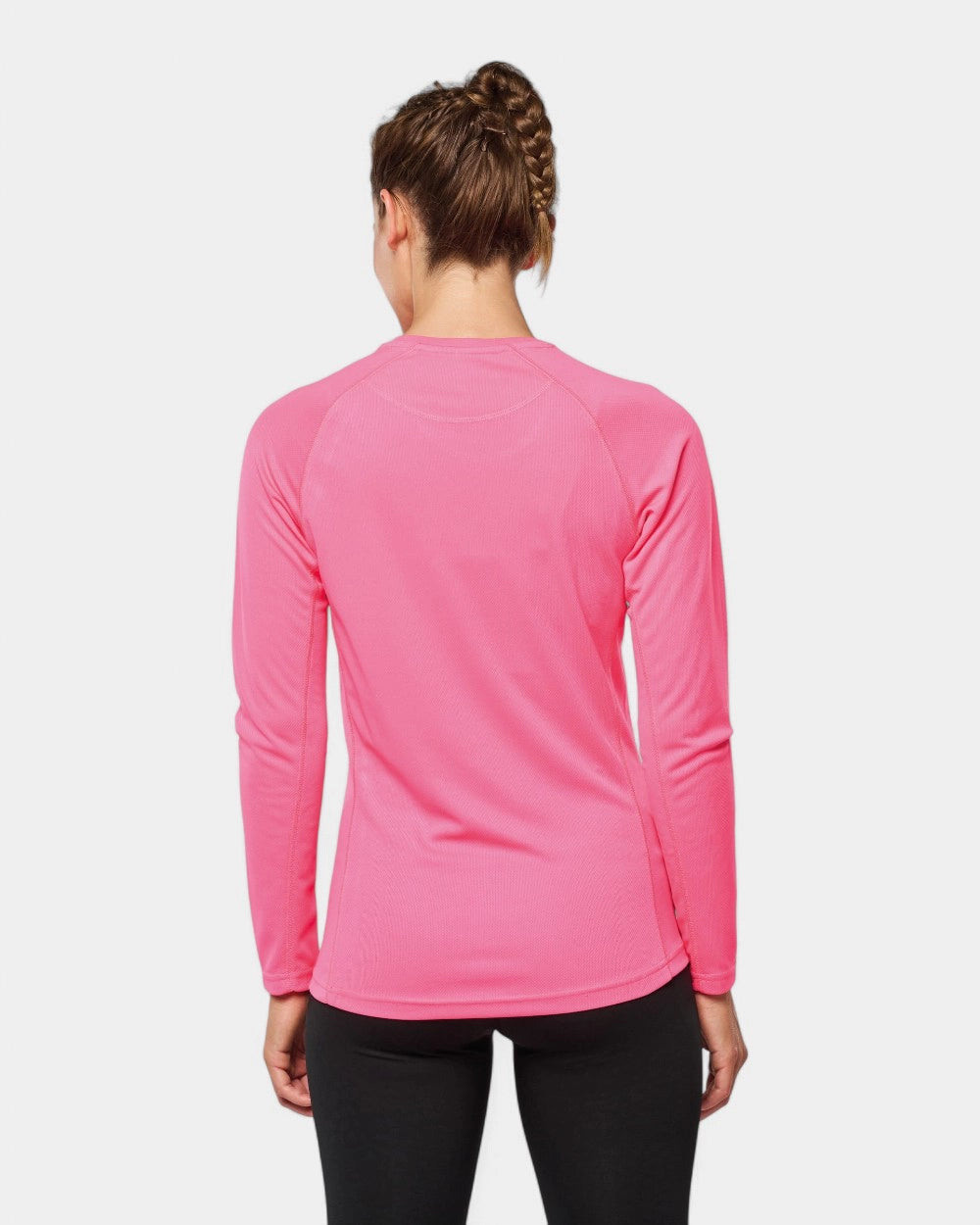
The raglan sleeve is the second performance cut, and it changes how the tee moves. A raglan seam runs from underarm to collar instead of sitting on the shoulder, removing the seam that chafes under a backpack strap or a repeated overhead reach. It also opens the shoulder for a fuller range, which is why running and racket-sport tees so often use it.
Cut and panel together set the silhouette. A close athletic fit suits race vests and competitive kit; a relaxed training fit suits gym and leisure wear over a longer day. Branded drawstring bags often ship with the same order so a club kits out players head to kitbag in one go, and we colour-match across both.
Dye-Sublimation: The Full-Kit Print Method For Custom Sports T-Shirts
Sublimation is the marriage made for synthetic sports t-shirts. Heat turns solid dye to gas, which bonds into the polyester fibre rather than coating it, so the colour becomes part of the cloth. There is no printed layer to crack, peel or stiffen, and crucially no film to block the wicking, so a fully printed tee breathes exactly like a blank one.
This is the only economical route to all-over, edge-to-edge designs: sponsor walls, gradient fades, sleeve-to-hem patterns and per-player names and numbers in one pass. A running club rolling out a fully sublimated kit gets seam-to-seam coverage no screen print can match, with every panel of the same tee carrying artwork. The dye sits inside the fibre, so it cannot fade in the wash the way ink on the surface can.
The one rule sublimation imposes is fibre and colour. It needs a high-polyester face, ideally 100%, and it prints onto white or light cloth, since it adds dye but cannot lift a base colour. Dark all-over kit is dyed into the polyester from the start. We confirm the base supports your palette before artwork, so nothing prints muddy on the finished sports t-shirt.
Print Routes Beyond Sublimation For Printed Sports T-Shirts
Not every brief needs full-kit sublimation, and three other routes mark printed sports t-shirts cleanly. A printed transfer or screen-print holds a chest crest or a small sponsor block on a budget run, where a club needs forty matching tees fast rather than edge-to-edge artwork. These sit on the surface, so we keep the print area off the highest-sweat zones.
Embroidery and heat transfer on personalised sports t-shirts
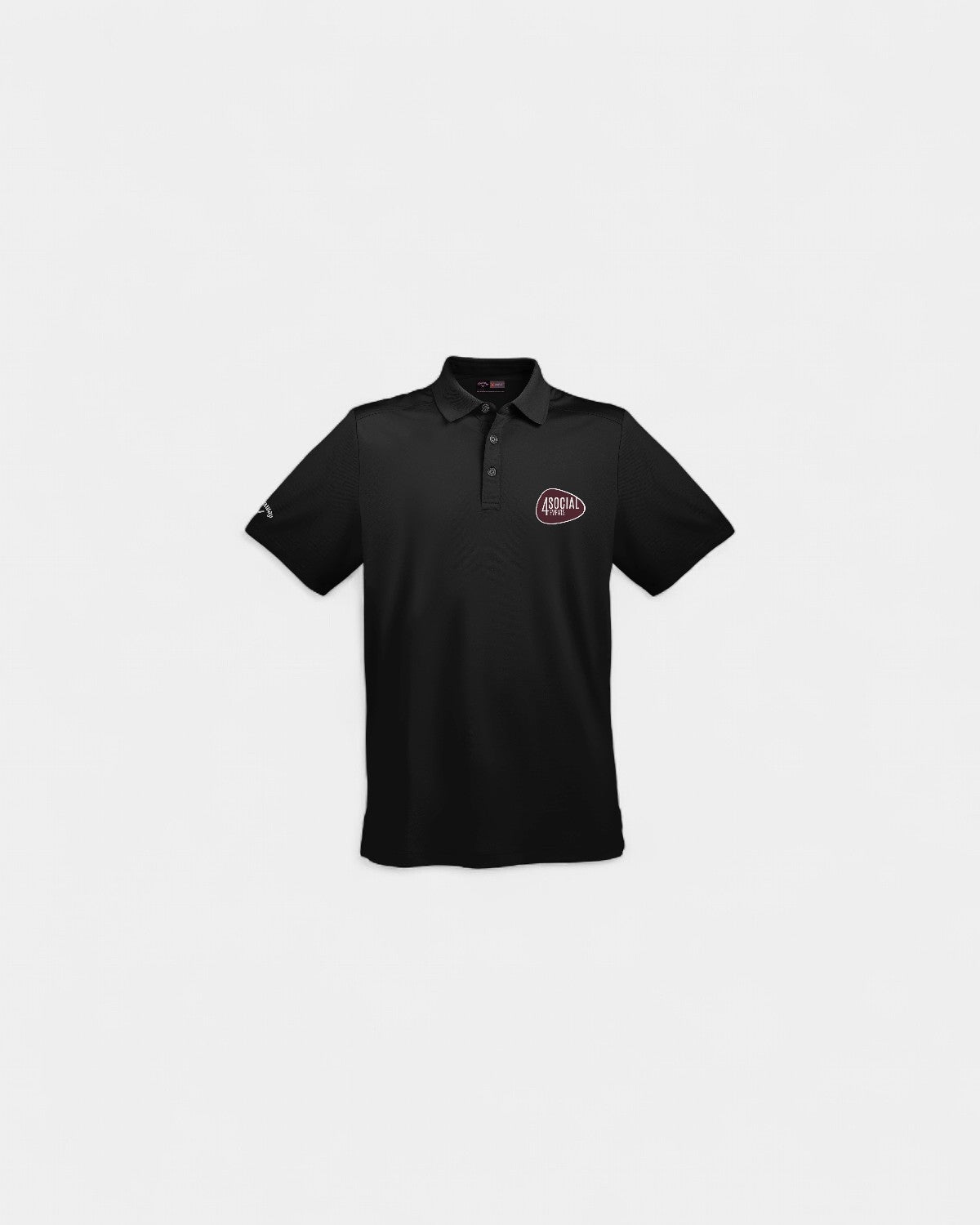
Embroidery suits a left-chest club badge or a coach's initials, giving a textured, hard-wearing mark that reads as kit rather than merch. It adds a little weight and is not used across a whole panel, so we reserve it for crests and small logos on a sturdier training base. A heat-applied number and name on the back personalises each player without a new setup per tee.
The decoration table below maps each route to where it belongs on a performance tee, because the wrong method on a wicking knit is a costly mistake. Choosing badly means a stiff patch over the sweatiest panel or a crest that lifts in the wash, so we recommend the route against your artwork and your wash frequency.
| Method | How it marks | Best use on a sports t-shirt | Note |
|---|---|---|---|
| Dye-sublimation | Dye bonded into the fibre | Full-kit, all-over, names and numbers | Needs high-poly, light base |
| Screen print | Ink cured on the surface | Chest crest, sponsor block, volume runs | Keep off high-sweat panels |
| Heat transfer | Pressed film, per-garment | Player names and numbers | No new setup per tee |
| Embroidery | Stitched thread mark | Left-chest badge, coach initials | Adds weight, crests only |
Designing Artwork And Colour Coverage For Personalised sports t-shirts
A sublimated sports t-shirt is a blank canvas, which is a freedom and a trap. Edge-to-edge coverage means seams, side panels and sleeves all carry artwork, so a design built only as a flat chest logo leaves the wrap-around panels empty. We work from a full garment template so the pattern resolves across the whole tee, not just the front a designer sees first.
Colour behaviour is the second design rule. Sublimation prints onto a light base and adds dye, so a near-white knit gives the brightest, truest gradients, while deep all-over colour is dyed into the polyester from the start. Fine white text inside a coloured panel reads cleanly, but a thin pale line over a busy print can disappear, so we keep critical detail off cluttered ground.
Sponsor and number legibility decides a kit's job on the day. A back number must read from the touchline, so we size it to the cut and keep it clear of the seam lines. Supplying vector artwork lets the design scale across every size in the run without softening, and we return a full-garment proof for sign-off before any tee is printed.
Matching Custom Sports T-Shirts To The Activity And End Use
A 10k race vest, a gym training tee and a football warm-up top are three different specs wearing one category name. The race vest wants the lightest quick-dry knit and a close cut so nothing flaps at pace. The gym tee can carry a touch more weight for daily wear, and the warm-up top often takes a bolder sublimated design built to be seen from the touchline.
Use case also sets durability. A club training tee washed three times a week needs a knit and a print that survive a hundred-plus cycles, which is exactly where sublimation pulls ahead. A corporate fun-run giveaway worn once tolerates a lighter base and a simpler chest print, and spending up there is wasted budget rather than value.
Custom caps round out a running-club look, since a wicking cap and a matching sublimated tee read as one kit on a start line. We map the whole order, tees first, to the calendar and the climate it will be worn in, so the spec fits the season as well as the sport.
Fit, Sizing And Cut Across Your Printed Sports T-Shirts
Athletic fit is a deliberate choice, not a smaller size. A performance cut sits closer through the body to cut drag and keep mesh panels over the right vents, while a relaxed training cut leaves room for movement and layering. Mixed-ability clubs usually want both on the order form, so casual members are not forced into a race-cut tee.
Size runs on sports t-shirts behave differently from cotton, because the synthetic knit gives a little and recovers. Most ranges span XS to 3XL or 4XL, with junior sizes available for youth squads. We hand over the laid-flat dimensions, chest width and length included, so a club maps a real chart rather than guessing. Women's race-cut and unisex bodies are both common.
Ordering a realistic size curve avoids the medium-heavy pile that strands the extremes. For a youth football academy we model the spread from the actual squad list, weighting the junior bands and adding a couple of spares per age group. Every player then gets a tee that fits on photo day.
| Cut | Shape | Sizes | Suits |
|---|---|---|---|
| Athletic race fit | Close through the body | XS-3XL | Competitive running and racing |
| Training fit | Room to move and layer | XS-4XL | Daily club and gym wear |
| Women's race cut | Shaped, close silhouette | XS-2XL | Female squad and event kit |
| Junior | Scaled youth body | 5-6 to 13-14 yrs | Academy and school sport |
Colourfastness, Anti-Odour And Wash Life Of Personalised sports t-shirts
Wash life is where a synthetic tee quietly wins. Because sublimated dye lives inside the fibre, the colour does not bleed or grey over a season of hot training washes. The print cannot peel either, because there is no separate layer to lift. We still advise a 30-degree wash and no fabric softener, since softener coats the fibre and blunts its wicking.
An anti-odour finish appears on many performance bases, and it works by slowing the bacteria that turn sweat into smell on the cloth between washes. Where a base carries that finish, it is named on the maker's spec for that specific style rather than promised across the collection. We send the exact treatment detail for the tee you choose. Some finishes wash out over time, which we tell you up front.
That same per-style precision protects your own marketing. We forward the base's tech pack, so any recycled or certification claim you repeat is sourced from the document, not the listing. Corporate Gift Boxes can present a club tee as a welcome pack, kept tidy until the first session.
Quantity, Setup And Lead Time On Custom Sports T-Shirts
For custom sports t-shirts, the number that moves the method is quantity. Sublimation carries a per-design setup but then prints all-over at no extra cost per colour. A full-kit order of fifty rewards it, while a run of eight chest crests is cheaper by transfer or screen. Names and numbers add per-player handling but no fresh setup, which is why squad personalisation stays affordable.
Lead time on a sublimated kit reflects the print-cut-sew sequence, since all-over tees are often printed flat then made up, not bought blank and decorated. Allow around three weeks for a standard order from approved artwork, and a little longer for large fully sublimated runs or a physical sample first. A low first-order minimum lets a small club start a kit and top up later without a new setup.
Mid-season top-ups are the practical test of a kit supplier. Because the artwork and the dye file are held, a club adding five new members later gets matching tees without redesign, so the eleventh shirt reads identically to the first. We keep your file ready so a reorder is a quantity, not a fresh brief.
Long-Sleeve And Seasonal Printed Sports T-Shirts
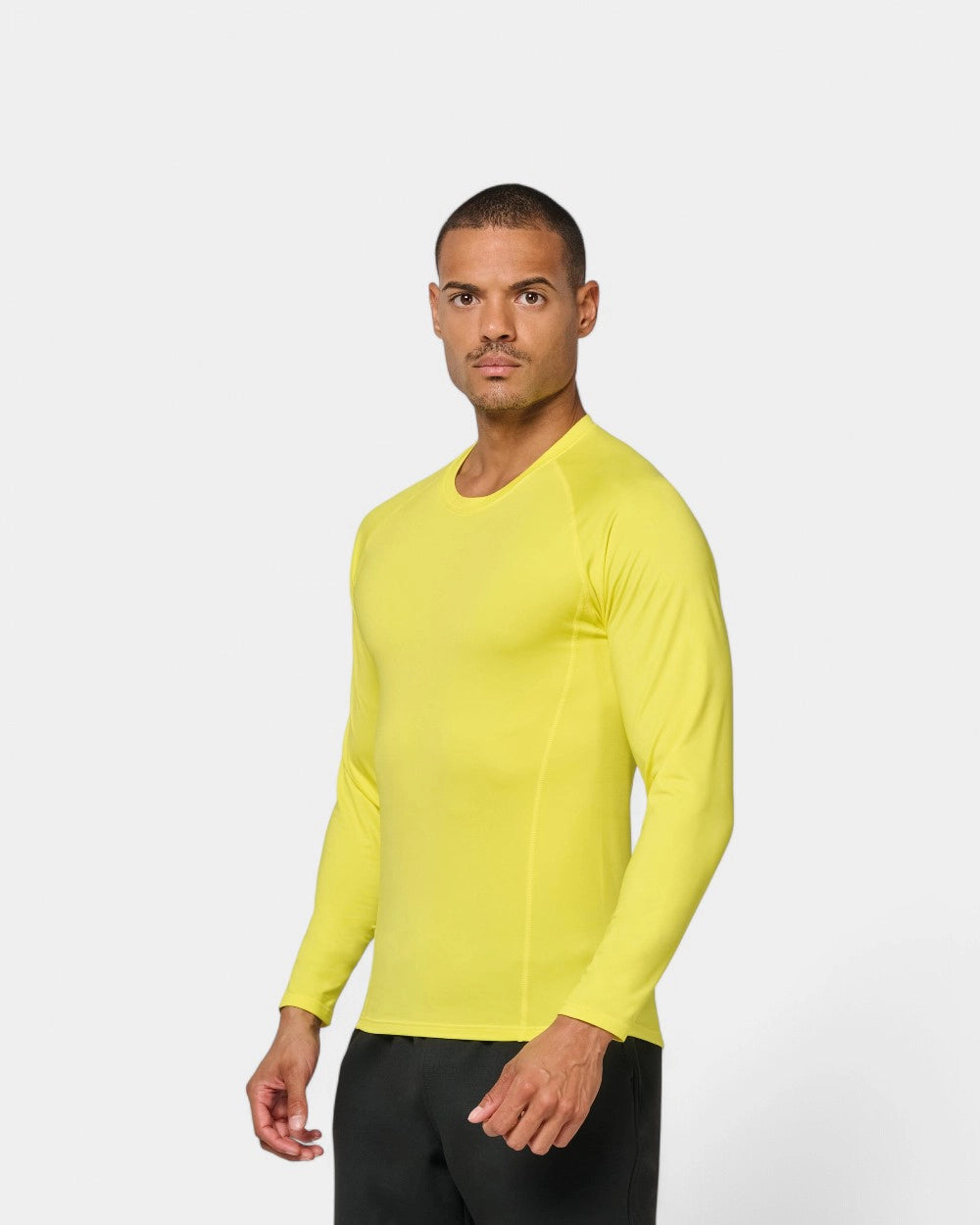
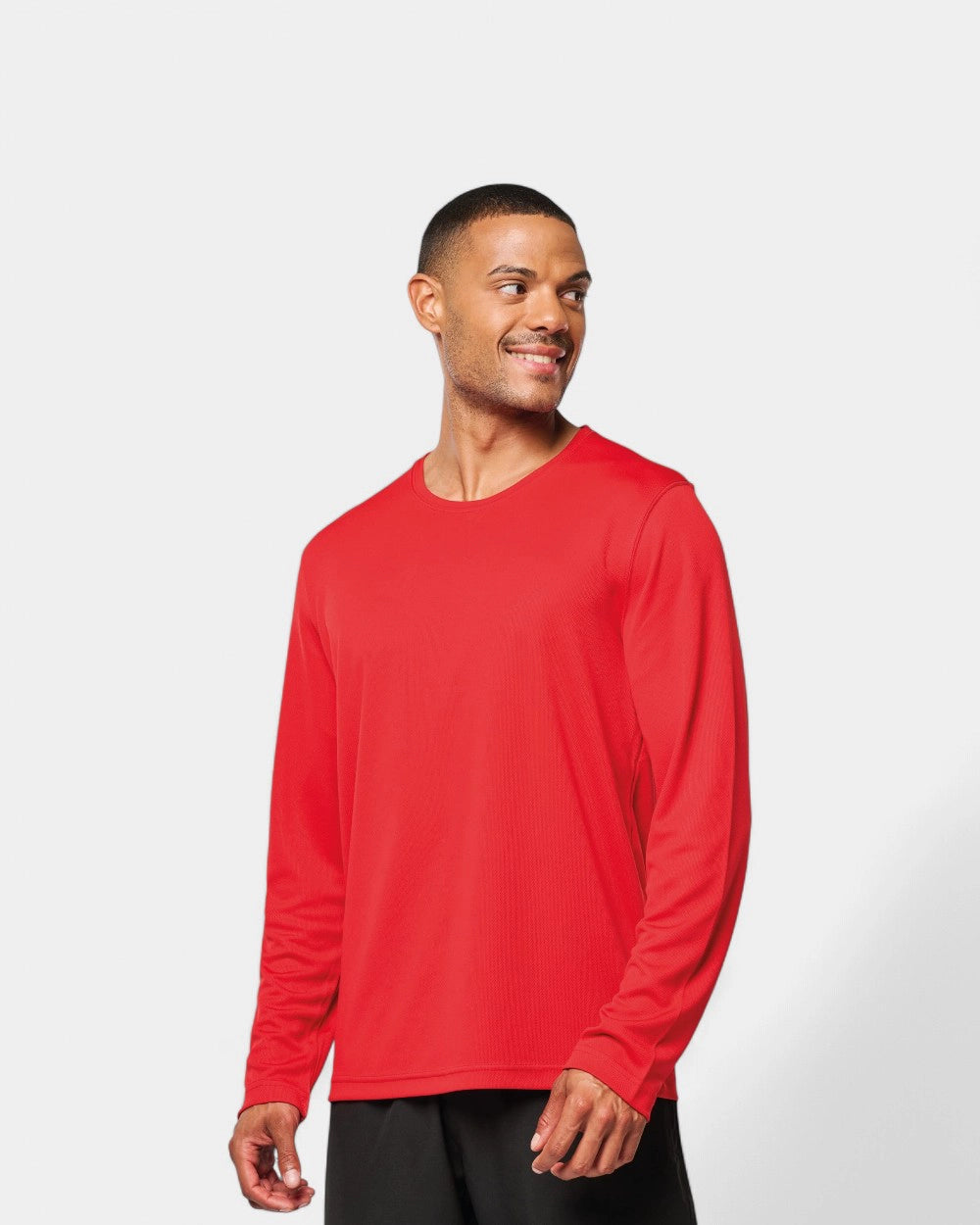
Printed sports t-shirts are not only a summer race vest. The same wicking knit runs as a long-sleeve tee for cold-weather training, an early-season cross-country fixture or a spring morning start. The longer sleeve keeps the moisture management of the short-sleeve base while adding cover where a bare arm would chill at a standstill.
Weight is the lever that tracks the season. A light long-sleeve around 140 g/m² suits a brisk autumn run. A brushed-back knit nearer 180 g/m² holds warmth for a winter session without the bulk of a separate layer. The cut stays close so the tee sits under a gilet or a shell when the temperature drops further.
Sublimation carries across the longer body exactly as it does the short-sleeve, so a club runs one design through both garments in a single colour story. A squad then trains in matching kit from a cold January morning to a July fixture, with the crest and the sponsor block reading identically across the seasonal range.
Cross-Training And Team-Sport Briefs That Lean On Printed Sports T-Shirts
Beyond the running club, printed sports t-shirts carry across the training week. A circuit-and-conditioning gym wants a stretch poly-elastane tee that survives burpees and ground work; a netball or hockey squad wants a breathable race-cut body under a bib. A corporate league side wants a bold sublimated shirt that photographs well for the sponsor.
Charity and event briefs sit alongside the club work. A 5k fundraiser kits hundreds of runners in a light, single-wear tee with the cause front and centre. A school sports day leans on colour-blocked house tops that sort teams at a glance. Each brief tunes the knit weight and the print coverage differently, so we never reach for one default base.
Personalised footballs often join a grassroots training order, so a club brands the kit and the kit bag and the ball that travels with them in one go. Whatever the sport, a well-specced performance tee puts your name where a cotton tee would be soaked and sagging by the warm-up's end.
- Set knit weight by sweat load: 130 g/m² race, 150-160 g/m² training
- Choose 100% poly for full sublimation, poly-elastane for stretch
- Place mesh under arms, flanks and upper back for real venting
- Pick raglan sleeves where straps or overhead reach cause chafe
- Reserve embroidery for chest crests, never over sweat panels
- Skip fabric softener so the wicking and anti-odour finish last
- Hold the dye file so mid-season top-ups match the first batch

