

Printed parasols






Treat your clients and employees!

FAQ - Branded parasols
Trusted by 1,000+ companies
Where your custom parasols will stand, and what that demands
Start with the location, because with custom parasols a 3m pub-garden model and a 2m cafe-frontage model are different orders. The footprint, the base and the wind exposure all change with the setting.
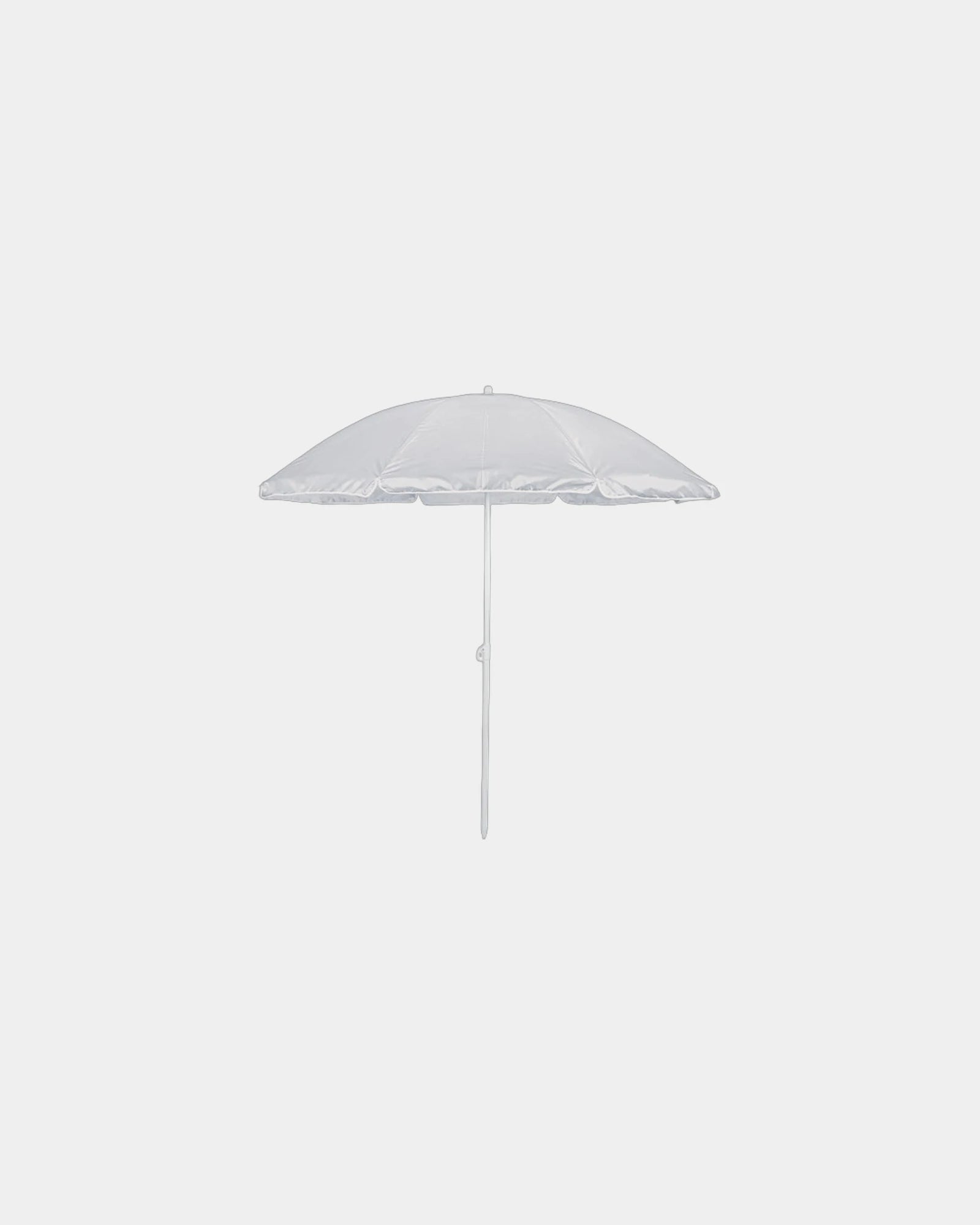
A pub beer garden over picnic benches wants wide round canopies on weighted bases, printed with the brewery or pub name. A pavement cafe with limited width often needs a square canopy that tessellates against a wall. Trade-stand and festival use favours a fast push-up or crank parasol that two staff can rig in minutes.
Beach-club and seafront sites add a wind and salt problem most garden buyers never face. There the pole material and the canopy venting matter more than the print area, so the brief leads on durability first.
Canopy diameter and shape across personalised parasols
A 2m canopy shades a small bistro table for two, while a 2.5m to 3m round canopy covers a full pub bench or four to six seats. Diameter sets how many covers each of your custom parasols shades, so it drives the whole order.
Round canopies suit open gardens and give the largest shaded circle per pole. Square and rectangular canopies pack tighter in a row along a frontage, so a line of them throws an unbroken band of shade with no gaps. Branded Beach Towels sit alongside parasols in a beach-club or lido kit where the same logo runs across the whole poolside scene.
Larger commercial spans above 3m exist for restaurant terraces and event arenas, usually as a cantilever or a heavy crank model. Above that size the base weight and the mechanism become the limiting factors, not the fabric.
| Canopy diameter | Shape options | Typical coverage | Best setting |
|---|---|---|---|
| 2m | Round or square | One small table, 2 seats | Cafe frontage, balcony |
| 2.5m | Round or square | Bistro table, 4 seats | Restaurant terrace |
| 3m | Round or square | Pub bench, 4-6 seats | Beer garden, beach club |
| 3m+ cantilever | Round or square | Large table, lounge set | Event arena, hotel pool |
Crank, push-up and cantilever mechanisms on promotional parasols
At opening time a barista cranks a 3m canopy up one-handed while carrying a tray, and at a market stall two hands shove a push-up pole until the pin clicks. How the parasol opens shapes both the daily shift and the price, and each mechanism suits a different rhythm of use.
A push-up parasol slides open by hand and locks with a pin. It is the cheapest and lightest, which suits market stalls and a quick festival rig. A crank parasol winds open on a geared handle, so one person opens a heavy 3m canopy without strain, ideal for daily cafe and pub use.
A cantilever parasol hangs the canopy from a side arm, leaving the area under it completely clear of a centre pole. That frees a dining set or a lounge area beneath it, which is why hotels and upper-tier restaurants choose them despite the higher price and heavier base.
Aluminium versus hardwood poles on custom parasols
A 3m hardwood pole can weigh half again what the same aluminium pole weighs, and that gap is felt every time staff carry it. The choice trades looks against weight and upkeep, and both materials can be branded, though aluminium takes a printed wrap more readily than timber.
Aluminium poles are light, rust-resistant and powder-coated in a colour to match your brand. They suit high-turnover hospitality where staff open and close the parasol daily and value the low weight. Hardwood poles in beech, ash or eucalyptus give a warmer, premium look that retail and luxury venues often prefer.
Wood needs occasional oiling and is heavier to move, so weigh that against the aesthetic gain. For a salt-air seafront site, powder-coated aluminium or a wood-effect aluminium pole resists corrosion better than untreated timber over several seasons.
Printing your logo across personalised parasols: canopy, valance and pole
Custom parasols give you three separate print zones, and a strong brief uses all three. The canopy panels, the hanging valance and the pole each carry the mark differently.
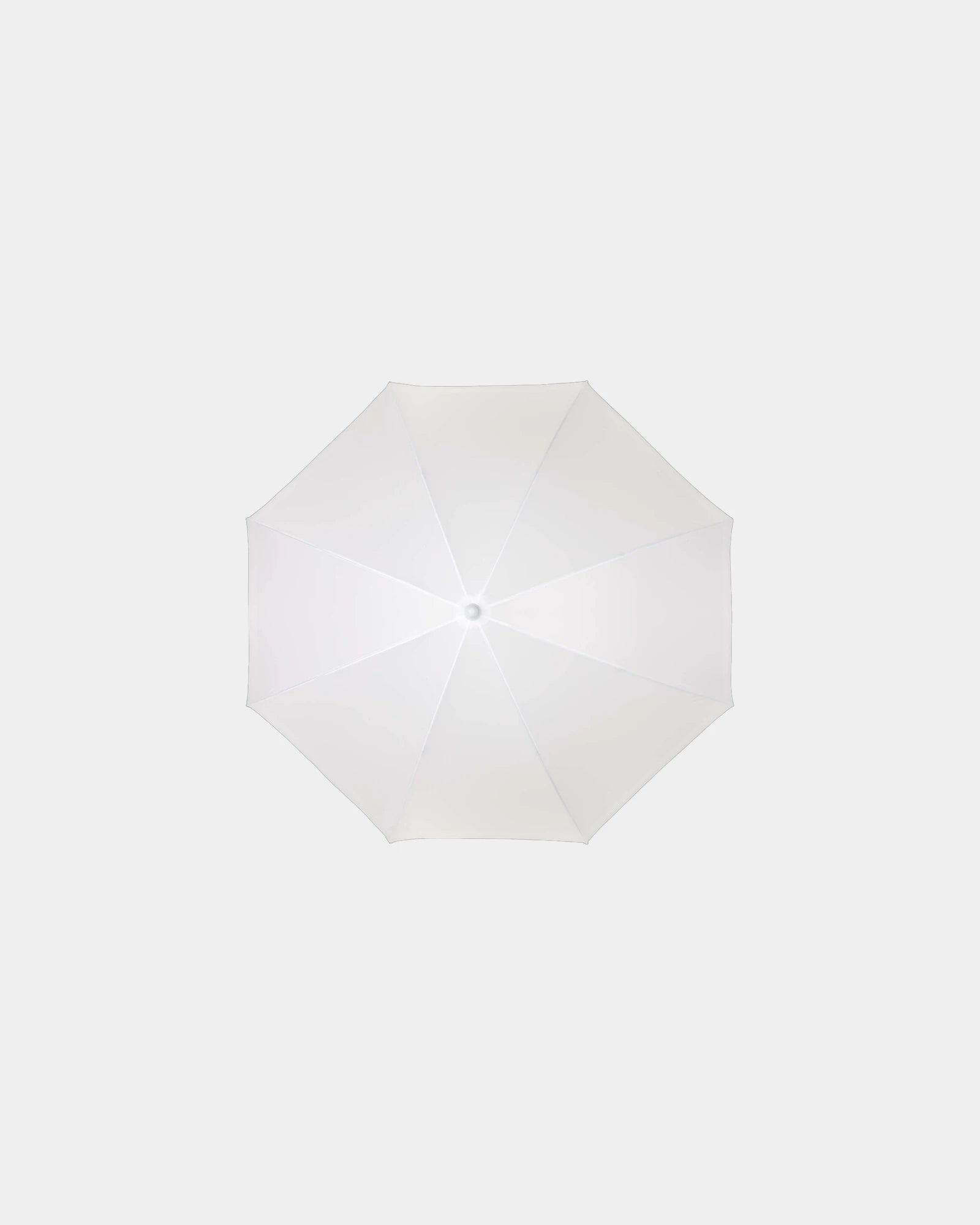
Screen print lays one to several spot colours onto each canopy panel, which keeps a logo crisp and is the workhorse for a two-colour pub or brewery mark. Full dye-sublimation prints edge-to-edge across the whole canopy, so a photographic design or an all-over pattern wraps the entire shade. Match the method to the artwork, because a gradient needs sublimation while a flat logo screen-prints cheaper.
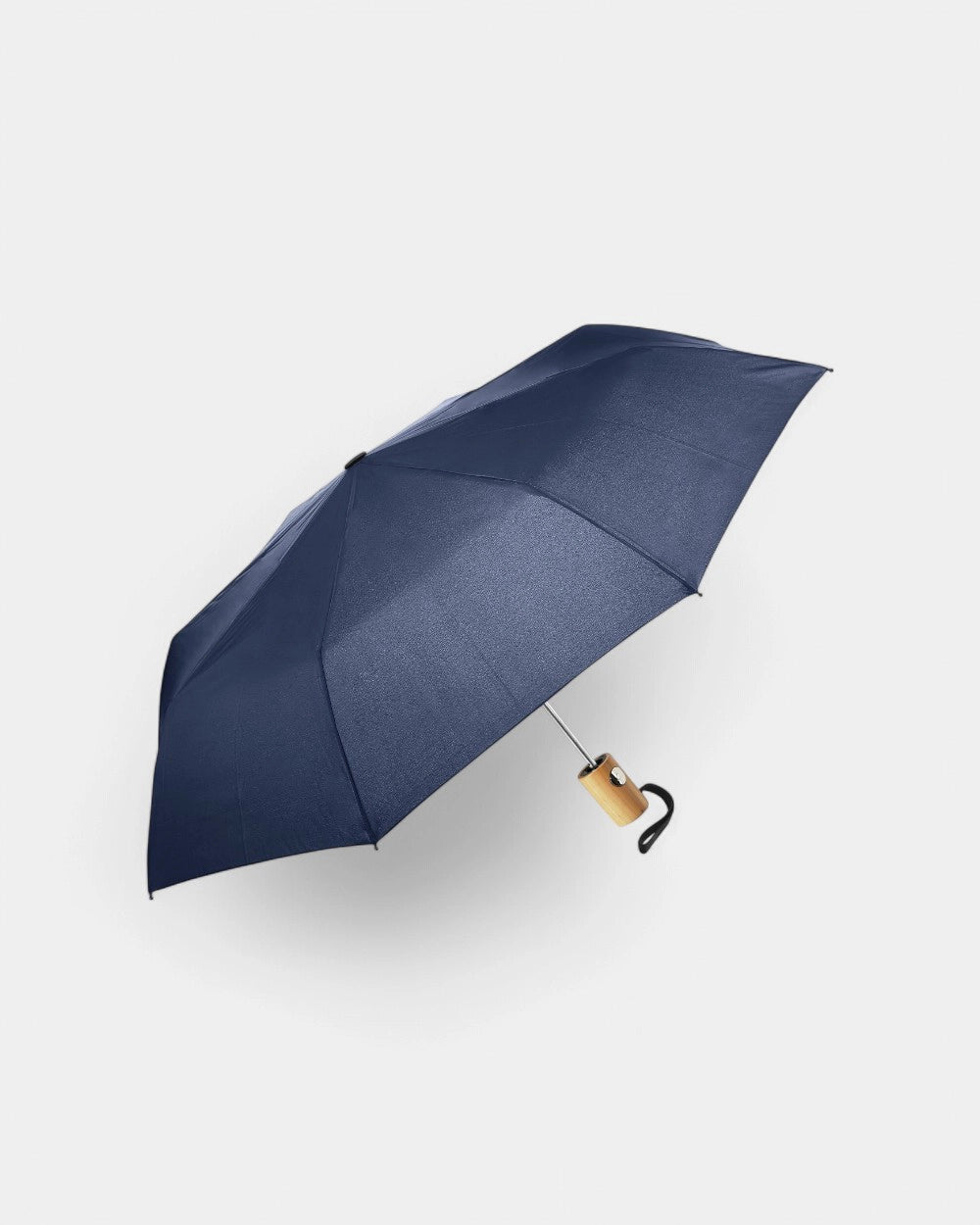
Branded umbrellas cover the handheld rain side of the same activation, when staff or guests need personal cover walking between buildings rather than fixed shade.
The valance: hospitality branding on promotional parasols
The valance is the hanging fabric skirt around the canopy edge, and it is the single most valuable strip on hospitality branded parasols. It sits at eye level to anyone seated or walking past, unlike the canopy top.
A pub or cafe typically prints the venue name or a sponsor logo repeated around all sides of the valance, so the brand reads from every approach. Because it runs at face height across a terrace, the valance often draws more views than the canopy top above it.
Valances come scalloped or straight-cut, and the drop is usually around 15 to 20cm. That gives enough depth for a wordmark without the skirt flapping in a breeze, though exact dimensions are model-dependent.
| Print zone | Method | Best for | Visibility |
|---|---|---|---|
| Canopy panels | Screen print | 1-3 colour logos | Seen from a distance |
| Full canopy | Dye-sublimation | Photographic, all-over | Seen from a distance |
| Valance skirt | Screen or sublimation | Venue name, sponsor | Eye level on terrace |
| Pole wrap | Printed sleeve | Secondary branding | Close up at the table |
Wind venting and base weight for custom parasols
On an exposed seafront terrace a gust can lift a 3m canopy clean off an under-weighted base and send it skating across the decking. Undersizing the base is the most common and most dangerous mistake, so the base must match the canopy, not the other way round.
A vented canopy has a small chimney at the crown that lets wind escape upward, which cuts lift and helps the parasol sit settled in a breeze. Seafront and rooftop sites should treat that vent as standard, not as an upgrade.
Sizing the base to your custom parasols
As a working guide, a 2.5m to 3m crank parasol needs roughly 50 to 60kg of base weight on a free-standing site. A 3m or larger cantilever needs around 80 to 100kg or a bolt-down ground fixing, because the offset arm acts as a lever in a gust.
Manufacturers quote a wind tolerance per model, often around Force 5 to 6 for a vented commercial frame, but treat that as a survival rating, not a working one. Wind down and close any parasol once wind passes a stiff breeze, roughly Beaufort Force 3. An open canopy in a gust is what bends frames and snaps ribs.
Canopy fabric weight and grade on personalised parasols
Canopy cloth is sold by weight, and that figure tells you how the parasol will wear. Light promotional canopies run around 180 to 220gsm, while commercial hospitality models sit closer to 250 to 300gsm of solution-dyed polyester or acrylic.
Choosing the cloth grade for your promotional parasols
The heavier weave resists UV fade, holds its dye through a full trading season and does not slacken after rain and sun cycles. A budget 180gsm canopy suits a single summer event, whereas a beer garden that runs March to October wants the denser cloth.
Solution-dyed cloth carries colour through the whole fibre rather than on the surface, so a sun-faded panel keeps its tone far longer than a printed-on dye would. We label the woven weight and the UPF figure on each canopy variant when you spec the fleet, so the cover you sign for is the cover you receive.
Many hospitality venues need a flame-retardant canopy for their licence or insurance, commonly to a B1 standard. The fire rating is fixed to the specific canopy model, and we issue the matching certificate for the exact base you select.
Tilt, telescopic and per-panel print on promotional parasols
A tilting parasol pivots the canopy on a button or push hinge to chase the sun, so a south-facing terrace stays shaded from lunch to early evening. A telescopic centre pole, by contrast, drops to a shorter height for storage and for sites with a low awning or balcony ceiling.
Tilt suits a fixed cafe table that needs angled cover, while telescopic suits a venue that strikes the parasol nightly into a tight cupboard. Neither mechanism reduces the print area, which is where the real value of a branded canopy sits.
Full dye-sublimation treats every triangular panel as one continuous print bed, so a six-panel canopy gives you six full-colour faces plus the underside seen from below. A maker can run a different message on alternating panels, which lets a brewery alternate the house mark with a seasonal cask or cider promotion around the same canopy.
A dense, solution-dyed canopy blocks most ultraviolet while it shades the covers below, and the maker quotes the UPF on a printed cloth tag stitched into each canopy variant. Branded sunglasses extend the same sun-and-shade theme into a giveaway when a venue runs a summer promotion under its newly branded parasols.
Custom parasols for pubs, cafes, beaches and events
Match the custom parasols to the trade. A brewery or pub group orders 3m crank round parasols in a fleet, all carrying the same valance branding. That rolls out a consistent look across multiple venues in one go.
A cafe or deli with a narrow pavement licence wants square canopies that tuck against the building and shade a tight row of two-seater tables. Beach clubs and lidos lean on wind-vented, salt-resistant models, often in a market-parasol style with a tilting pole.
Event and exhibition teams choose fast push-up parasols they can transport and rig across a circuit of shows. Custom bucket hats pair with a beach or festival parasol stand where staff need branded sun cover on the head as well as overhead.
| Setting | Recommended parasol | Key feature |
|---|---|---|
| Pub beer garden | 3m crank round | Fleet valance branding |
| Pavement cafe | 2-2.5m square | Tessellates against wall |
| Restaurant terrace | 3m+ cantilever | Clear floor, no pole |
| Beach club | Vented market parasol | Wind and salt resistant |
| Event circuit | Push-up parasol | Fast rig, easy transport |
Seasonal terraces that put custom parasols to work
A branded parasol earns its place across very different trading calendars, and the canopy you spec follows the months it stands out. A seaside lido opens hard from May to September and wants salt-resistant venting. A city rooftop bar trades later into autumn under heaters, so a denser cloth and a tilt to chase low sun matter more than a beach frame would need.
Festival and touring teams sit at the other end. They rig and strike a parasol many times across one summer circuit, so a light push-up frame that two staff handle quickly beats a heavy crank that slows the get-in. The brief below pairs each calendar with the build that suits it.
| Trading calendar | Canopy priority | Frame that suits |
|---|---|---|
| Summer seaside lido | Salt and wind venting | Vented market parasol |
| Autumn rooftop bar | Dense cloth, tilt | Crank with tilt hinge |
| Festival touring circuit | Fast rig, light weight | Push-up frame |
| Year-round hotel pool | Clear floor, durable | Cantilever, weighted base |
Ordering personalised parasols: quantity, lead time and proofing
Fleet roll-outs drive most parasol orders, so a brewery refreshing twenty venues at once buys at a different unit cost than a single cafe taking two. Larger printed runs lower the cost per canopy as the screen or print set-up spreads across more units.
A free sample of a stock canopy is available so you can check fabric weight, colour and crank action before committing a fleet. Standard production runs to delivery in three weeks from approved artwork, with the timeline moving on canopy quantity and print complexity.
Personalised fans handle close-range cooling for guests seated under the parasols, a low-cost summer add-on for the same terrace. Send print-ready vector artwork sized to the panel, and approve the colour proof before the print run starts.
A late artwork change is the usual reason a parasol fleet misses a season opening, so lock the valance wording early. Confirm the canopy colour, the valance text and the pole finish on one signed proof before any printing begins.
Storage, covers and replacement canopies for promotional parasols
Custom parasols are a multi-season asset, so plan for the months they stand closed as well as the days they shade. Out-of-season storage protects both the frame and the printed canopy.
Wind down and close each parasol every night and through bad weather, then slip a fitted storage cover over the folded canopy to keep dust and damp off the fabric. A protective cover extends the colour life of a printed canopy noticeably across winters in store.
On most commercial models the canopy detaches from the frame, so a faded or storm-damaged canopy can be reprinted and replaced without buying a whole new parasol. That keeps a fleet refresh cheaper than a full reorder when only the branding has dated. Corporate Gift Boxes suit the staff or partner gifting that often runs alongside a venue's seasonal relaunch.
One pub group came to us for a fleet refresh expecting to rebuy every parasol. On inspection the canopies were sound, but the printed valances still carried an old drinks sponsor that had left the estate. We reprinted only the valance skirts and rehung them on the existing frames, so the group relaunched at a fraction of a full reorder.
Frames in powder-coated aluminium shrug off a winter in a dry store. Hardwood frames benefit from a light re-oil before the next season to keep the timber from drying and greying.
- Match base weight to canopy size, never undersize
- Print the valance for eye-level terrace branding
- Choose a vented crown for windy seafront sites
- Pick aluminium poles for daily high-turnover use
- Order square canopies to line a narrow frontage
- Confirm any B1 fire rating on your chosen model

