

Promotional Cycling Helmets
- Price, low to high
- Price, high to low
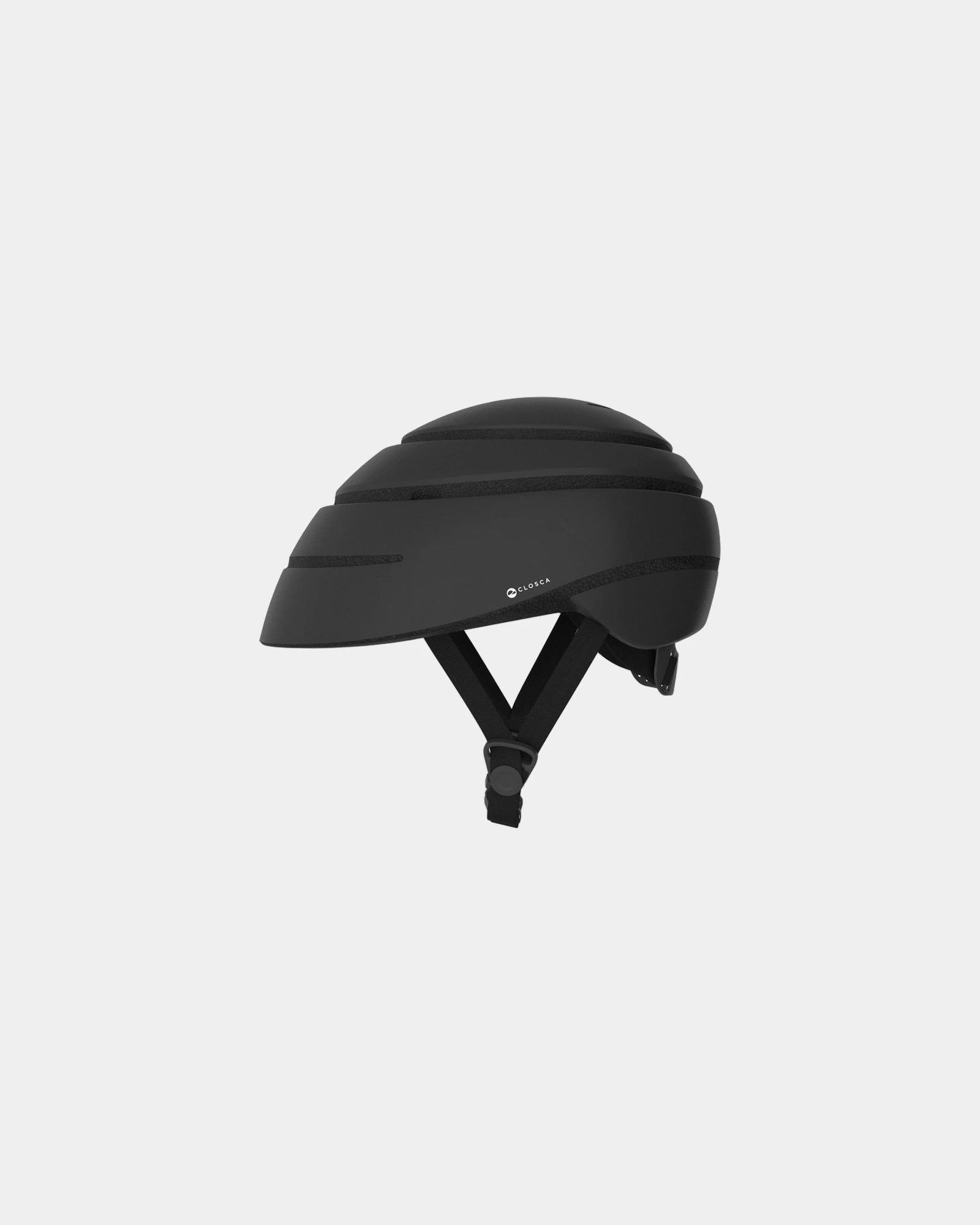


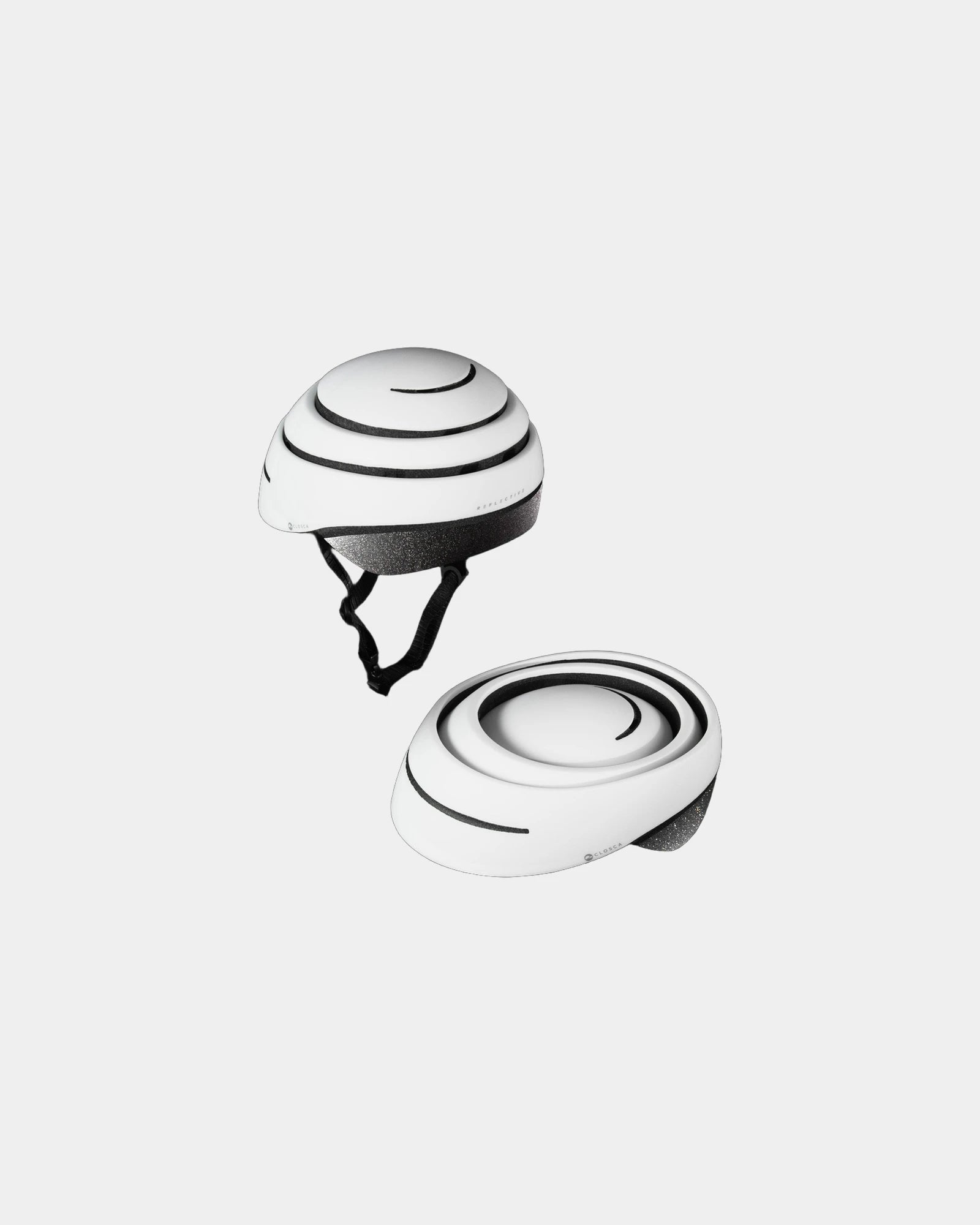


Treat your clients and employees!

FAQ - Personalised Cycling Helmets
Trusted by 1,000+ companies
In-Mould Construction Behind Custom Cycling Helmets
In-mould versus hard-shell branded cycling helmets
The shell build sets the weight, the price and how the vents run, so it is the first thing to settle on a branded cycling helmet order. In-mould construction fuses the shell to the liner: a thin polycarbonate outer skin and the expanded-polystyrene foam bond in a single moulding step. That keeps the helmet light, lets the vents run clean through both layers, and gives a smooth outer skin that takes a logo well.
The older alternative is a hard-shell helmet, where a separate ABS shell is taped or glued over the foam after moulding. It is tougher against scuffs and costs less, which suits a high-volume bike-share or schools handout where helmets get knocked about. In-mould reads lighter and more premium for a sportive or a staff cycle scheme. We match the construction to how rough a life the branded cycling helmet will lead.
Construction also decides what the print sits on. An in-mould shell gives a continuous, slightly curved polycarbonate surface that a pad-print or a moulded sticker follows cleanly. We read your artwork against the shell shape and the vent layout before a run, so the logo lands on a flat enough panel and never bridges an open vent.
The Certification Marking On Promotional Cycling Helmets Is The Maker's
Every branded cycling helmet we brand carries its own safety marking from the manufacturer who built and tested it. That marking, the standard it states and any conformity claim belong to the product's own specification, printed on the inside label and the data sheet. We add a logo to the outside, we do not test or certify, and we make no safety-performance claim of our own. The exact reference sits on the data sheet for the model you choose.
This shapes what you can honestly tell your own audience. You may quote the standard named on the label, because that is the maker's declared marking. You cannot have us invent a standard number or promise a level of protection. Our decoration is designed around that rule: branding goes on the outer shell only, never over the internal label, the strap anchors or the impact liner. Pairing the branded cycling helmet with a high-visibility custom cap for off-bike moments keeps the brand visible without asking the helmet to carry a message it was not built for.
Ventilation And Airflow On Branded Cycling Helmets
Branded cycling helmets earn their keep on airflow, so vent count is worth setting against the use-case rather than the brochure photo, because a rider notices airflow on the first climb. A road or sportive helmet typically carries a high vent count, often in the high teens to mid-twenties, with front intakes and rear exhausts channelling air across the head. More open vents mean cooler riding and a lighter shell, at the cost of a little coverage area.
A commuter, bike-share or urban helmet usually runs fewer, larger vents for a cleaner look and a more robust shell. An entry-level handout helmet may carry a modest vent count to keep cost and weight sensible across a big order. Exact vent numbers are model-dependent, so we confirm the count and the airflow style for the line you pick rather than quoting a single figure across the range.
Vents also set where a logo can sit. The solid panels between intakes are the real estate a print lives on, and a busy 24-vent road shell leaves narrower bridges than a six-vent urban lid. We map your mark to the closed areas at proof so it reads whole. That is the same care we take placing a print on Branded tech gadgets, where the usable surface is just as tight.
| Helmet type | Shell build | Typical vents | Best fit |
|---|---|---|---|
| Road / sportive | In-mould, lightweight | High teens to mid-20s | Sponsored rides, clubs, events |
| Commuter / urban | In-mould or hard-shell | Fewer, larger vents | Cycle-to-work, staff schemes |
| Bike-share / fleet | Hard-shell, robust | Modest count | Shared fleets, high turnover |
| Schools / handout | Hard-shell, value | Modest count | Safety programmes, youth events |
Adjustable Cradle And Dial Fit On Custom Cycling Helmets
Hand a single helmet design to fifty staff on a cycle scheme and the fit system is what stops half of them abandoning it. Most modern helmets carry an internal cradle, a plastic retention ring that wraps the back of the head, tuned by a rear dial. Turning the dial draws the cradle in or lets it out by a few millimetres, so one shell adapts to a range of head shapes without sizing each rider.
The cradle usually adjusts for height too, clipping up or down at the rear so the branded cycling helmet sits level rather than tipping back. The chin strap meets under the ear in a Y-split and buckles below the jaw. Better helmets add a one-hand buckle and a strap splitter that locks the angle once set. These are model-dependent, so we confirm the fit hardware on your chosen line.
The dial-and-cradle system is what makes a near one-size order workable for a mixed adult group. It also means the helmet a rider sets to their own head is one they keep using. Your logo then travels with them on the commute rather than sitting in a drawer.
Sizing And Mixed Youth-Adult Orders For Promotional Cycling Helmets
Band split for a mixed order of promotional cycling helmets
Helmet sizing runs on head circumference measured around the brow, not on a vague small-medium-large guess, so it pays to plan it before an order. Most adult ranges split into roughly two or three size bands. Common bands are an S/M around 52 to 58 cm and an L/XL around 58 to 62 cm. The dial cradle covers the spread inside each band, and exact ranges are model-dependent.
Youth and child helmets run smaller bands and their own fit cradle, typically from around 48 cm. A family-facing event or a schools programme often needs both: youth lids for under-12s and adult bands for parents and staff. We can run a mixed youth-and-adult order under one job, with the same logo scaled to each shell. A community ride then reads as one brand across every age on the start line.
Getting the band right matters more than on most branded kit, because a helmet only sits correctly inside its intended range. For a known team you can collect a quick brow measurement and order the right band per rider. For an open giveaway, a single S/M plus the dial covers the majority of adult heads, with an L/XL stocked for larger sizes. We advise a band split that fits a typical workforce without you measuring every head.
| Band | Typical circumference | Adjustment | Best for |
|---|---|---|---|
| Youth / child | Approx. 48 to 54 cm | Dial cradle | Schools, family events |
| Adult S/M | Approx. 52 to 58 cm | Dial cradle | Most adult giveaways |
| Adult L/XL | Approx. 58 to 62 cm | Dial cradle | Larger head sizes |
| One-band + dial | Single band spread | Dial cradle | Open fleets, bike-share |
The Branding Area On Branded Cycling Helmets
Print methods for custom cycling helmets
Branding sits on the outer shell, between the vents, mapped to solid panels and clear of the internal label, the impact liner and the strap hardware. The method then follows how many helmets you need and how much colour the artwork holds. A pad-print presses one or two ink colours onto the curved polycarbonate, cheapest per helmet at volume. A domed sticker carries full colour and gradients over a gentle curve. A heat-transfer covers photographic artwork and longer text for a sponsor lock-up.
The three routes differ on cost and durability, not just colour. A pad-print has the lowest unit cost and bonds into the shell finish, so it resists scuffs and wash for the life of the helmet. A domed sticker carries a clear resin dome that protects fine detail but can lift at the edge under heavy abrasion. A heat-transfer sits flattest and richest for photographic work, though it is the dearest per unit on a small run and best kept off the most exposed panels.
Placement is a brand decision as much as a technical one. The side panels read best to passing traffic and in event photography, while a small rear mark sits at the eyeline of a following rider. We send a free digital proof showing the logo mapped to the actual shell before anything is printed. That is the way we map a print onto Custom drawstring bags so a cycling kit reads as one set.
| Method | Colour | Durability | Relative unit cost |
|---|---|---|---|
| Pad-print | 1 to 2 colours | Bonds in, scuff-resistant | Lowest at volume |
| Domed sticker | Full colour, gradients | Resin dome, edge can lift | Mid |
| Heat-transfer | Full colour, photographic | Flat and rich, keep off wear panels | Highest on small runs |
| Decal set | Spot or full colour | Multi-position, replaceable | Varies by coverage |
Minimum Order And Price Bands For Branded Cycling Helmets
Branded cycling helmets price in steps, because a pad-print or sticker tool is a one-off setup cost spread across the run. So the per-helmet price falls in steps as the count climbs from a sample into the hundreds. A first branded batch typically starts from a low minimum, in the region of 25 to 50 helmets, which lets a club or a small team commit before a fleet. Below that floor the setup weighs too heavily on each unit to make sense.
Price then moves in bands rather than smoothly. The bands commonly fall around 50-99, 100-249, 250-499 and 500-plus. The unit cost steps down at each threshold as the fixed setup spreads wider. Ordering just over a band edge, say 105 against 99, is usually worth it because you cross into the cheaper rate. We flag where your quantity sits against the next band so you can size the order around it.
Method shifts the maths too. A pad-print rewards volume hardest, so a 500-helmet road order leans that way. A 60-unit run with a detailed crest may cost less overall as a domed sticker. There is no plate to pay for, so the higher unit rate still works out cheaper. We quote two or three quantity points against your artwork so the trade-off is visible before you commit. A bottle often rides along, so riders pick up a personalised water bottle at the same event.
A 60-Person Cycle-To-Work Rollout In Custom Cycling Helmets
Take a workplace running a 60-person cycle-to-work launch. We build it around two adult bands: roughly 45 in S/M and 15 in L/XL, the usual spread for a mixed adult group. A few extra L/XL stay in stock, so a late large-head sign-up is covered without a reorder. The brief leads on fit and ventilation, because a helmet staff will actually wear matters more than the logo.
Decoration is a two-colour pad-print on the side panels, the cheapest route at this count and tough enough for daily commuting. At 60 units the order sits in the 50-99 band, so we show the cost against 100 too. That helps if the scheme expects a second intake worth crossing the threshold for. One free proof maps the mark to the chosen shell before any plate is cut.
Production runs to roughly a three-week lead from artwork sign-off, and the 60 helmets ship together as a single palletised consignment to one site address. We confirm that date against the launch day before the order is placed. The stocked L/XL pairs cleanly with custom sportswear if the same scheme later adds branded jerseys at a matching logo weight.
Visor, Peak And Accessory Compatibility On Custom Cycling Helmets
Branded cycling helmets often take a removable visor or peak, the most-asked accessory, and compatibility is model-dependent. Many urban and trail helmets take a clip-in or bolt-on peak that shades the eyes for a commuter brief. Most lightweight road shells do not, because the peak adds drag and weight. We confirm whether your chosen line accepts a peak, and whether it ships fitted or as an add-on, before the order rather than after.
Other features run model-dependent in the same way. Some helmets carry a rear light clip or a reflective rear panel for commuter visibility. Others add an insect mesh across the front vents, or a magnetic buckle that fastens one-handed with gloves on. Each of these changes both comfort and the usable branding surface, so we check them against your logo placement at proof. A peak in particular can sit close to a front-panel mark.
On a shared helmet the liner does as much work as the shell. Internal comfort pads sit between foam and head, wick sweat and lift out for washing, which keeps a bike-share or team helmet hygienic across many riders. A spare pad set ordered with a fleet keeps a helmet in service rather than retiring early.
- Removable peak on most urban and trail lines, rarely on road shells
- Lift-out comfort pads for washing and sweat wicking
- Spare pad set to keep a shared fleet hygienic
- Rear light clip or reflective panel for commuter visibility
- Insect mesh across front vents on some lines
- One-hand or magnetic buckle for gloved fastening
Colour, Reflectivity And Visibility On Promotional Cycling Helmets
Colour does branding and safety work at once on a helmet, because a bright shell is both a brand statement and easier for traffic to see. Stock shells come in a deep palette, and a close match to a corporate colour is usually possible, though an exact Pantone on the moulded shell itself is model-dependent. We confirm the nearest standard shell colour to your palette before the run.
Visibility features lift a commuter or winter brief. A reflective decal or a light-clip on the rear catches headlights at dusk, and a high-vis shell colour reads further in low light than a dark one. These are practical touches the rider benefits from, separate from any protection claim. We can place a reflective element so it works with, rather than over, your logo.
For event and sponsorship work the shell colour is often dictated by the campaign, so we set the logo shade against the chosen shell at proof rather than after. A bold mark on a light shell or a white mark on a dark one each read very differently in ride photography. We confirm the contrast on a sample before committing the order.
Ordering, Proofing And Lead Time For Branded Cycling Helmets
Branded cycling helmets start with a clear brief that turns a logo into a proof fast, so it helps to send the essentials up front. Tell us the use-case, the rough quantity, the size bands you need and your brand colours. We translate that into a construction, a vent style and a print method without a long email chain. We flag at this stage if a detailed logo needs simplifying to read across the vented shell panels.
Send vector artwork where you have it, since clean lines map far better onto a curved shell than a logo lifted from a website. We then return a digital proof showing the mark on the actual helmet shape. You sign off the size, the position and the colours, and the print runs to that approval. The internal label and the maker's marking stay exactly as supplied throughout.
Production runs to roughly a three-week lead from sign-off, and we confirm it against your event or scheme date before the order is placed. For a premium handout the finished set can ship in corporate gift boxes, so a sponsored rider or a new starter unboxes a considered kit rather than a loose pile. The box also protects the helmet in transit.
Use Cases For Branded Cycling Helmets By Sector
The sector you are buying for usually points to a construction and a print method before the logo is even drawn. A cycling club wants a light in-mould road shell for a sportive. A workplace running a cycle-to-work scheme wants a commuter lid that staff will actually wear. A bike-share operator wants a tough hard-shell built for high turnover. Reading the sector first settles the shell, the vent style and the band split fast.
| Sector | Shell and vents | Why it fits |
|---|---|---|
| Clubs and sportives | In-mould, high vent count | Light, premium, event photography |
| Cycle-to-work schemes | Commuter in-mould or hard-shell | Comfort and fit for daily wear |
| Bike-share and fleets | Hard-shell, robust, modest vents | Drop-resistant, high turnover |
| Schools and safety programmes | Hard-shell value, youth bands | Cost-sensible across a big order |
| Sponsorship and events | In-mould, campaign colour | Bold side panels for traffic and cameras |
We map the helmet to the sector at quote, then confirm the size bands, the fit hardware and the branding area against that brief. A sponsored road lid for a club and a hard-shell fleet helmet for bike-share are two different orders. We spec each off one logo rather than forcing one shell across the whole scheme.
Care, Replacement And Reorder Cadence Of Custom Cycling Helmets
Built to do its job once, a helmet should be handled by a scheme with replacement planned from the start. After any significant impact a branded cycling helmet should be replaced, even if the shell looks intact, because the foam liner crushes to absorb the hit and does not recover. We flag this so a fleet budgets for replacements rather than treating a knocked helmet as still sound.
Day-to-day, the shell wipes clean with mild soap and water, and the lift-out pads wash separately to keep a shared helmet hygienic. Keeping a helmet out of a hot car or direct sun protects both the foam and the printed branding. Solvents and harsh cleaners can dull a pad-print or lift a sticker edge, so a short care note covering safe cleaning ships with every order.
Manufacturers also give a service life for the foam, commonly a few years from first use. After that a helmet is best replaced regardless of impacts, and the exact figure sits on the model's data sheet. For a long-running staff or bike-share scheme we set a reorder cadence around that life. That is often a rolling replacement of a share of the fleet each year, so branded helmets stay both current and on-brand without a single large repeat order.

