

Custom european sweatshirts
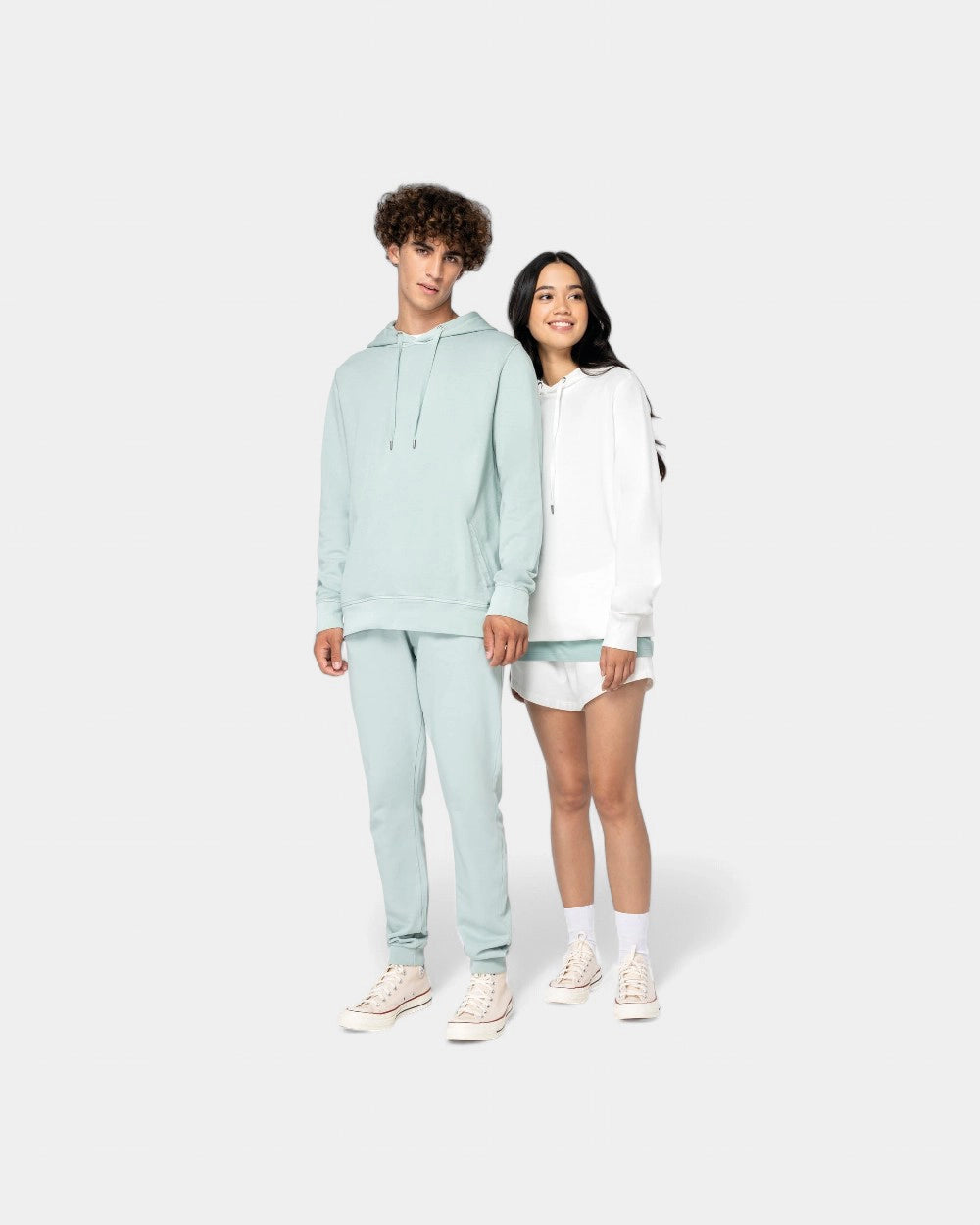


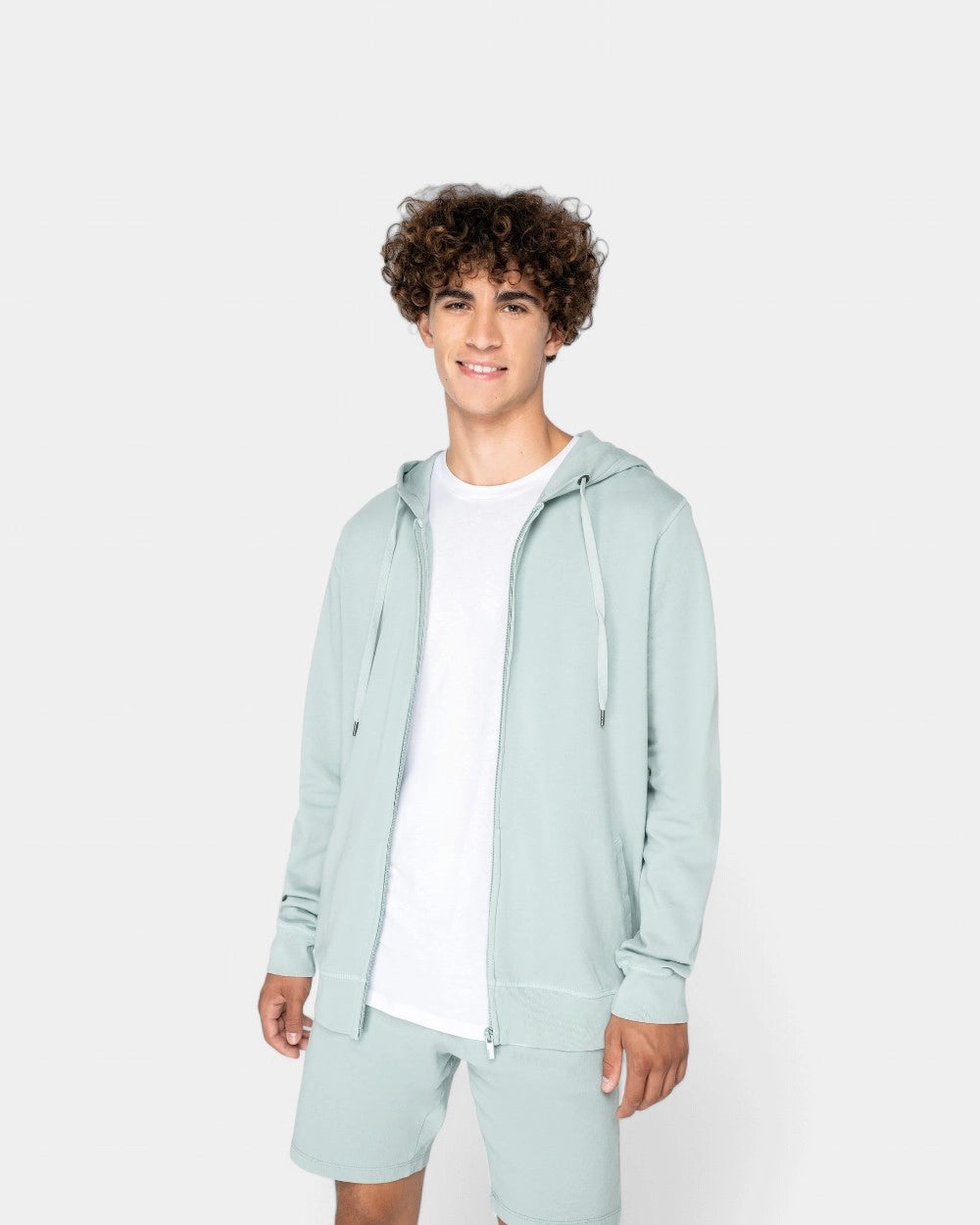


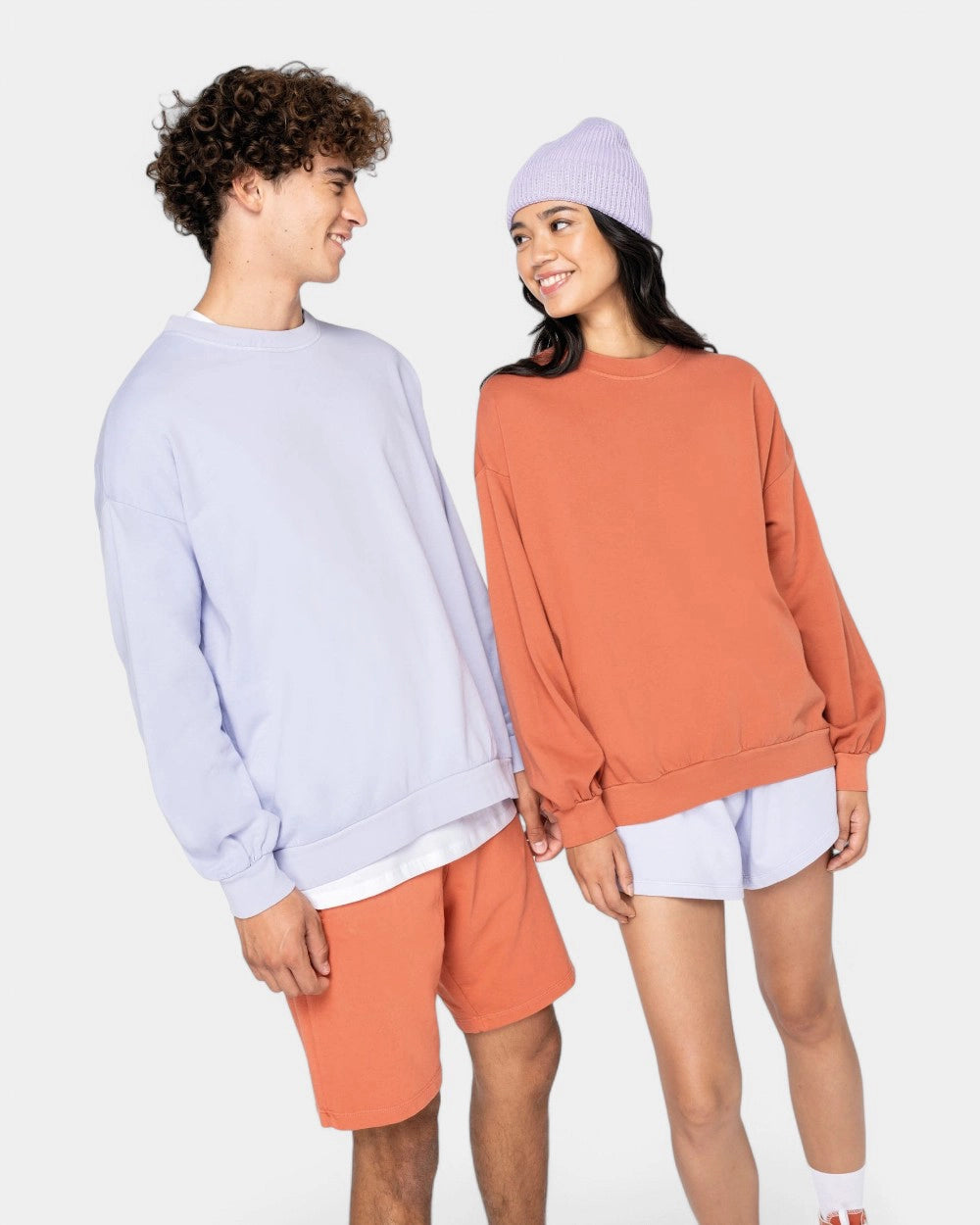


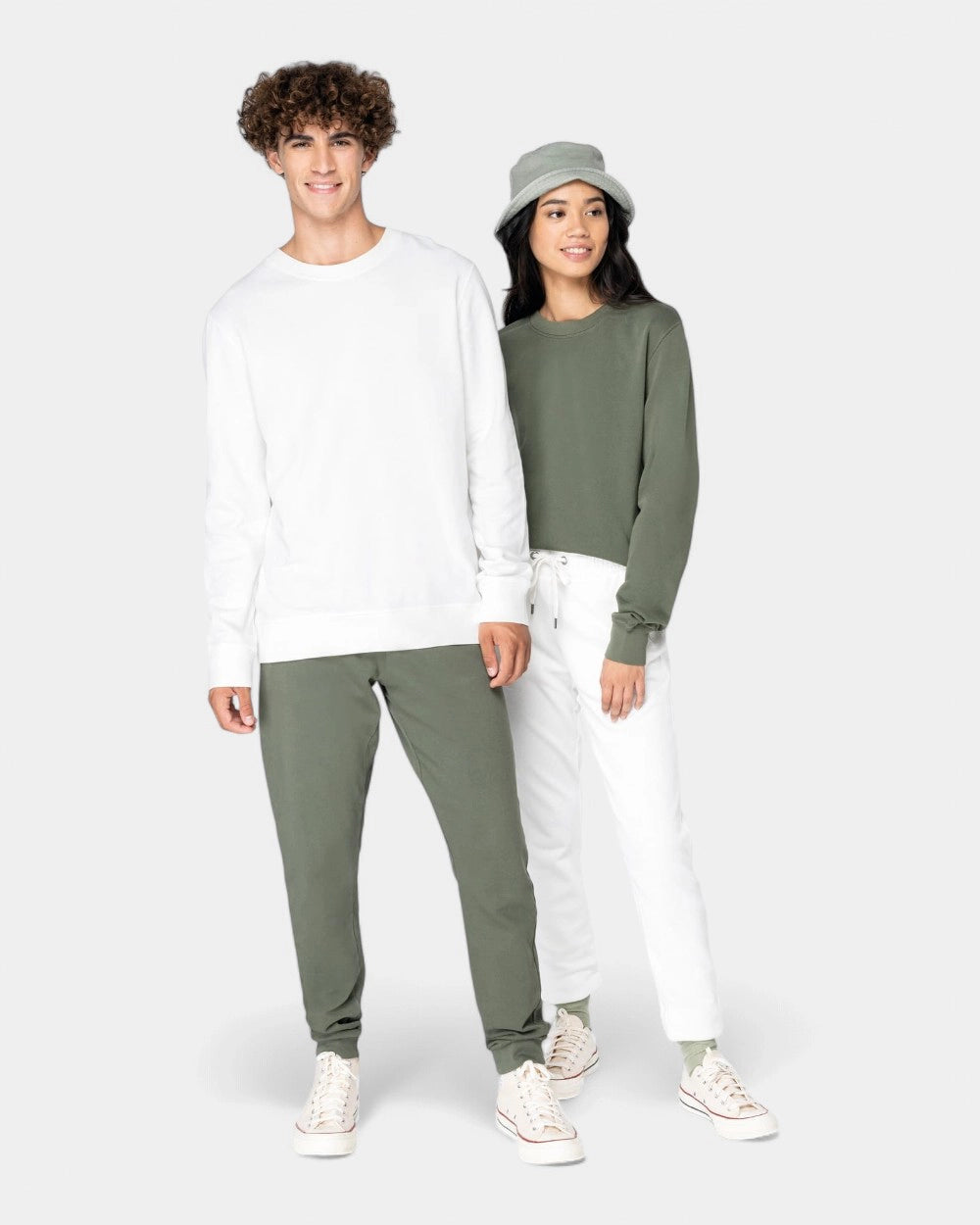


Treat your clients and employees!

FAQ - Branded european sweatshirts
Trusted by 1,000+ companies
Why organic european sweatshirts start from a different brief
A sustainability team kitting out 120 staff has two questions a standard catalogue cannot answer: where was this sewn, and what is the cotton. European-made sweatshirts settle both. The garment is knitted, dyed and stitched on the continent, so the supply chain stays short and traceable. The face cloth is organic cotton, not a conventional blend grown with routine pesticide.
That provenance is the whole reason this collection exists, and it is the one claim we make as fact. The maker confirms European manufacture and an organic-cotton body per blank. Everything else on the page stays product specific, because a vague green label means nothing to a procurement lead who has to defend the choice in a tender document.
Organic status sits in the maker's per-garment documentation, not in a slogan. Each base ships with its own tech pack stating the organic-cotton content for that exact style, so you cite the line you ordered rather than a blanket claim. Where you want the lighter pullover sibling without the hood, our Embroidered Sweatshirts carry the same fleece logic on a flat crewneck chest.
The hood, drawcord and kangaroo pocket on organic european sweatshirts
The hood is the feature that defines custom european sweatshirts and the one a crewneck cannot offer. A double-layer hood keeps its shape pulled up against a cold loading bay or a January touchline. A single-ply hood collapses flat and looks cheap by the second wash. The drawcord threads through metal-tipped eyelets, and a flat woven cord resists the fray that rounds out a cheap twisted one.
The kangaroo pocket is a decoration constraint as much as a comfort feature, so it shapes where your mark can go. The pouch splits the lower front, which means a large central logo has to sit on the chest above the pocket opening rather than spanning the whole body. We set the pocket-mouth bartacks to take daily strain, because that seam is the first to gape when hands go in cold and wet.
Buyers who want the same warmth with a front zip and two separate pockets are choosing a different build entirely. Our Personalised zip hoodies open fully down the front, which suits layering over a shirt and lets staff vent on the move. The pullover here is warmer through the body because no zip breaks the front panel.
Fleece weight and feel on European-made sweatshirts
Reading fleece weight bands on organic european sweatshirts
At 270 GSM the organic body feels light on the shoulder, right for indoor staff and the shoulder seasons. Push it to 350 GSM and the garment reads as a keepsake a climbing club will pull on for years. Gram weight governs both warmth and how a heavy crest settles, so we pin it to the intended wear before decoration enters the conversation. The organic cloth spans every band, not just the heavyweights.
Brushed against loopback inners on European-made sweatshirts
How the inner face is finished counts for as much as the weight. A brushed organic inner is raised so the surface loops lift into a warm pile, the soft handle a winter pullover is bought for. A loopback inner is left smooth, running cooler and breathing more freely, which favours an active wearer and a sharper print. Either finish takes the organic yarn, so handle and fibre stay separate decisions.
| Weight band | Inner face | Best for | Decoration note |
|---|---|---|---|
| Around 270 GSM | Loopback or light brush | Indoor staff, spring runs | Holds fine print cleanly |
| 300 to 320 GSM | Brushed-back nap | All-round team kit | Anchors mid-size crests |
| 330 to 350 GSM | Dense brushed nap | Outdoor clubs, keepsakes | Carries large stitched marks |
| 360 GSM and up | Heavy structured nap | Premium merch drops | Best for big back graphics |
- Brushed-back nap adds warmth for autumn and winter wear
- Loopback inner breathes and holds a sharper print
- Organic cotton runs across every weight band offered
- Heather bodies need a print underbase to read true
- Reinforced drawcord eyelets stop the cord ripping through
- Double-layer hood holds shape when pulled up
- Jersey-lined hood feels softer against the neck
Where the mark sits on European-made sweatshirts around hood and pocket
Two features absent from a crewneck shape where artwork can land on a hood: the seam where the hood meets the neck, and the pouch across the hem. The clear chest panel above the kangaroo pocket gives roughly 22 to 28 cm of working height before the pouch mouth interrupts it. A breast logo of 8 to 10 cm sits clear of both the drawcord and the pocket, reading as staff uniform.
The hood is itself a decorating surface few buyers think to use. A small repeat or a club name can run the hood edge, and a hidden message inside it shows only to whoever wears it. The rear panel carries the biggest statement, taking artwork near 38 cm tall by 30 wide on a heavier body, legible the length of a sports hall.
A nape mark below the back collar and a sleeve hit add quieter detail without crowding the front. When a brand wants a lighter layer beneath the pullover, our Custom T-Shirts carry the same breast mark, tying the warm-weather and cold-weather garments into one look.
Embroidery on organic european sweatshirts
On organic european sweatshirts plain lettering needs roughly 4,000 stitches; an intricate crest may pass 15,000, and it is the stitch tally rather than the footprint that sets the digitising fee. A raised organic pile has to be tamed, so a cut-away backing is laid under the worked area. That stops the soft surface tugging threads off true wash after wash.
Because the pouch sits low, a sizeable stitched crest belongs high on the chest, away from where the pocket seam would buckle it. Heavy fill looks its best on a 330 GSM raised body; a slim loopback can wrinkle beneath tight thread. Every job goes out as a free digital proof, and we lock each thread shade with you before the first piece reaches the hoop.
Embroidery suits the brand mark that has to last, which is why staff and club kit lean on it. Where a customer also wants performance layers carrying the same crest, our Custom Sportswear take stitched or printed marks on technical fabrics built for training rather than warmth.
Choosing a print route by run size for European-made sweatshirts
A charity ordering 250 sweatshirts behind a punchy two-colour rear slogan points straight to screen printing. One stencil is cut per colour and ink forced through, the rig cost diluted across every extra garment carrying the artwork. A raised pile blunts hairline detail, so thin lines are firmed up at proof or moved onto a smoother loopback face before production begins.
For shorter, full-colour work, DTF transfer is the better fit. A 40-piece run bearing a busy multi-colour badge stays sensible on cost with no per-colour tooling, and the film holds gradients and fine work a stencil cannot. A properly cured print and a good transfer both shrug off repeated 30-degree washes turned inside-out, with care advice tucked into every delivery.
| Method | Best for | Colour handling | Typical minimum |
|---|---|---|---|
| Screen print | Large runs, bold back art | Cost rises per colour | From approx. 25 |
| DTF transfer | Small full-colour crests | Unlimited, no set-up | From approx. 10 |
| Embroidery | Chest crests, left chest | Thread-dependent | From approx. 10 |
| Print plus stitch | Stitched chest, printed back | Mixed per garment | From approx. 25 |
Cuffs, hem rib and hood lining that define quality organic european sweatshirts
Whether a pullover lasts a full season is settled at the cuffs and hem, and a budget blank betrays itself here before anywhere else. A taut rib carrying a little elastane recovers its grip at wrist and waist through repeated machine washes. A flimsy single rib stretches loose within months and the shape goes baggy. The hood join and the pocket bartacks shoulder the same everyday pulling.
A jersey-lined hood reads more premium than a raw fleece inner and sits more comfortably against the neck, which matters for a garment worn all day. The drawcord eyelets should be reinforced so the cord cannot rip through when yanked, and a flat cord stays tied better than a round one. These small specs separate a sweatshirt kept for years from one retired by spring.
Rib and drawcord colour are free design levers most buyers miss, letting a club echo its palette without a second print pass. For an event hamper or onboarding pack, the sweatshirt pairs naturally inside our Corporate Gift Boxes. A folded organic pullover anchors a welcome kit that feels considered rather than thrown together.
Cut, grading and shade options for organic european sweatshirts
A single design on custom european sweatshirts has to suit a spread of physiques across a 90-piece order, so the cut and the size run weigh as heavily as the logo. Most organic hooded styles offer a unisex block from XS through 3XL. A roomy drop-shoulder option suits creator merch, while a trimmer regular block looks neater on staff who wear it to client meetings.
Shade governs both the look and how ink behaves. A deep colour masks scuffing and throws a bright mark forward. A marl or an undyed natural ground wants an underbase so a print holds rather than soaking into the surface. Undyed and gently dyed tones fit a provenance-led story, keeping the dye chemistry as restrained as the organic yarn already is.
Pulling a size sample ahead of a large commitment is worth the small wait. We pass on flat figures such as half-chest and length, so a team maps its own chart instead of trusting a generic label. Running one style in a pair of shades lets departments or year groups tell themselves apart without adding a second body to the job.
| Fit | Cut | Sizes | Reads as |
|---|---|---|---|
| Unisex regular | Straight classic body | XS-3XL | Staff and corporate |
| Relaxed oversized | Drop shoulder, roomy | XS-2XL | Streetwear, creator merch |
| Fitted cut | Shaped, closer body | XS-XL | Retail-style drops |
| Youth grade | Scaled junior sizing | Age 5-13 | School and club juniors |
Traceability behind European-made sweatshirts
The tech pack behind organic european sweatshirts
A procurement lead defending an order in a tender wants more than the word organic, so the documentation behind the body is part of the spec. Each made-in-Europe base carries its own tech pack stating the organic-cotton content and the place of manufacture for that style. That is what you quote, rather than a generic claim about the collection as a whole.
The made-in-Europe fact attaches to specific build stages, not just a label. The fleece itself is knitted in France or neighbouring Europe, then the hood panels and the kangaroo pouch are cut and closed in the same continental workshops. So the seam joining the hood to the body, and the bartacks holding the pocket, are sewn where the labour rules are documented rather than offshore.
That short continental chain also clips the transport leg, which a buyer scoring scope-three emissions now weighs beside the line price. The distance is verifiable from the maker's origin record rather than asserted in marketing. Where a wash standard or fibre certificate is named on a specific base, we forward the maker's certificate for that exact style on request. A certificate belongs to a garment, not to a catalogue.
Use cases that suit European-made sweatshirts
Order 200 for a student society and members reach for the sweatshirt all through term, the name circulating well past the social it launched at. With a hood and a front pouch the garment reads as ordinary off-duty wear. It gets worn far more often than a rigid event tee, quietly clocking up exposure that justifies a single outlay.
A creator pressing 150 limited pieces flips that thinking: a dense 350 GSM body, a deliberate palette and a print the buyer actively pays for. An employer drawn to the organic European angle is signalling its values to the workforce. The supporting paperwork lets HR stand behind the gift instead of leaning on a hollow eco tagline.
Where a brand wants the broader hooded range alongside this organic line, our Custom Hoodies cover conventional-cotton pullover bodies in a wider colour and weight spread. The organic European base sits at the premium, traceable end of that range for buyers who need the origin on record.
Washing, shrinkage and care for organic european sweatshirts
On organic european sweatshirts the organic cotton behaves like any natural fibre, so a small first-wash shrinkage is normal and we size the grade with that allowance built in. A cold or 30-degree wash inside-out protects both the decoration and the brushed nap. Air-drying rather than tumbling keeps the body from tightening up and the rib from losing its recovery early.
A care card travels with each delivery, and one routine covers screen print, transfer and stitch alike. Anyone fitting out a team that washes its kit weekly is better off on the firmer elastane rib and a mid-to-heavy cloth. Those specs take repeated cycles far more gracefully than a thin lightweight body on a single-ply rib.
| Step | Recommendation | Why it matters |
|---|---|---|
| Wash temperature | Cold or 30 degrees | Protects nap and decoration |
| Wash orientation | Inside-out | Shields print and stitch |
| Drying | Air-dry, no tumble | Limits shrinkage, holds rib |
| First wash | Expect slight shrink | Grade allows for it |
How we decorate your organic european sweatshirts without compromising the body
A raised organic pile is not a flat tee, so the decoration has to respect the cloth rather than fight it. A cut-away backing goes under any stitched area, holding the thread true while the brushed nap moves through the wash. A water-based or properly cured print sits into the surface instead of cracking across a heavy fleece. We never push a method onto a body it will not suit, because a logo that fails by spring undoes the provenance the buyer paid for.
Placement protects the garment as much as the artwork. The pouch mouth and the drawcord are kept clear. A crest sits high on the chest where no seam buckles it, and a large graphic moves to the back panel a heavier weight can carry. Every position is proofed on the actual base before the run, and we name the method per garment at quote. That way a procurement lead signs off the real fleece, not a screen mock-up.
Order volumes, the minimum floor and turnaround for European-made sweatshirts
Volume is the single lever that moves both the per-garment figure and the method that makes sense, whether the run is a small team set or a full intake. Screen work and stitching both pay off at scale because the tooling is amortised across the batch. The rate per sweatshirt drops markedly once a small club order grows toward the hundreds.
Societies and lone departments seldom need that many, which is why these organic bodies start at a modest floor. A 25 to 30-piece run goes through without a separate tooling fee. Build in a handful over the actual headcount for late arrivals, rather than commissioning a costly top-up later. Shade lot and grading line up most reliably inside a single production run.
Turnaround moves with both the count and the decoration, so a small stitched job leaves before a many-position print spread over hundreds of bodies. Once the artwork is signed off we commit to a fixed date, with dispatch typically near the three-week mark. The continental supply chain shortens any reorder against a far-shore alternative.

