

Promotional disposable cameras
- Price, low to high
- Price, high to low
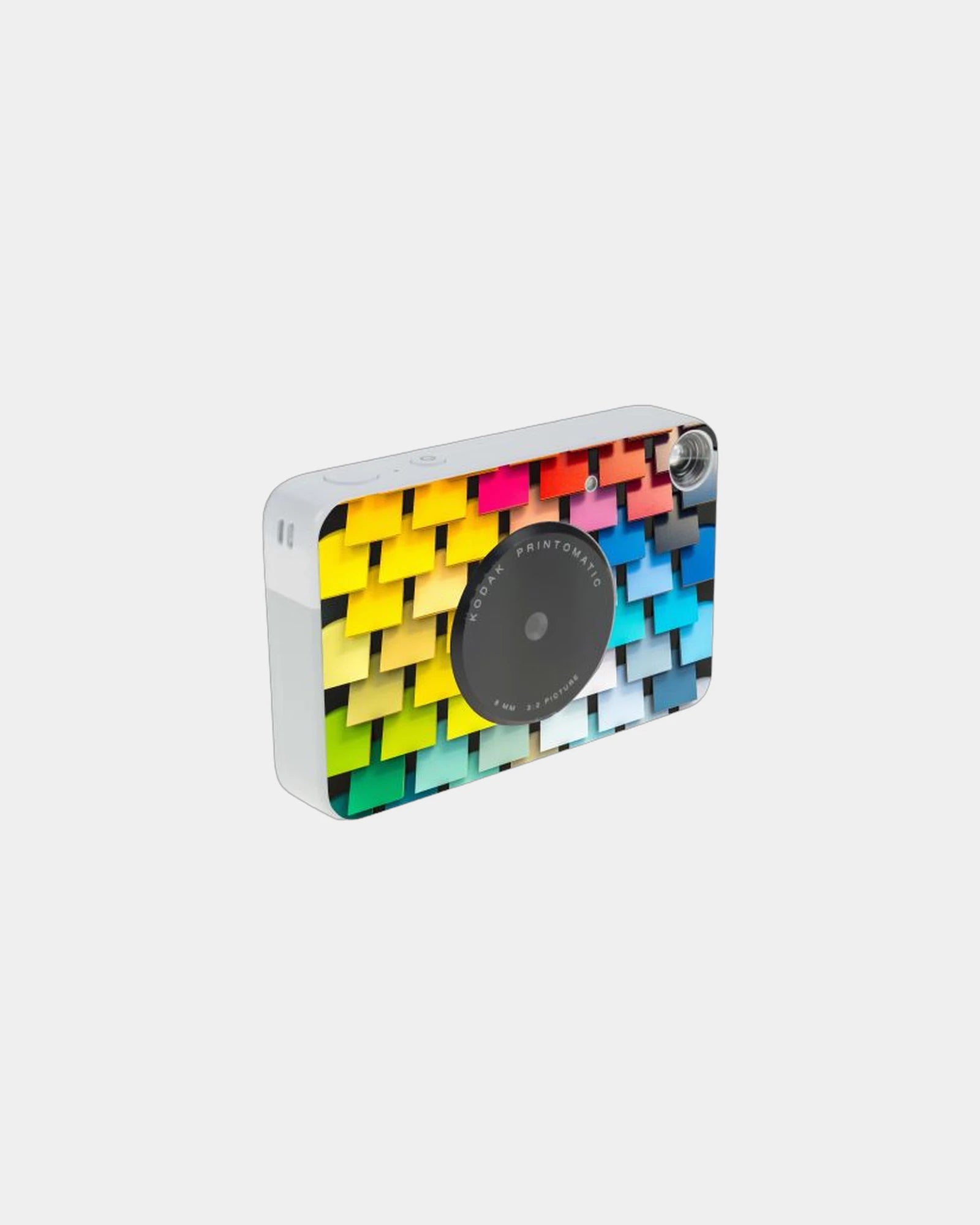


Treat your clients and employees!

FAQ - Branded disposable cameras
Trusted by 1,000+ companies
Personalised disposable cameras: what a single-use camera actually is
Strip away the artwork and you have a sealed plastic shell. Inside sits a roll of 35mm colour film, a fixed-focus lens, a manual film winder and, on most models, a small flash. There is no screen, no memory card and nothing to charge beyond the flash, which runs on a single internal cell. The whole point of branded disposable cameras is that nobody at the table needs instructions. You wind, you point, you press, and the moment is on film for good.
That simplicity is why these cameras travel so well across formats. A wedding reception, a 5,000-visitor festival stand, a press launch or a school reunion all want the same thing. They want photos taken by the people in the room, not staged by a supplier. The film constraint is a feature, because a fixed shot count makes every frame deliberate. Personalised disposable cameras lean into that scarcity rather than fighting it.
Promotional disposable cameras: 27 or 39 frames per camera
The first spec to decide is how many shots each disposable camera carries, because it sets both the unit cost and how the cameras get used. A 27-exposure model is the workhorse for table-scatter at a wedding, where you want lots of cameras each catching a handful of frames. A 39-exposure model suits a smaller headcount passing one or two cameras around all night, or a multi-day trip where the same camera follows the group.
As a rough planning rule, budget one 27-shot camera per two to three guests for full table coverage, and a 39-shot camera per six to eight people when they share. Run the maths against your roll count before ordering, because an under-supplied room leaves frames unshot and an over-supplied one inflates your developing bill later. Personalised playing cards make a natural companion on the same table when you want a second activity that keeps guests at their seats between courses.
| Setup | Recommended model | Why |
|---|---|---|
| Wedding table scatter | 27-exposure, one per 2-3 guests | Spreads frames across many candid angles |
| Festival or trade stand | 27-exposure, high volume | Cheap per unit, given away freely to visitors |
| Small dinner or stag/hen | 39-exposure, shared | One camera follows the group all night |
| Multi-day trip or tour | 39-exposure | More frames before the roll runs out |
Personalised disposable cameras: flash versus no-flash
Promotional disposable cameras: when to specify flash
Flash is the single biggest factor in whether your developed roll comes back usable. An indoor evening reception, a marquee after sunset or a nightclub launch needs the built-in flash on every frame. ISO 400 film cannot gather enough light on its own once the sun is down. A daytime beach wedding, an outdoor festival or a garden party will mostly shoot fine on ambient light, so a no-flash model trims a little from the unit price.
The split is this: if any part of your event runs after dark or indoors, specify flash. Brief guests to use it within roughly three metres of their subject. Flash range on these cameras is short, so a flash photo of a stage fifty metres away returns black. For mixed indoor-outdoor days, flash models are the safe default because guests rarely judge the light correctly themselves.
| Condition | Flash needed | Result without flash |
|---|---|---|
| Evening indoor reception | Yes | Dark, mostly unusable frames |
| Marquee after sunset | Yes | Underexposed, lost detail |
| Bright outdoor daytime | No | Sharp, well-lit shots |
| Mixed indoor and outdoor day | Yes, as default | Some frames lost indoors |
Custom disposable cameras: ISO 400 film inside
Almost every disposable camera on the market ships with ISO 400 colour negative film, and there is a good reason it became the standard. ISO 400 is fast enough to catch movement and dim interiors without a tripod, yet fine-grained enough that prints hold detail. It is the all-rounder that copes with a sunny ceremony at noon and a dim dance floor at midnight on the same roll. That is exactly the spread a single-use camera has to survive.
That fixed sensitivity is also why the flash decision matters so much. The film cannot be pushed mid-event the way a digital sensor adjusts, so the flash is your only lever for low light. Expect the warm, slightly grainy, colour-shifted look that film gives by nature. That texture is the nostalgia people are paying for, not a flaw to correct in the lab.
Personalised disposable cameras: a full brand canvas on every camera
Custom disposable cameras: designing the full-wrap
The body of a single-use camera is a rectangular block, and the printed paper or card wrap covers almost all of it. That gives you a genuine 360-degree canvas: front, back, both ends and the top around the shutter. You are not stuck with a small badge on a corner. A couple's monogram and date can run the full front. A festival line-up can wrap the sides, while a brand carries a logo, a hashtag and a call to action across separate faces.
Print is typically full-colour on the wrap, so photographic backgrounds, gradients and brand PMS colours all reproduce. Because the wrap is the brand canvas, treat it like a mini poster rather than a logo placement. Custom stickers are a useful add-on here if you also want to seal the developed prints or label the return envelope in matching artwork.
| Surface | Typical use | Note |
|---|---|---|
| Front face | Main monogram, logo or headline | Largest single panel, most visible |
| Back face | Hashtag, instructions, thank-you | Read while winding on |
| Side ends | Date, line-up, sponsor strip | Narrow, keep text short |
| Top around shutter | Short tagline or icon | Seen as the guest shoots |
Custom disposable cameras: the wedding table-scatter giveaway
Personalised disposable cameras: table-scatter tactics
Weddings are where these cameras earn their reputation. Scattered across reception tables, branded disposable cameras catch the speeches, the first dance and the late-night chaos from every guest's seat at once. They fill the gaps between the photographer's set pieces. The roll comes back full of frames no hired lens was positioned for: the table laughing, the kids under the table, the uncle attempting the worm.
Pair the wrap artwork with the couple's monogram and date and the camera doubles as a favour guests take home. A short instruction line on the back, like leave the camera on your table at the end, saves you chasing them down. Custom Hand Fans sit well alongside on a summer wedding table, giving guests something for the heat while the cameras handle the memories.
Promotional disposable cameras for festivals and brand activations
Personalised disposable cameras work as a giveaway and an advert at once at a festival or a brand activation. Hand a wrapped camera to a visitor and your line-up or logo travels the site all weekend. It then goes home and sits on a shelf until the film is developed weeks later. Promotional disposable cameras turn a freebie into a slow-burn brand impression that resurfaces when the photos finally land.
For stands, order in volume on the 27-shot flash model and brief staff to hand them out with a printed line on where to upload or tag the developed shots. A short prompt on the wrap turns a giveaway into a content channel, since the photos land with your hashtag already attached. A camera given at a stand can feed user-generated content back to your channels once the roll is finally developed. Custom tech gadgets work as the higher-value tier in the same activation when you want a flagship giveaway above the camera price point.
Personalised disposable cameras: the corporate nostalgia angle
Personalised disposable cameras let conferences, away-days and client dinners break the digital monotony. Nobody checks a screen, so people actually talk, and the analogue novelty alone gets a table laughing. The nostalgia angle is real currency here. For a generation raised on phone cameras, the ritual of a fixed shot count and a wind-on lever is genuinely novel, not retro for its own sake.
The experiential value is that guests do not see the results instantly. The delay builds anticipation, and the eventual prints become a shared follow-up moment with your brand attached. That second touchpoint is rare in event marketing. Most giveaways land once and fade. Custom disposable cameras give you a first hit on the day and a second weeks later when the gallery arrives. That doubles the brand contact from a single handout. Personalised Christmas gifts extend that thinking into the festive season, where a wrapped camera at a staff party captures the night for a team to relive in January.
Custom disposable cameras: developing the film
A disposable camera is only half the experience until the film is developed. Once the roll is finished, the whole camera goes to a film lab, where the back is opened, the 35mm negative removed, processed and scanned. You get back physical prints, digital scans, or both, depending on the lab service you choose. Plan for this step in your timeline, because high-street and postal labs typically need several days to a couple of weeks.
Collect the cameras at the end of the event rather than letting guests wander off with them, or you lose the photos entirely. A drop-box with a clear sign works at weddings, and a line on the wrap reminding guests to leave it behind saves you chasing strays. For corporate runs, gather them centrally and send the batch to one lab so the scans come back as a single shareable gallery.
| Output | Best for | Turnaround |
|---|---|---|
| Prints only | Weddings, physical keepsakes | Several days to two weeks |
| Scans only | Brand activations, sharing online | Several days to two weeks |
| Prints and scans | Mixed personal and digital use | Slightly longer |
| Single batch to one lab | Corporate, one shared gallery | Depends on volume |
- Finish the roll before developing
- opening the back early ruins unshot frames
- Collect every camera at the event end or lose the shots
- Send the whole camera to the lab, never just the film
- Choose prints, scans or both at the lab stage
- Allow several days to two weeks for developing
- Brief guests to use flash within about three metres
Personalised disposable cameras: print artwork, proofs and lead time
Supplying clean artwork is what keeps a camera order on schedule. Send vector files or high-resolution images for the wrap, set to full bleed so nothing important sits near the trimmed edges. We return a digital proof for sign-off before anything prints, and your artwork approval comes back within 24 hours so a tight event date stays reachable.
Lead time on branded disposable cameras moves with quantity and finish. A few hundred wrapped cameras print faster than a five-thousand-unit festival run. A fully bespoke wrap with bleed checks adds a little over a stock template with a dropped-in logo. Confirm your event date at the quote stage so production and your developing window both fit before the day arrives.
Promotional disposable cameras: quantities, packaging and minimum orders
Personalised disposable cameras price up mainly on order quantity, so plan the headcount maths first. Small weddings might take fifty cameras; a festival activation can run into the thousands. We can advise a low minimum order for trial runs so you can test the wrap artwork and flash performance before committing to a full event volume.
Cameras arrive individually wrapped and boxed for distribution, ready to scatter or hand out. For gifting tiers you can present each camera in its own sleeve or pack. The packing also protects the wrap in transit, so a printed body reaches the table unscuffed. On a large festival run we confirm carton counts up front, so an event team can plan on-site distribution before the gates open rather than unboxing on the day. Corporate Gift Boxes turn a single wrapped camera into a sit-down gift when the occasion calls for more than a table-scatter freebie.
Personalised disposable cameras: use cases by sector
Personalised disposable cameras settle into an event by occasion, which usually fixes the exposure count, the flash choice and the run size before the wrap is designed. A wedding wants table-scatter cameras with a couple's monogram. A festival wants high-volume flash models given out freely. A corporate away-day wants the analogue novelty as an ice-breaker. Reading the event first picks the spec fast.
| Occasion | Suggested model | Why it fits |
|---|---|---|
| Weddings | 27-exposure flash, table scatter | Candid frames, doubles as a favour |
| Festivals and activations | 27-exposure flash, high volume | Cheap per unit, advert that travels home |
| Corporate away-days | 39-exposure shared | Breaks the digital monotony, nostalgia hook |
| Stag, hen and small dinners | 39-exposure shared | One camera follows the group all night |
| Brand campaigns and UGC | 27-exposure flash, full-wrap | Feeds user content once the roll develops |
We map the camera to the occasion at quote, then confirm the flash, the roll count and the developing route against that brief. A monogrammed wedding scatter and a high-volume festival drop are two different orders off one wrap template. We spec each rather than forcing a single model across every event type.
Custom disposable cameras: eco and recycling
Single-use is in the name, so the responsible-disposal question is fair. The camera shells are widely recyclable. Most film labs recover and reuse or recycle the bodies when you return them for developing, since the back has to be opened there anyway. Returning the whole camera to the lab is therefore the greenest route, not binning it after shooting.
Any recycled-content or specific recyclability figure is printed on the spec sheet for the exact camera model you select, since it varies by manufacturer and shell. Ask us for that data sheet on the model you choose and we will confirm what applies before you order.

