

Branded cutlery
- Price, low to high
- Price, high to low
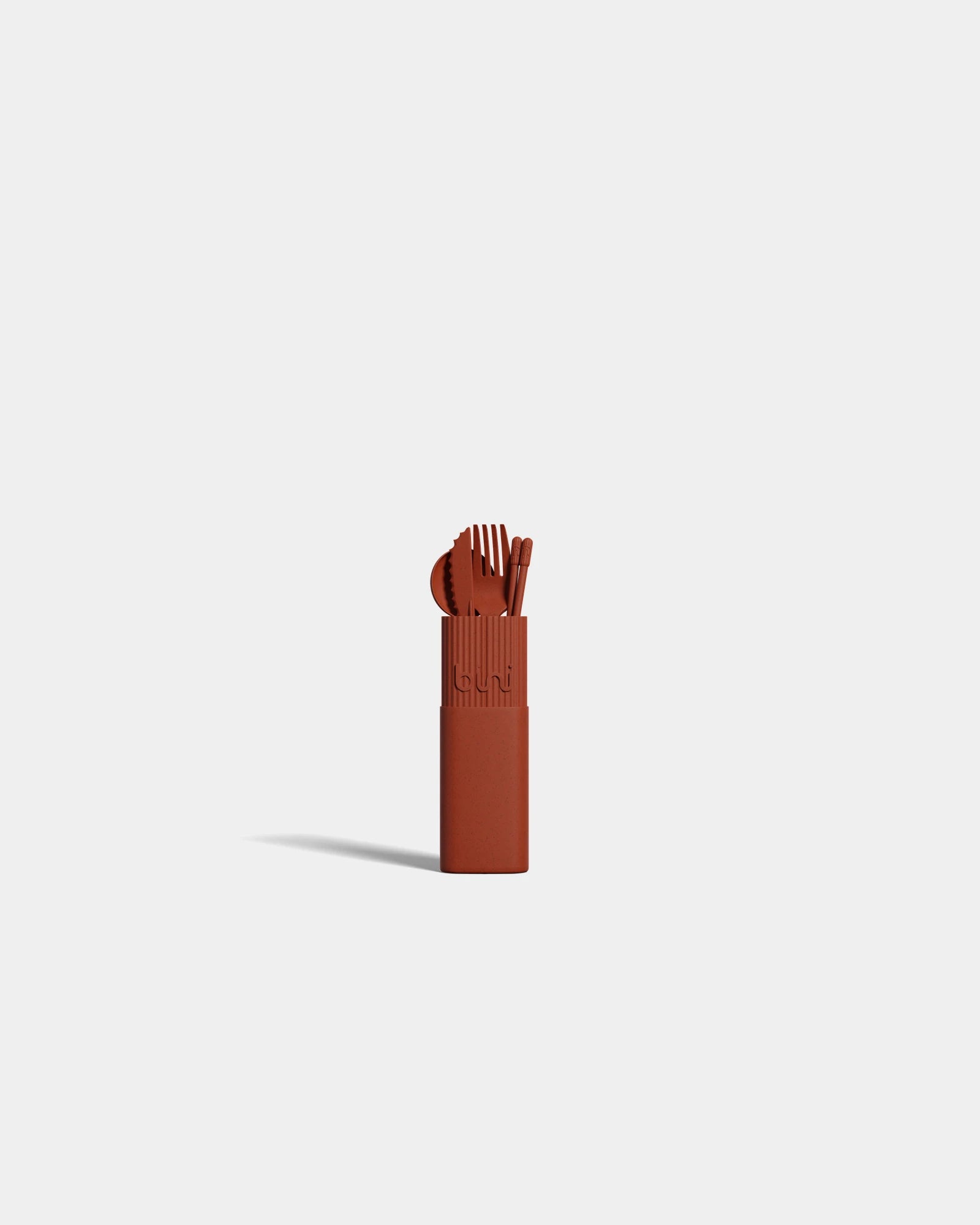


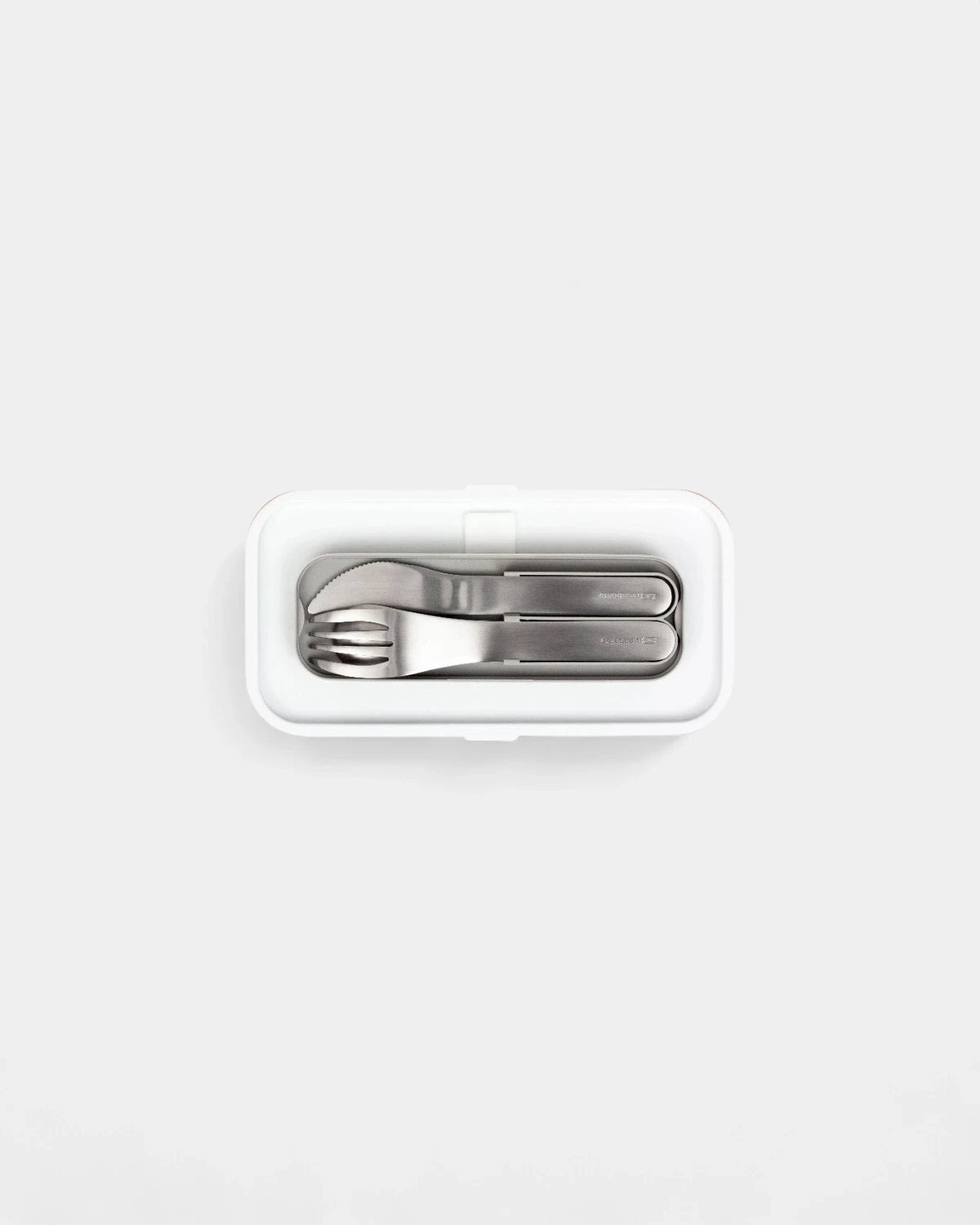


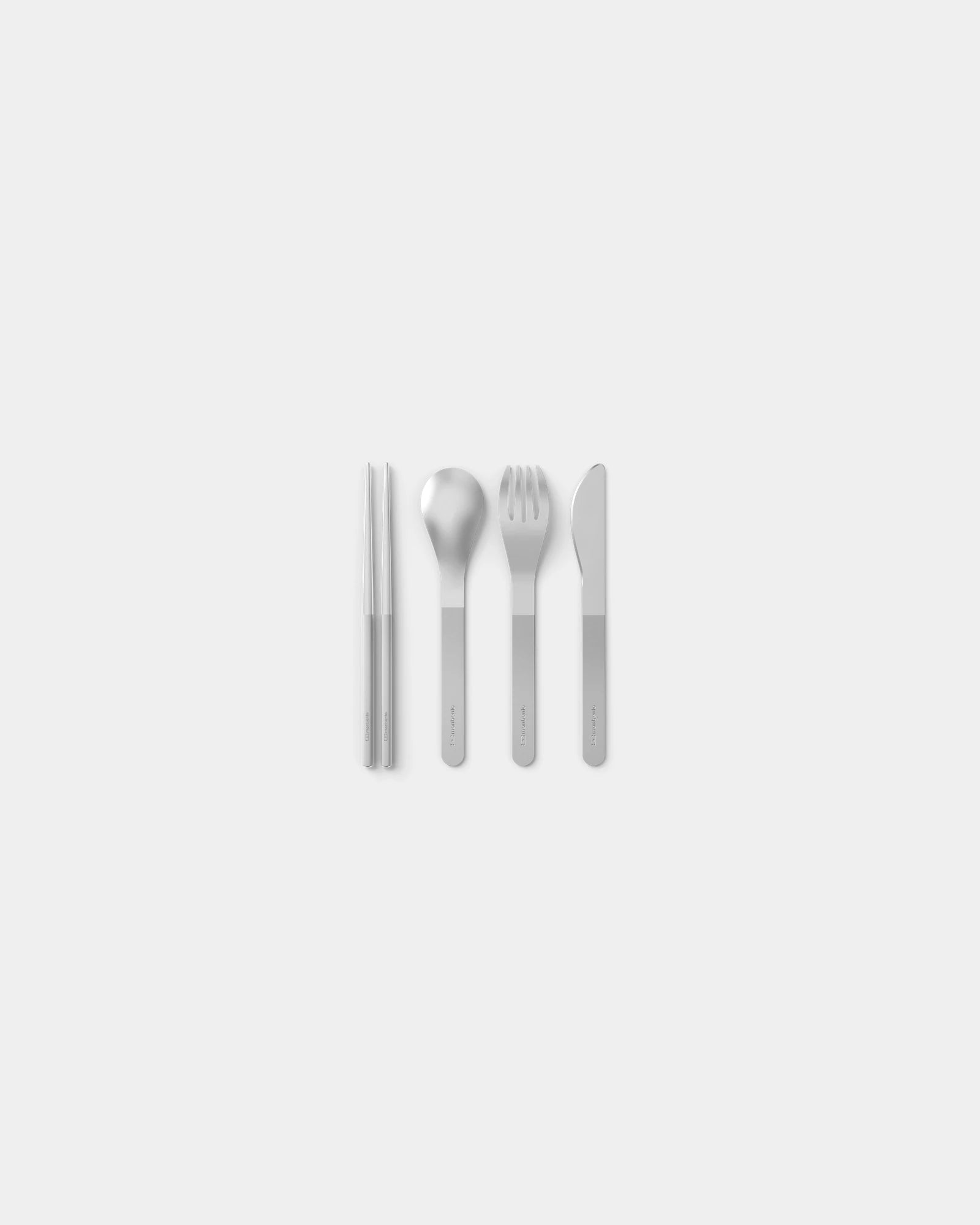


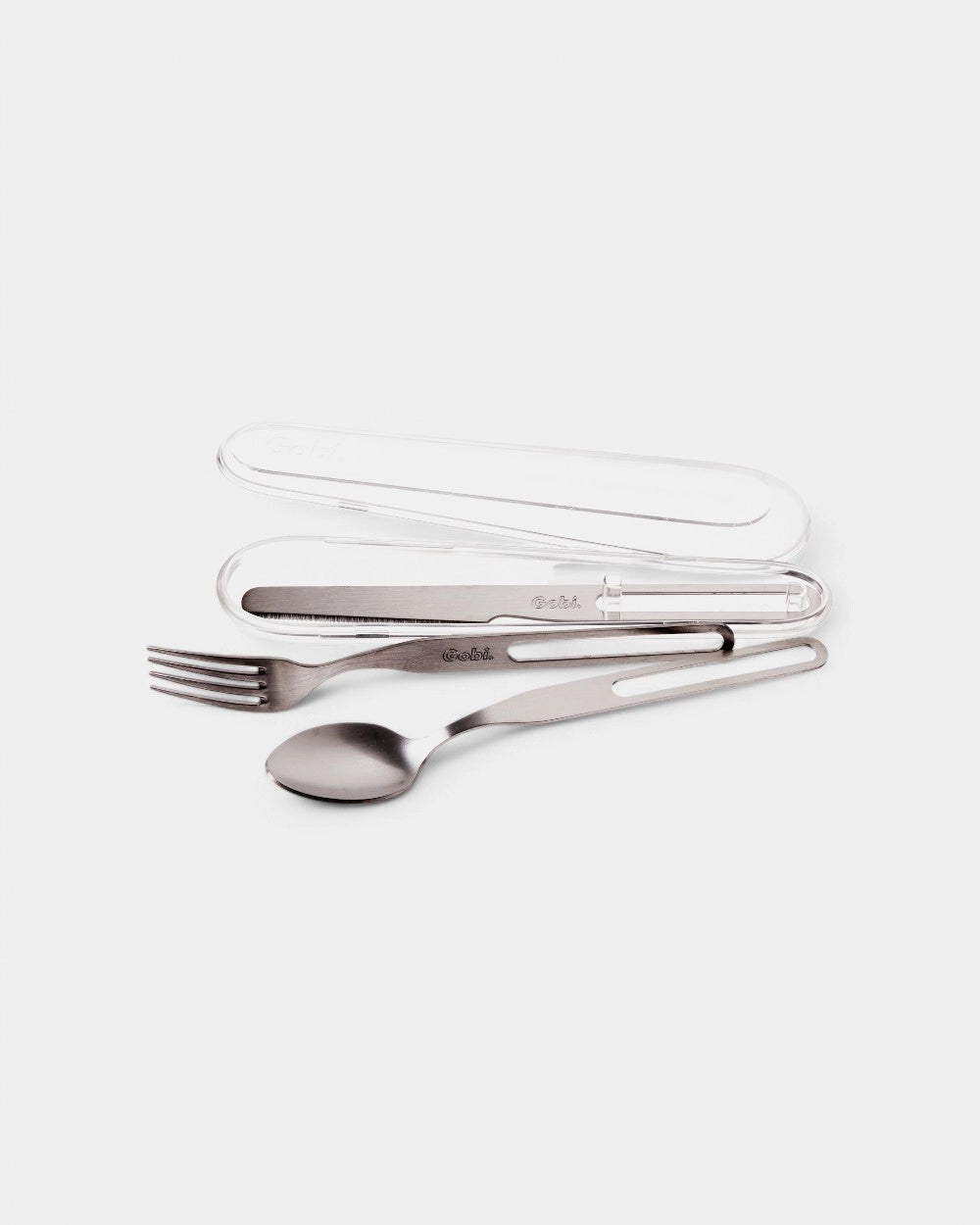


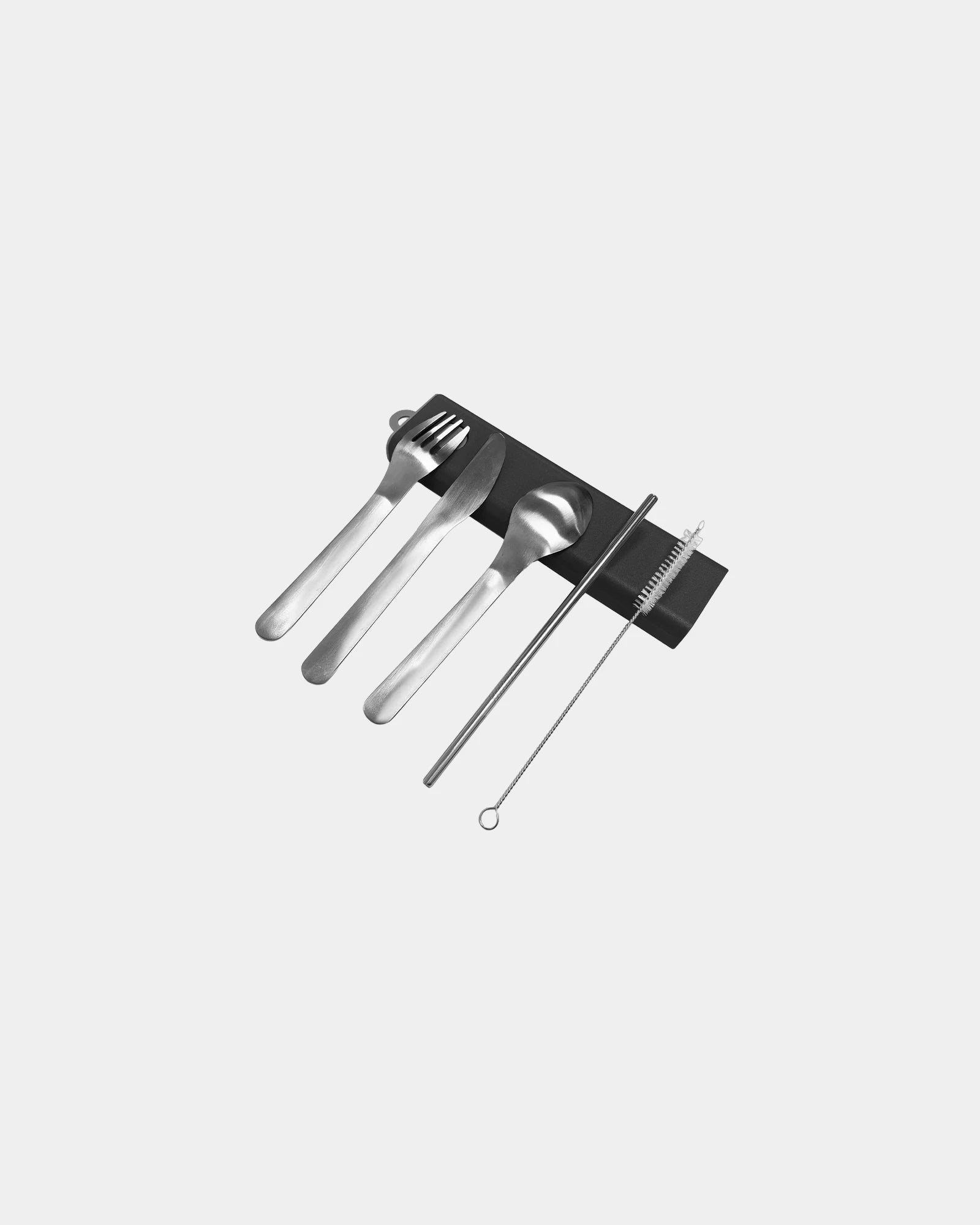


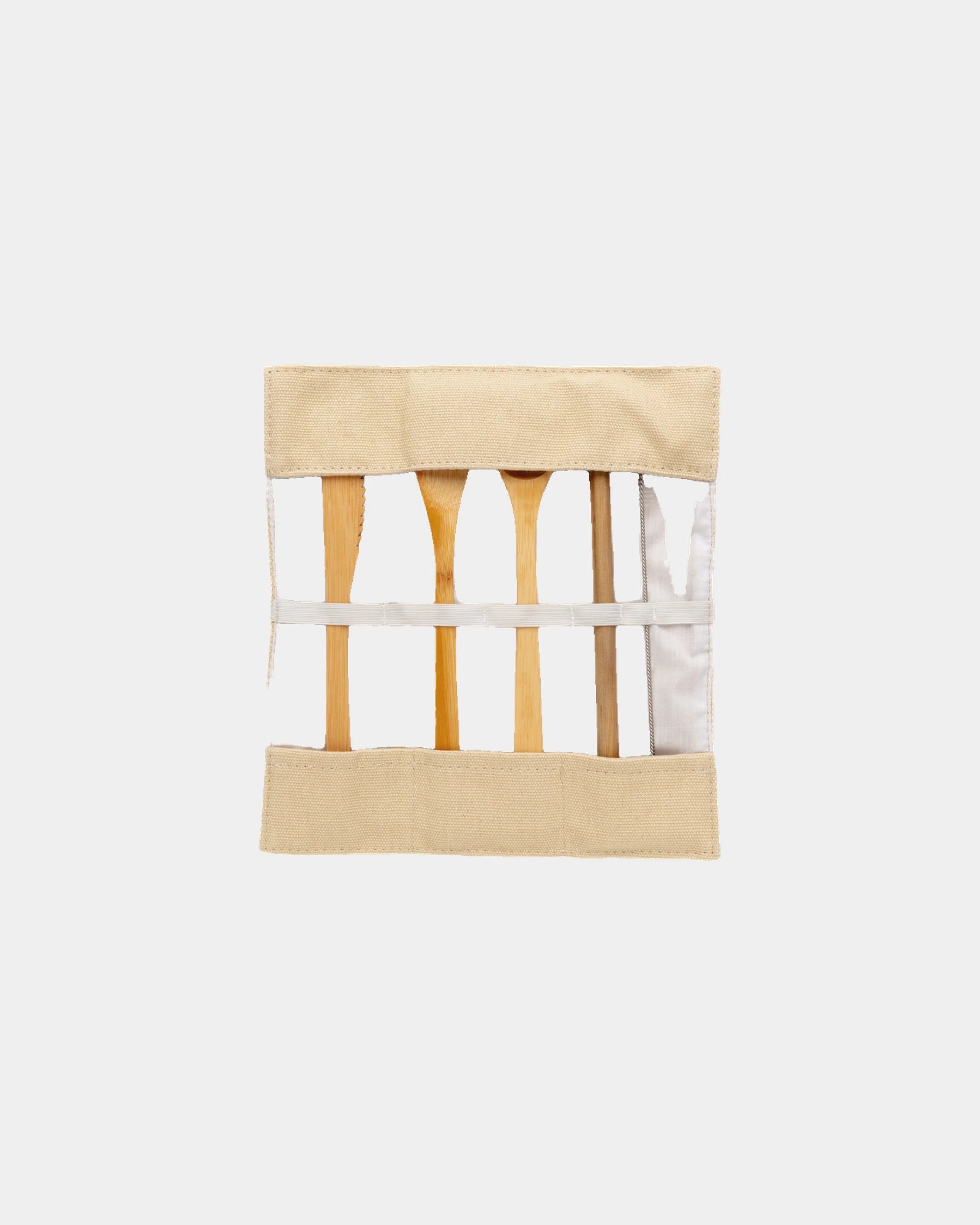


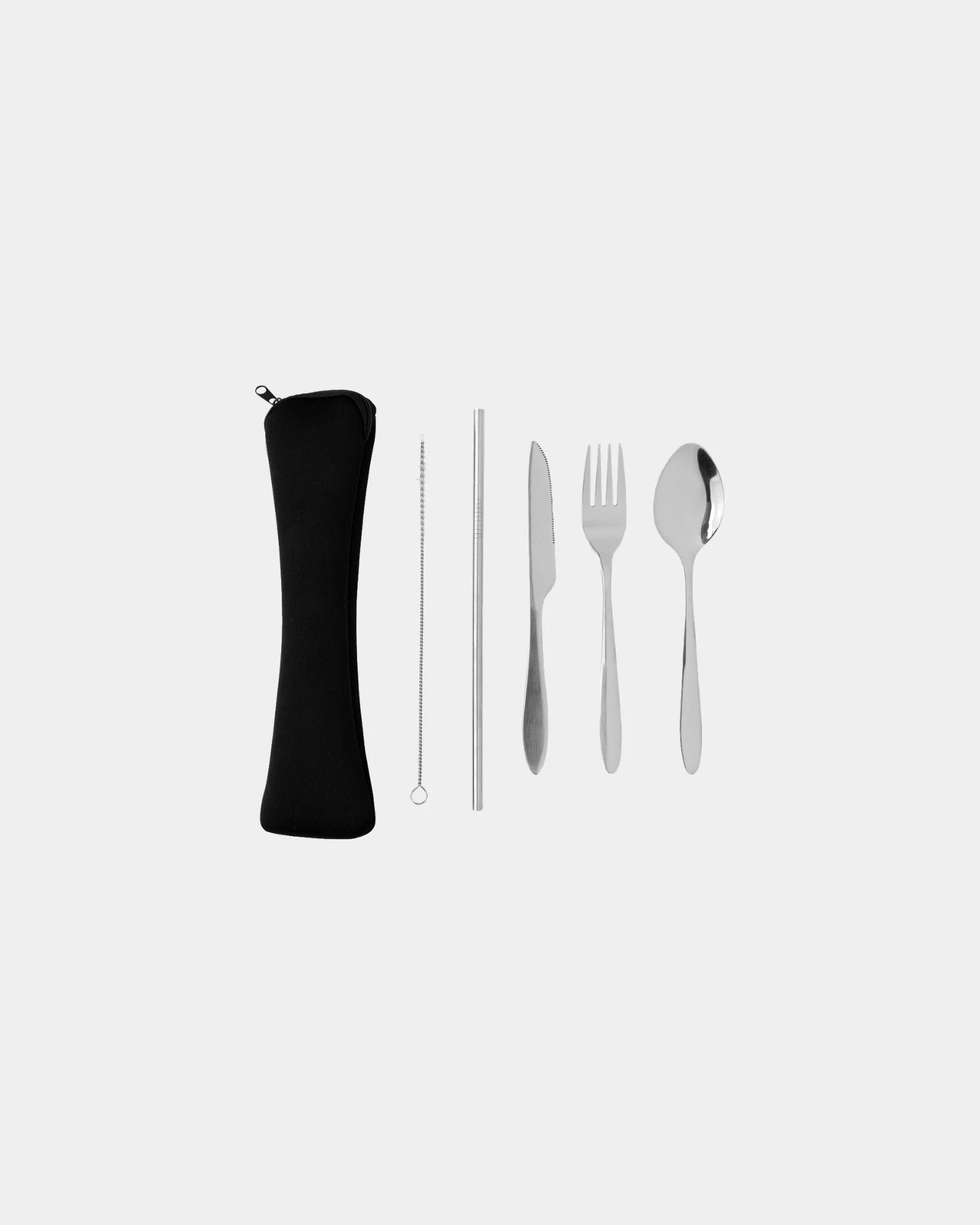




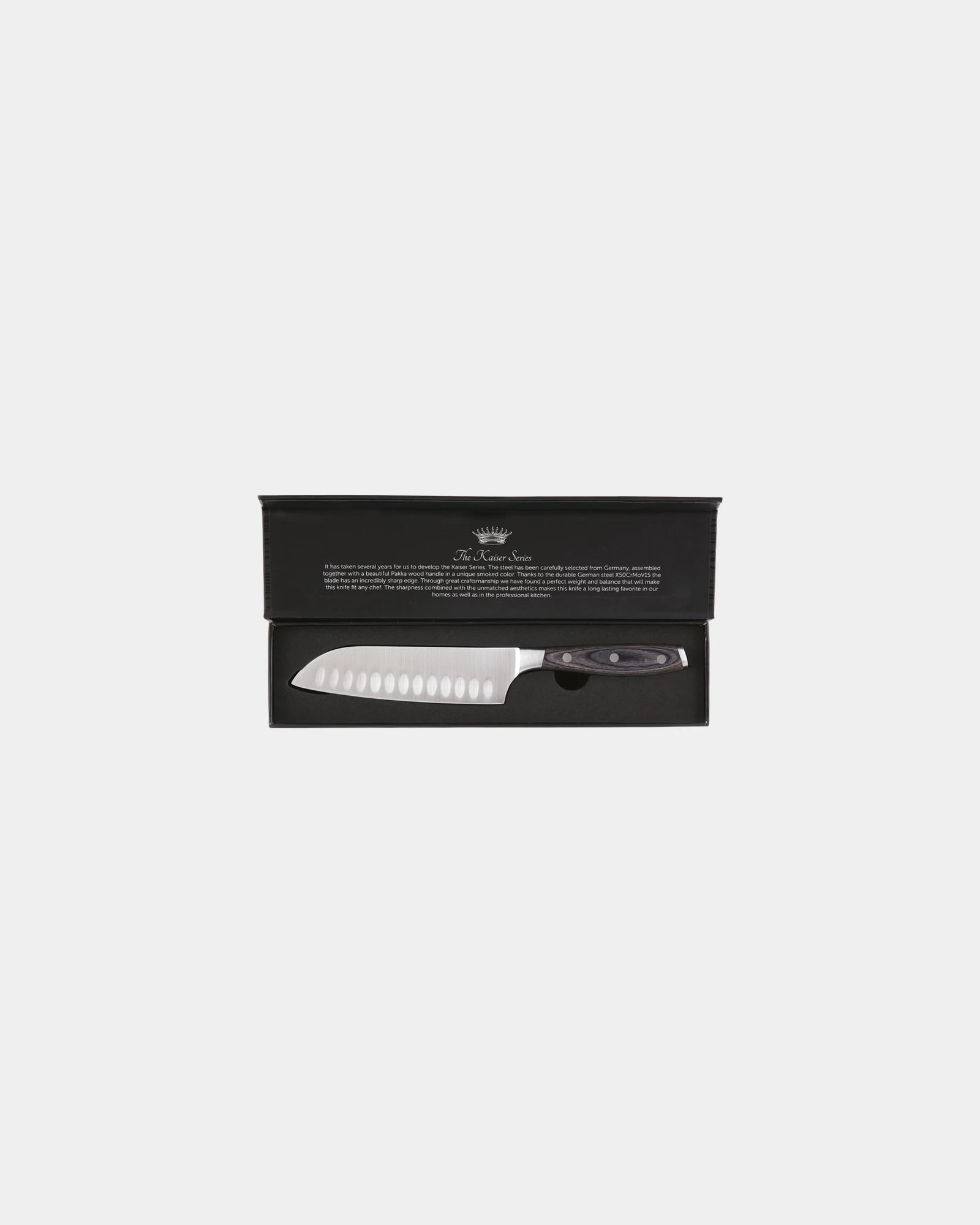


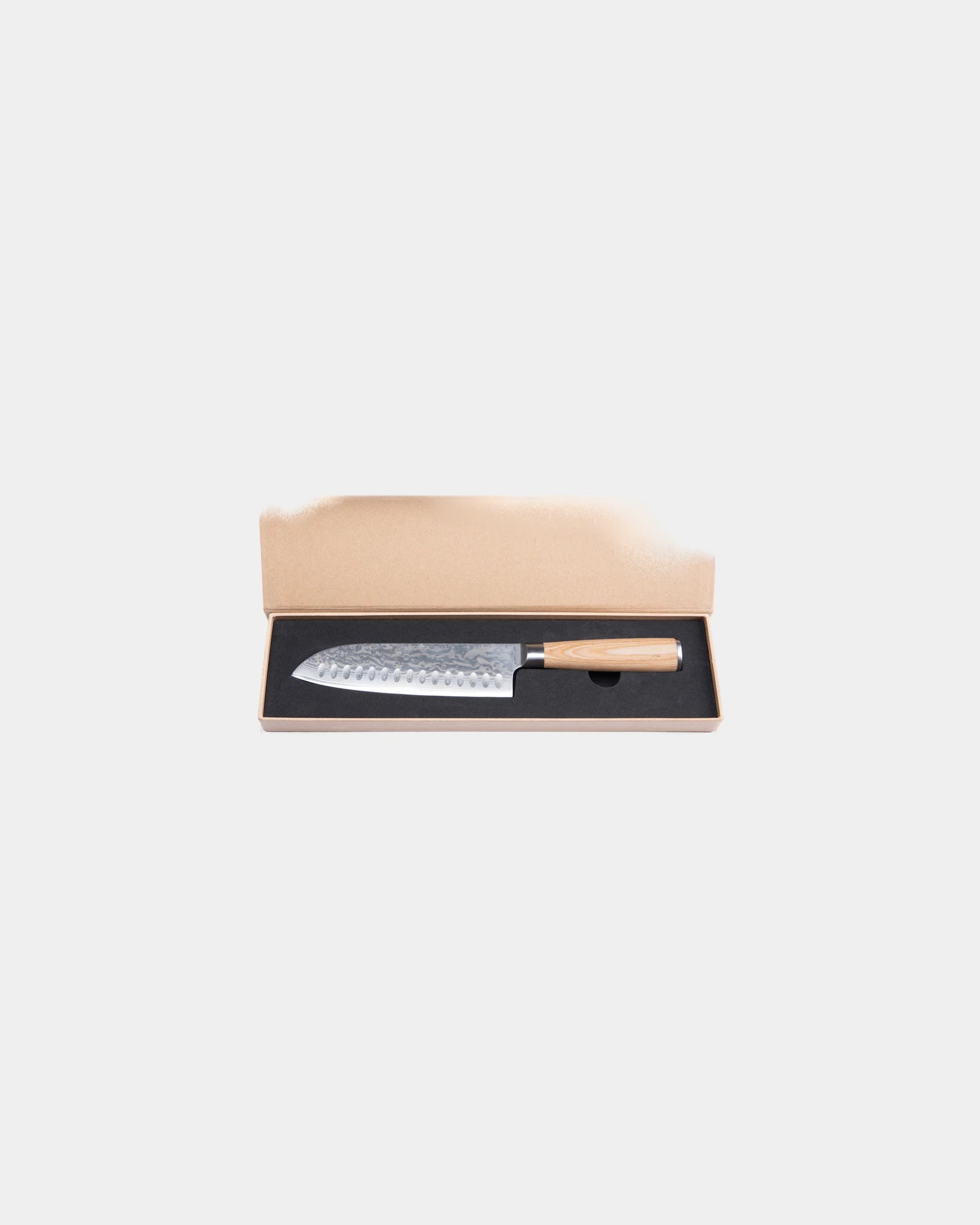


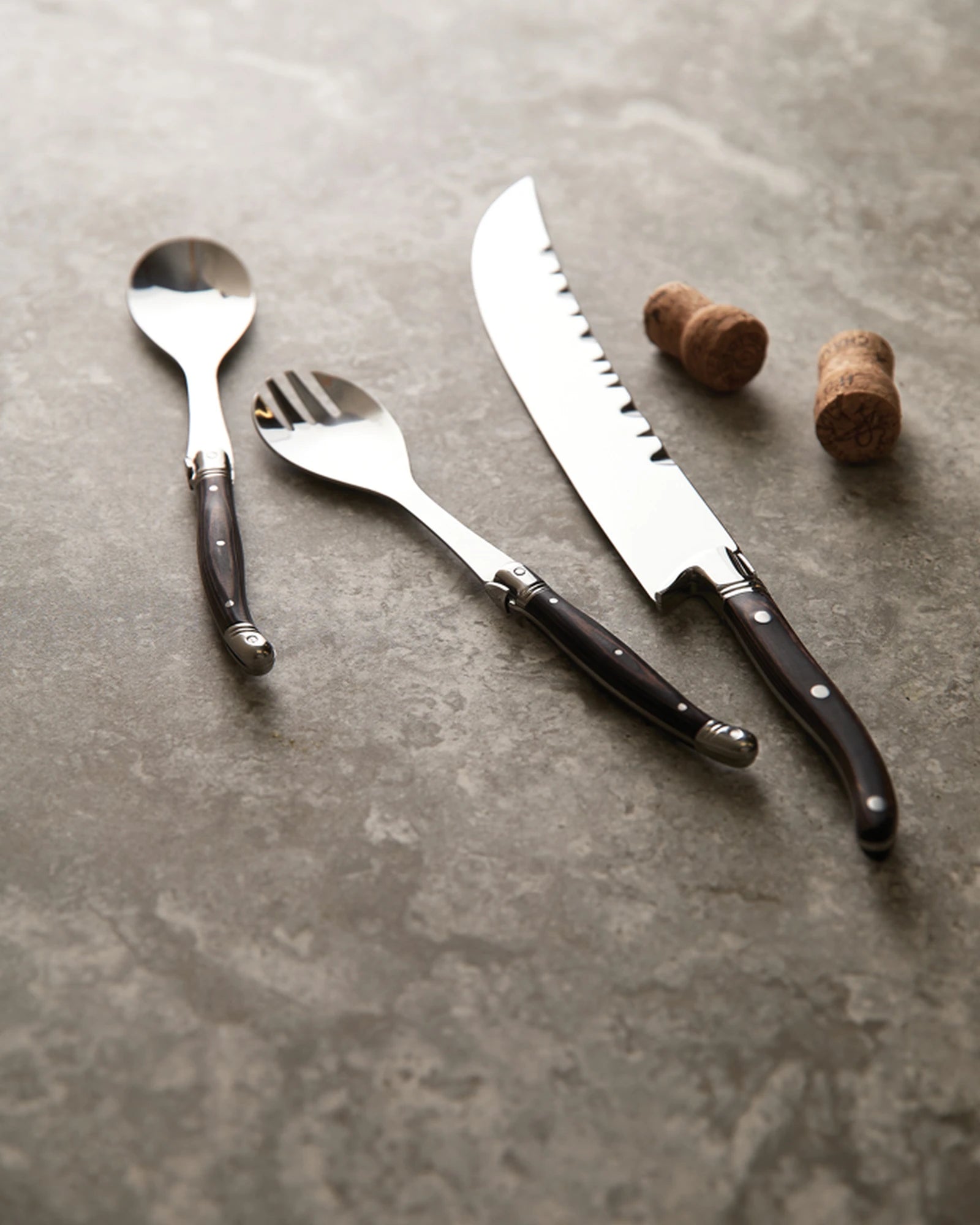


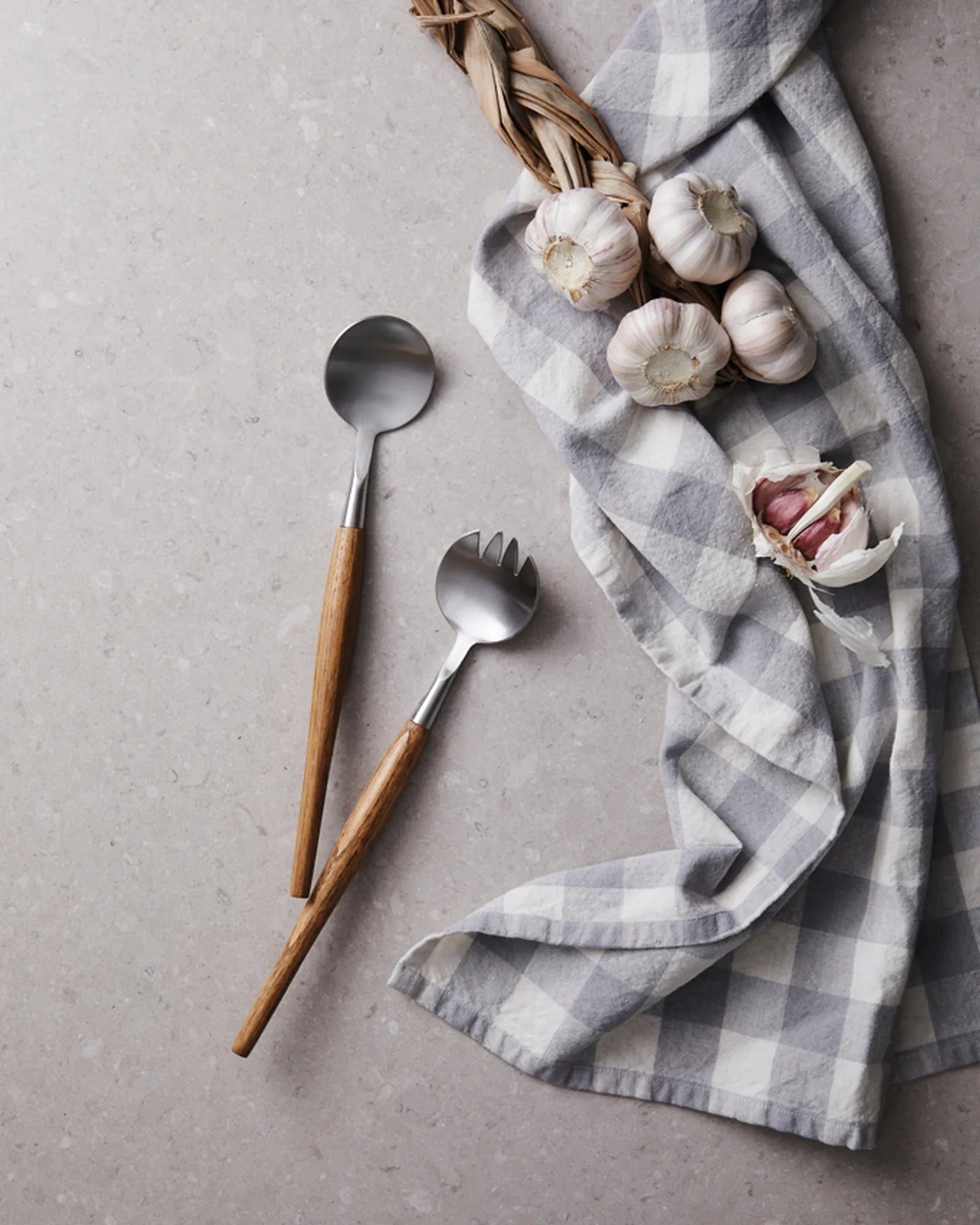


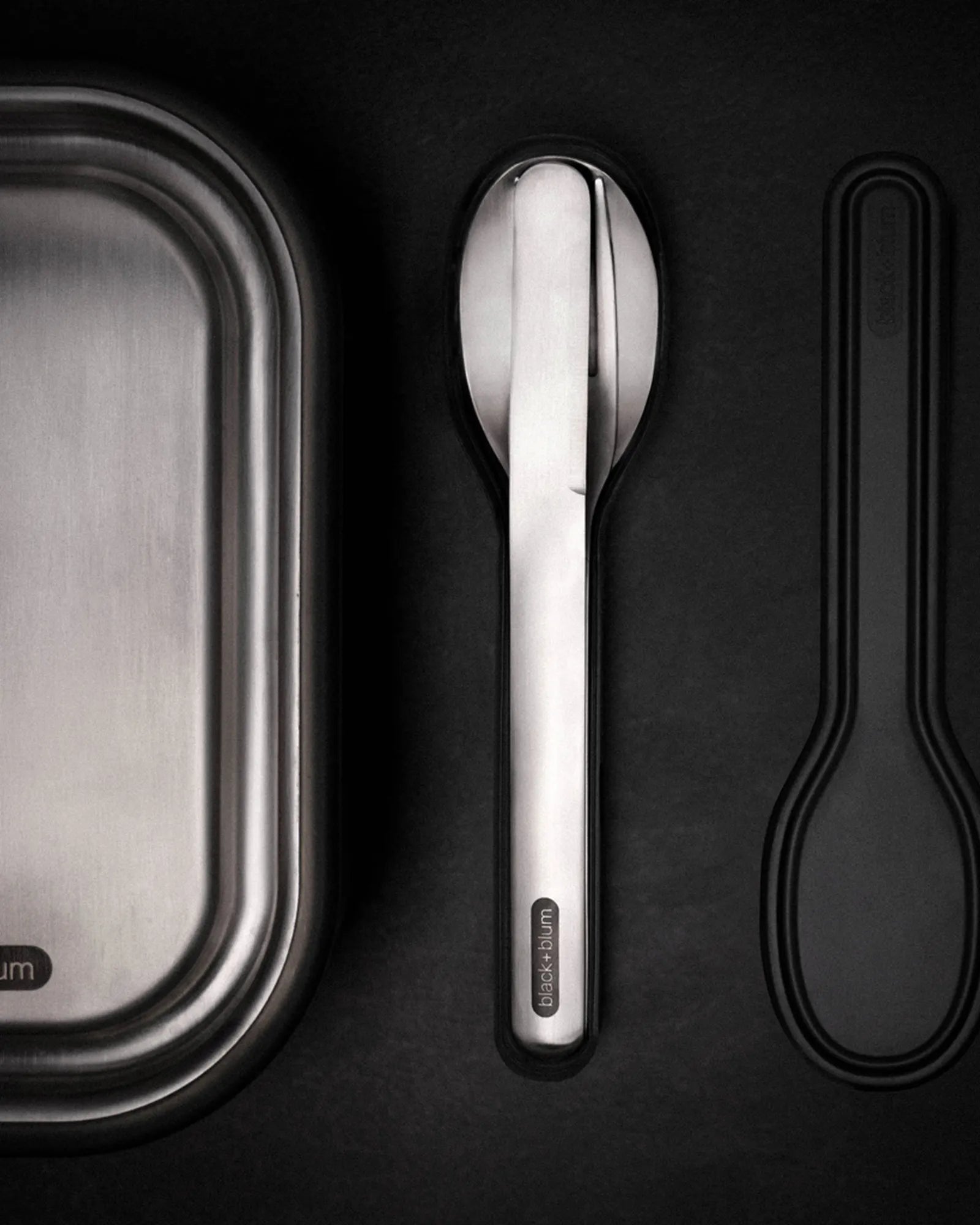


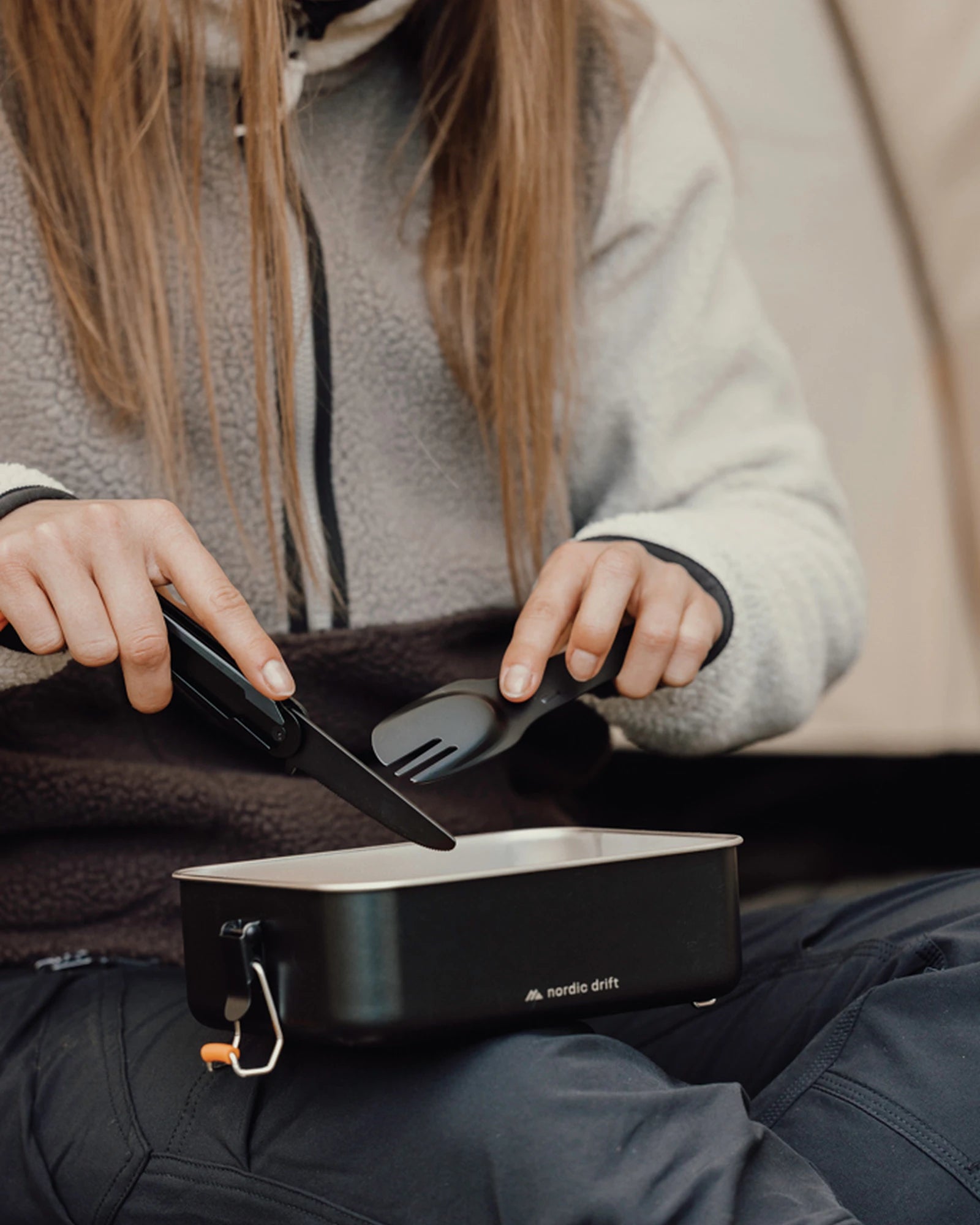


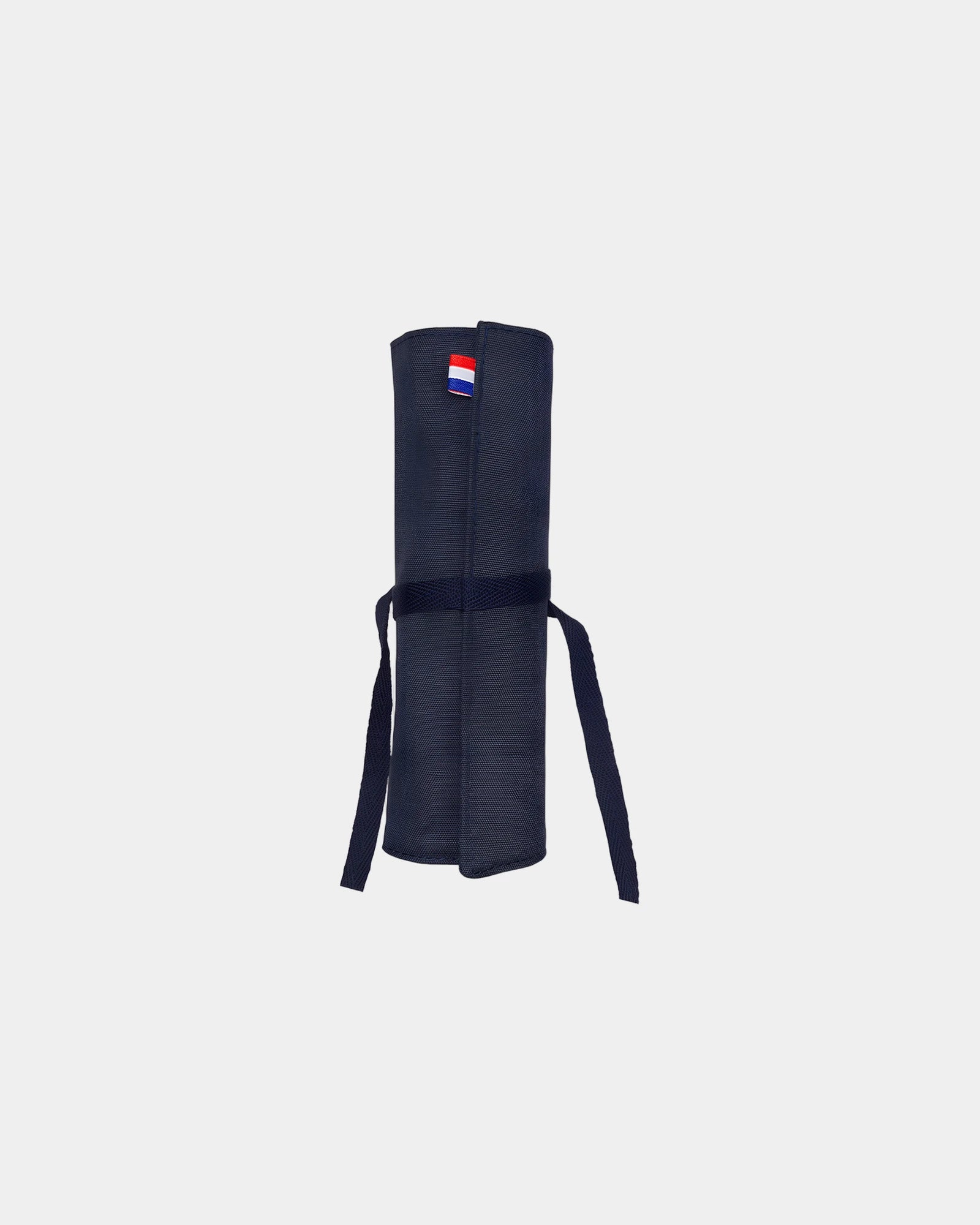


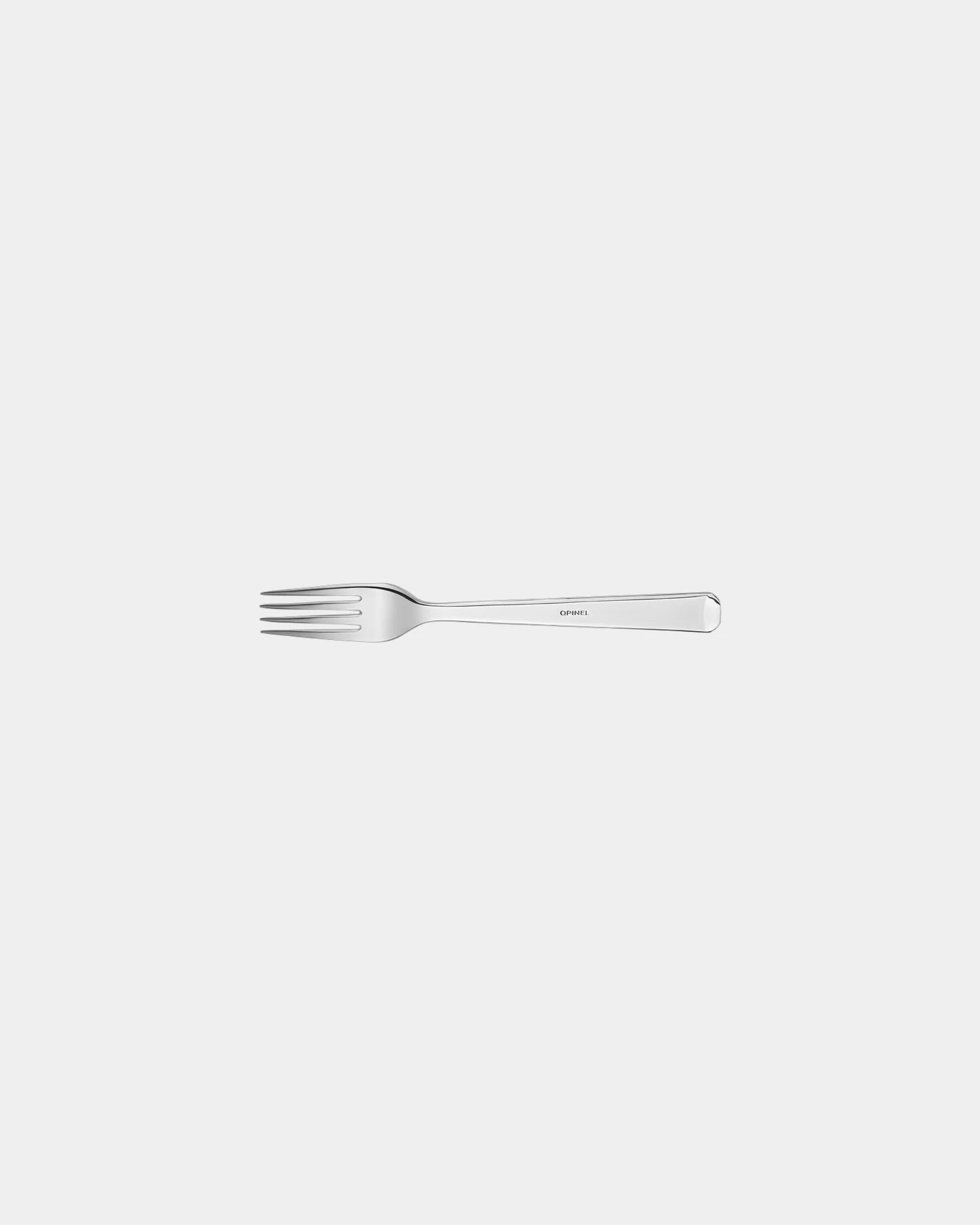


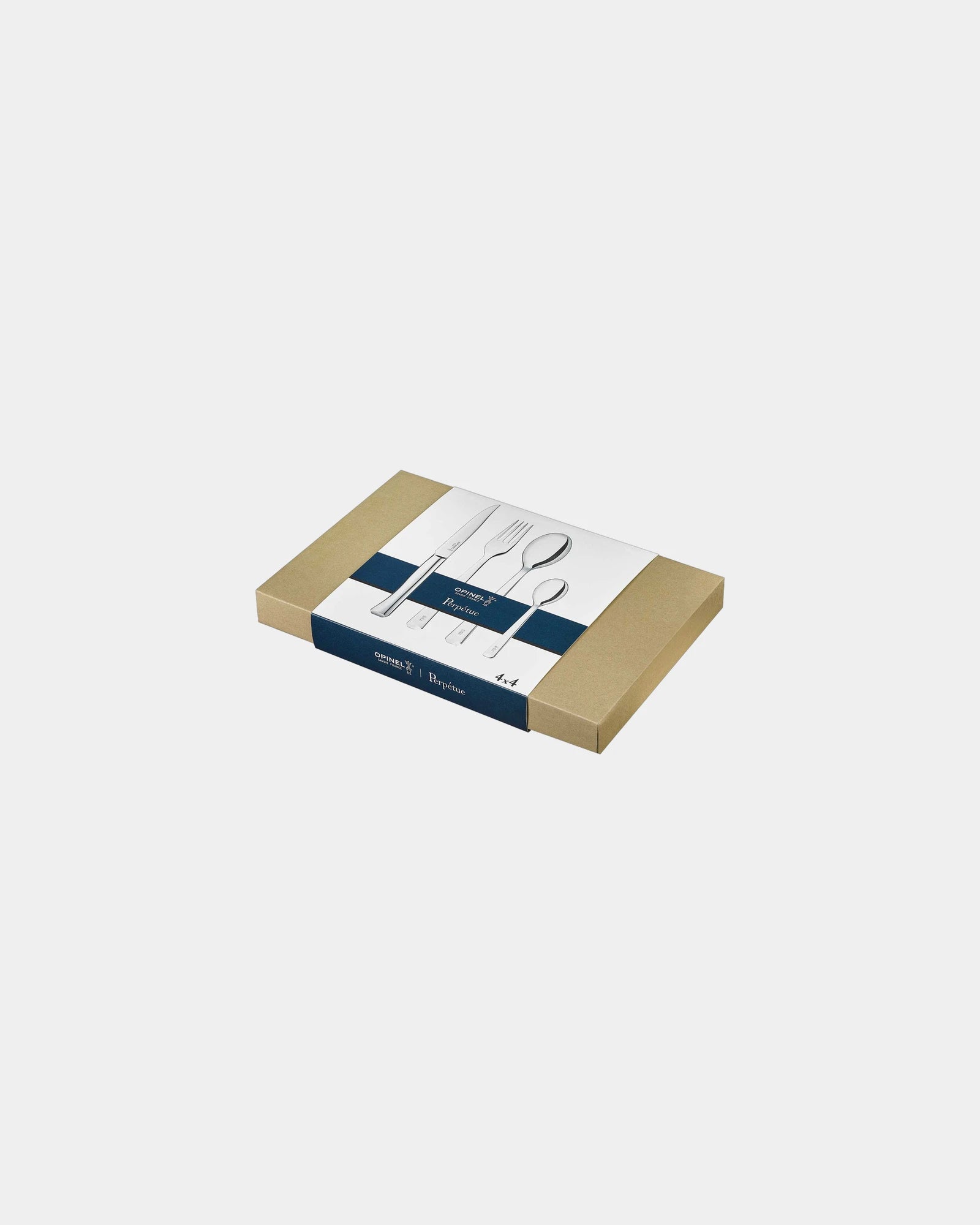


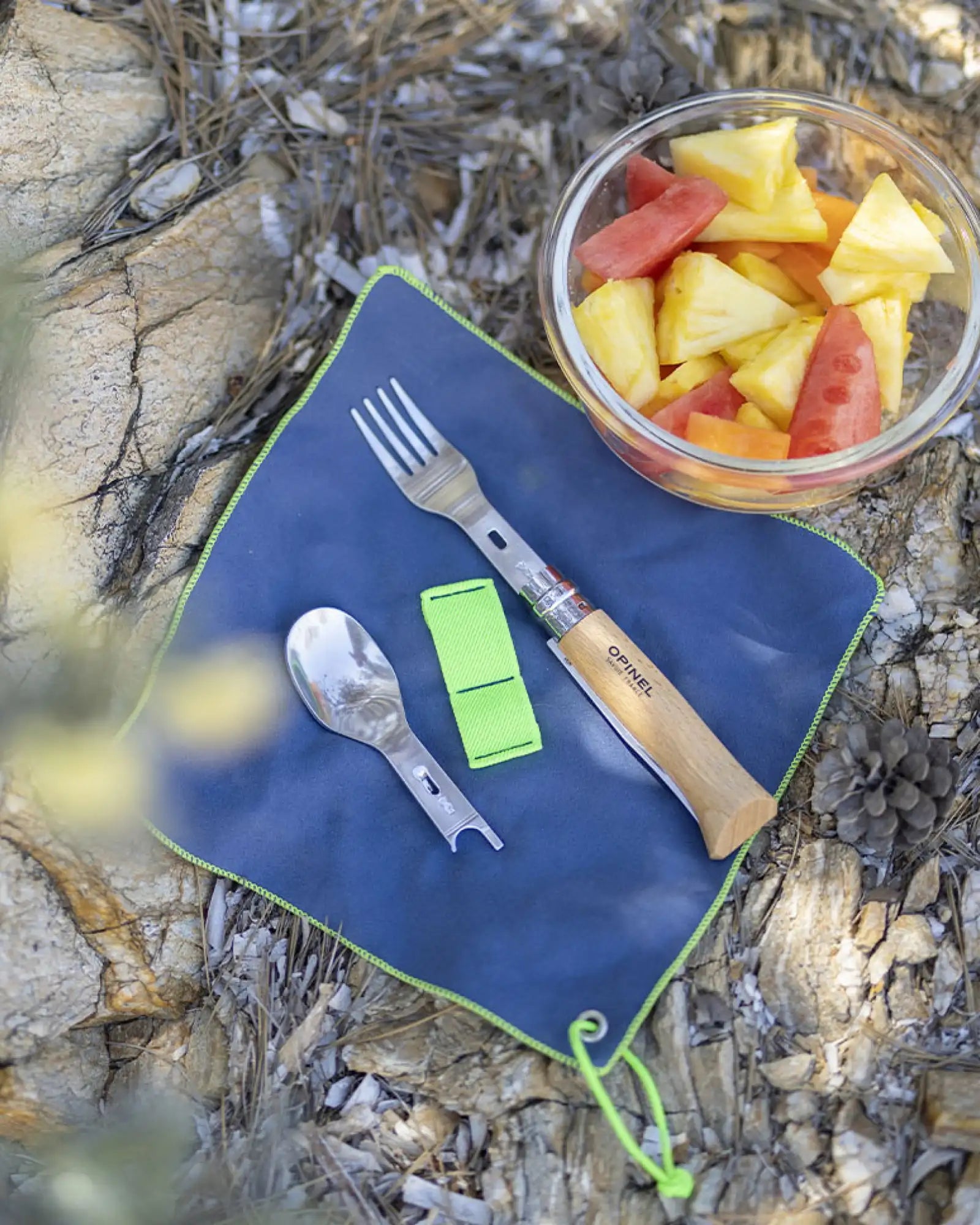






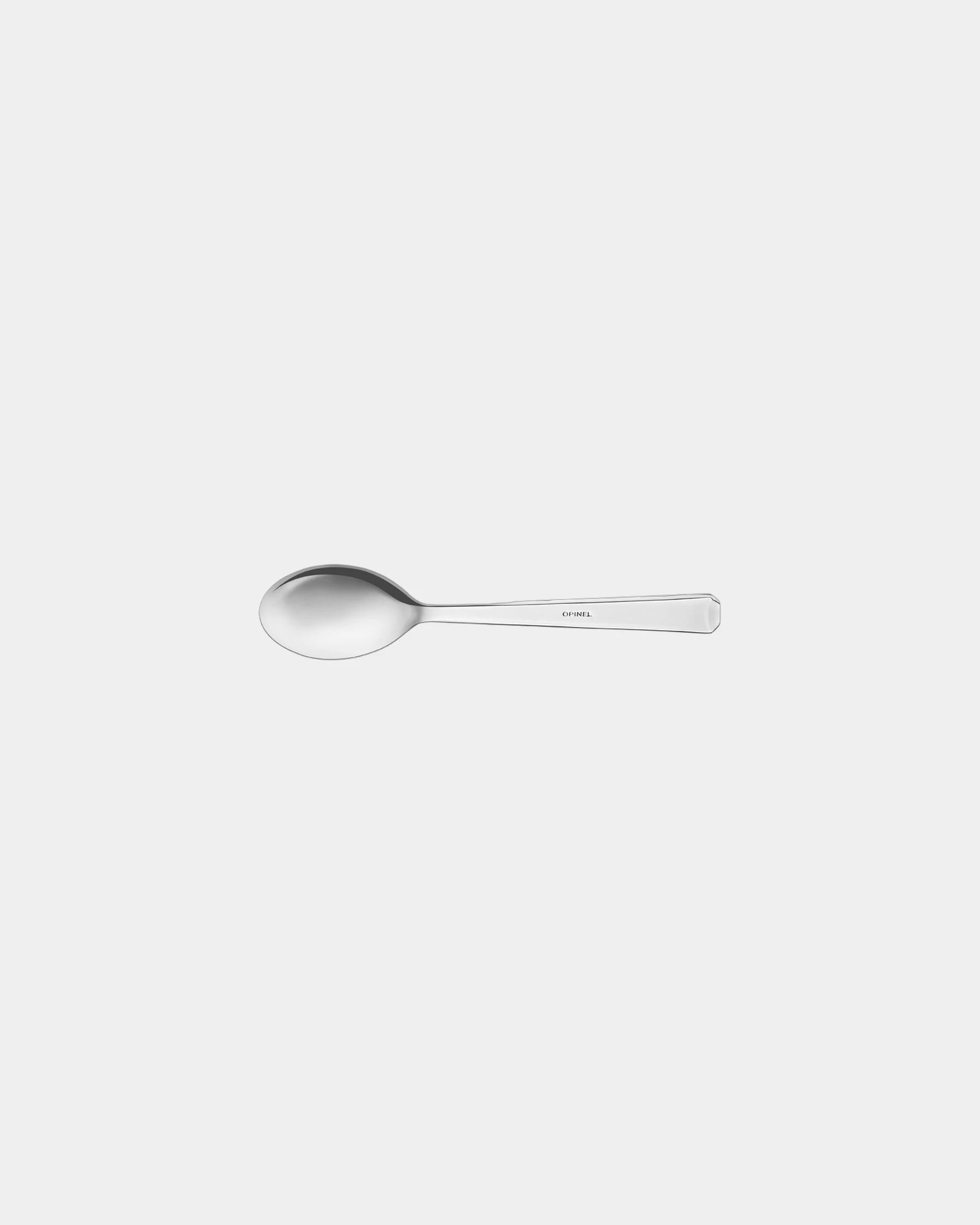




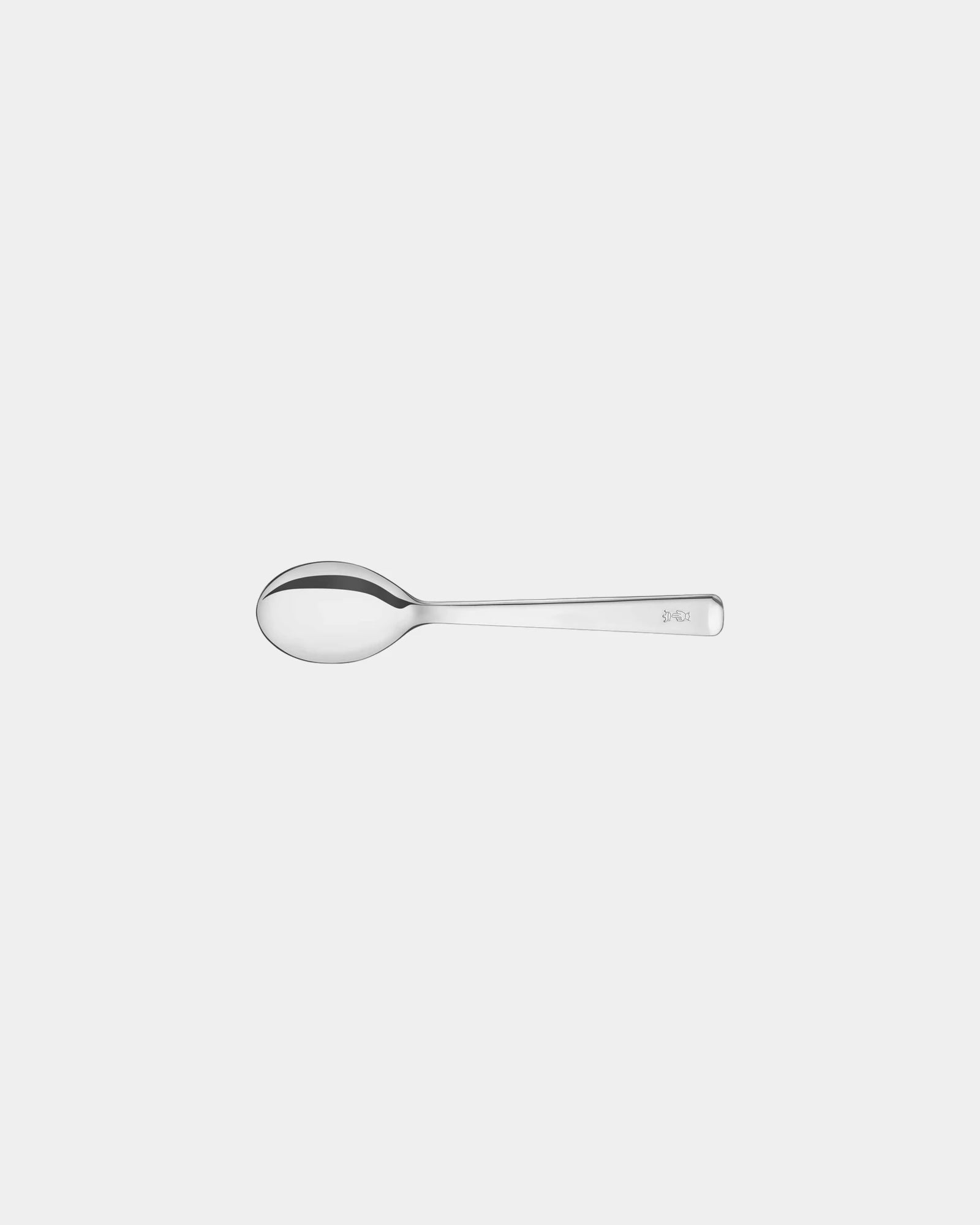






Treat your clients and employees!

FAQ - Personalised cutlery
Trusted by 1,000+ companies
What counts as reusable promotional cutlery
Reusable Promotional cutlery is a knife, fork and spoon (sometimes a spork, chopsticks or a straw) designed to be washed and used again, not binned after one meal. The set lives in a pouch or a clip-shut case so it survives a rucksack. That alone separates it from the disposable wooden or plastic items handed out at catering stands.
The usual carrier is a three-piece travel set, but the category stretches wider. A spork on a keyring suits a festival wristband giveaway, while a full canteen kit might add a metal straw and a cleaning brush. Personalised lunch boxes often ship alongside the cutlery as a desk-lunch pair, so the two collections are worth quoting together.
The recipient keeps the set because it solves a real daily problem, the takeaway fork they never have. That utility is why a personalised cutlery handout converts to actual use far more reliably than a printed pen or a tote.
Stainless steel custom cutlery: the workhorse material
Why steel leads most branded cutlery sets
Picture a 2,000-piece order of Branded Cutlery sets going to a tech firm's canteen rollout. Stainless steel is almost always the answer there. The grade you want is 18/8 (also written 304), food-grade, dishwasher-stable and resistant to the staining a wheat-straw handle can pick up over a year.
Steel takes laser engraving better than any other material in this collection. The mark sits in the metal, survives the dishwasher and reads as a quiet, premium finish rather than a printed sticker. Weight is the trade-off, a full steel set runs heavier than bamboo, which matters for a posted giveaway where every gram lifts the parcel cost.
| Material | Best decoration | Typical feel | Watch-out |
|---|---|---|---|
| Stainless steel 18/8 | Laser engraving | Solid, premium, dishwasher-stable | Heavier, raises postage per unit |
| Bamboo | Laser engraving or pad print | Light, warm, natural look | Hand-wash advised, can darken over time |
| Wheat-straw blend | Pad or UV print | Lightest, lowest unit cost | Blend often part PP, not fully compostable |
| Wheat-straw + steel mix | Print on handle, engrave nowhere | Budget eco look | Mixed materials complicate recycling |
Steel suits an audience that will use the set for years and judge a giveaway on its heft. Where budget or parcel weight rules that out, the lighter options below earn their place.
Branded bamboo cutlery sets and their care rules
The care brief on branded bamboo cutlery sets
Branded bamboo cutlery sets read as the most natural option on a stand, and bamboo is a fast-renewing grass, which gives the eco angle some honest grounding. The set is light, warm to hold and laser-engraves to a clean burnt-in mark that suits a craft-brand or wellness audience.
The care brief matters here and buyers often miss it. Bamboo is best hand-washed, a hot dishwasher cycle can dry it out and raise the grain over months. We state the wash guidance on the spec so you can pass it to recipients, rather than have the set fail quietly in a drawer.
Personalised tea towels make a coherent add-on for a bamboo kitchen-themed kit, since both lean on the same natural, home-cooking register. Quote them as a small bundle when the brief is a wellness or food-brand gift.
Wheat-straw printed cutlery and the eco claim
Wheat-straw printed cutlery sets are the lightest and usually the cheapest per unit, which makes them the default for a high-volume festival drop of several thousand. The handle is moulded from a blend, commonly wheat fibre mixed with polypropylene, so it is durable and dishwasher-tolerant.
Be precise about the eco language. A blended wheat-straw handle is part plastic and is not home-compostable, whichever way a stand markets it. We state the actual blend percentage and any recyclability claim on the product spec, so your campaign copy never overreaches what the material can back up.
For a festival or open-day giveaway, personalised glasses pair naturally with a wheat-straw cutlery handout on the same eco-merchandise table. Both read as practical, low-cost reusables that displace single-use plastic.
Laser engraving versus print on a promotional cutlery handle
Choosing the mark for promotional cutlery
Decoration on Promotional cutlery comes down to two routes and the handle width decides between them. Engraving burns a precise, colour-free mark into steel or bamboo, ideal for a logo and a short line of text. It is also the only finish that survives years of dishwashing on a steel set.
Print (pad or UV) lays down colour, so a multi-colour logo or a bright brand mark needs print rather than engraving. The limit is the handle, most cutlery handles are narrow, so a stylised mark or initials reads far better than a dense logo crammed into a few millimetres.
| Method | Works on | Colour | Best for |
|---|---|---|---|
| Laser engraving | Steel, bamboo | None (tonal mark) | Logos, monograms, lasting finish |
| Pad print | Wheat-straw, bamboo | 1-2 spot colours | Simple bright marks on flat handles |
| UV print | Wheat-straw, steel | Full colour | Multi-colour logos where budget allows |
Send vector artwork early. We return an artwork proof within 24 hours so you approve exactly how the mark sits on the handle before any production runs.
Pouches, cases and how the custom cutlery set travels
On Custom cutlery the carrier is not an afterthought, it is what keeps the set in daily rotation. A cotton drawstring pouch is the low-cost standard and itself takes a printed logo, doubling your brand surface. A clip-shut plastic or bamboo case protects the points and suits a set with a knife and straw.
Match the carrier to the use. A festival giveaway can run a simple printed pouch, while an executive canteen gift justifies a rigid case that survives a desk drawer. The case also fixes the most common complaint, loose cutlery rattling and scratching inside a bag.
Personalised aprons extend the same kitchen-brand kit when the recipient is a cookery school or a food-service team, giving the cutlery a coordinated context beyond the lunch break.
Where promotional cutlery earns its keep
Promotional cutlery works hardest in three settings, and the right material follows each. At a festival or eco-event it directly displaces single-use plastic, which is both the practical pitch and the sustainability story. In an office or canteen it replaces the drawer of mismatched plastic forks and keeps the logo on every desk at noon.
The third is the corporate gift or onboarding pack, where a steel set in a case reads as a considered, useful welcome rather than landfill swag. Personalised chopping boards sit well in that same onboarding or client-gift bracket when the recipient is a home-cook or hospitality audience.
| Use-case | Suggested material | Carrier | Why it fits |
|---|---|---|---|
| Festival or eco-event | Wheat-straw | Printed cotton pouch | Lowest unit cost at high volume |
| Office or canteen | Stainless steel | Drawstring pouch | Daily dishwasher use, lasting mark |
| Corporate gift or onboarding | Stainless steel | Rigid case | Reads as a considered welcome |
| Wellness or food-brand | Bamboo | Printed cotton pouch | Natural register, warm hand-feel |
Across all three, the through-line is daily utility. Unlike a single-use item consumed and forgotten, a reusable set returns to the same hand at every meal, which is the whole reason the category outperforms cheaper throwaway alternatives.
Custom cutlery sizing, weight and parcel cost
Custom cutlery specs sit in tight ranges, model-dependent. A typical travel set of personalised cutlery runs around 18 to 20 cm per piece, folded or nested into a pouch of roughly 22 cm. A steel three-piece set weighs noticeably more than its bamboo equivalent, often by a multiple, which is the single biggest driver of posted-giveaway cost.
If your campaign mails individually, weight per set is the number to interrogate, not just the unit price. A lighter wheat-straw or bamboo set can be cheaper to post in volume than a steel one, even if the steel piece costs more to make. We confirm per-set weight on the spec so you can model the freight before committing.
Nesting also affects the parcel. A set that folds or stacks into its own cap packs flatter than three loose pieces, which trims box size on a large mailing. Where the brief is a hand-out at a stand rather than a posted gift, weight matters less and you can specify the heavier steel set without a freight penalty.
Order quantity, minimums and lead time for promotional cutlery
Minimum order on Promotional cutlery typically starts around 50 to 100 sets, lower than many decorated drinkware lines, which makes it workable for a smaller event. Unit price drops as quantity climbs, with the meaningful breaks usually landing at the 250, 500 and 1,000-set bands.
On cutlery sets the production clock turns on the decoration far more than the count. A laser-engraved stainless run clears quickly, while a UV-printed wheat-straw order in the several thousands needs colour matching and sits longer on the line. Standard delivery is three weeks once artwork is approved, and we flag any longer window on a big or multi-colour job before you commit.
Distinguishing reusable Branded Cutlery sets from single-use catering items
Buyers sometimes confuse this collection with the disposable wooden or PLA cutlery a caterer buys by the case. They are different products with different jobs. Disposable cutlery is a consumable cost, used once and binned, and carries a brand for a single meal at most.
Reusable Branded Cutlery sets are durable items the recipient keeps and reuses, which is exactly what justifies engraving a logo onto them. Spending on a precise mark only pays back when the set survives months of use. If your brief is single-meal catering, this is the wrong collection, the value here is repeat daily use.
Use cases for promotional cutlery by sector
The sector you are buying Promotional cutlery for usually settles the material before any decoration talk begins. A festival ops team wants the lightest, cheapest wheat-straw set in volume. A facilities team kitting out a canteen wants dishwasher-stable steel. A wellness or food brand wants the natural look of bamboo on the stand. Reading the sector first turns a long spec conversation into a short one.
| Sector | Suggested set | Why it fits |
|---|---|---|
| Festivals and outdoor events | Printed wheat-straw | Lowest unit cost at high volume |
| Offices and canteens | Engraved stainless steel | Daily dishwasher use, lasting mark |
| Corporate gifting and onboarding | Steel set in a rigid case | Reads as a considered welcome |
| Wellness and food brands | Bamboo set in a cotton pouch | Natural register, warm hand-feel |
| Hospitality and catering teams | Steel with a carry case | Survives a working shift, hygienic |
We map the set to the sector at quote, then confirm the carrier, the decoration and the per-set weight against that brief. A printed wheat-straw handout for a festival and an engraved steel set for a canteen are two different orders. We spec each off one logo rather than forcing one material across the whole campaign.
Building a coherent kit of Branded Cutlery sets
A cutlery set rarely ships alone for a considered gift, and the strongest kits keep one material story. Branded Bamboo cutlery sets with a printed cotton pouch read as one wellness-brand idea, where a steel set in a rigid case suits a corporate canteen register instead.
Custom food hampers give that kit a finished presentation when the occasion is a client gift or a seasonal thank-you. The cutlery then sits inside a wider food-themed package rather than arriving loose.
- 18/8 steel resists staining
- bamboo needs hand-washing
- wheat-straw is part plastic
- engraving beats print on narrow handles
- pouches add a second logo surface
- weight drives posted-giveaway cost
How we decorate your custom cutlery without compromising the set
On Custom cutlery the handle is the only branding surface on a fork or spoon, and it is narrow, so the mark has to respect the tool rather than fight it. We set the logo on the flattest part of the handle, clear of the curve where the head begins. The engraving or print then reads clean and the cutlery still feels right in the hand. A mark crammed too close to the bowl distorts as the surface bends, which is why we map it at proof first.
We also protect the food-contact face. Engraving and print sit on the outer handle, never on the part of a spoon or fork that meets food, so the decoration never touches the eating surface. On a steel set the laser mark is tonal and sealed into the metal, so it survives years of dishwashing without lifting. On bamboo and wheat-straw we keep the print density sensible, because a heavy ink block on a narrow handle can flake where the material flexes. The aim is a durable brand that leaves the set fully usable.
Specifying your promotional cutlery order
Start from the audience when specifying Promotional cutlery, then the material follows. A years-long executive gift points to engraved steel, a high-volume festival drop points to printed wheat-straw, and a natural food-brand handout points to bamboo. Decoration and carrier fall out of that one decision.
Sustainability claims are the place to stay disciplined. Any compostable, recyclable or material-blend statement is confirmed on the product spec, so your marketing reflects what the set genuinely is. Where a fact is not stated, treat it as not claimed, and ask us before it reaches your campaign copy.
One last practical step is to request a sample before a large run. A physical set tells you the real handle width for your logo and the actual weight for freight. It also shows how the engraving reads on that specific finish, before you commit several thousand units. A sample of the carrier matters too, since the pouch or case decides whether the set survives a rucksack and stays in daily rotation.

