

Custom audio devices
- Eco-friendly
- Made in Europe
- Price, low to high
- Price, high to low
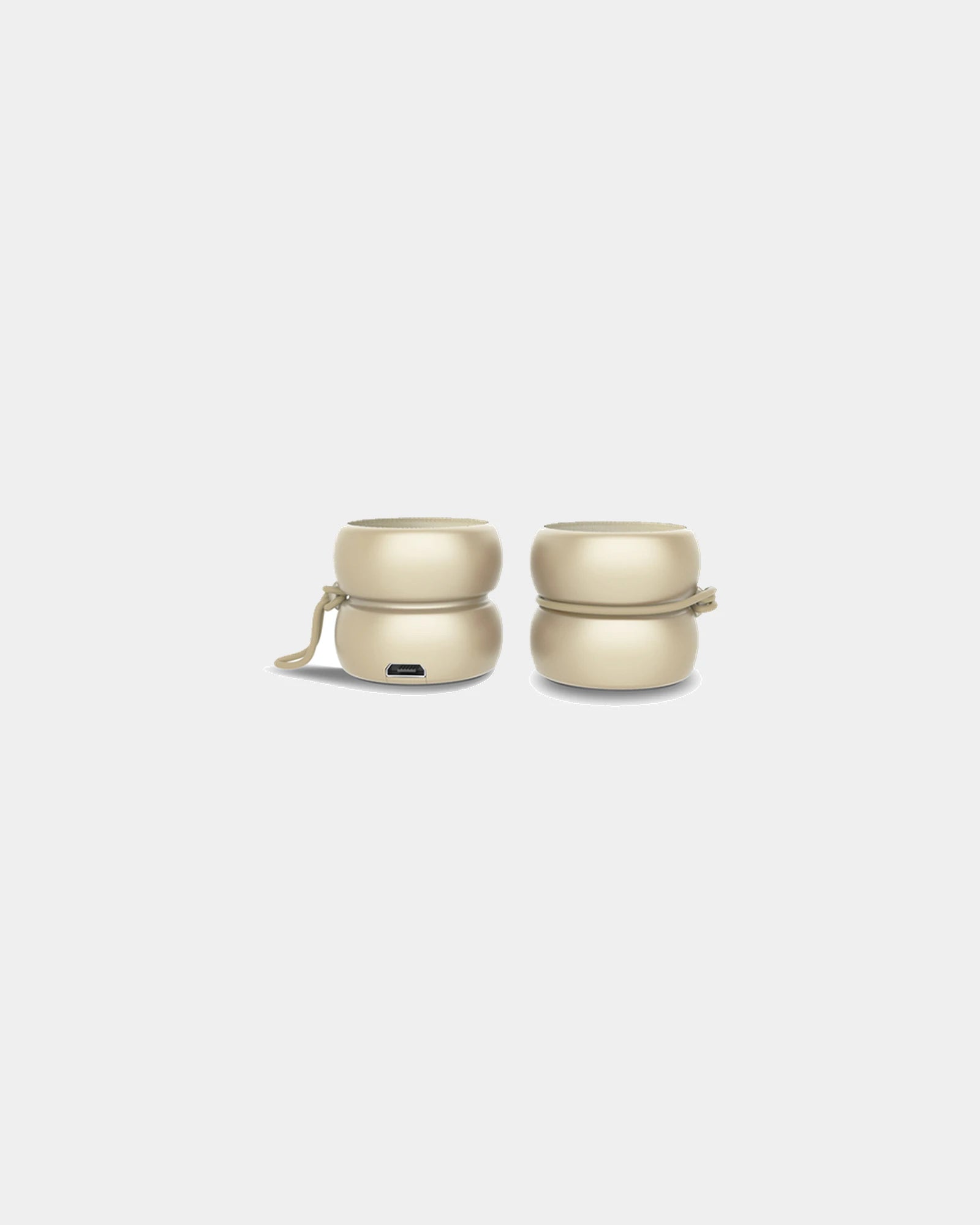


Treat your clients and employees!

FAQ - Custom audio devices
Trusted by 1,000+ companies
Drivers and output across the branded audio devices range
Sound quality on any audio device starts with the driver, the cone that moves the air, and the way it is quoted changes with the format. On a Bluetooth speaker the headline figure is output in watts, and the number that means something is RMS, the continuous power the amplifier sustains, not the inflated peak power printed on a box. A pocket speaker commonly runs around 3W to 5W RMS, a desktop cylinder 10W to 20W, and a rugged outdoor unit higher still, model-dependent.
On worn devices the driver is measured in millimetres instead of watts. Wireless earbuds typically carry a 6mm to 12mm dynamic driver, on-ear headphones sit around 30mm, and over-ear cans reach 40mm, where the larger diaphragm shifts more air for a fuller, cleaner sound. A larger driver in any body, speaker or headphone, holds its clarity at higher volume before it starts to distort.
Pick the output to the use, not the headline figure. A 3W pocket speaker is ample for a desk, while a garden party wants the headroom of a 20W body. A commuter earbud values a balanced 10mm driver, and a home-office over-ear gift benefits from the 40mm scale. Brief the listening context and the right tier of branded audio device follows.
One trade-off buyers settle late but should settle first: output fights battery and size. A bigger driver and a higher power figure draw more current and need a larger cell, which adds bulk. On earbuds the constraint is the tiny in-ear housing, on speakers it is the cabinet. State whether portability or volume leads, and the rest of the spec resolves around it.
| Device type | Typical driver / output (approx.) | Best fit |
|---|---|---|
| Wireless earbuds | 6mm to 12mm driver | Commute, gym, one-to-one gift |
| On-ear / over-ear headphones | 30mm to 40mm driver | Home office, focus, premium gift |
| Pocket speaker | 3W to 5W RMS | Desk, tent, bathroom shelf |
| Cylinder / soundbar | 10W to 30W RMS | Room, garden, home-office desk |
Where the bass comes from across custom audio devices
Bass is the spec that separates a custom audio device people use daily from one they ignore, and it is built differently in each format. On a compact speaker it rarely comes from the main driver alone; a passive radiator does the heavy lifting. That undriven cone, often on the base or a side panel, extends the low end far below what a small box should manage on its own, and you can feel it pulse on the casing at high volume.
On earbuds and headphones the seal replaces the radiator. An in-ear tip that seals the canal, or an over-ear cushion that closes around the ear, traps the air the driver moves and delivers the bass straight to the eardrum. A poor seal leaks low frequencies and thins the sound, which is why fit matters as much as the driver on any worn device.
Not every audio device needs deep bass, and speech-led units are no exception. A speaker for a conference call, or an earbud aimed at podcasts and video meetings, values clear mid-range over low end, so a simpler acoustic design keeps the body slim. Name the listening use in the brief, music or voice, and the acoustic tuning follows from there.
Stereo separation is the related point most buyers overlook. A lone speaker plays in mono however good the driver, so true left-right sound needs two bodies, whereas earbuds and headphones deliver stereo by design across the two ears. That is where the wireless pairing covered below changes what each format can do.
IP water and sweat resistance on branded audio devices for active use
The moment an audio device leaves the desk it meets rain, sweat and the odd drop onto paving. The IP rating is the spec that decides whether an outdoor or sports gift survives its first season. The code reads as two parts. The IP number, such as IP67, covers dust then water; an IPX rating covers water only, leaving the dust digit unrated. The higher each digit, the tougher the seal.
Read the water digit against the real use. On a speaker, IPX4 resists splashes and rain for a covered patio, IPX7 survives immersion to a metre for thirty minutes for a poolside gift, and IP67 adds grit resistance for a festival or site. On sports earbuds, an IPX4 to IPX7 rating shrugs off sweat and a downpour on a run, which is the difference between a gym gift that lasts and one that fails.
Over-ear and on-ear headphones are usually left unrated, since they are indoor devices, so the water spec is a decision for speakers and earbuds rather than the whole range. Where a rating is quoted, the sealed body uses a gasketed grille or a flap over the charging port, and that construction reads as quality in the hand before a note plays.
The exact ingress figure is printed on each model's data sheet, since the rating is verified per body, not assumed from a rugged look. Tell us the environment the branded audio device will live in and we confirm the rated model that matches it.
| Rating | What it survives | Best fit |
|---|---|---|
| IPX4 | Sweat, splashes and rain | Sports earbuds, patio speaker |
| IPX5 | Low-pressure water jets | Garden speaker, poolside earbud |
| IPX7 | Immersion to 1m, 30 min | Beach and canal-towpath speaker |
| IP67 | Dust-tight plus immersion | Festival, site, off-road speaker |
Battery life and charging across custom audio devices
An audio device that dies halfway through the day fails the one job a gift like this exists to do, so get the playtime confirmed in writing before you order. Compact speakers commonly hold a single charge for around 5 to 12 hours, while larger outdoor bodies reach 20 hours or more, model-dependent. The bigger battery is part of why a rugged speaker weighs what it does.
Worn devices report battery in two figures. Wireless earbuds run roughly 4 to 8 hours per bud, then the charging case tops them up for a combined 20 to 30 hours across a week. Over-ear headphones, with room for a larger cell, reach 20 to 40 hours on one charge. Read every quoted figure as a moderate-volume best case, since pushing any device near its ceiling cuts the real runtime.
Charging port decides how painless the top-up is. A USB-C input refills far quicker than ageing micro-USB and matches the cable most recipients already carry, so name the port in the spec. Some larger speakers double as a power source, with a USB-A output that tops up a phone from the speaker's own cell in a field.
For a recipient who forgets the wall charger, a Branded power banks unit in the same gift kit keeps a speaker or an earbud case alive across a weekend. Sizing the cell to the use matters here, because a speaker entertains a group while an earbud case only has to survive a commute, and the spec should follow that difference.
Bluetooth versions and codecs on branded audio devices
A wireless device is no use if it cuts out every time the phone moves out of reach, so the connection spec is practical, not a number on a box. Current promotional audio devices ship with Bluetooth 5.0 to 5.3, model-dependent. That holds a stable link to around ten metres line of sight on a speaker and reconnects to the last phone the moment it wakes. Earbuds and headphones hold a shorter, body-close link that stays rock-solid through a pocket.
The codec is the quieter half of the spec. Bluetooth carries audio through a codec, and almost every device supports SBC as the baseline, with many adding AAC for cleaner streaming from an iPhone. The codec sets how much detail survives the wireless hop, so a music-led earbud or headphone gift benefits from AAC support, while a speech-led unit is well served by SBC alone.
Some speakers add a 3.5mm aux input and a microSD slot alongside Bluetooth, which matters more than buyers expect. A speaker that also reads a card plays at a stand with no phone tied up, and an aux lead rescues the link if a handset misbehaves. Wired headphones with a detachable cable offer the same fallback for a boardroom or studio recipient.
A built-in microphone turns a speaker or an earbud into a hands-free unit for calls, useful for a home-office or van-based recipient. Where that matters, name it, since not every body includes one. The exact Bluetooth version and codec support sit on the data sheet and vary across a single range.
TWS pairing and wireless connection across audio devices
The term that runs through the whole range is TWS, true wireless stereo, and it does a different job in each format. On earbuds it is the baseline: the two buds link as a left and right pair from one phone, which is what makes a modern earbud wireless at all. On speakers it is an upgrade, linking two identical units into a stereo pair that spreads sound across a room rather than filling a desk in mono.
Pairing a speaker set is usually a two-button handshake: connect one unit to the phone, hold a button on both, and the second joins as the opposite channel. Once linked they hold the split until switched off, so a recipient sets it once at the start of an evening. Earbuds pair the moment they leave the case, then reconnect automatically each time.
This reframes a premium order. A speaker gift can ship as a matched TWS pair in one box, each carrying your logo, which doubles the branded surface and the perceived value in a single handover. It suits a senior client gift or a long-service award far better than a lone unit, while an earbud set delivers the same stereo experience in a pocket format.
Speaker TWS only works between two of the same model, not a pocket unit beside a cylinder, so plan the pairing into the order from the start. For a single-unit campaign it costs nothing and goes unused; for a paired premium gift it is the headline. State which the run is and we spec the bodies to match.
Active noise cancellation on branded earbuds and headphones
Active noise cancellation, ANC, is the feature that turns a worn audio device into a premium gift, and it is worth understanding before you spec it. A small microphone samples ambient noise, and the device generates an opposite sound wave that cancels the low, steady drone of a train, an office or a plane. It is the upgrade most buyers do not know to ask for, and it changes how an earbud or a headphone feels in daily use.
ANC is strongest against constant low-frequency noise and lighter against sudden speech, so it suits a commuter or an open-plan recipient more than a quiet home worker. Many devices pair it with a transparency mode that lets outside sound back in at the tap of a button, so a wearer hears a platform announcement without pulling the earbud out.
The feature sits mainly on earbuds and over-ear headphones rather than speakers, since it works on sound reaching the ear. A passive design, with no ANC, seals out noise through the ear tip or cushion alone and keeps the price and the battery drain down, which suits a high-volume handout. Name whether the run is ANC or passive, because it moves both the tier and the cost.
Where ANC matters, it becomes the headline of the gift and the story on the box. A Branded earbuds set with ANC reads as a retail-grade reward for a top client, while a passive pair suits a broader event handout. Confirm which the run is before you fix the spec.
Form factors across the custom audio devices range
The format of the device is the first decision a brief should settle, because it drives the output, the battery and the marking area all at once. Wireless earbuds slip into a pocket and suit a commute, a gym or a one-to-one gift, trading room-filling volume for portability and a personal listen. They are the format for a high-volume handout where the unit must stay small and light.
On-ear and over-ear headphones wrap a larger driver and a longer battery into a body that reads as a premium retail product, which makes them the centre of a senior gift run. The ear cups also give a broad, flat surface for a logo. A Bluetooth speaker, by contrast, projects sound to a whole group, from a pocket pebble to a cylinder that wraps a logo right around the grille.
A rugged outdoor speaker wears a reinforced shell, a rubberised bumper and an integrated carabiner, built to clip onto a rucksack for an active audience. A slim soundbar body, wider than it is tall, suits a home-office desk with a wide stereo spread from a single unit. Audio accessories, from charging cases to cables and stands, round out a complete tech kit.
Match the format to where the gift will live, not to a price point alone. A campus earbud handout, a poolside speaker reward and a boardroom over-ear gift each call for a different body, and locking the format first keeps every later spec accurate. Tell us the audience and we narrow the shape before the quote.
| Format | Feel and use | Best audience |
|---|---|---|
| Wireless earbuds | Pocket case, personal listen | Commuters, gym, campus |
| Over-ear headphones | Premium feel, broad cup surface | Senior client and staff gifts |
| Bluetooth speaker | Fills a room or a garden | Home, outdoor and event use |
| Soundbar / accessories | Wide desk sound, kit extras | Home-office and tech kits |
Fit, carry and wearability on branded audio devices
How a device is worn or carried decides how often the gift gets used and seen, and the detail changes with the format. Wireless earbuds ship with several silicone tip sizes so a recipient seals the canal for both comfort and bass, and a poor tip fit undoes an otherwise good driver. Over-ear headphones live or die on cushion softness and clamp force, since a comfortable pair stays on for a full working day.
Speakers ask a different question: where they travel. An integrated carabiner clips a rugged unit onto a rucksack strap, a tent pole or a bike frame, so the speaker rides along to the outdoor places a brand wants to be seen. A silicone strap suits a poolside body, while a grippy base keeps a desk speaker in place. The carry feature should follow the body, not bolt onto every model.
Carry and fit hardware doubles as a branding cue. A coloured carabiner, a printed earbud case or a cushion in your house colour reads as part of the product, not an afterthought, and gives a second surface beyond the main body. On a rugged speaker the bumper itself can be moulded in a brand colour to tie the whole unit together.
These details are also what make branded audio devices outlast the campaign that handed them out. Earbuds that ride in a pocket every day, and a speaker that clips to a bag, keep the logo in public view long after the event, where a deskbound box would sit unseen. Specify the fit and carry feature to how mobile the audience really is.
Branding bodies, cases and ear cups across the audio devices range
Print and engrave methods for custom audio devices
The branding surface shifts with the format, so the method has to follow the body. On a speaker the grille or shell is the headline face aimed at the room, on earbuds it is the charging case lid and the buds themselves, and on headphones it is the broad outer ear cup. A fabric-wrapped grille, a moulded plastic case and an aluminium cup each take a different process, so confirm the body before locking artwork.
Pad print is the cost-effective classic for a one or two-colour logo on a curved plastic case or body, and screen print suits a bold single-colour mark on a flatter panel. UV digital print lays full-colour artwork with gradients onto a flat face such as a headphone cup. Laser engraving cuts a permanent, refined mark into an aluminium body, cup or earbud case that never rubs off, ideal for an understated corporate gift.
Fabric and small-surface branding on branded audio devices
A fabric speaker grille or a fabric headphone headband opens a route hard bodies cannot offer: a woven or dye-sublimated logo printed straight into the cloth, which reads as a designed product rather than a sticker. On tiny earbuds the mark moves to the case lid, where even a small pad print or engrave carries the brand every time it is opened. A Branded USB sticks takes a pad print or laser engrave on its casing too, so a paired tech gift set can share one finish across the audio device and the stick.
Send the logo as vector art with Pantone references, because a fabric grille, a moulded case and an aluminium cup render colour differently and the proof has to reconcile the surfaces. We turn that proof around within 24 hours, so placement is signed off before a single device is marked.
| Method | Surface | Effect |
|---|---|---|
| Pad print | Curved case or body | One to two solid colours |
| Screen print | Flat plastic panel | Bold single colour |
| UV digital print | Flat cup, grille or face | Full colour, gradients |
| Laser engraving | Aluminium body, cup or case | Permanent, no colour |
| Woven / sublimated | Fabric grille or headband | Logo printed into cloth |
Materials, finish and the eco story behind branded audio devices
The body material sets both the feel and the environmental narrative of an audio device, and it is worth choosing as deliberately as the driver. Moulded ABS is the budget default, taking a full-colour print cleanly and keeping a big earbud or speaker run affordable, though it reads as plain plastic in the hand. A soft-touch rubberised coating lifts the feel, hides fingerprints and adds the grip an outdoor speaker or a sports earbud needs on a wet hand.
Aluminium bodies, ear cups and end caps read and feel like a retail product, which is why they sit on senior client gifts where the unboxing carries weight. Fabric-wrapped speakers and headphone headbands soften the look and warm the acoustics, and the cloth itself takes a printed logo. Recycled-plastic and bamboo bodies offer a lower-impact route for a values-led brand across speakers, earbuds and headphones alike.
Any recycled or organic content is verified per model and printed on that line's spec label, not inferred from how the body looks. We send the figure for the exact base you pick before you write your own messaging. That keeps an eco claim accurate to the device in the box rather than a blanket statement.
On any audio device the housing colour does as much brand work as the printed mark. A shell or an ear cup moulded in your house colour with a contrast badge reads as your own product, not a stock unit wearing a sticker. A Custom mouse mats in the same shade lets a hot-desk gift share one palette with the earbuds or speaker. Confirm the colourways early, since finish options vary by model.
Retail-quality presentation that makes branded audio devices a real gift
A reward that arrives looking bought outperforms one that arrives looking branded, and audio devices are one of the few promotional lines that clear the bar set by a high-street shelf. A rigid printed gift box with a foam insert holds the earbuds and case, the headphones or the speaker, the charging cable and a quick-start card in place. That turns the handover into an event rather than a bag-stuffer.
The components inside build the impression. A braided USB-C cable, a card in your tone of voice and, on a paired TWS speaker set, two units nested side by side all read as a complete product. Each secondary surface, the box and the card, takes your brand without crowding the device itself. A Custom tech gadgets mix can share that same box for a multi-item tech kit.
This is where branded audio devices beat most tech giveaways on perceived value. A recipient keeps good earbuds in a pocket or a speaker on a kitchen counter and reaches for them daily. The logo stays in the open across commutes, kitchens and offices rather than dropping into a drawer after the event. The gift earns its dwell time by being genuinely used, not merely kept.
Position the tier to the recipient. An over-ear pair with ANC or a matched TWS speaker set in a rigid box suits a top client or a long-service award. A bright pocket speaker or a passive earbud in a printed sleeve suits a freshers-fair handout. For a wider tech line, Branded headphones anchor the premium end of the audio devices range.
Minimum orders, lead time and choosing branded audio devices by audience
Audience sets the spec on branded audio devices before quantity does, because a client gift and a campus handout pull the format, the output and the price in opposite directions. Fix who receives the device first, then let the volume follow. Minimum orders typically start near 25 to 50 units for the better models, which keeps a pilot run or a senior gift accessible.
Larger volumes open keener per-unit pricing and a wider choice of body colour and finish, so weigh spec, quantity and deadline together rather than fixing one in isolation. A passive earbud at high volume and an ANC over-ear at low volume sit at opposite ends of both the price and the lead-time scale.
Production sits around three weeks from proof sign-off, and the marking method moves it. A single-colour pad print on stock cases clears faster than a full UV wrap or a sublimated fabric grille on a big run. Leave room for the proof step before an event date, and confirm anything model-dependent in writing.
Settle the format, the output tier, the connection spec and whether the run is passive, ANC or TWS-paired before you request a quote. A pilot of a handful of units proves the sound, the fit and the battery in real use before you commit a full run.
- Wireless earbuds with a 6mm to 12mm driver for commuters and gym users
- On-ear and over-ear headphones with a 30mm to 40mm driver for premium gifts
- Bluetooth speakers from 3W to 30W for desk, home and outdoor use
- ANC on earbuds and headphones for commuters and open-plan recipients
- IPX4 to IP67 sealing for sports earbuds and outdoor speakers
- USB-C charging, with AAC and SBC codec support on music-led devices
- Minimum orders near 25 to 50 units, lead time about three weeks
Sampling an audio device before a full run
An audio device is judged by ear, so a brief gains from a listening step a printed pen never needs. We can send a single unit at the chosen tier, an earbud, a headphone or a speaker, before the full run. The buyer then hears the driver, tests the fit or the seal and checks the connection in the place it will live.
The proof settles the logo; the sample settles the sound. A quoted driver size, a codec and a battery figure read fine on paper, yet only a device in hand confirms it holds its clarity at volume. A waterproof or sweat-resistant claim is best checked on a real body too, not taken from the sheet.
A pilot also de-risks the volume order. Proving the playtime, the pairing and the fit on a handful of units protects a four-figure commitment. We log the body, the colourway and the marking method against the order, so a reorder matches the first.

