

Branded aprons
- Price, low to high
- Price, high to low


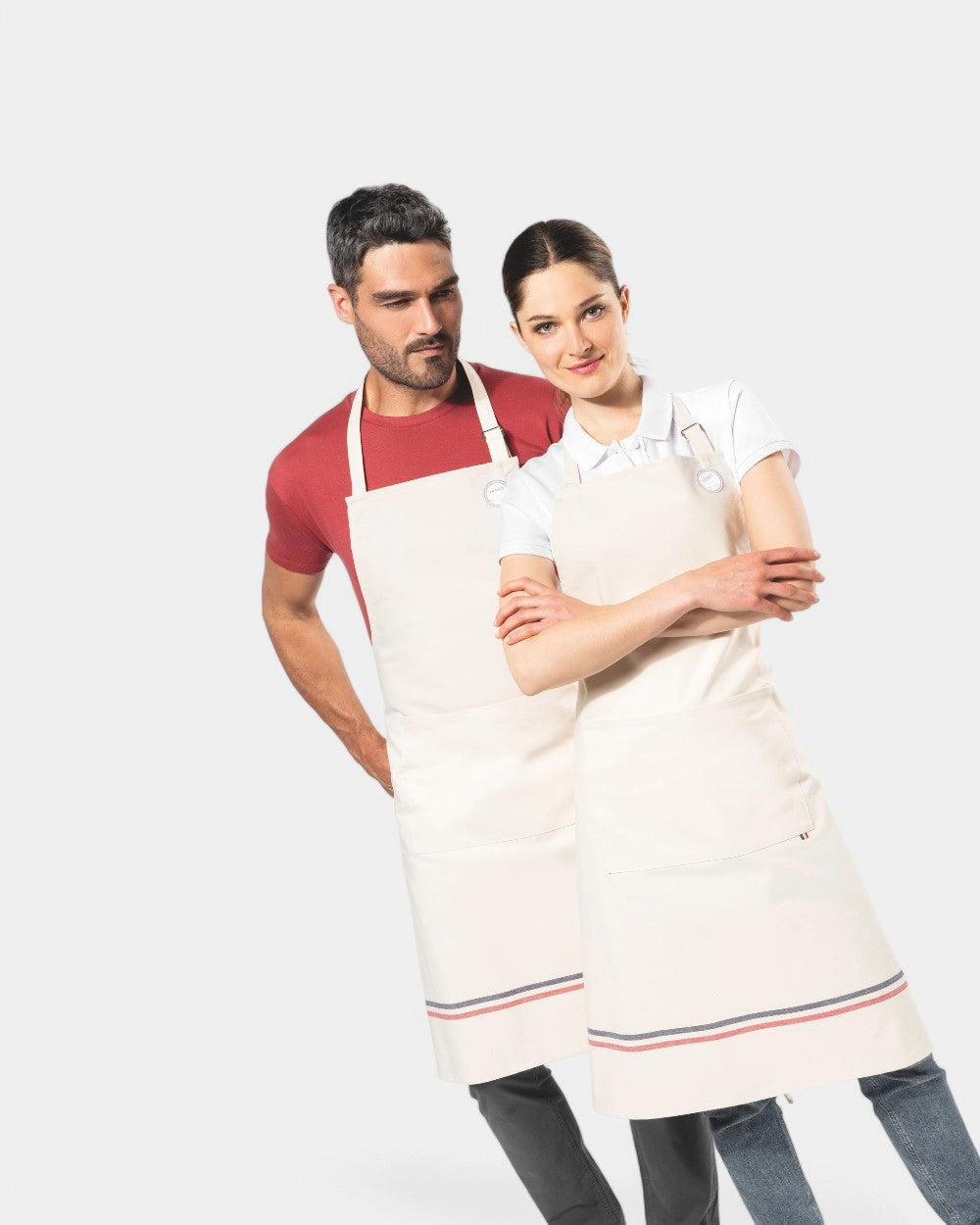


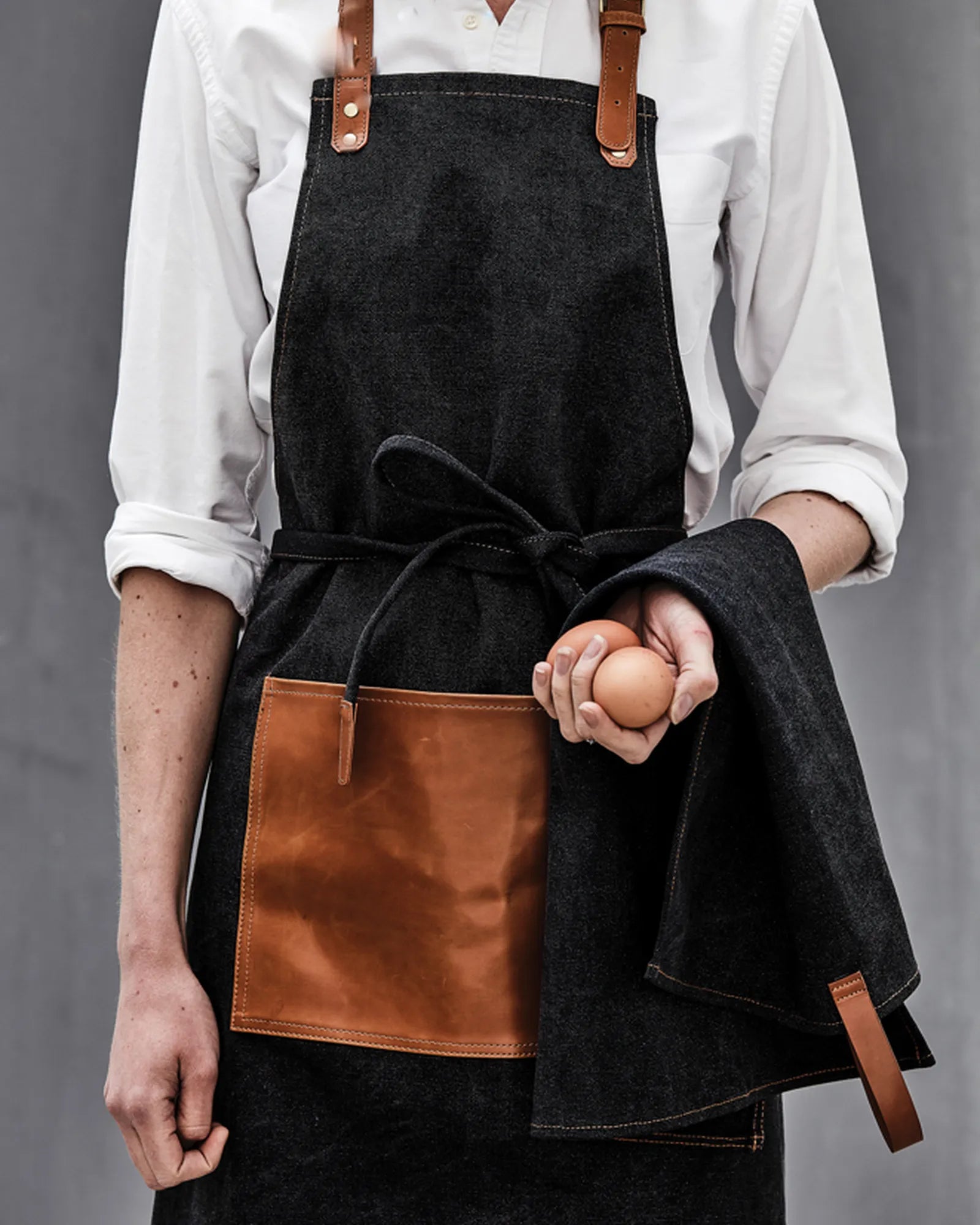




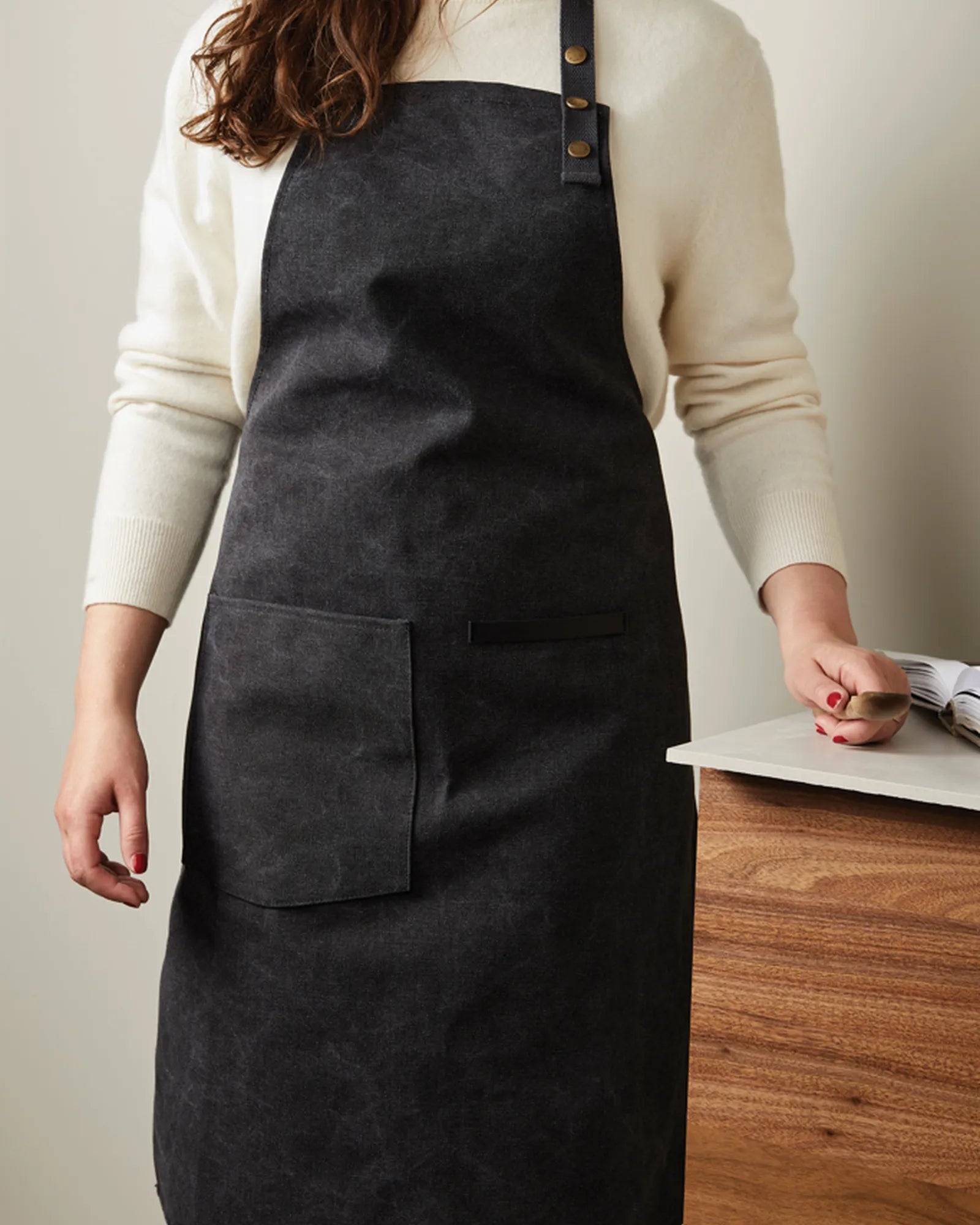






Treat your clients and employees!

FAQ - Personalised aprons
Trusted by 1,000+ companies
A café front-of-house set: where printed aprons start
Picture a new coffee bar opening with eight baristas on the floor. Each wants a short waist apron in house colours and a left-chest logo that reads across the counter. The front pocket runs deep enough for a cloth, a thermometer and a card machine, and a D-ring buckle cinches the same printed aprons to any frame in seconds.
We treat that brief as a uniform decision, not a giveaway, matching the printed apron crest to your Corporate wear. The waist cut keeps a barista free to crouch to the under-counter fridge, while a bib version would suit the kitchen pass behind them. Matching the colour to the wall tiles ties the room together the moment a customer walks in.
Bib, bistro, cross-back and child: choosing your printed aprons cut
The cut decides what the printed apron protects and how long a shift it survives. A full bib apron shields chest to knee and suits a chef working a hot line or a butcher facing splash and bone dust. A short bistro or waist apron covers the lap only, which keeps a waiter cool and quick across a busy floor.
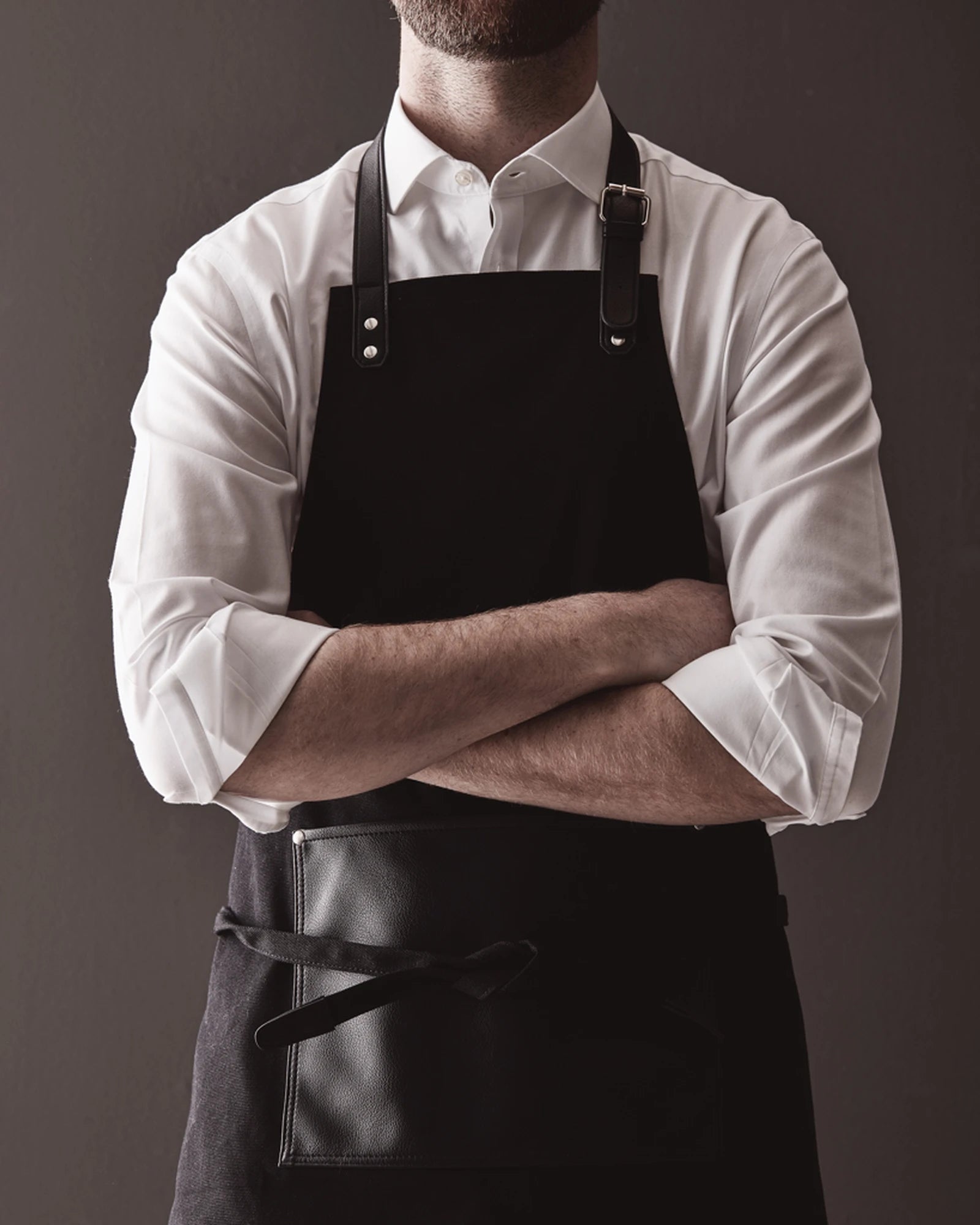
Cross-back aprons swap the neck loop for straps that cross the shoulders, taking the weight off the neck on a ten-hour shift. They read as the craft, deli and speciality-coffee look, and they suit anyone who finds a single neck strap pulls and chafes by mid-afternoon. The same chest logo sits clean on the bib panel either way.
Child and specialist cuts for embroidered aprons
Children's aprons round out the range for cookery schools, soft-play cafés and family gift runs. Scaled to fit roughly ages 3 to 12, these embroidered aprons carry the same mark as the adult version at a smaller size. A pottery studio can issue a named child's apron per pupil and top up as new starters join.
Specialist cuts answer specialist jobs. A cobbler apron wraps front and back for a fishmonger or a welder. A four-way tie lets a heavy bib sit higher or lower on a tall chef. A pocket-less tabard suits a food-prep line where loose ties and pouches are a hygiene risk. We match the cut to the station, not the catalogue.
| Cut | Coverage | Best role | Tie style |
|---|---|---|---|
| Full bib | Chest to knee | Chef, butcher, line cook | Neck loop + waist |
| Bistro/waist | Lap to knee | Waiter, barista, bar | Waist only |
| Cross-back | Chest to knee | Craft, deli, speciality coffee | Crossed shoulder straps |
| Child | Scaled bib | Cookery school, gift | Neck loop + waist |
| Cobbler/wrap | Front and back | Fishmonger, workshop | Side ties |
Cotton, canvas, denim and oilcloth: fabric for embroidered aprons
Fabric is chosen for the mess it meets, then for the mark it carries. A mid-weight cotton or poly-cotton around 200 to 240gsm is the café and waiting workhorse. It stays comfortable across a shift, launders hot and sits flat enough to take a stitched chest logo cleanly.
Heavier cloth handles heavier work. A 10 to 12oz cotton canvas or a washed denim stands up to a butcher's block, a forge or a barbecue pit. These printed aprons also age into the rugged look a craft brand often wants. The weight holds a dense embroidery without puckering, so a large back logo sits crisp rather than rippled.
Coated and treated cloths answer the wettest jobs. An oilcloth or PVC-coated apron wipes clean for a fishmonger or a brewery wash-down, and a water-repellent finish helps a poly-cotton shed a splash before it soaks through. Organic cotton is available where a brief asks for it, with the certification stated in the product spec on request rather than claimed in this copy.
Embroidery versus print: marking your promotional aprons
A kitchen apron meets steam, grease and a hot wash every day, so the mark has to be built for laundry, not display. Embroidery stitches the logo in thread, so a left-chest crest holds its colour and shape through repeated 60-degree washing and the odd brush against a hot pan. That durability is why most hospitality bibs default to stitch over ink.
Print earns its place where thread cannot go. A large front slogan, a multi-colour illustration or a photographic graphic prints flat and bright, and screen print drives the unit cost right down across a big single-colour run. Reach for print on a 300-piece festival or charity apron run where a bold one-colour logo covers the whole bib.
Matching embroidered aprons to the rest of your kit
If you are also kitting staff in Embroidered workwear, a stitched apron crest matches the polos for a hard-wearing season-long finish. Print stays in reserve for a seasonal slogan or an event-only design.
Heat-applied transfer and woven labels cover the in-between briefs. A pressed transfer adds a per-apron name above the pocket with no fresh setup, handy for a chef's-table service where each cover carries a guest's name. A woven tab sewn into the hem suits a maker selling promotional aprons as retail stock alongside the food.
| Method | Best for | Wash durability | Practical minimum |
|---|---|---|---|
| Embroidery | Chest logos, names, crests | Very high, 60C | From 1 |
| Screen print | Large single/2-colour fronts | High when cured | From approx. 25 |
| Heat transfer | Per-apron names, event art | Medium-high | From 1 |
| Woven label | Hem tab for retail stock | Very high | From approx. 50 |
Pockets, ties and adjustable necks on your promotional aprons
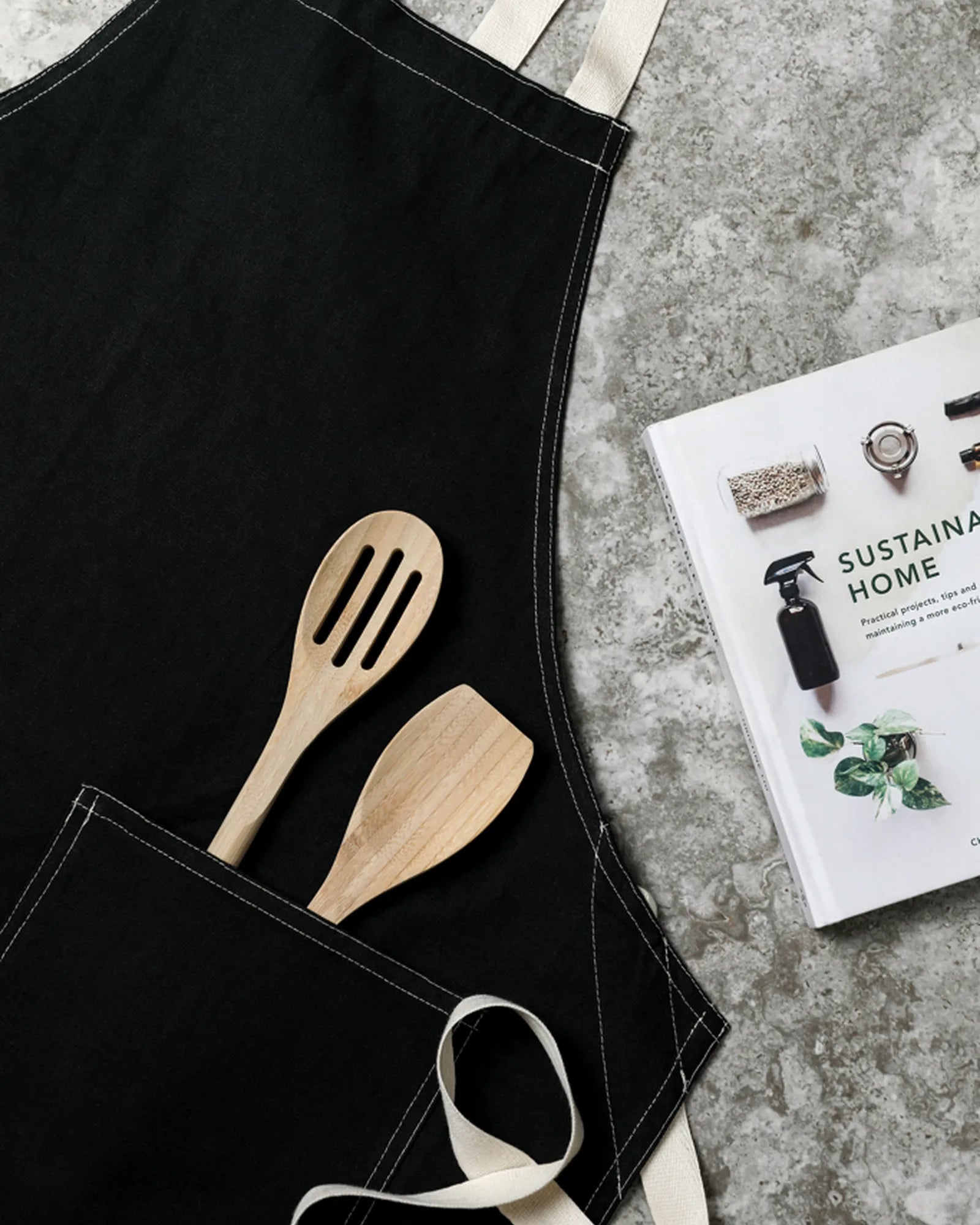
The pocket layout is where a printed apron stops being a sheet of cloth and starts doing a job. A wide front pouch split into two suits a waiter carrying a pad, a pen and a card reader. A three-section pocket keeps a barista's thermometer, cloth and tamper apart. We set the pocket count and depth to the tools the role actually carries.
Specialist pockets answer specialist hands. A potter or a florist might swap the food pockets for a wide tool pouch and a snip holster, while a craft-trade apron drops to a single chest patch. We log the layout so it carries across a wider run of branded Custom Clothing for the same team.
Ties decide comfort across the back half of a shift. Long waist ties that wrap to the front let a chef of any size knot the apron where it sits right. An adjustable buckle on the neck loop tunes the bib height, while a cross-back strap removes the neck load entirely for the longest stints on the line.
- Bib pen slot keeps ink clear of the cloth
- Divided front pouch separates pad, pen and reader
- Waist towel loop holds a service cloth ready
- Adjustable neck buckle tunes bib height in seconds
- Long wrap ties knot at the front for any size
- Zipped inner pocket guards phone and tips
- Hidden seam pocket for a card machine on the floor
Sector kits: matching promotional aprons to the trade
Each trade loads its printed aprons differently. A café leads on a short bistro cut in house colours, a kitchen line on a hot-wash bib. A butcher takes a 12oz canvas that resists fat and the odd bone-saw nick, with the crest set high on the chest, clear of the working zone.
Craft, retail and gift runs flip the priority to the look. A natural-shade cross-back canvas apron reads as the maker or candle-studio aesthetic and sells as retail stock. Pairing it with branded Custom caps gives a market-stall trader a coordinated front, while a craft-fair seller might run fifty as a Christmas line.
Sizing and fit across your embroidered aprons
An apron is more forgiving on size than a fitted top worn beneath it, but fit still decides comfort across a long shift. Most adult bibs run one size with long wrap ties that suit roughly a small to a 2XL frame. A generous-fit or plus block covers larger team members without the ties straining. A child's range scales down to fit ages 3 to 12.
Where the team also wears Custom T-Shirts under the apron, the wrap ties forgive a size mix that a fitted tee cannot. Strap length is the real fit variable on an apron. A tall chef needs longer neck and waist ties to wear a bib high and knotted at the front, where a standard length would ride short. We spec longer ties across a full team order so one apron style covers a mixed-height crew without anyone fighting the straps.
Personalisation reaches the individual on embroidered aprons. Beyond the house logo, we stitch or press a name and role above the pocket per piece, the same way we handle a run of branded staff clothing. That lets a cookery school allocate an apron to each named pupil.
Wash life and food-safe care for printed aprons
The wash cycle decides how long an apron lasts, so we spec it to take the heat a kitchen demands. A poly-cotton bib holds shape and colour through repeated 60-degree laundering, the temperature most food-hygiene routines default to. Heavier canvas prefers a 40-degree wash to keep its structure and avoid heavy shrinkage. Pure cotton printed aprons feel softer but fade faster under daily hot washing.
The marking method changes the care advice on printed aprons. Embroidery shrugs off hot washes and a tumble dry, while a heat transfer prefers a cooler 40-degree cycle and a turn inside out to protect the film edge.
We send a short care note with larger apron runs so each piece reaches its full wash life, which keeps a stitched logo crisp and delays the reorder. A care label can be sewn in on request for a retail apron line.
| Apron | Wash temp | Tumble dry | Note |
|---|---|---|---|
| Embroidered poly-cotton bib | Up to 60C | Low | Iron avoiding the logo |
| Heat-transfer named apron | 30-40C | Cool/none | Turn inside out |
| Canvas/denim, embroidered | Up to 40C | Low | Expect slight shrink first wash |
| Oilcloth/coated | Wipe clean | None | Do not machine wash |
Quantity, runs and lead time for your promotional aprons
The order size steers both the marking method and the per-apron cost. A twelve-piece café set runs cleanly on embroidery, where the one-off stitch setup spreads across the dozen and each apron carries an identical crest. A 300-piece festival run tips toward screen print, where a single screen makes a bold front cheap across the whole batch. We can send a free sample before you commit, so you check the cloth weight and stitch in hand first.
A cookery-school class set sits in the middle. Forty aprons for a weekend course want a stitched house logo plus a pressed first name per piece. Child cuts take shorter ties so no pupil trips on trailing straps.
Lead time tracks the run size and the finish. A small café set in stitch is faster to produce than a 500-piece printed gift run that needs screens and a colour match. A coated oilcloth run adds a touch more, since the film resists embroidery and routes to transfer instead. We confirm a delivery window against the live quantity, with our standard route landing finished aprons inside three weeks.
| Order shape | Typical quantity | Marking | Indicative window |
|---|---|---|---|
| Café front-of-house set | 8-15 aprons | Embroidery | Approx. 2-3 weeks |
| Cookery-school class set | 30-50 aprons | Embroidery + transfer | Approx. 3 weeks |
| Festival/charity run | 200-500 aprons | Screen print | Approx. 3 weeks |
| New-starter top-up | 1-5 aprons | Embroidery, file held | Approx. 1-2 weeks |
Use cases for printed aprons by sector
Every trade asks something different of an apron, so the right model starts from the work, not the catalogue. A café or bar leads on a short bistro cut that keeps front-of-house quick and cool. A production kitchen needs a hot-wash bib that shields chest to knee across a long line. Butchers, fishmongers and brewers push the brief toward heavy canvas or a coated front that resists fat, splash and wash-down. Craft studios, potters and florists treat the apron as a tool carrier and a brand piece at once. Cookery schools and family lodges add child cuts and per-pupil names. We map each station to a recommended model so a mixed team orders one coherent set rather than a drawer of odd stock.
| Sector | Recommended model | Why it fits |
|---|---|---|
| Café and bar | Bistro waist, poly-cotton | Cool, quick, easy 60C wash |
| Production kitchen | Full bib, poly-cotton | Chest-to-knee cover, hot-wash safe |
| Butcher and fishmonger | Canvas or coated bib | Resists fat, splash and bone dust |
| Craft and florist studio | Cross-back canvas | Tool pockets plus retail-ready look |
| Cookery school | Child bib, named | Per-pupil fit and clear allocation |
How we decorate your embroidered aprons without compromising the product
Decoration on an apron has to respect the cloth it lands on, because the wrong method on the wrong fabric fails in the laundry rather than on the rail. On a flat poly-cotton or canvas bib we lead with embroidery, since stitched thread keys into the weave and holds a 60-degree wash without cracking. On a coated oilcloth or PVC front we never punch a needle through the film, because the holes break the waterproof barrier the apron exists to provide. There we switch to a heat-applied transfer or a sewn-on patch instead. We test the placement against pocket seams and ties so the mark sits on a flat panel that wears evenly.
Setup choices protect the garment as much as the brand. We keep stitch density matched to the fabric weight, so a dense back logo does not pucker a lighter cloth or stiffen the bib panel. We hold your digitised file and pocket layout on record, so a reorder or a new-starter top-up lands identical without fresh charges. Per the maker, the polyester thread we use stays colour-fast well above a kitchen wash cycle, which we state as a supplier specification rather than a claim of our own. Where a brief calls for organic or certified cloth, the certification is named in the product spec on request, not asserted in this copy.

