

Branded softshell jackets
- Price, low to high
- Price, high to low
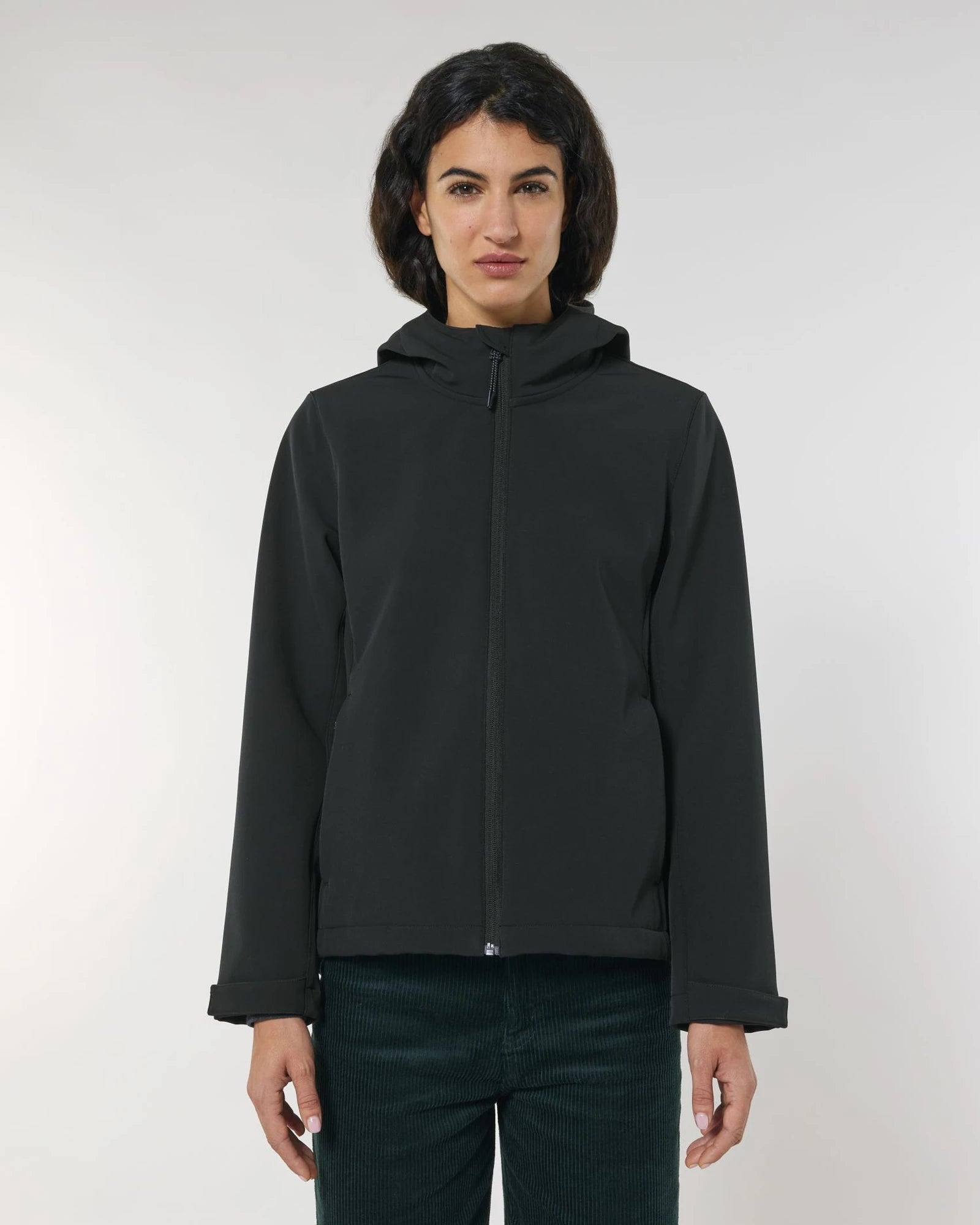


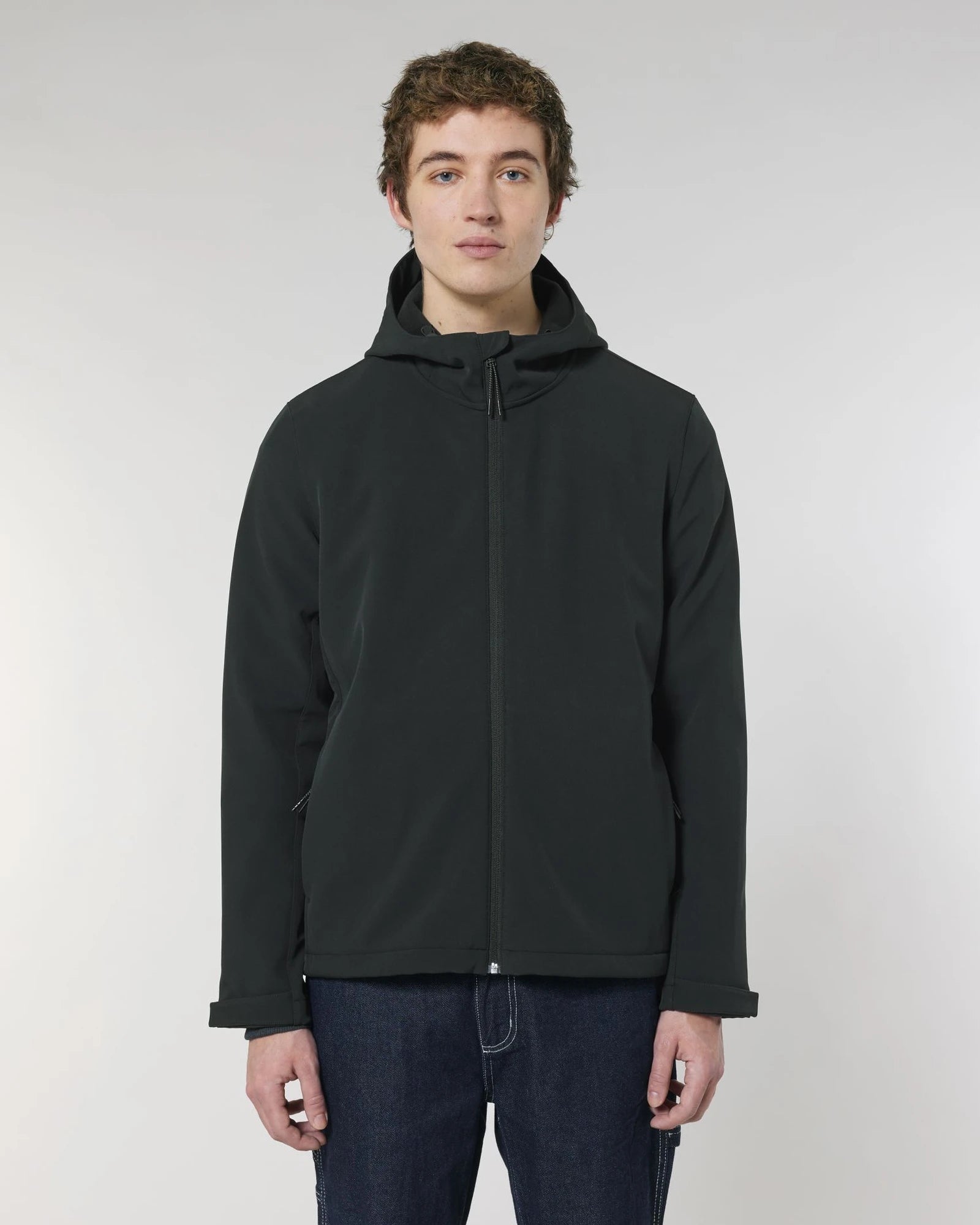


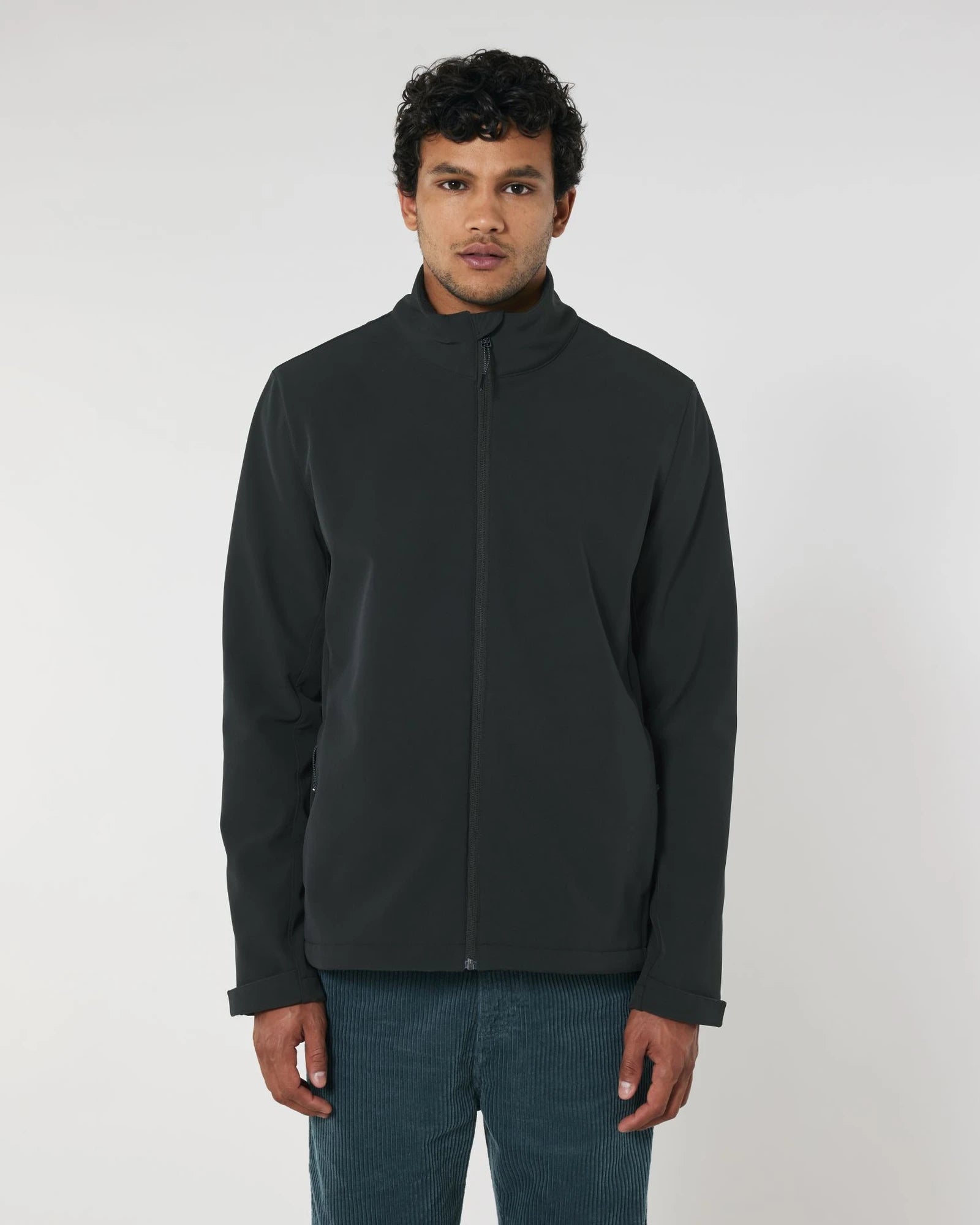


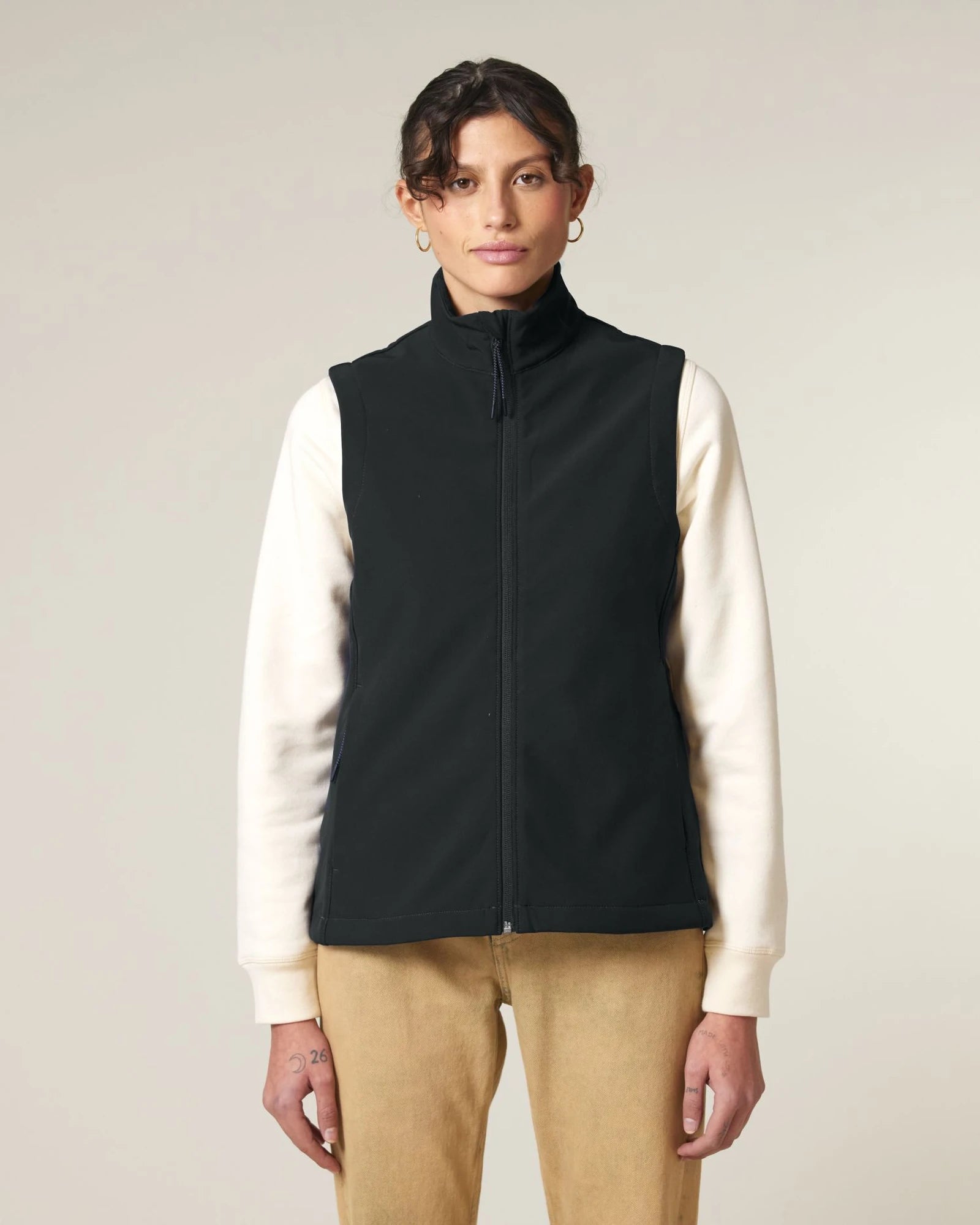


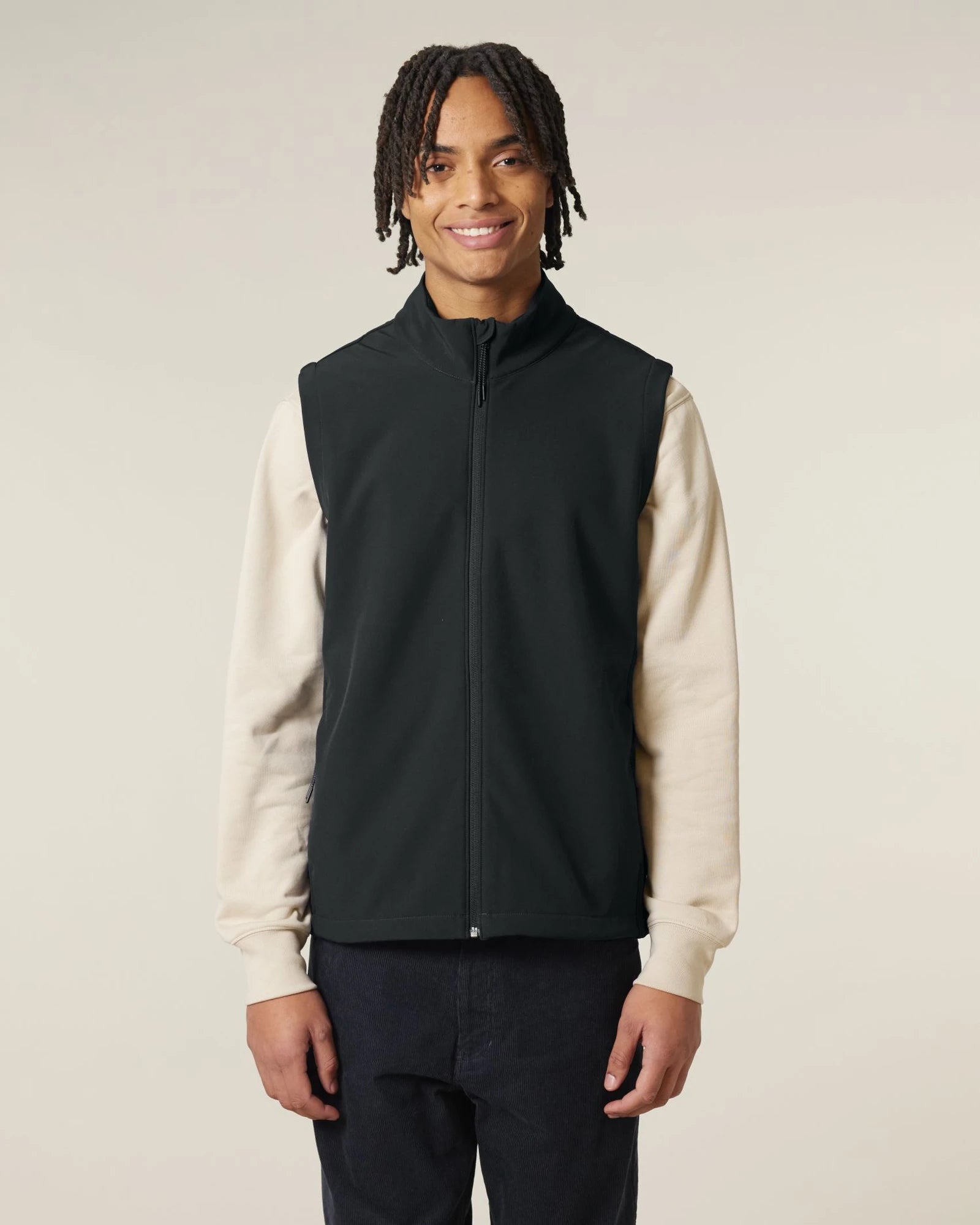


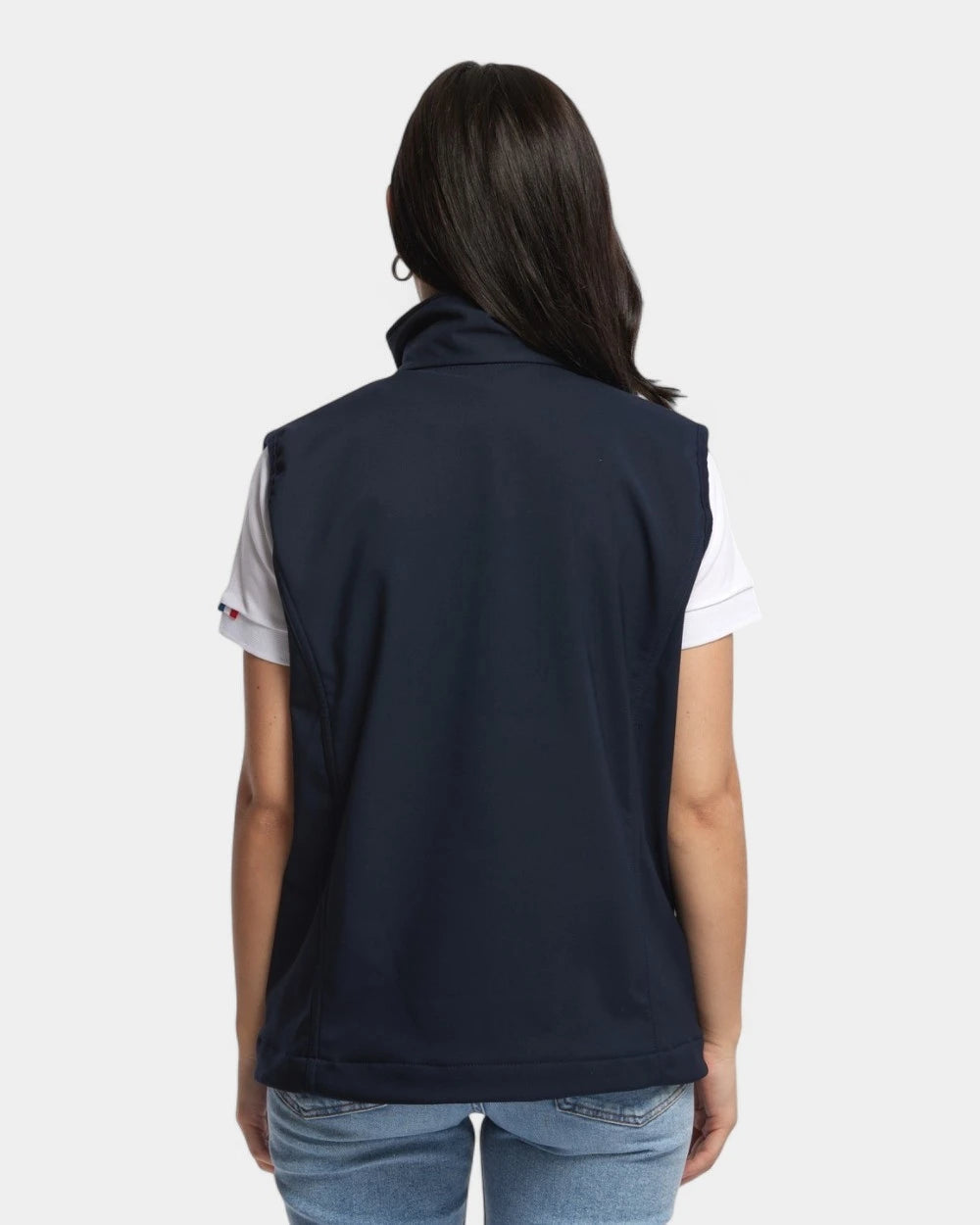


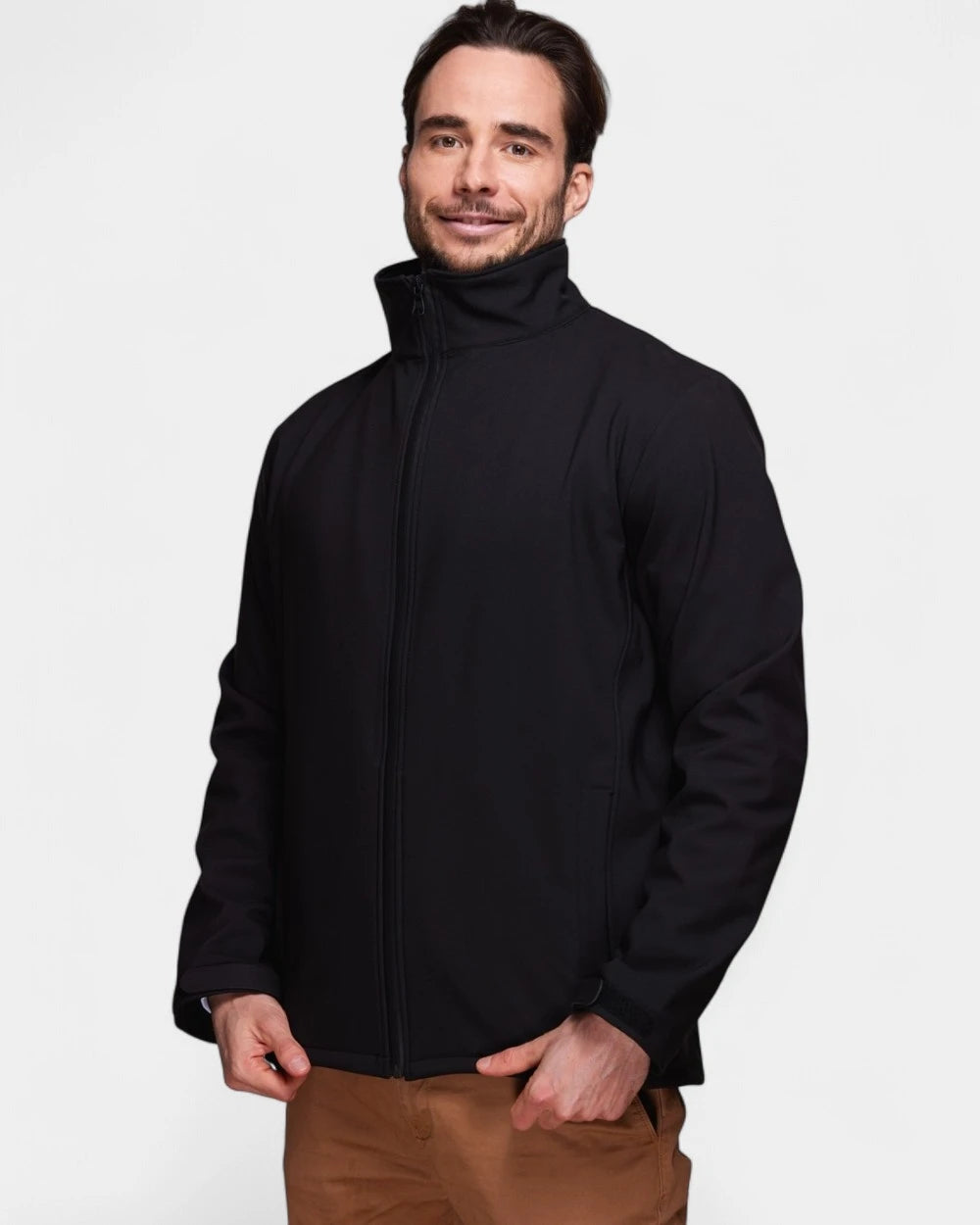


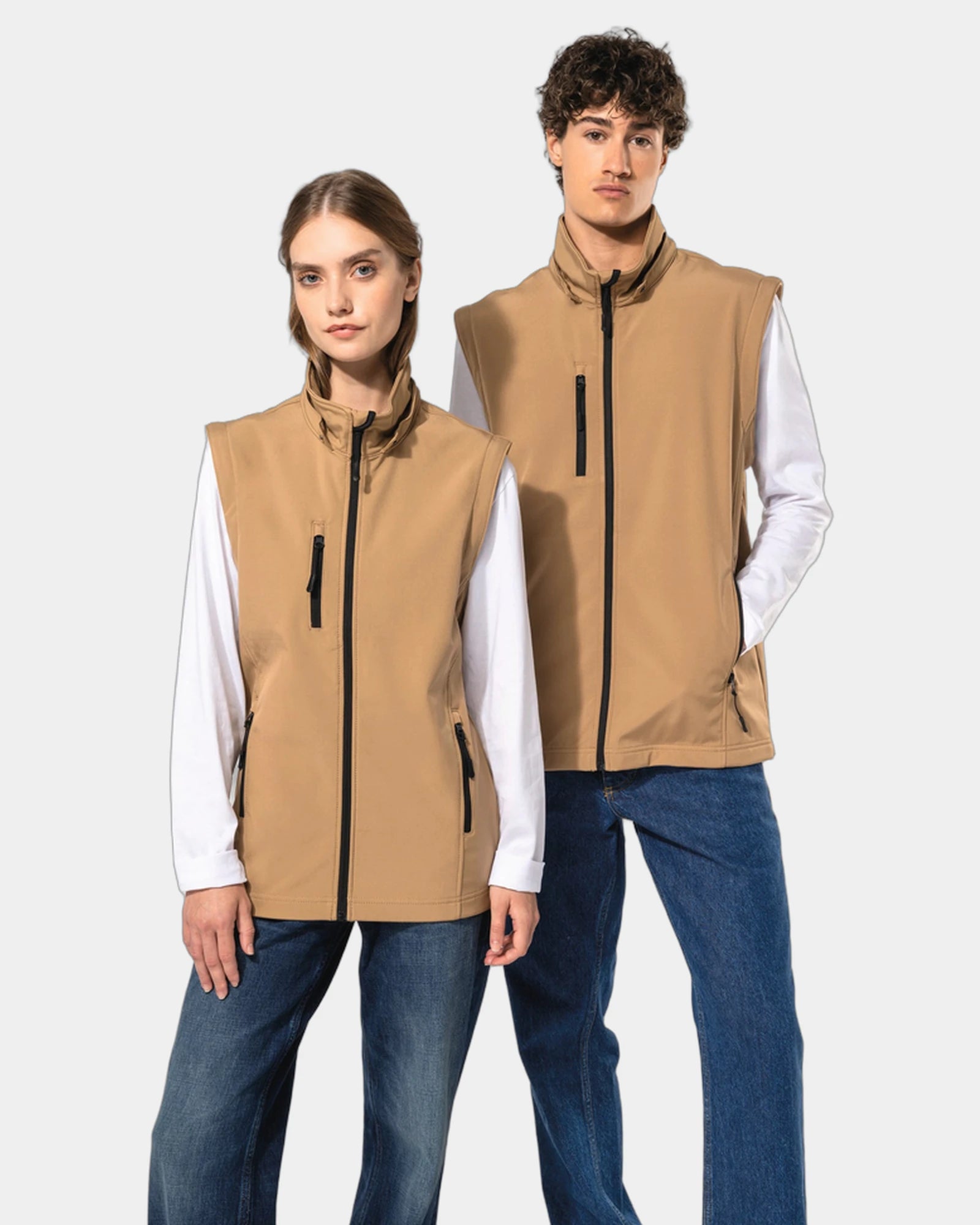


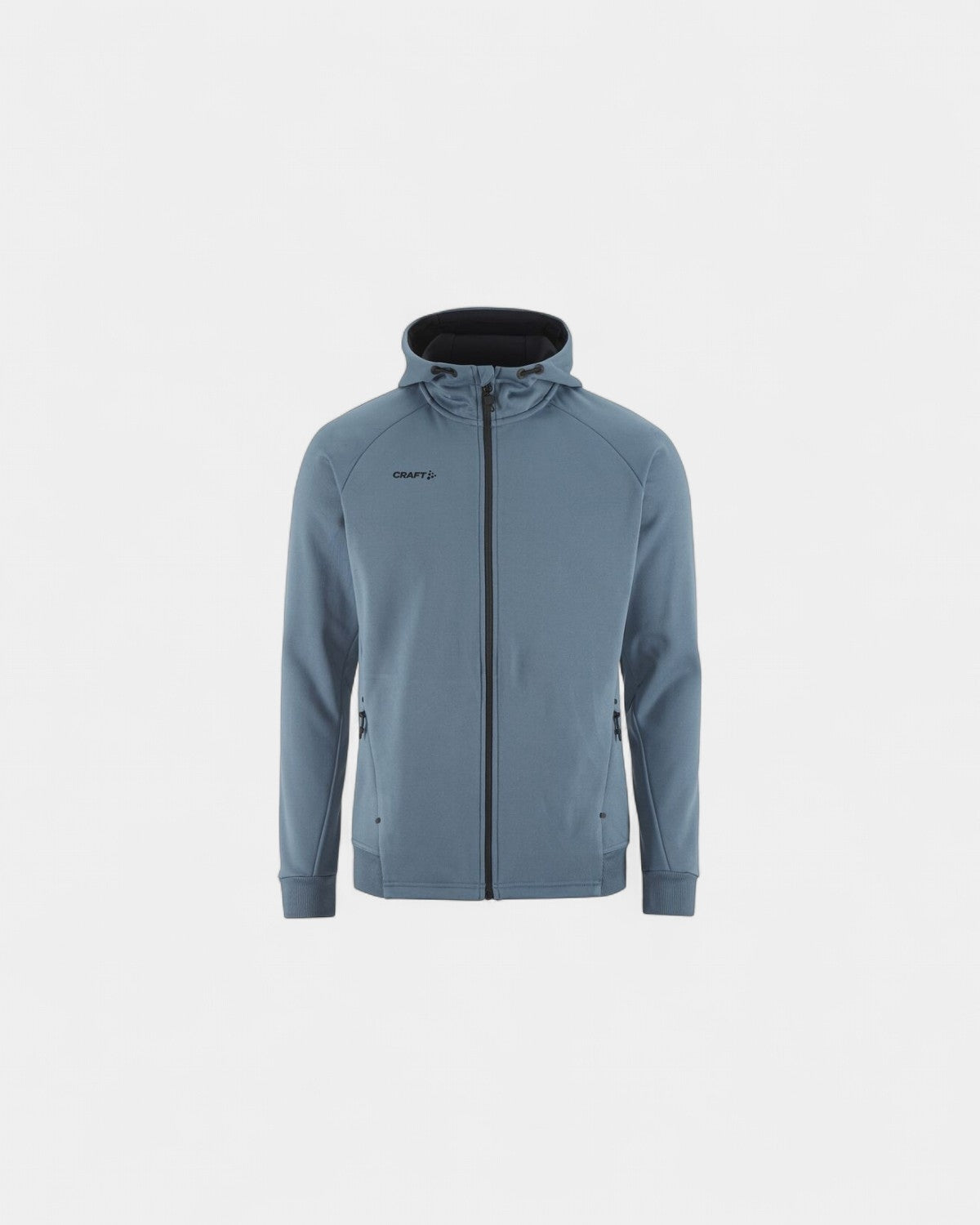


Treat your clients and employees!

FAQ - Embroidered softshell jackets
Trusted by 1,000+ companies
What branded softshell jackets actually are, layer by layer
Strip a softshell back and you find a fabric laminate, not a single woven cloth. The face is a tightly woven stretch polyester or nylon that resists wind and abrasion. Behind it sits a thin membrane, and against the skin sits a brushed fleece back that holds warmth. The three are bonded into one panel, which is why a softshell feels like one supple layer rather than a lined coat.
Why the bonded build defines branded softshell jackets
That bonded build is the whole reason the garment exists. A traditional shell keeps rain out but traps sweat; a fleece keeps you warm but lets wind cut straight through. A softshell jacket merges both into a wind-resistant, water-repellent, breathable midweight that a moving worker can wear from a cold car park to an active task without overheating.
The membrane inside 3-layer personalised softshell jackets
The membrane is the part buyers rarely see and most often ask about. On a true 3-layer softshell it is a microporous or hydrophilic film that pushes vapour out while stopping wind and light rain coming in. We send the membrane spec for the exact base you shortlist, so the figure on your tender matches the garment.
2-layer, 3-layer and fleece-backed personalised softshell jackets compared
Most ranges of personalised softshell jackets split into three builds, and the difference is structural, not cosmetic. A 2-layer softshell bonds a stretch face to a fleece back with no separate membrane, so it blocks wind and a drizzle but lets more through in steady rain. It is the lightest and the cheapest per unit, which suits a large event run.
A 3-layer bonded softshell adds the membrane between face and back, lifting both the wind block and the water column while keeping the breathability. It is the build most field and uniform programmes settle on. A fleece-backed softshell pushes the inner pile deeper for static cold work, trading a little stretch and pack-down for warmth.
| Build | Layers | Wind/water | Best suited to |
|---|---|---|---|
| 2-layer softshell | Face + fleece back | Windproof, repels drizzle | Light event and indoor-outdoor wear |
| 3-layer bonded softshell | Face + membrane + back | Windproof, higher water resistance | Field teams, year-round uniform |
| Fleece-backed softshell | Face + deep fleece | Wind-resistant, very warm | Cold static work, stewarding |
Read the build against the role, not the price list. A reception or events team that moves between heated rooms rarely needs the membrane; a survey crew on an exposed site does. Embroidered Jackets cover the wider outerwear picture when a brief also needs padded or fully waterproof options beyond the softshell band.
How water-repellent branded softshell jackets really are
A softshell is water-repellent, not waterproof, and what sets the two apart is the membrane plus the face finish. The face carries a durable water-repellent treatment that makes rain bead and roll off. A 3-layer softshell then handles a shower, a drizzle and a wind-driven mist for the length of a stand-up task. Sustained, heavy rain eventually wets the face out.
This is where a softshell and a hardshell part company. A taped-seam waterproof seals every needle hole and carries a high water column for an all-day downpour, at the cost of stretch, breathability and a softer hand. A softshell trades that top-end waterproofing for comfort and movement, which is the right call for most field and client-facing work.
The repellency is renewable. The face treatment fades with washing and abrasion, then a reproofing wash restores the bead so the jacket sheds water again. We flag this in the care guidance because a softshell that has stopped beading is usually just due a reproof, not worn out.
Breathability and stretch: why personalised softshell jackets keep moving
Breathability is why a softshell stays zipped through a shift instead of being shrugged off and carried. A working body produces vapour, and a softshell membrane lets it escape rather than condensing inside the jacket. That is what stops the clammy feel a cheap shell gives after ten minutes of effort, and it is the reason active outdoor staff reach for the softshell first.
Stretch is the partner spec. The woven face carries mechanical or elastane stretch, so the jacket moves with a shoulder reaching across a load bay or a knee bending on a site. A rigid shell fights that movement and rides up; a four-way-stretch softshell follows it. For roles that climb, lift or drive all day, the stretch matters as much as the warmth.
The two specs trade against each other in the build. A very warm fleece-backed softshell breathes a little less than a thin 3-layer; a light stretch softshell vents fast but holds less heat. State the typical task and working temperature and we match the base, rather than guessing from a catalogue line.
Taped and bonded seams on branded softshell jackets
Seams decide how a softshell behaves at the points where panels meet. A standard softshell uses flat, stitched seams that sit smooth under a rucksack strap and resist a breeze. A premium 3-layer softshell can add seam taping at the shoulders and chest. Those are the panels most exposed to wind-driven rain, the weakest line on any jacket.
Bonded and welded construction is the other marker. Where a maker bonds a pocket or a zip placket rather than stitching it, fewer needle holes let wind and water track through. It also leaves a cleaner face for a logo to sit on. These details cost more but show on a garment worn hard across two or three winters.
None of this makes a softshell a substitute for a taped waterproof in a genuine storm. It makes a good softshell noticeably better at the showery, blustery middle of British weather, which is where most working days actually sit. We confirm which bases carry taped seams when you brief the run.
Embroidering a logo onto the face of branded softshell jackets
The bonded face is a firm, smooth surface, which makes personalised softshell jackets one of the better outerwear garments to embroider. Stitches bite into the woven face and sit crisp, where a flexing waterproof can crack a print and a deep fleece can swallow fine text. Thread also holds colour and texture through the washing and weather an outdoor jacket lives through.
Protecting the membrane when embroidering branded softshell jackets
The membrane is the detail to respect under the needle. Every stitch is a hole, so heavy embroidery on the most exposed chest or shoulder panel of a 3-layer softshell can, in theory, become a wicking point in driving rain. We back the design with a cut-away stabiliser and keep dense logos clear of the wettest panels, so the badge never undermines the water resistance.
Placement follows the role. A left-chest logo around 8 to 10 cm reads right on a rep or exec softshell. A back design of 20 to 25 cm turns a field crew into signage across a yard or a car park. The artwork proof is shared for approval within 24 hours before any softshell is run.
| Position | Typical size | Use |
|---|---|---|
| Left chest | approx. 8-10 cm | Reps, exec, client-facing |
| Full back | approx. 20-25 cm | Field crews, event signage |
| Sleeve | approx. 5-7 cm | Web address or strapline |
| Collar/nape | approx. 4-6 cm | Name or small secondary mark |
Printed branded softshell jackets: when ink beats thread
Embroidery is the default on a softshell, but a heat-applied transfer is the better call on two briefs. The first is multi-colour or photographic artwork that thread cannot carry, such as a detailed crest or a sponsor block. The second is a short, single-season promotional run where a one-off digitising fee would not pay back across the units.
The smooth woven face takes a transfer cleanly, with fine detail a stitch cannot hold. The trade-off is durability under heavy laundering, since a print sits on a membrane that flexes. It suits a lighter-worn garment more than a daily site jacket. Custom Hoodies take the same transfer route for the casual end of a staff wardrobe, where print runs are common.
Where personalised softshell jackets sit: midlayer or outer
The softshell flexes between two jobs, which is its quiet advantage over a single-purpose coat. On a mild, blustery day it is the outer layer, worn over a polo or shirt and zipped to the chin against the wind. On a genuinely wet or freezing day it slides under a hardshell as a warm, wind-cutting middle layer, the sleeves slim enough not to bunch at the cuff.
That dual role changes how you size and stock a team. A softshell bought purely as an outer can run trim; one that may sit under a shell wants a touch more room. For crews that layer a brushed midlayer beneath it on the coldest mornings, our Embroidered fleeces slot under the softshell without doubling the bulk.
Picture a parks team starting at 6am in frost and finishing at noon in pale sun. The softshell is the one garment that carries them across that swing without a bag of spare layers. That flexibility is why it became the default corporate outerwear rather than a niche technical buy.
Zips, pockets and the working detail on personalised softshell jackets
The zip is the part a wearer touches every shift, so a chunky moulded zip with a chin guard reads and lasts better than a thin coil that snags. A contrast or colour-matched zip pull is a cheap detail that lifts a client-facing softshell. An inner storm placket behind the main zip blocks the draught a bare zip lets through.
Pockets carry their own decisions on a working softshell. Zipped hand pockets stop a site wind hollowing out the warmth. A chest pocket keeps a phone secure when someone bends or climbs, and an inner pocket protects a pass from the rain the face is shedding. Lined hand pockets matter for drivers and gatehouse staff who keep cold hands tucked.
Cuffs and hem detail on personalised softshell jackets
Adjustable cuffs and a drawcord hem seal the two gaps where wind robs a softshell of its warmth. A hook-and-loop cuff lets a wearer cinch over or under a glove, and a hem cord stops the jacket ballooning on an exposed stand. These are the markers of a softshell built for real days rather than a rail.
Personalised softshell jackets for named teams and roles
Personalised softshell jackets go beyond a shared crest by stitching an individual name or role under the chest logo. On a softshell this is straightforward because the firm woven face holds small lettering cleanly, where a fleece pile would close it up. Site supervisors, event leads and duty managers use it so a wearer is identifiable across a busy yard.
Lock the name roster before production, because a late spelling change means re-hooping a finished jacket rather than editing a file. A low minimum order means a small named run for one new department is viable without a national quantity. A four-person survey crew can be kitted as cleanly as a fleet of fifty.
Position is a choice with the same logic as the logo. A name reads well on the right chest opposite the crest, or stacked beneath a left-chest badge, kept within one thread colourway for a uniform look. Custom beanies take the same name treatment to finish a cold-weather kit from the neck up.
Colour, contrast and keeping the badge legible on branded softshell jackets
A softshell holds a deep, even colour because the face is woven tight, so corporate navy, charcoal, black and bottle green sit true under embroidery. A dark body hides marks on a busy site and frames a logo cleanly. A bright body or a hi-vis softshell to the relevant EN standard makes an event crew findable from the far side of a venue.
Thread contrast is what carries the badge at distance. A tone-on-tone logo reads discreet for a client-facing exec softshell but disappears across a yard, so field and event jackets want high contrast against the body shade. A contrast chest or shoulder panel gives a second placement option, though the logo is best kept within one panel rather than crossing a bonded seam.
| Use case | Recommended build | Branding lead |
|---|---|---|
| Reps and client visits | Trim 3-layer softshell | Subtle left chest |
| Events and exhibitions | Light 2-layer or bright shell | Large back motif |
| Field and grounds crews | 3-layer or fleece-backed | Chest plus back |
| Drivers and gatehouse | Fleece-backed softshell | Left chest, name on collar |
Sizing personalised softshell jackets across a mixed team
A softshell is worn over other clothing, so its sizing runs differently from a base layer and the team curve should account for the layer beneath. A jacket worn over a fleece needs room the polo size never told you, and a softshell meant to double as a midlayer under a shell wants less. Confirm the intended use before you set the size split.
Offer a tailored women's cut alongside the unisex block where the range allows, because the difference shows on a row of staff at an event. Most softshell ranges run XS to around 3XL, with workwear bases reaching larger for full site coverage. A free sample lets you check the fit and the embroidery on the real bonded fabric before you commit a full run.
Commit the full size and colour split in a single softshell run rather than topping up later. A second batch risks a fresh minimum and a dye-lot shift in the bonded face, which shows when two crews stand side by side in the same navy. Embroidered workwear pulls trousers, hi-vis and the softshell into one branded system so the whole kit matches.
- Choose the layer count against the role's real exposure
- Run a 3-layer build where steady wind-driven rain is likely
- Keep dense embroidery off the wettest chest and shoulder panels
- Size up if the softshell may sit under a hardshell
- Specify taped seams for the most exposed field crews
- Reproof the face periodically to restore water repellency
Ordering quantities, lead time and proofing your personalised softshell jackets
A branded softshell order runs in three steps: pick the build and colour, approve the stitch-out proof, then production. Embroidery setup is a one-off digitising charge per logo, so the per-jacket cost falls as the run grows while the badge stays identical across every piece. A dozen exec softshells and three hundred event shells decorate the same way but land at very different unit costs.
Quantity also nudges the sensible build. A small, smart corporate run rewards a trim 3-layer softshell with a subtle chest badge. A large outdoor run often settles on a hard-wearing fleece-backed base to control cost across the size curve. Standard delivery is three weeks from approved artwork, with the proof returned inside 24 hours so the clock starts fast.
For a winter rollout, the practical move is to confirm artwork and sizing in early autumn, before the popular shades and the larger sizes thin out in the seasonal rush. A single planned order beats a scramble of top-ups once stock depth tightens.
Caring for branded softshell jackets so the badge and the membrane last
Personalised softshell jackets reward a gentler wash than a cotton garment. Run it at 30 degrees on a gentle cycle, zipped up so the teeth do not snag the stitching. Skip the fabric softener that clogs the membrane and kills the breathability the jacket is bought for. Air-drying protects both the bonded laminate and the embroidered logo far better than a hot tumble.
The water repellency is the part owners forget. When rain stops beading on the face, a low-heat tumble or a reproofing wash revives the treatment. A softshell that looks tired is usually one reproof from shedding water again. Treated this way, a stitched badge outlasts the seasons of wear a working softshell sees, well beyond what a heat transfer would survive on the same garment. A spare Embroidered gilets in the same colour story gives staff a lighter sleeveless option for the milder days between, on the same wash routine.

