Promotional Gifts
- Eco-friendly
- Made in France
- Made in Europe
- B corporation
- Price, low to high
- Price, high to low
Treat your clients and employees!
FAQ - Branded Merchandise
Trusted by 1,000+ companies
Why most Branded merchandise looks the same
Walk a UK exhibition floor and a pattern repeats stand to stand. The same catalogue pen, the same stress ball, the same plain cotton tote with a logo stamped flat in the middle. The items are different companies but they read as one anonymous pile, because every buyer ordered from the front page of the same supplier catalogue. Sameness is the default, not a design choice.
That default has a cost most marketing teams never measure. Branded merchandise that blurs into the pile buys a glance and nothing more, because a recipient who cannot tell three brands apart keeps none of them in mind. Branded merchandise that blends in is not cheap visibility, it is invisible visibility paid for at full price.
This page is not a product page. It is the brief for the harder job above the catalogue line, namely choosing or shaping an item that a stranger would clock as yours from across a room. Each section below frames one route to promotional gifts that read as distinctly yours, then points to the dedicated collection where the sizes, finishes and ordering detail live.
For the broad picture, our Promotional Merchandise hub is the twin to this one. The cost-per-impression and the full range live there; this page is identity-first only. Use the hub to compare families and unit economics, then come back here for the question that hub does not answer, namely how an item stops looking like everybody else's.
Matching Branded merchandise to your brand character
A law firm and a craft brewery should never hand out the same object, yet they routinely do. The first decision in Branded merchandise is not the product, it is the character the product has to carry. A precise, restrained brand wants a quiet deboss on good stock; a loud, playful brand wants colour, wit and a shape people photograph. Pick the tone first and the item shortlist narrows itself.
Run the audience and the brand voice through one filter before you open any catalogue. Ask what a recipient would assume about your company if this object was the only thing they ever saw from you. If the honest answer is nothing in particular, the item is wrong however cheap it costs per unit.
| Brand character | What the item should signal | Distinctive route | Avoid |
|---|---|---|---|
| Precise and premium | Restraint, quality, detail | Deboss or laser on heavy stock | Loud full-bleed print |
| Playful and bold | Colour, wit, personality | Unusual shape, slogan, pattern | Plain corporate navy |
| Eco and considered | Material honesty, low waste | Recycled body, undyed cotton | Throwaway plastic gadget |
| Technical and modern | Function, finish, smart spec | Matte tech, clean single-mark | Novelty gimmick |
| Warm and human | Care, tactility, usefulness | Soft-touch, kept everyday item | Cold disposable filler |
Custom shapes and colours that make Promotional gifts unmistakable
The fastest way to lift merchandise out of the generic pile is to leave the standard mould behind. A bespoke-shaped enamel pin, a die-cut sticker that follows your icon, a bottle in your exact brand colour rather than catalogue white. These are the cues a recipient reads before the logo, because shape and colour register faster than text. Distinctiveness lives in the silhouette as much as the print.
Branded gadgets show how far a custom finish can travel, from a colour-matched cable wrap to a casing moulded in your house tone instead of off-the-shelf black. A tech item carried daily in a brand-exact colour does more recognition work than the same gadget in standard grey with a small printed mark few people ever notice.
Colour-matching your Branded merchandise to spec
Colour is the cheapest distinctiveness you can buy, but the spec needs a hard number. A Pantone match on a printed surface holds to roughly a Delta-E of 2 to 3, close enough that the eye reads it as exact. A moulded or dyed body runs wider, nearer Delta-E 4 to 5, because pigment behaves differently in plastic than in ink. Quote your solid-coated Pantone reference, not a process build, since a CMYK approximation drifts further on every run.
Custom company merchandise that doubles as a talking point
The strongest custom company merchandise does a second job beyond carrying a logo. It starts a conversation. A deck of cards a prospect actually plays, a sock pattern someone shows a colleague, a mug with a line that makes a meeting laugh. When the object earns a reaction, your brand is discussed rather than merely displayed, and discussion outlasts dwell time.
Personalised playing cards are a clean example of merchandise as a talking point. A custom deck gets handled, shuffled and passed round a table long after a flyer is binned. Print your own face-card artwork or a back design built from your pattern, and a routine giveaway becomes an object people keep on the desk and reach for again.
The talking-point test is simple. Would a recipient mention this item to someone else without being asked? Generic merchandise never clears that bar. An original piece with wit or genuine usefulness does, and a single unprompted mention is worth more than a hundred logos seen and forgotten.
Wearable Branded merchandise that people choose to wear
A branded tee only advertises if someone wears it out of choice, and most never leave the drawer because they look like uniform, not clothing. Distinctive wearables flip that. A considered design on a good blank, a tonal print rather than a billboard chest logo, a colourway someone would pick in a shop. The aim is a garment worn for its own sake, with your brand riding along.
Custom T-Shirts reward a design-led approach, because fabric weight and print placement decide whether the shirt becomes a weekend favourite or landfill with a logo. A small left-chest mark or a back-neck detail reads as a brand someone would choose; a giant front print reads as a freebie people only wear to paint a fence.
Fabric weight sets the tone before any print lands. A light 150gsm tee feels like a handout; a heavier 180 to 200gsm cloth with a soft finish feels like a garment. Brief the blank as carefully as the artwork, because a great design on a thin shirt still reads as throwaway merchandise the moment it is touched.
Everyday Branded merchandise that keeps your brand in view
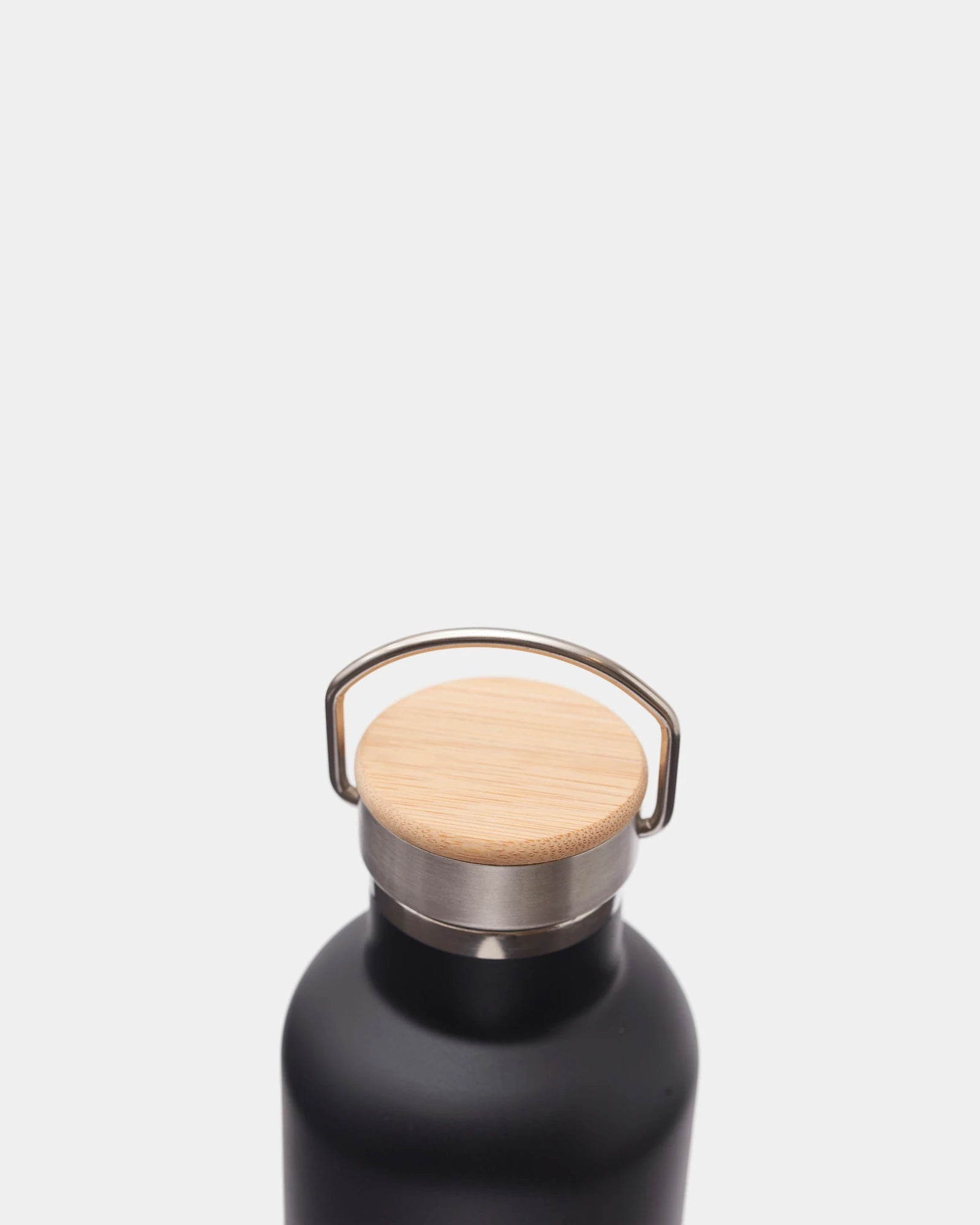
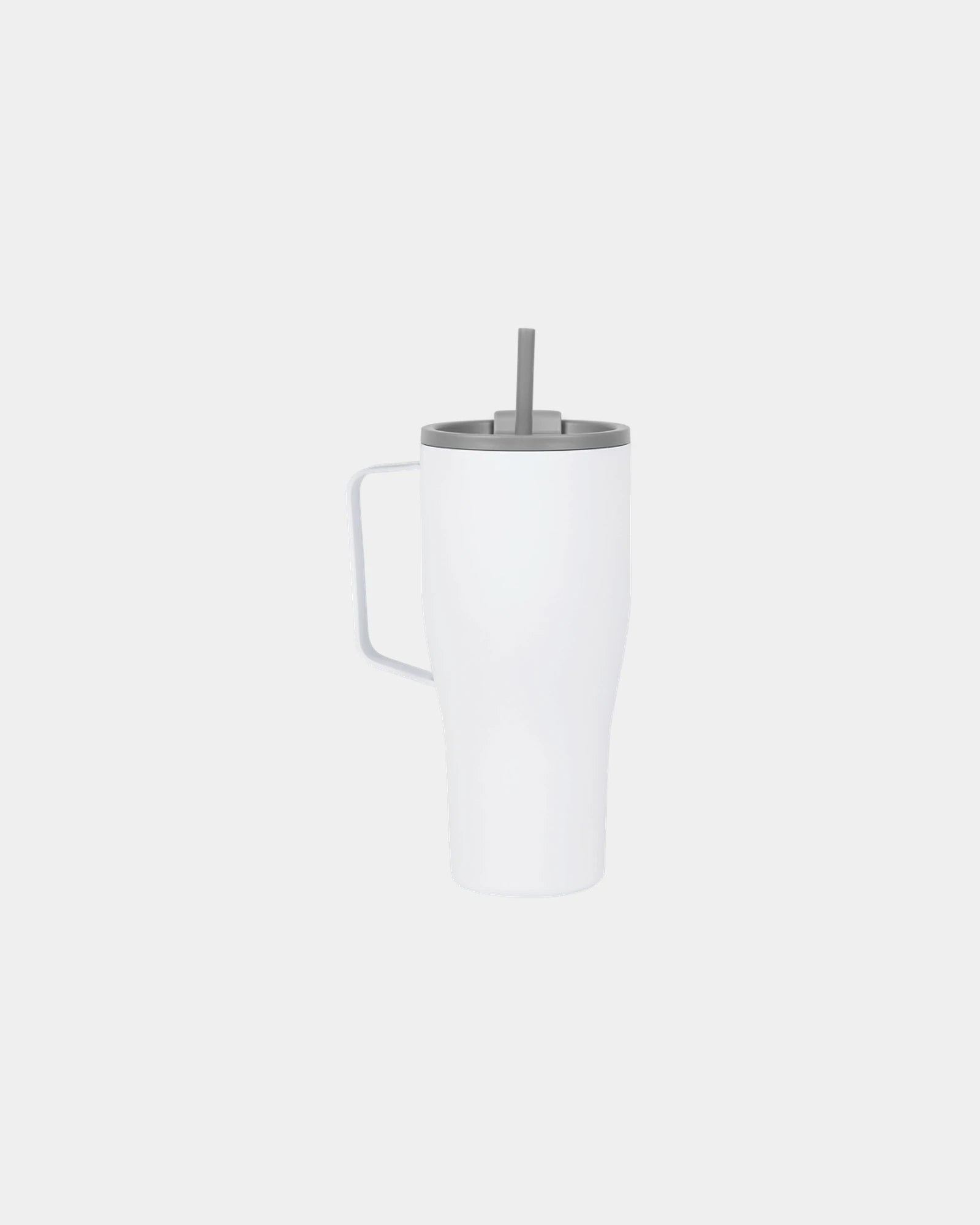
Distinctiveness and daily use are not in tension; the best original merchandise is the item someone reaches for every working day. A mug used at every coffee break, a bottle refilled at the office tap, a notepad open through every meeting. The trick is making that everyday object unmistakably yours rather than a plain vessel that happens to wear a logo.
A desk staple becomes house design once personalised mugs wrap the artwork, colour the inner or handle, or run a pattern round the body instead of a single front logo. A mug seen across an open-plan office dozens of times a day pays back precisely because the design carries from two desks away, not just up close.
The everyday-merchandise test is whether the recipient would still use the item if it carried no logo at all. If the object is good enough to keep on its own merit, the branding rides for free for months. If it only exists to hold a logo, it is binned the week the novelty fades.
Promotional gifts that surprise a recipient
Surprise is a distinctiveness all its own, because nobody expects a great version of a small thing. Custom socks under a board pack, a printed deck in a welcome box, a genuinely soft tee in a new-starter bundle. The gap between the low expectation of a giveaway and the quality of the actual object is where a brand wins memory. Exceed the bar and the item gets talked about.
Personalised Socks are the classic surprise piece, since a knitted-in pattern in your colours reads as a designed product rather than a printed-on freebie. Socks knit your logo and palette into the yarn itself, so the brand is part of the object rather than a sticker on its surface. Recipients photograph them in a way no pen ever earns.
Surprise works once per recipient, so spend it where it counts. Reserve the unexpected, higher-quality piece for the audience you most want to remember you, and let cheaper reach items carry the broad volume. A single object someone did not see coming lodges deeper than a stack of predictable ones.
| Occasion | Audience | Distinctive piece that lands | Why it works |
|---|---|---|---|
| New-starter welcome | Incoming staff | Soft tee plus knit-in socks | Sets house identity from day one |
| Key-account gift | Senior prospects | Bespoke deck or colour-matched tech | Reads as designed, not bought in bulk |
| Conference handout | Broad delegate crowd | Brand-colour bottle or tote | Recognisable across a busy floor |
| Member or fan pack | Loyal community | Pattern-led set in house colours | Items people choose to wear and show |
| Thank-you mailer | Customers at home | Considered gift box | Unboxing moment beats a flat flyer |
Decoration that lifts Branded merchandise above a flat print
The decoration method is where generic and distinctive Branded merchandise part company. A flat one-colour screen print is the default that makes everything look the same; the techniques below give an item a finish a recipient registers as considered. The right method depends on the surface, so match the marking route to the material rather than defaulting to print on everything.
Embroidery raises a logo off a garment in thread you can feel. A deboss presses your mark into leather or card so it catches the light. A knitted-in pattern builds the brand into the yarn. Each reads as design rather than decoration, and each costs more than a flat print for a reason a recipient can sense in the hand.
| Surface | Standout finish | What it signals | Generic alternative to beat |
|---|---|---|---|
| Cotton garment | Stitched embroidery | Tactile, made not stuck on | Flat single-colour screen |
| Knitted item | Knit-in jacquard pattern | Brand built into the yarn | Heat-pressed logo on top |
| Card or leather | Pressed deboss or foil | Quiet, premium, deliberate | Loud printed panel |
| Coated metal | Laser etch to base tone | Subtle, hard-wearing mark | Sticker-look full wrap |
| Ceramic mug | Full-wrap or colour inner | House design, not a badge | Small front-only logo |
Custom company merchandise as a coordinated set, not a logo dump
One distinctive object is strong, but a small coordinated set is stronger. A shared palette and pattern across two or three items reads as a designed world rather than a pile of freebies. The discipline is restraint. A set works when the items share a visual language, not when every surface is crammed with the logo at full size. Coherence turns a handful of pieces into a kit rather than a logo dump.
Coordination becomes most visible inside Corporate Gift Boxes, where the box, the tissue and two or three chosen items can carry one colourway and one pattern from the outside in. A recipient opening a considered box reads care before they read the brand, and that unboxing moment is the part most generic merchandise never even attempts.
Build a set around a single recognisable cue, a colour, an icon or a pattern, repeated quietly across each piece. Three items in one visual language out-brand a dozen mismatched giveaways, because the recipient sees a deliberate identity rather than a clearance bin with your name on it.
Keeping Branded merchandise honest about materials
Distinctive does not mean dishonest, and the fastest way to undo an original piece is to claim more than the spec proves. The recycled percentage sits on each product's own tech pack, so an rPET bottle states one figure and a recycled-cotton tee states a different one. Trust the model you pick rather than a label stretched across a whole catalogue.
Material honesty is itself a distinctiveness for the right brand. An undyed organic cotton in its natural shade, a recycled body that shows its texture, a metal that quietly retires a pile of disposable plastic. For an eco-led company the material carries the message, so the object should look as considered as the claim attached to it.
We can send a free sample of a shortlisted item before you order. The feel of the cloth, the weight of the metal and the crispness of the mark are then judged in the hand, not from a screen. A distinctive piece has to survive being touched, and a sample is how you confirm it does ahead of a full run.
Quantity and quality trade-offs in Branded merchandise
Distinctive merchandise forces a real decision between reach and depth, because the budget rarely stretches to a premium custom piece at mass-handout volume. A small run of a striking, well-made object lodges with a few key contacts; a large run of a simpler item seeds a logo widely. The choice is not which is better, it is which job this campaign needs.
Run size against the cost of Promotional gifts
Volume also shifts what a custom finish costs per unit, and the tipping point is real, not vague. A bespoke injection mould carries a one-off tooling cost that only amortises sensibly above roughly 1,000 to 2,000 units. A knit-in sock or scarf pattern needs a setup that pays back from about 250 to 300 pairs, far lower than tooling. Below those floors, a digital or pad print keeps the setup near zero and the unit price flat, which is why a short run stays printed rather than moulded.
| Run size | Realistic distinctive route | Best use | Watch-out |
|---|---|---|---|
| 50 to 200 | Premium bespoke piece | Key prospects, VIP gifting | High unit cost, plan the spend |
| 200 to 500 | Custom colour or finish | Targeted campaign, events | Setup spread over few units |
| 500 to 2,000 | Knit-in or full-wrap design | Staff kit, member packs | Lock artwork early |
| 2,000 plus | Distinctive but simpler item | Broad reach, mailers | Hold the design discipline at scale |
- Decide the brand character before you open any catalogue
- Specify an exact solid-coated Pantone, not the nearest stock colour
- Pick items a recipient would actually show a colleague, like a printed deck
- Reserve the surprise piece for the contacts you most want to remember you
- Build a set around one repeated cue, not a logo on every face
- Read the recycled content off the chosen item's own tech pack
Briefing distinctive Branded merchandise from scratch
Branded merchandise designed from scratch needs a tighter brief than a catalogue reorder, because you are designing an object, not picking one. Bring three things and the rest follows. The brand character in a sentence, the audience and channel, and any house assets such as a pattern, an icon or an exact colour reference. With those settled, the item shortlist and the decoration route fall into place quickly.
Artwork is proofed free within 24 hours, so a custom layout, a colour match or a bespoke pattern is signed off on screen before anything is made. Standard printed work then ships in around three weeks from that sign-off. Brief the character first and the object second, and the result looks like your brand rather than the supplier catalogue everyone else ordered from.