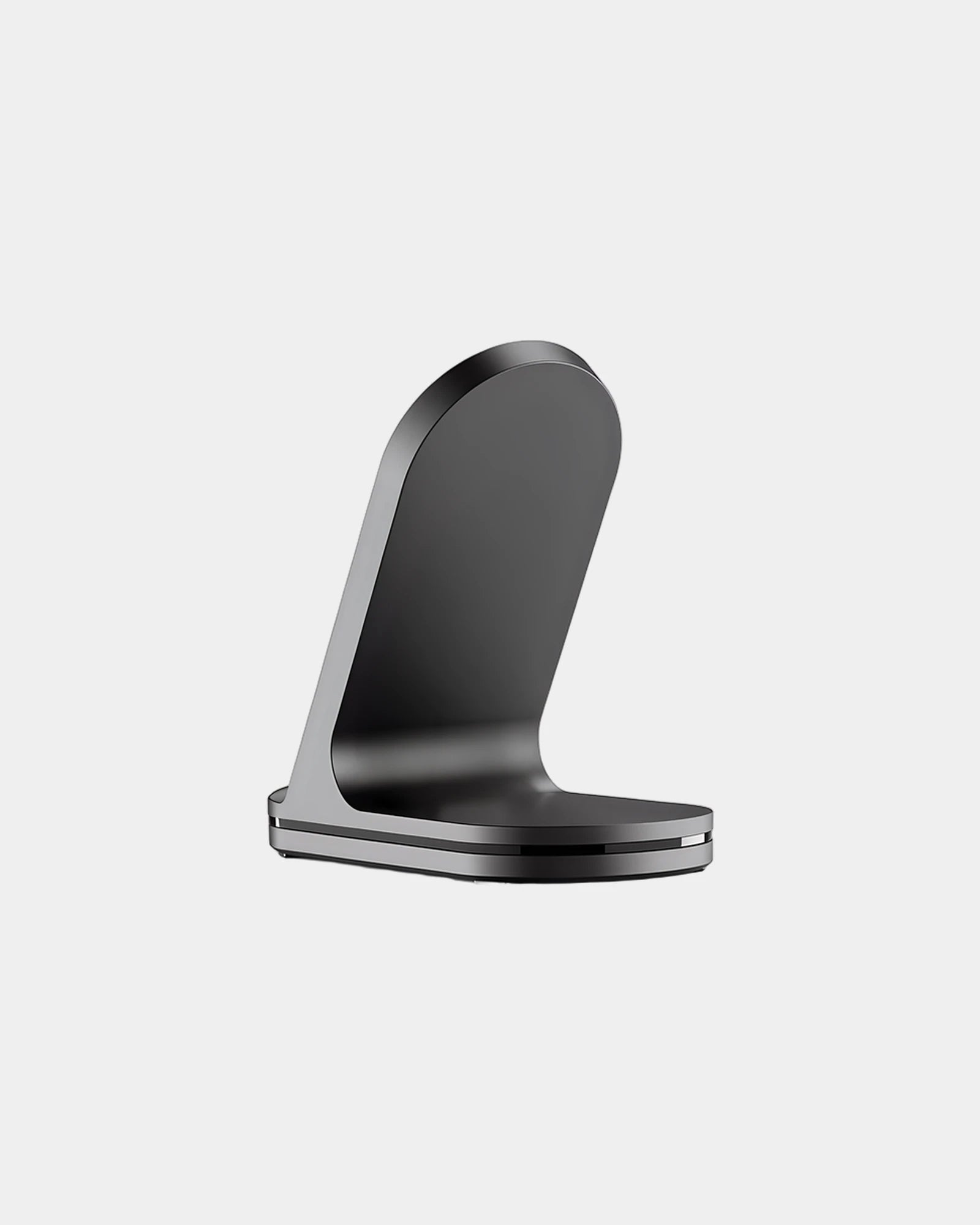
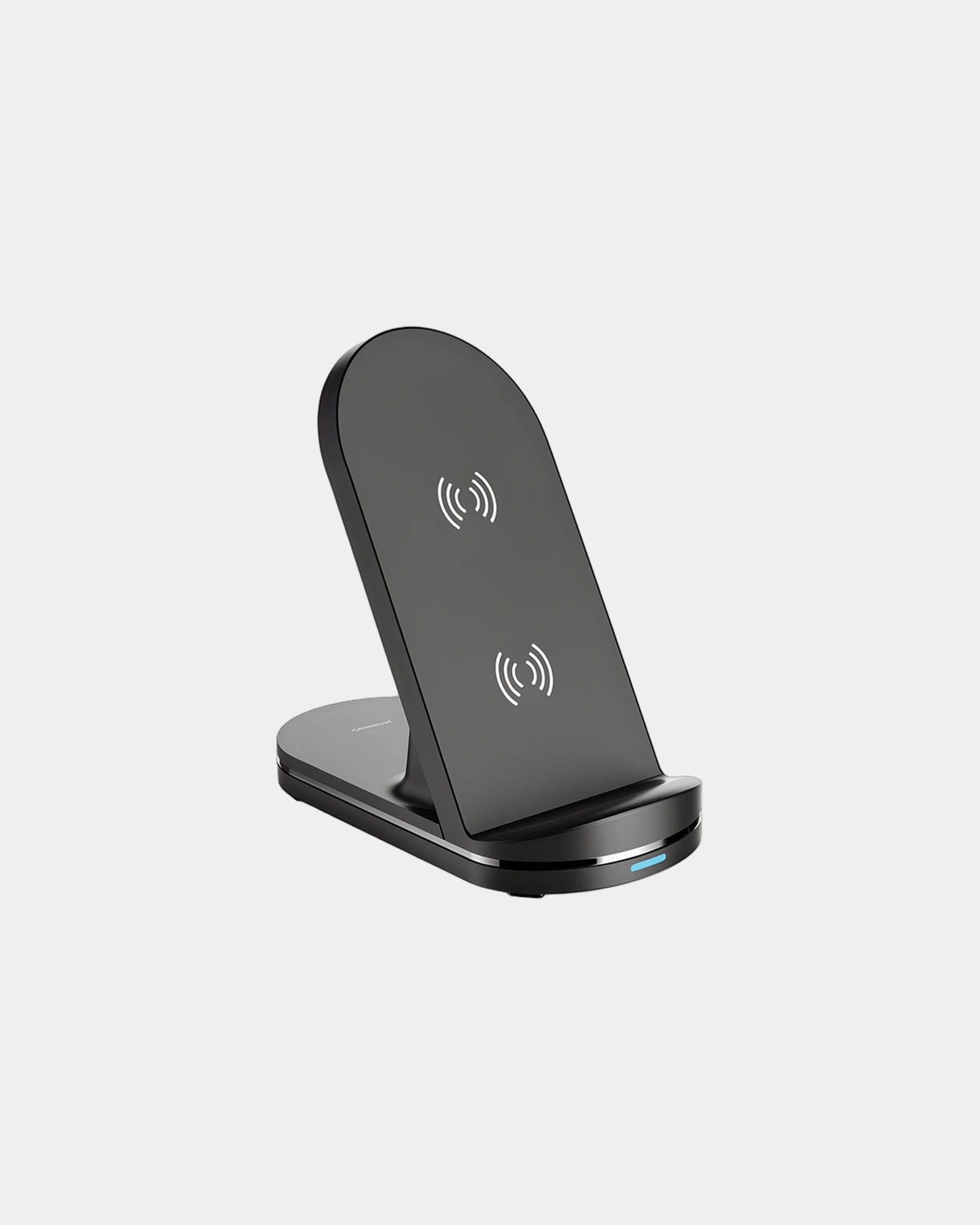
Promotional charging stations
Treat your clients and employees!
FAQ - Branded charging stations
Trusted by 1,000+ companies
What Custom charging stations do that a single pad never will
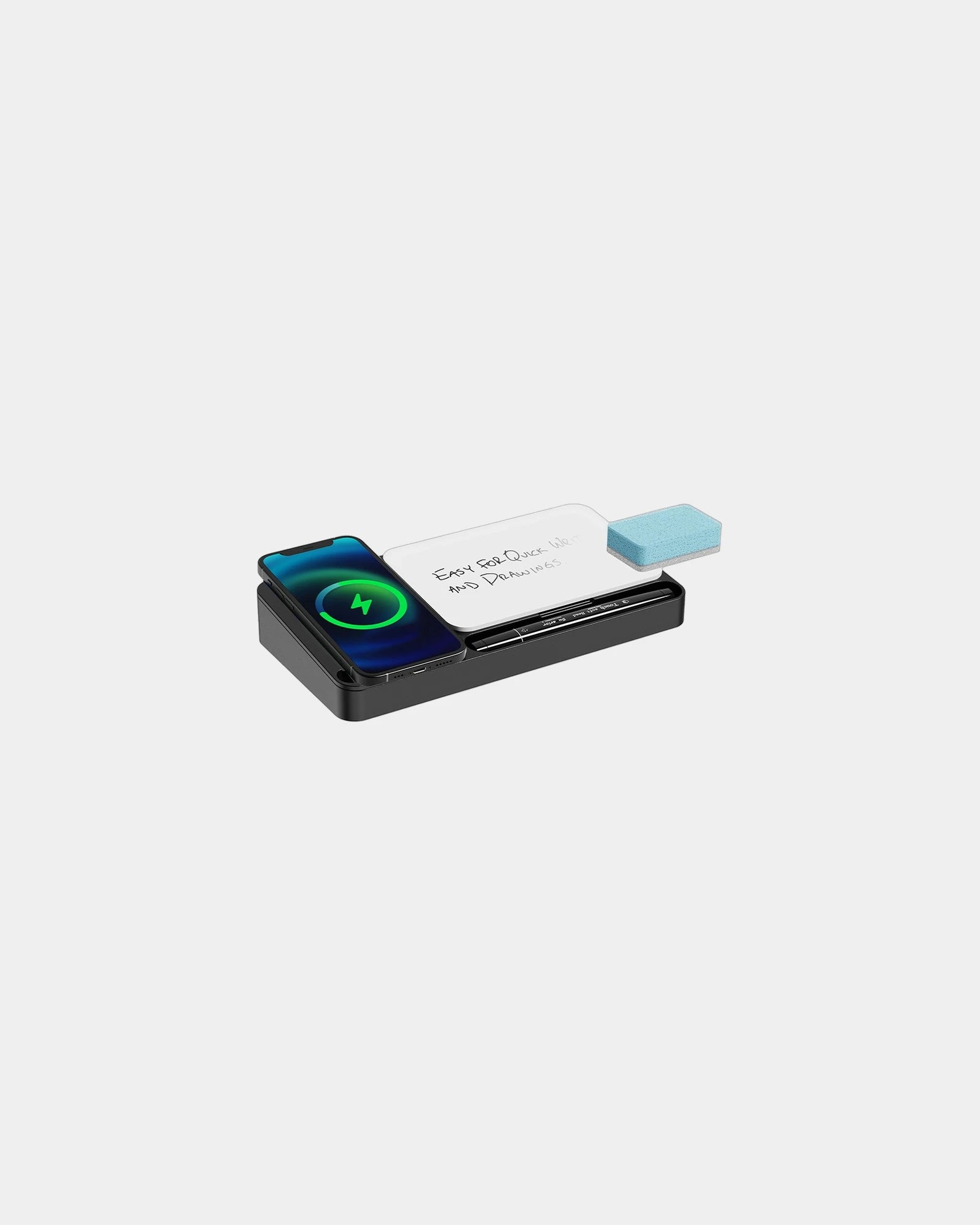
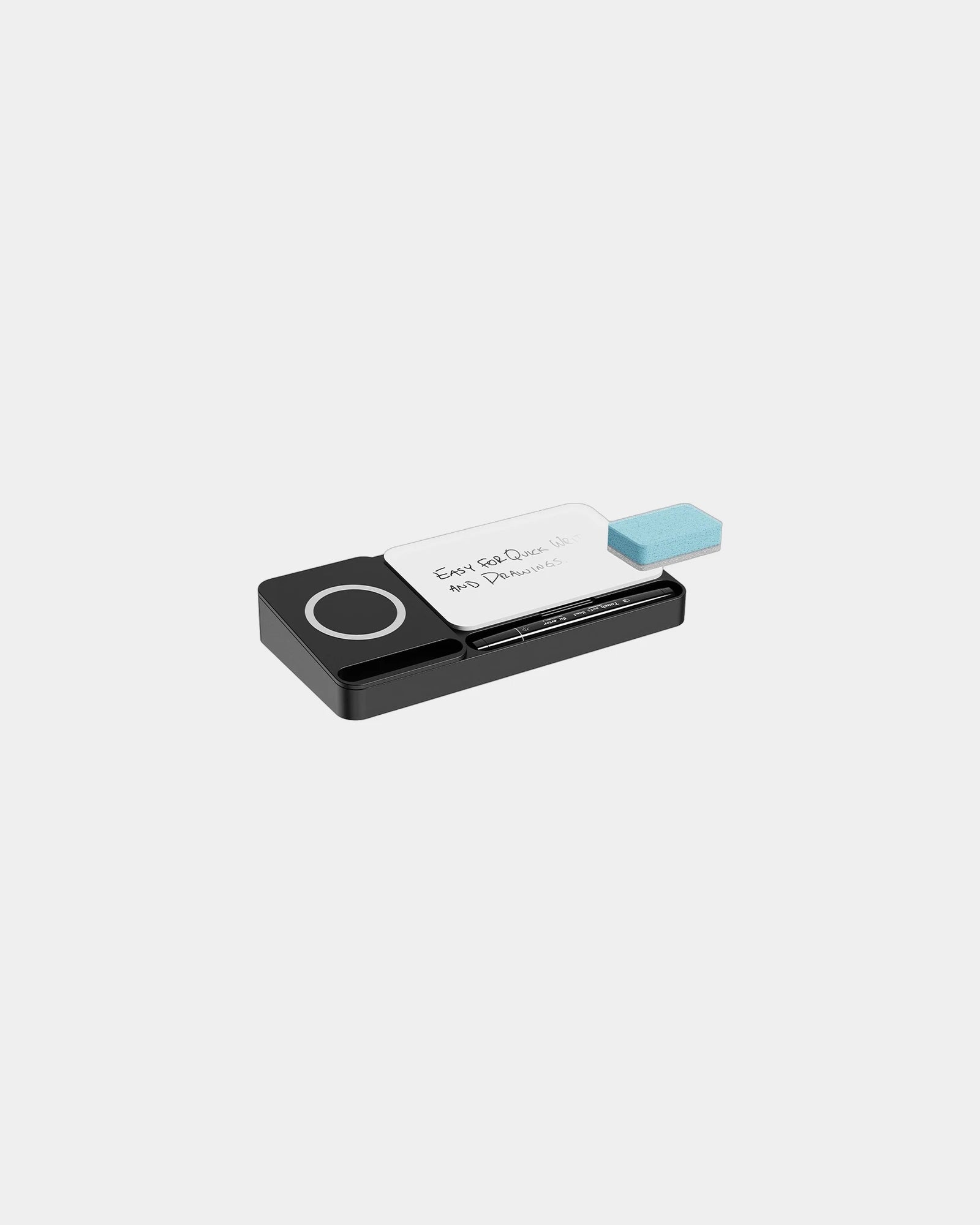
Set one of the Custom charging stations on a co-working bench and the difference is obvious within an hour. One mains plug now serves the bench instead of three people fighting over two wall sockets. A charging station consolidates a phone, a watch and an earbud case onto one footprint, so the gift earns a permanent spot rather than a drawer. That shared use is the whole reason a buyer reaches for a station over a pocket charger.
The format also shifts who sees the brand. A pad lives with its single recipient at home; a station sits where colleagues, members and visitors pass it all day. The logo therefore racks up far more daily views per unit, which is why a smaller run of stations often beats a bulk run of cables on real exposure.
Because the unit stays plugged in and stationary, its body can be larger and heavier than a portable charger needs to be. That extra real estate is exactly what makes the branding and the cable routing work, which the next sections unpack.
Round out a communal tech corner with Branded gadgets so the station anchors a small desk set rather than standing alone.
How multi-device Promotional charging stations split ports and watts
The figure that decides whether a station satisfies a busy desk is its total wattage and how it carves up across simultaneous ports. A unit rated at 65W shared across four outputs cannot hand every device its peak. Plug in a laptop, a phone and earbuds at once, and the dock divides that ceiling between them. Three devices drawing together each get a thinner slice than one would on its own, which suits a working top-up rather than an emergency refill.
Port mix matters as much as the headline number. A practical station carries a couple of USB-C Power Delivery outputs for modern phones and laptops, a USB-A for legacy leads, plus a Qi pad moulded into the top. Naming that spread in your brief stops a recipient hitting a station that cannot feed their particular kit.
Watch and earbud cradles draw little, so they rarely strain the budget; the phone and any laptop are what eat the watts. A higher total rating keeps each output usable when the station is full, and that is the spec to confirm for a meeting-room unit several people lean on at once.
| Station type | Typical total output | Outputs offered |
|---|---|---|
| 3-in-1 desk dock | 15W to 20W | Qi pad, watch puck, earbud tray |
| Multi-port hub | 45W to 65W | 2x USB-C PD, USB-A, Qi top |
| Reception charging bar | 100W plus | Multiple PD ports, several pads |
| Locker tower | Varies per bay | Mixed cabled bays, secure doors |
3-in-1 stations: phone, watch and earbuds on one Custom charging stations build
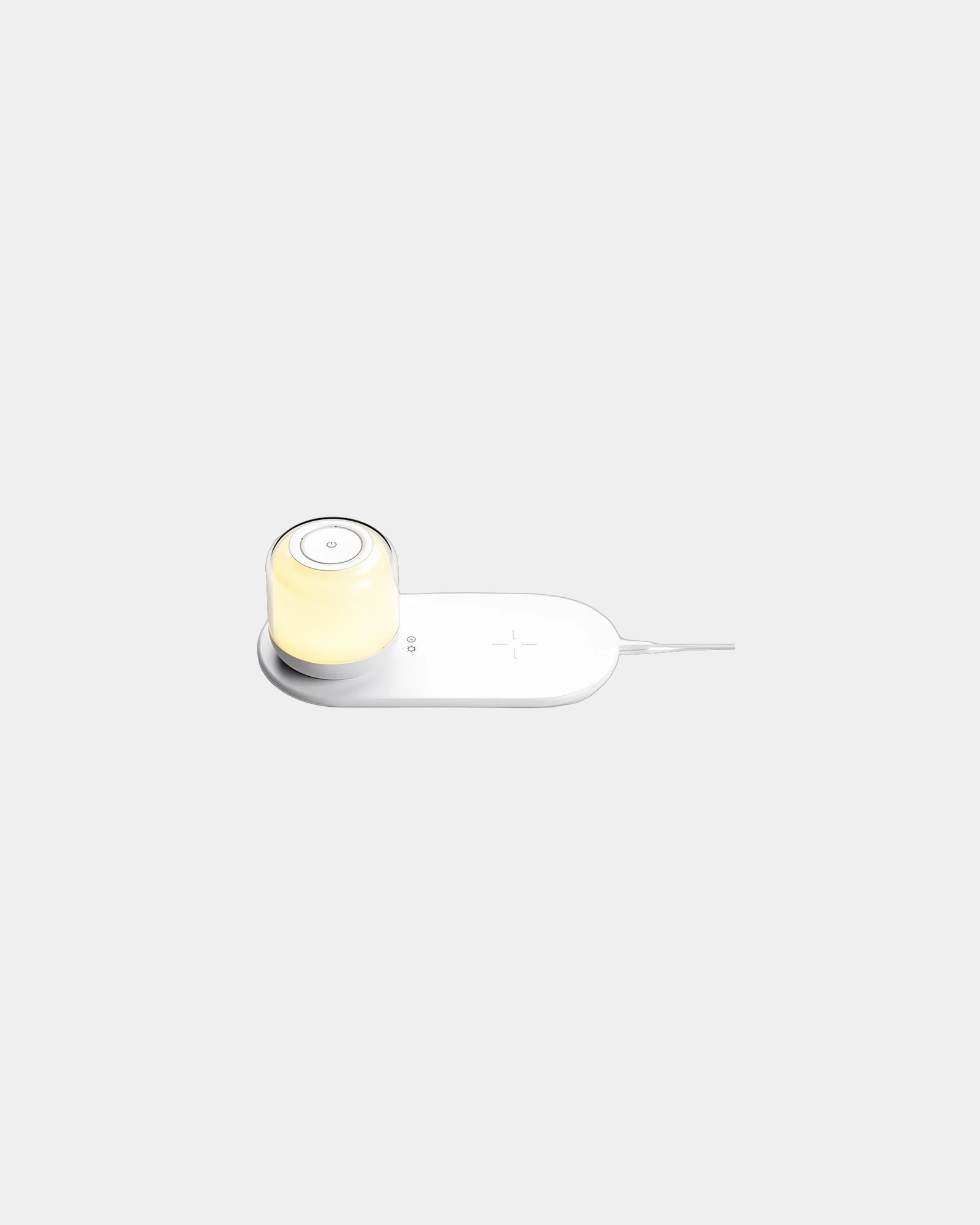
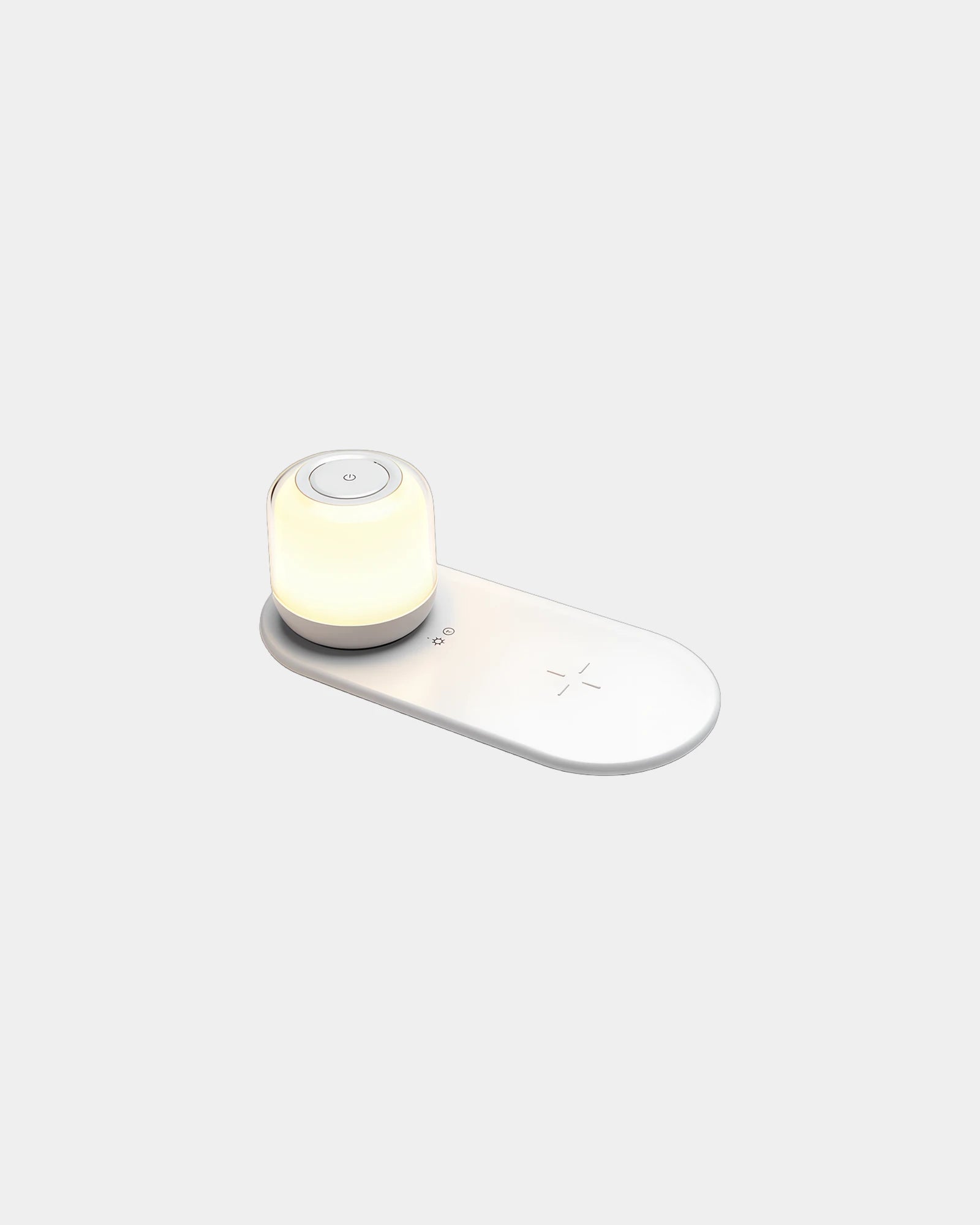
The desk-sized 3-in-1 is the format most buyers picture among Custom charging stations, and it solves a specific morning ritual. A recipient sets the phone on the central pad, clips the watch to the side puck and drops the earbud case on a small tray, all from one lead. By the end of a coffee, three devices are topped up and the cables that used to web across the desk are gone.
Apple-led teams expect the watch cradle to charge the watch upright in nightstand mode, and the earbud tray to take a case without a separate cable. Mixed-fleet offices need the phone pad to handle both iPhone and Android, so flag the recipient's device split before the format is fixed.
The folding versions collapse the watch arm and the pad into a flat slab for a wash bag, which turns a desk fixture into a travel piece. That makes the 3-in-1 the rare station that works both as an office fixture and a frequent-flyer gift.
Promotional charging stations for reception, co-working and the event charging bar
A festival stand or a conference foyer with a hundred flat phones is where a larger station stops being a gift and becomes infrastructure. A free-standing charging bar offers a row of pads and cabled bays so visitors drop a device, browse the stand and collect it charged. The unit pulls a queue toward your brand and holds people in front of it.
Reception counters and member lounges use a mid-size hub as a permanent courtesy, branding the welcome experience directly. Hot-desks and AV trolleys take a multi-port dock that whoever lands there can share. In each case the station is a fixture, so the logo works for the venue for years rather than going home in a bag.
Where security matters, a locker tower gives each phone its own closing bay, which suits a gym floor, a clinic waiting area or a school. Visitors charge behind a door and the venue carries the brand on the cabinet face.
For a delegate handout that complements the fixed bar, slim portable units sit alongside Branded power banks so people who cannot wait at the stand still leave topped up.
| Setting | Station format | Why it suits the space |
|---|---|---|
| Meeting room | Multi-port desk dock | Clears the cable tangle a table collects |
| Reception or lounge | Mid-size hub | Branded courtesy for visitors |
| Exhibition stand | Free-standing charging bar | Draws and holds a queue |
| Gym, clinic, school | Lockable tower | Secure charging behind a door |
| Hot-desk or trolley | Compact shared dock | Whoever lands there can use it |
Cable management: the spec that keeps shared Custom charging stations tidy
A station serving four devices invites four trailing leads, and an untidy hub on a reception counter undoes the premium look fast. Good units route every cable into the body and out through a single rear channel, so one lead reaches the wall and nothing snakes across the surface. That hidden routing is what separates a considered station from a power strip with a logo.
Integrated leads help further. A dock with captive USB-C and watch cables built in means a recipient never loses or swaps the right tip, and the desk stays clear. Where leads are removable instead, a weighted base and rear clips stop them creeping forward as devices are lifted on and off all day.
A non-slip underside is the quiet detail that holds the whole thing in place. A rubberised or felt base stops a busy station sliding when someone tugs a cable, which on a glossy reception desk is the difference between tidy and chaotic. Specify it wherever the unit sees heavy shared traffic.
The branding surface: why Promotional charging stations print bigger than any pad
The large flat base and top of a station give the widest unbroken print area in the tech catalogue, and that is the buyer's real prize. A reception hub's front panel carries a full logo plus a tagline and a URL at a size legible from across a counter. A single pad offers a fraction of that; a station turns the hardware itself into signage.
Placement is a choice the format opens up. The top deck around the pads reads to anyone setting a phone down, while the front fascia of a bar or tower addresses the room. On a tower you can wrap the whole cabinet, turning a functional locker into a standing brand panel that works even when no device is charging.
Different surfaces want different methods. A UV digital print lays a full-colour photographic logo onto a plastic deck, and pad print suits a curved housing. A vinyl wrap covers a large tower or bar economically across its whole face. Your proof comes back within 24 hours for sign-off, so placement is confirmed on the real station body before any unit is made.
For more large-format surface-print options to pair on a desk, see Tech gadgets and match the finish across the set.
Materials and finish on Custom charging stations
Material sets both the feel and the marking of Custom charging stations. ABS is the cost-led choice for big desk-dock runs, taking full-colour print and holding the unit price down at volume. A fabric or felt-topped deck adds grip so a phone does not slide off the pad, and reads as a softer, more considered desk object.
Bamboo and cork stations carry a natural look and take a clean laser engrave, which suits a sustainability-led office or a wellness brand without a high-gloss plastic sheen. Metal bodies in aluminium or zinc feel weighty and cool, engraving permanently for a restrained corporate or boardroom unit that should not show a printed logo.
On sustainability, the recycled share in an rPET or recycled-ABS shell is set by the specific mould. The percentage for your chosen unit appears on that model's tech sheet rather than as a catalogue range. We put it in writing alongside the quote.
A weighted base is worth specifying on any shared station. It stops a multi-device unit tipping as a watch is unclipped or a cable tugged during a busy reception shift.
| Body material | How it is marked | What you get |
|---|---|---|
| ABS plastic | UV digital print | Bright full colour, fine lines |
| Fabric or felt deck | Heat transfer or sewn-in badge | Soft grip underhand |
| Aluminium or zinc | Laser engrave | Permanent, understated |
| Bamboo or cork | Laser engrave | Natural, no gloss |
| Large tower or bar | Full vinyl wrap | Whole-cabinet brand panel |
Wireless and wired outputs on Custom charging stations: matching the standard to the room
Wireless Qi output on Promotional charging stations
A station mixes induction and cabled outputs, and the two deliver very different real-world speed. The moulded Qi pad on the top tops a phone up gently and sheds a little energy to warmth over the coil gap, fine while someone is at their desk. A cabled USB-C Power Delivery output on the same unit pushes more power for a laptop or a phone in a hurry.
The wireless tier still hinges on the EPP profile. Baseline Qi caps near 5W, whereas the Extended Power Profile opens the 10W and 15W rungs, and the pad and the handset both have to back it. Specify EPP in the brief when a recipient wants quick wireless, otherwise the coil drops back to a slow trickle.
Wired PD output on Custom charging stations
Wired speed runs as a chain. A 65W PD station feeding a laptop down a non-PD lead drops to base speed, since that lead cannot pass the negotiation. A station sold on speed therefore needs output, lead and device all on one standard, which pays to flag to everyone who shares the unit.
Where a recipient wants single-device simplicity over a shared hub, Branded chargers cover the pads, stands and plugs that suit one owner rather than a whole bench.
Who orders Custom charging stations, and how the unit shifts by sector
Few promotional items hold a fixed spot for as long as a station, so buyers split by where that spot sits. Technology and SaaS firms scatter desk docks across an office and give 3-in-1 units to clients as a modern gift that travels home and goes on working for years.
Hotels, gyms, member clubs and conference venues drop hubs and locker towers into their rooms as a branded courtesy, putting the logo on the welcome itself. Professional-services firms favour an engraved metal desk unit as a low-key client gift, where a subtle mark on aluminium reads right for a formal recipient.
Events and exhibitions teams favour free-standing bars that draw a queue onto a stand, while universities place lockable towers in libraries and student unions. Retail and hospitality brands run fabric-topped 3-in-1 docks through VIP and loyalty schemes for the modern desk look.
To extend a charging corner with the leads that feed it, many buyers add Branded charging cables in matching colours so the whole set reads as one kit. Custom charging stations therefore shift format by sector, with the spot the unit holds deciding the body long before the logo goes on.
Choosing the right Promotional charging stations for your brief
Start the brief with the setting, because a desk dock, a reception hub and an event bar are different products, not sizes of one. Once the space is fixed, the device mix follows: a 3-in-1 for a personal desk, a multi-port hub for a shared bench, a locker tower where phones need securing. Get that pairing right and the rest of the spec falls into place.
Then settle the output to match the heaviest device the station must feed at once, since a unit sized for phones and watches strains under a laptop. The list below walks the decisions in order so nothing model-dependent is left to chance before you brief us. A short brief here saves a reprint later.
Personalised charging docks at the desk end and full reception bars at the other span a wide price range. The body and format swing the cost as much as the headcount does. Weigh setting, output and finish as one decision instead of locking any single one early.
- Setting first: desk dock, shared hub, reception bar or lockable tower
- Device mix: phone plus watch plus earbuds, or add a laptop
- Total output sized to the heaviest device charging at once
- Port spread: USB-C PD, USB-A and a Qi pad as the room needs
- Cable routing: captive leads or rear channel for a tidy shared unit
- Branding surface: top deck for desks, full wrap for a tower or bar
- Body choice: felt or recycled shell for eco briefs, engraved metal for formal clients
Presentation and packing for gifted Custom charging stations
Custom charging stations are heavier and bulkier than the pads and cables most tech gifts ship as, so their packing is a real consideration rather than an afterthought. A 3-in-1 dock destined for a client lands better in a rigid box with a foam cradle that holds the unit and its lead still in transit. The box carries the brand on the lid, so the gift reads as considered before it is even opened.
Posting a station direct to a home-working recipient adds a courier layer. A weighty metal hub needs a fitted outer that survives a drop, and a clear charging instruction card inside saves the recipient hunting for the watch cradle's device match. That small card cuts the support queries a mixed-fleet gift otherwise triggers.
For a premium client tier, a station sits well as the hero piece inside Corporate Gift Boxes. It is cushioned alongside a cable and a card, so the whole parcel arrives as one branded set rather than loose hardware.
| Gift tier | Packing | Best use |
|---|---|---|
| Volume desk dock | Printed card mailer | Bulk office or event handout |
| Client 3-in-1 | Rigid foam-cradle box | Posted individual gift |
| Metal reception hub | Fitted courier outer | Heavy unit shipped to home |
| Premium VIP set | Corporate gift box | Station plus cable and card |
How we decorate your Personalised charging docks without compromising the unit
A charging station has to keep working after it is branded, so the decoration never crosses a port, a coil or a vent. We map your logo to the flat top deck or the front fascia, the two faces built for marking, and leave the cabled outputs and the Qi pad clear. The print sits where the eye lands, not where a cable plugs in.
Heat is the second constraint a printed pad ignores and a station cannot. A unit feeding a laptop sheds warmth, so a full wrap is laid to leave the vented panels open and the rubber feet exposed. That keeps the cooling path honest while the cabinet still reads as a brand panel. Every placement is shown on the real station body in your 24-hour proof, so nothing is marked over a working surface. Promotional charging stations leave our line marked on the top deck or the front fascia, never across a port, a coil or a vent.
Lead time and minimums on a Promotional charging stations order
A desk-dock pilot or a small VIP batch starts from around 25 units, which keeps a first run accessible before you commit to fitting a whole office. Bigger volumes sharpen the unit cost and widen what materials are viable, so a fabric 3-in-1 and an engraved aluminium hub land at different prices for one quantity.
Build time sits at roughly three weeks once the proof is signed off. A plain printed desk dock turns faster than a moulded multi-port hub or a wrapped locker tower with its larger tooling. Free-standing bars and towers carry the longest lead because of the cabinet build, so brief those earliest. A free sample station can be produced for sign-off before you commit to the full run.
Confirm anything model-dependent in writing before production: the EPP profile on the pad, the total wattage, the port spread and the wrap dimensions on a tower. The data sheet for your exact station carries those figures, and getting them locked at quote stage is what keeps the run on schedule.