

Branded Made in France Stationery








Treat your clients and employees!

FAQ - Branded Made in France Stationery
Trusted by 1,000+ companies
Why a UK buyer chooses Made in France stationery
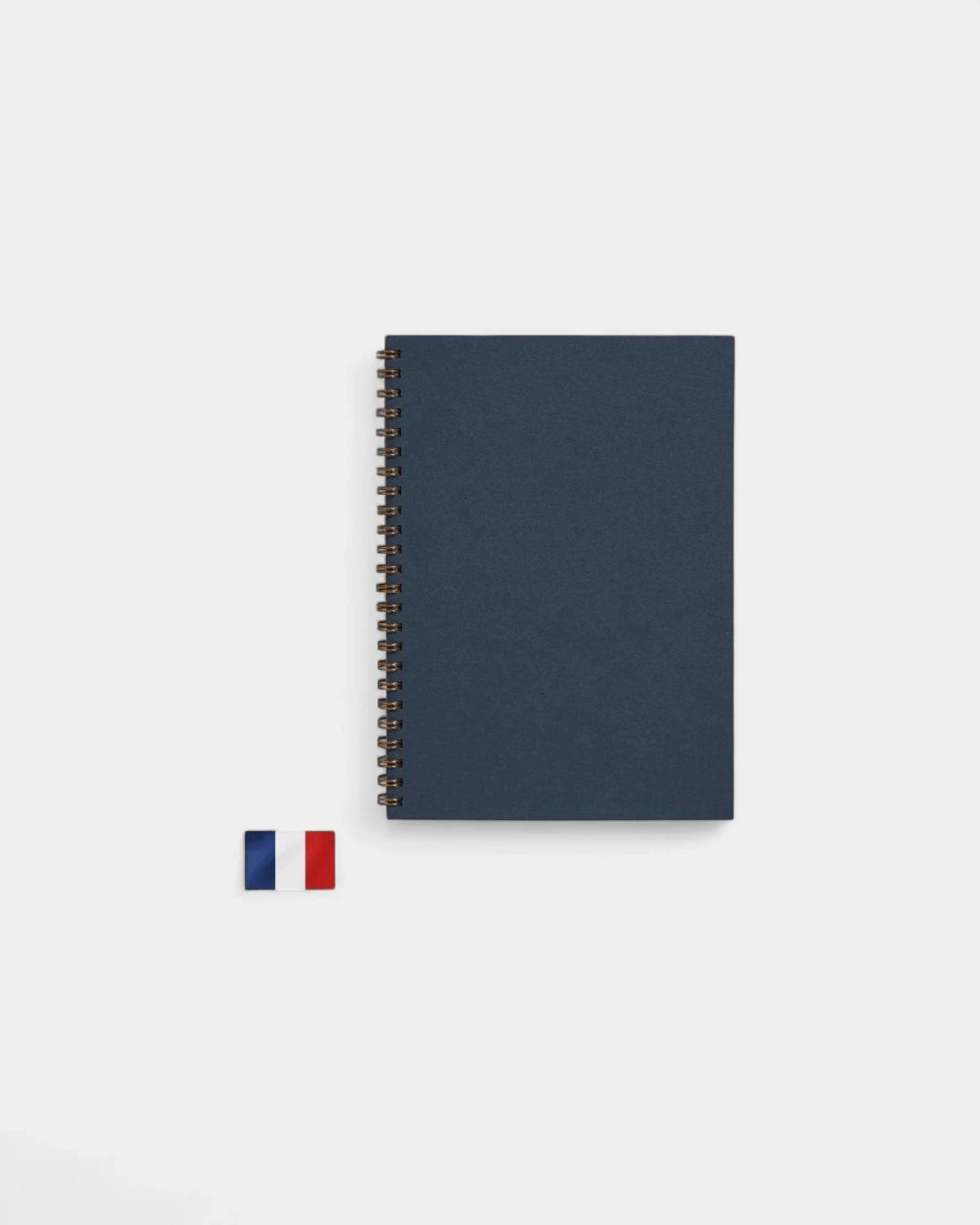
A procurement lead comparing two notebook quotes often finds the cheaper line gives no answer to one question: where was the paper milled and the book bound. Made in France stationery answers it. The notebook, pen or pencil is manufactured in France from European inputs, so the chain from mill to finished item is short enough to trace and name. For a buyer whose ESG report has to stand up, that traceability is the whole point of the order.
The provenance is not a badge bolted onto an import. It is confirmed at the factory: these lines are genuinely produced in France, which is why this hub exists separately from the general desk range. A buyer who needs that on the record can have it stated against the specific line ordered, rather than inferred from a vague country-of-origin label that covers a dozen sub-suppliers.
What traceable paper sourcing means for your Made in France stationery
Paper is where provenance does the most work, because a notebook or pad is mostly paper by weight. French and European mills supplying this stationery work to documented sourcing. The fibre behind a printed cover can be tied to a managed origin rather than an unnamed pulp lot. That is the difference between a sustainability line you can defend and one you simply hope holds up.
Certification on Made in France stationery travels per paper, not per range
FSC-stated and recycled stocks appear across the range, and the exact certification travels with each paper, not with the hub as a whole. The grammage and the certified status for any given notebook or pad sit on that line's own data sheet. A buyer building a verified eco order should read the sheet for the precise paper chosen, since an uncoated recycled stock and a coated FSC stock quote different figures.
Notebooks: the anchor of the Made in France stationery range
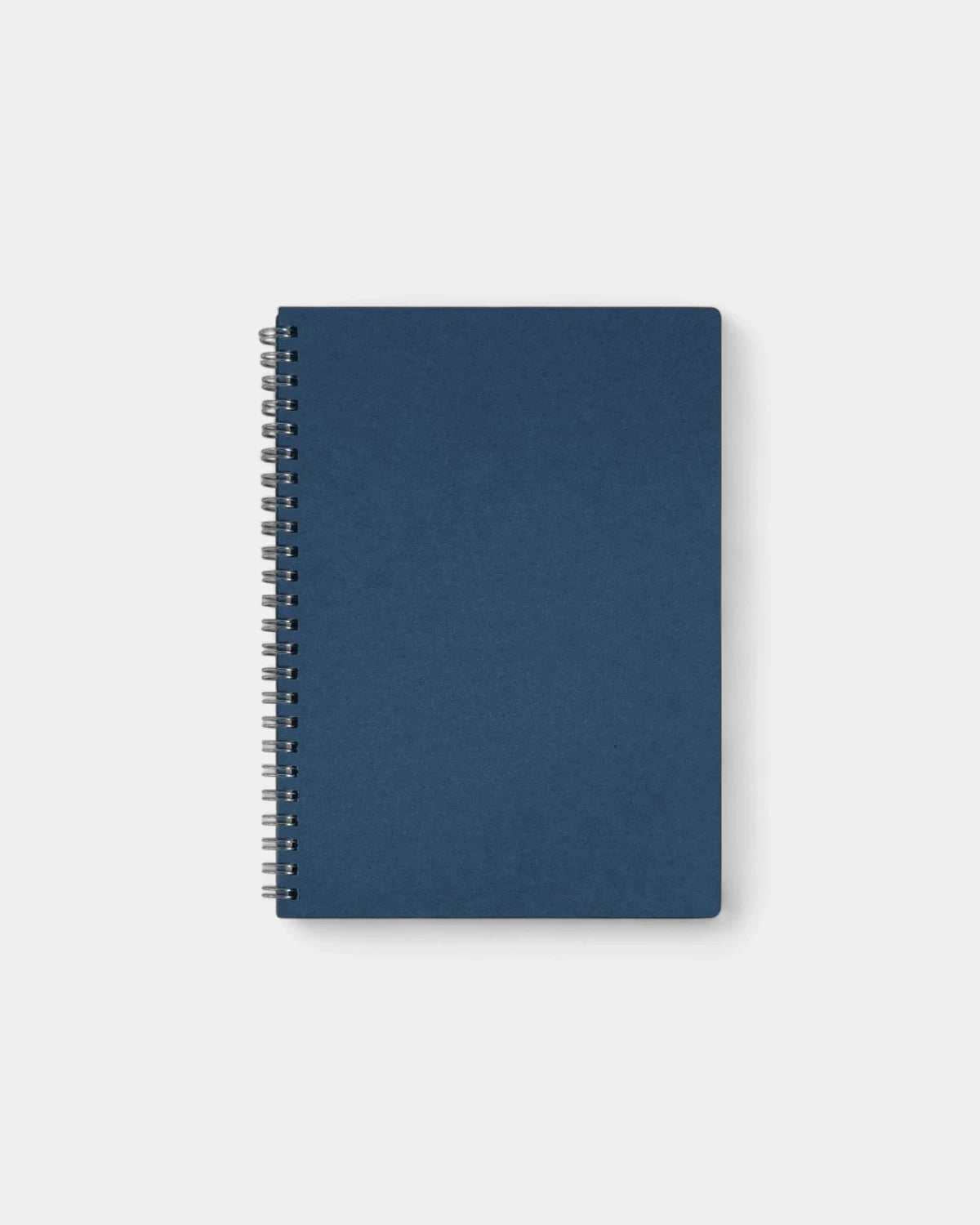
Picture a 250-unit conference order where every delegate leaves with a bound notebook still in use weeks later. That is the job the notebook does, and it anchors this Made in France stationery range because it carries the most paper and the largest cover. French binderies offer casebound, softcover and wire formats, each taking a different mark. A debossed leatherette cover reads as a gift, a printed card cover reads as event kit, and a wire pad reads as a working tool.
Notebook formats in the Made in France stationery range
Personalised notebooks cover the conference and meeting formats, the page rulings and the inner-paper grammage, with the cover materials set out on the product page. A casebound A5 book holds a blind deboss crisply on the cover board; a softcover takes a full-colour print across the front. The format choice follows how the recipient writes, so a planner wants a wide ruling and a note-taker wants a heavier inner stock.
Pens: the writing core of the Branded French stationery range
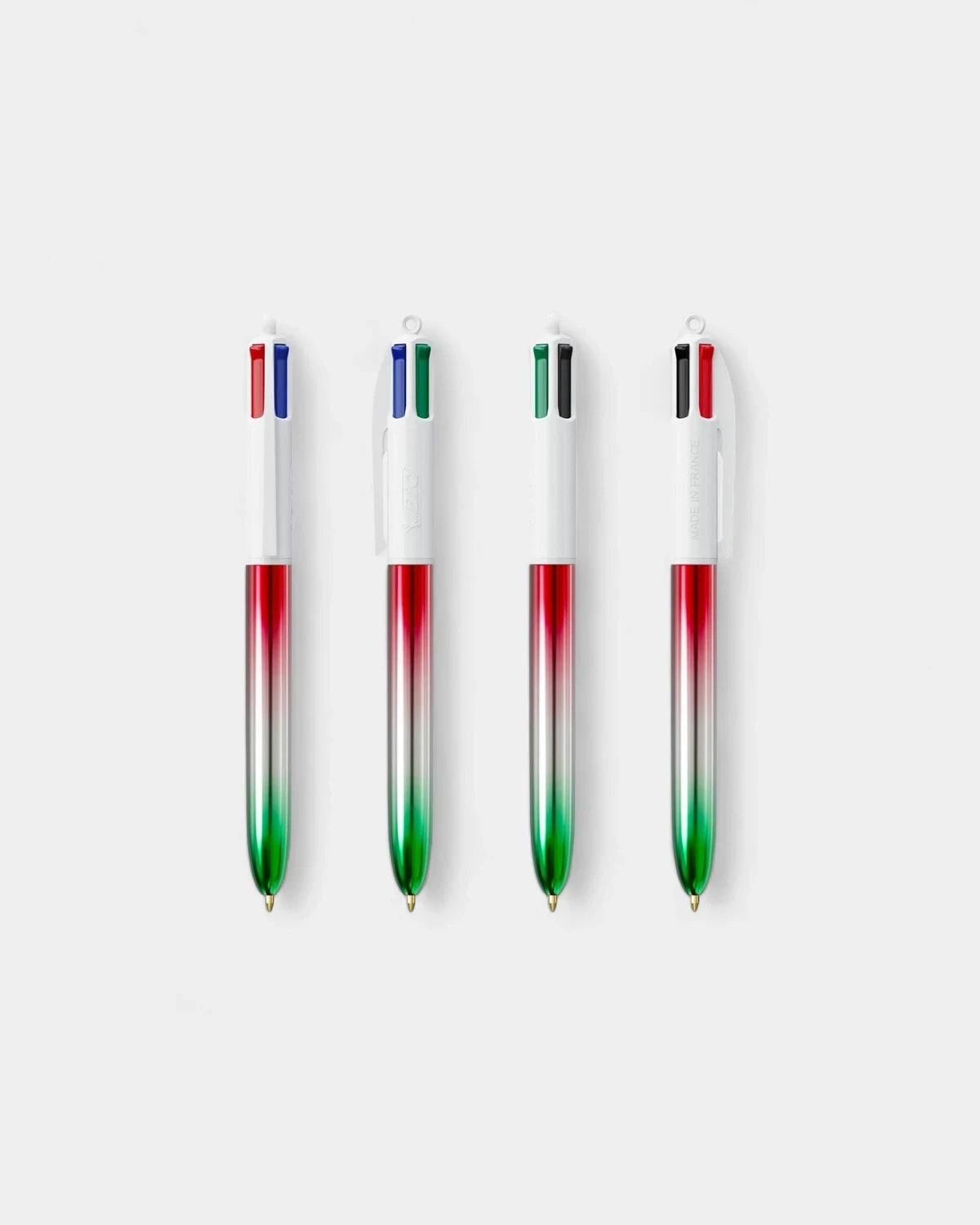
Pens are the everyday core of any French stationery set, handled more often than any other item on the desk. A pen brands along the barrel, and the surface decides the method: a lacquered metal barrel takes a laser engrave, while a plastic body takes a pad print. The material also sets the register, so a turned-metal rollerball reads dearer than a stock ballpoint and suits a different recipient.
Personalised pens span the rollerball, ballpoint and refillable formats, with the barrel finishes and engraving depth on the product page. A refillable body suits a longer-life client gift, while a stock ballpoint suits a high-volume mailing. Order the writing instruments in your house colour so a pen and its matched notebook read as one considered piece.
Pencils: the lowest-cost entry to the European made stationery range
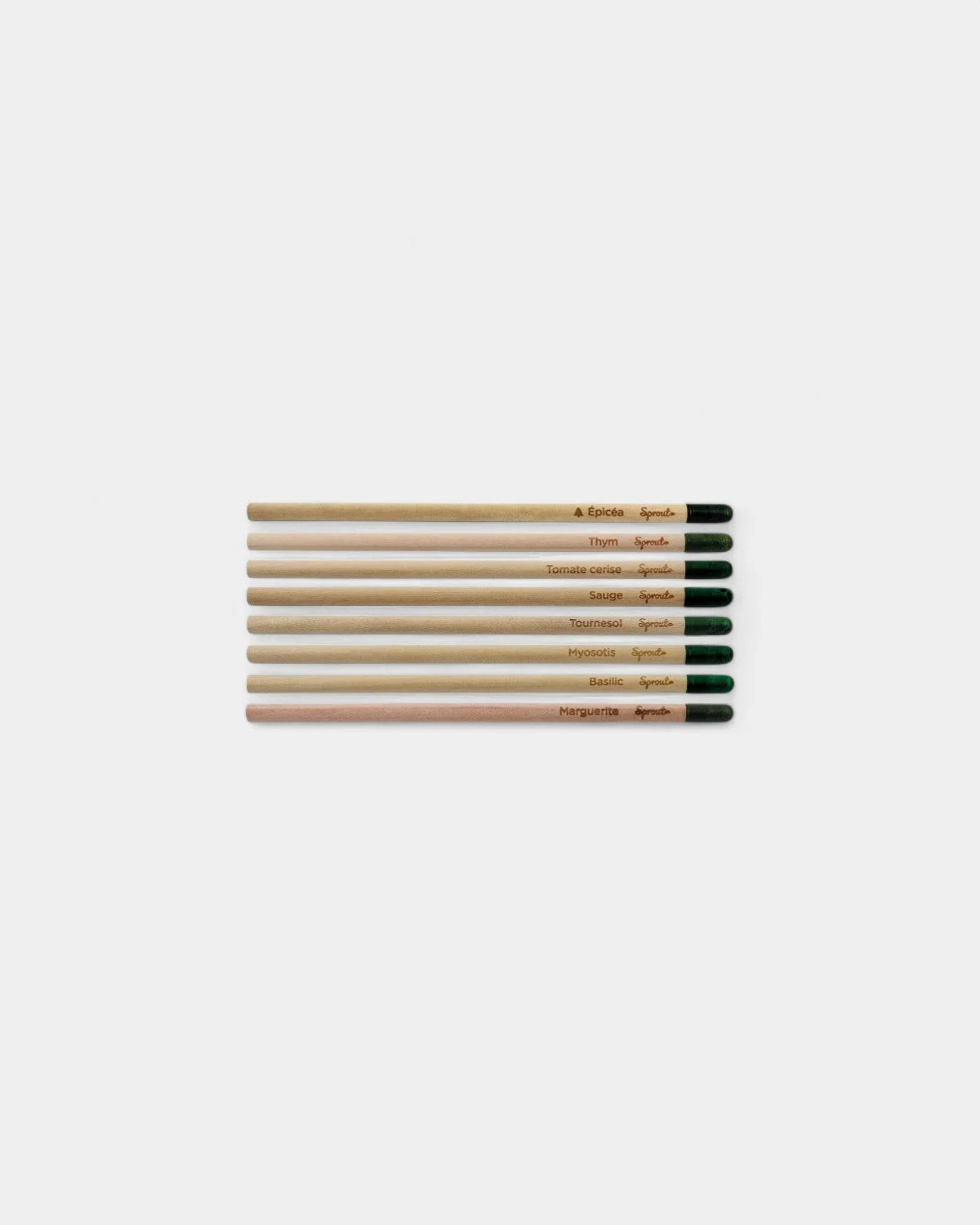
Pencils open the writing range at the lowest unit cost, which is why they carry a different brief from pens. A pencil marks along a painted or natural-wood shaft, and the timber is where the provenance shows plainest. A natural-wood pencil leans into the made-in-France, traceable-fibre story more directly than a lacquered one. The print area is narrow, so a word mark holds where a detailed crest would crowd the shaft.
Personalised pencils hold a print or a foil mark along the shaft, with the lead grades and lacquer colours on the product page. A graphite HB suits a general handout, while a coloured set suits a school or design audience. A pencil run of several thousand suits an exhibition giveaway or a classroom drive, where the low unit cost matters more than a long-life finish.
| Stationery item | Role on the desk | Branding surface |
|---|---|---|
| Notebook | Meetings and planning | Cover deboss or printed board |
| Pen | Daily writing and signing | Engraved or printed barrel |
| Pencil | Sketching and notes | Printed or foiled wood shaft |
| Highlighter | Marking and review | Printed barrel band |
| Pen pot | Holds the writing set | Engraved face or wrap label |
Highlighters and markers in the Made in France stationery range
Highlighters sit between the consumable and the keepsake ends of a Made in France stationery order, used daily yet rarely kept past the ink. That shapes the brief: a highlighter is a volume item, branded on a narrow barrel band, that lands well in a student pack, a revision drive or a desk-refresh send. The print area is short, so a word mark holds where a detailed crest would not.
Branded highlighters cover the single and multi-colour formats, the chisel-tip widths and the barrel print band, with the ink colours on the product page. A four-colour set suits a study or review audience; a single fluorescent suits a low-cost giveaway. Because the body is slim, the artwork is fixed to one Pantone and proofed on the band before the run, so a fine logo does not crowd the curve.
Pen pots: the desk home for your Branded French stationery set
A pen pot is the one item that holds the rest of the stationery in the eyeline all day. That is why it belongs on a provenance-led hub rather than just a desk one. A French-made pot in turned wood, recycled plastic or powder-coated metal brands on an engraved face or a wrap label. Its open top keeps the mark readable even when the pot is full of pens. It turns a loose handful of writing instruments into a deliberate set.
Branded pen pots cover the wood, metal and recycled-body formats, with the diameters and engraving areas on the product page. A turned-beech pot suits the made-in-France, natural-material angle and takes a clean laser mark on its face. Pairing the pot with the same house colour as the pens inside reads as one piece on a client or reception desk rather than two unrelated handouts.
Pencil cases and the carry side of the European made stationery range
A pencil case is the stationery item that travels, carrying the writing set between a bag, a desk and a meeting rather than sitting still. That makes it a natural pairing for a student send, an onboarding pack or an event kit, where the recipient wants the pens and pencils held together. A fabric or felt case brands on a large flat panel, giving more print area than any single pen in it.
Branded printed pouches cover the zip, roll and pouch formats, with the fabrics and recycled-content options on the product page. A waxed-canvas roll reads as a premium gift; a recycled-felt pouch suits a high-volume eco brief. The case is the item that justifies a matched set, since one branded pouch holding a French-made pen and pencil arrives as a considered kit, not a bag of separates.
Loose paper and pads behind the branded French stationery
Behind the bound notebooks sits the loose paper: writing pads, letter paper and refill blocks milled to the same European sourcing as the books. A pad brands on a printed header strip above the writing area, a format that suits a meeting room, a reception sign-in or a desk-refresh across a floor. The header is a narrow band, so it carries a logo and a line of contact detail rather than a full crest.
The grammage is the spec that separates a pad people keep from one they bin half-used. A heavier uncoated stock takes fountain-pen ink without bleed and feels worth keeping; a lighter stock suits a high-volume tear-off planner. Each pad's paper weight and its certified or recycled status are printed on the line's own data sheet. The figure is specific to the stock chosen rather than assumed for the range.
| Sub-range | Typical surface | Marking method | Best for |
|---|---|---|---|
| Notebooks | Leatherette or card cover | Deboss, foil or print | Conferences, client gifts |
| Pens | Metal or plastic barrel | Laser engrave or pad print | Daily-use, longer-life gifts |
| Pencils | Painted or natural wood | Print or foil | Low-cost, high-volume drives |
| Pads and paper | Printed header strip | Screen or litho print | Meetings, reception, fit-out |
| Pen pots | Wood or metal face | Laser engrave or wrap | Desk sets, reception |
Routing your Made in France stationery order by who receives it
With the items mapped, the fastest route to a shortlist is the audience. A named client list affords the keepsake end: an engraved pen, a debossed notebook and a turned-wood pen pot that read as gifts and survive a desk cull. A wide event or student audience wants the volume end: printed pencils, highlighters and a card-cover pad that post cheaply at several thousand units. The provenance holds across both, but the format and the spend shift with the list.
The split also runs on whether the Made in France stationery stays put or travels. A desk set, the pot, the pad and the engraved pen, stays on one surface and does brand work in place. A carried set, the pencil case holding a pen and pencil, moves with a student or a new starter through their day. Answer who receives the order and how they use it first, and the right sub-range falls out of that rather than the catalogue.
The short supply chain behind European made stationery
A buyer who has chased a delayed import knows the cost of a long chain: a notebook stuck at a port is a notebook missing the conference. European made stationery shortens that distance. With the mill, the bindery and the print shop inside France and its neighbours, the route from order to delivered carton crosses fewer borders and fewer hand-offs. For a date-driven brief, that shorter chain is a scheduling advantage as much as an ethical one.
The ethics sit in the same fact. A traceable chain means labour and environmental standards apply at named European sites, not at an unverifiable sub-supplier three tiers down. A buyer answering an ESG questionnaire can point to where the stationery was made and under which regime, rather than to a country-of-origin label that hides the detail. The provenance and the lead time are two readings of one short chain.
| Audience | Lead stationery | Spend register |
|---|---|---|
| Named client list | Engraved pen, debossed notebook | Keepsake, low volume |
| New starters | Pencil case, pen pot, pad | Mid volume, matched kit |
| Conference delegates | Casebound notebook, pen | Mid volume, dated |
| Students and events | Pencils, highlighters | High volume, low cost |
| Reception and meeting room | Header-strip pad, pen pot | Low volume, premium finish |
How marking works across mixed Branded French stationery
A mixed stationery order runs across leatherette covers, lacquered metal barrels, bare-wood shafts, printed card and engraved pots, and no single process suits them all. The material decides the marking each time. Wood and a beech pot take a laser engrave for a mark that never rubs away. A plastic highlighter barrel suits a pad print, a card cover a litho or screen pass, and a leatherette cover a blind deboss or foil. The right method for each piece is listed on that product's own page.
Keeping one logo sharp across mixed Branded French stationery
Supplying artwork as vector is the single step that keeps a mixed order looking intentional. The same mark then holds its edge from a 40mm pencil shaft to a full notebook cover. A logo that reads at one size can lose detail at another, so the range is pinned to one Pantone and proofed per surface before production. We confirm placement and bleed at proof stage. A free sample of your chosen line lets you check the engrave depth or the cover finish before a large batch is committed.
Quantity and the print economics of a Made in France stationery order
Quantity changes the maths on a stationery order more than any single feature, and it works differently per item. A several-thousand-unit pencil or highlighter run moves the pad or screen print onto a per-batch rate, dropping the unit cost well below a small order. An engraved notebook or pen pot stays dearer per unit because each piece is decorated individually. The saving from volume is real but smaller on the keepsake lines than on the consumable ones.
A mixed order then follows its slowest component on the timeline, not the average. An engraved beech pen pot or a debossed casebound notebook sits at the longer end of a roughly three-week window from approved artwork. A printed pad or pencil clears sooner. A Made in France stationery order tied to a conference date or an onboarding intake should book artwork sign-off back from that day, so the slowest line still lands in time.
- Notebooks: casebound, softcover or wire, cover deboss to full print
- Pens: rollerball, ballpoint or refillable, engraved or printed barrel
- Pencils: painted or natural wood, lowest unit cost in the range
- Highlighters: single or multi-colour, short barrel-band print
- Pen pots: wood, metal or recycled, engraved face or wrap label
- Pads and paper: header-strip print, grammage stated per data sheet

