Corporate Clothing
- Eco-friendly
- Made in France
- Made in Europe
- B corporation
- Price, low to high
- Price, high to low
Treat your clients and employees!
FAQ - Branded Workwear
Trusted by 1,000+ companies
What a branded workwear programme actually decides
A corporate clothing programme is a set of fixed choices, not a shopping basket. Before any garment is picked, the branded workwear brief locks one logo colourway, one or two wear positions, and a single decoration method. That is what keeps the reception desk and the van driver reading as one company.
The buyer who owns this is usually in operations or HR, and the pain they feel is drift. Without a single owner, the marketing team buys one navy this year. The field crew then buys a slightly bluer navy the next, until two departments no longer match across a car park. The programme exists to stop that slow divergence before it starts.
Those choices also have to outlast staff turnover. A new starter eighteen months from now must order the same navy polo, in the same shade, with the logo in the same spot, without anyone redrawing the brief. That repeatability is the real product on this page, and it is why a programme is planned differently from a one-off run.
The early decision that shapes everything else is the garment shortlist per role. Get that right and the colour, decoration and sizing fall into place behind it. The sections below work through each part of that shortlist, role by role, then route you to the range that holds each garment's full spec.
| Team / role | Typical garment | Logo position | Decoration |
|---|---|---|---|
| Reception, retail, hospitality | Piqué polo, poplin shirt | Left chest | Embroidery |
| Installers, site, delivery | Softshell, hoodie, sweatshirt | Large back + chest | Print or embroidery |
| Sales, support, back office | Crew-neck sweat, cotton tee | Small chest | Embroidery or print |
| Outdoor crews, stands, events | Cap, tee | Front panel, front | Embroidery or print |
Front-of-house corporate clothing: polos and smart shirts
Reception, retail floor, salon and hospitality staff are seen by customers at close range all day, so their corporate clothing carries the brand at conversation distance. Their branded workwear has to look tidy after a six-hour shift. A piqué polo or a poplin shirt with a stitched left-chest logo does that better than a printed tee.
Matching a new starter to an existing branded workwear polo run
Consider a salon that placed its first order two years ago and now hires a new stylist. The manager wants one polo, in the exact shade and stitch of the original six, ready for the new starter's first Saturday. A programme makes that a single line on a reorder; ad-hoc buying makes it a guess that arrives a tone off.
A 40-person retail rollout typically lands on two polo colours: a darker shade for the shop floor and a lighter one for managers, both carrying the same embroidered crest. Embroidered Polo Shirts give you that core front-of-house layer with a chest logo that survives daily washing.
For roles that face clients sitting down, or in cooler venues, a long-sleeve option keeps the same neat collar line without adding a separate garment family. It carries the identical chest logo and shade as the short-sleeve, so the team still reads as one set across the seasons.
Those longer-sleeve cuts matter most for spring and autumn shifts when a jacket is too warm but bare arms look unfinished. Embroidered long sleeve polo shirts extend the same colourway into the cooler rotas without breaking the front-of-house look.
Field and trade branded workwear: outer layers that take a beating
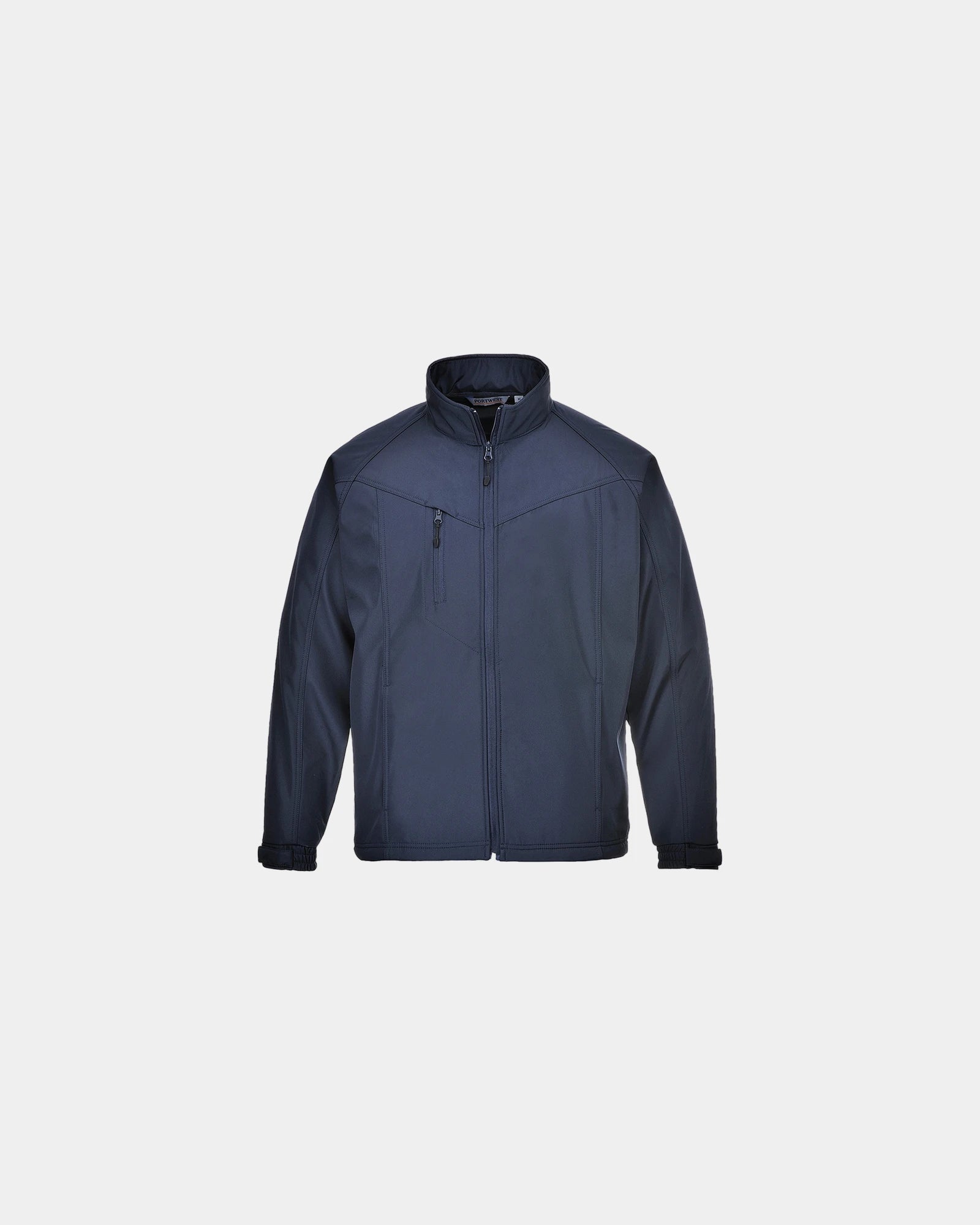
A two-person trade crew steps out of a sign-written van onto a customer's drive, and the homeowner clocks them as the company before a word is spoken. That recognition across a car park is the job branded workwear does for installers, site supervisors and delivery teams. A softshell or hoodie carrying a large back logo turns a pair of fitters into a visible, accountable presence, and weather cannot wash that off.
Back print and chest embroidery on corporate clothing for trade crews
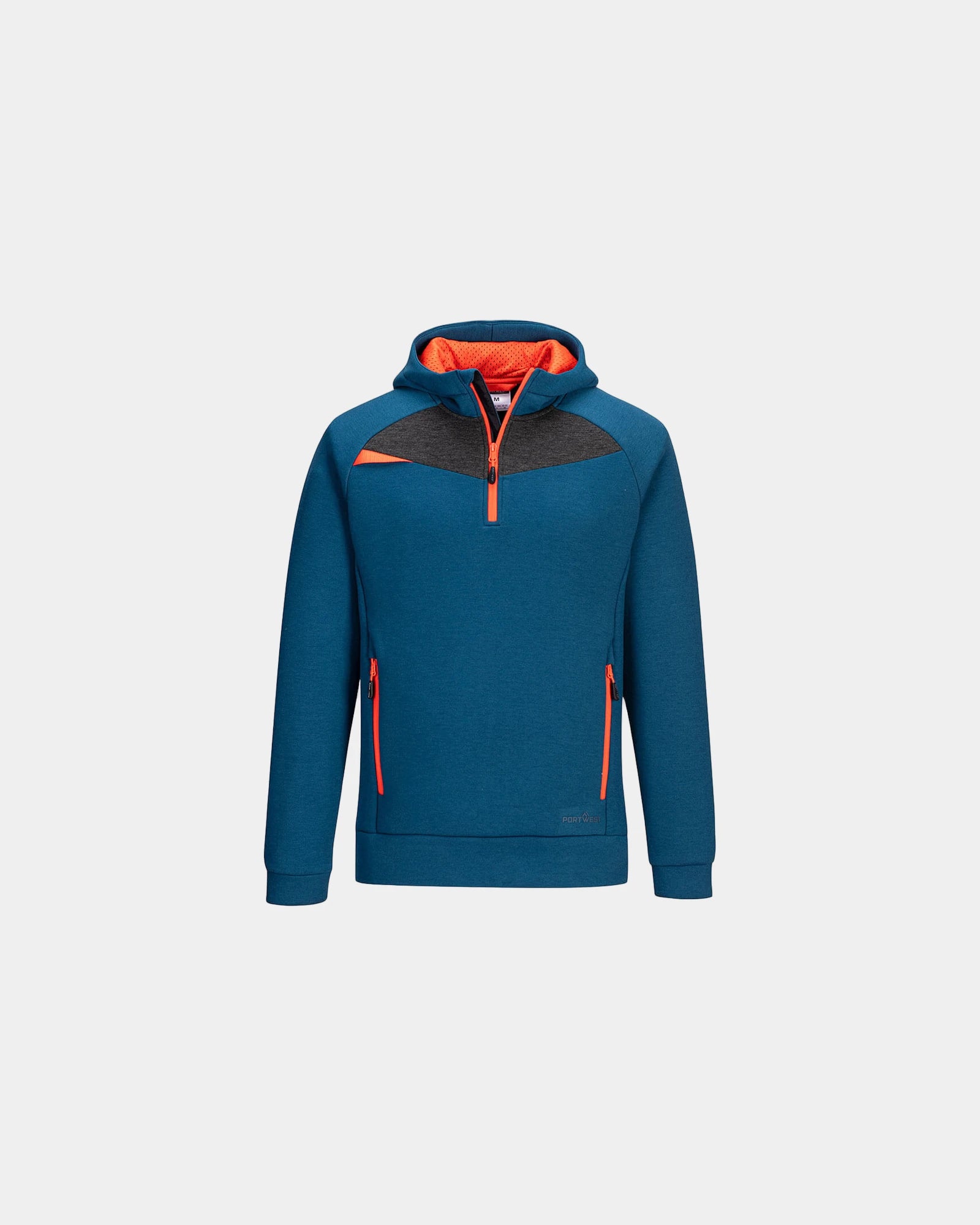
Decoration choice changes here. A back print sits flat under a hi-vis vest and goes large for distance reading, while a chest embroidery stays put through machine washes and scrubbing. Custom Hoodies cover the warm mid-layer that field teams live in for half the year.
Where the brief asks for one durable layer per van rather than a wardrobe, a heavyweight sweatshirt is the workhorse. It takes embroidery cleanly and holds shape through repeated industrial laundering on a trade rota.
| Condition | Garment | Weight guide | Logo treatment |
|---|---|---|---|
| Dry, active site work | Hoodie | Approx. 280-330 gsm | Large back print |
| Cold, exposed sites | Softshell | Bonded 3-layer | Embroidered chest |
| Indoor warehouse | Sweatshirt | Approx. 280 gsm | Chest embroidery |
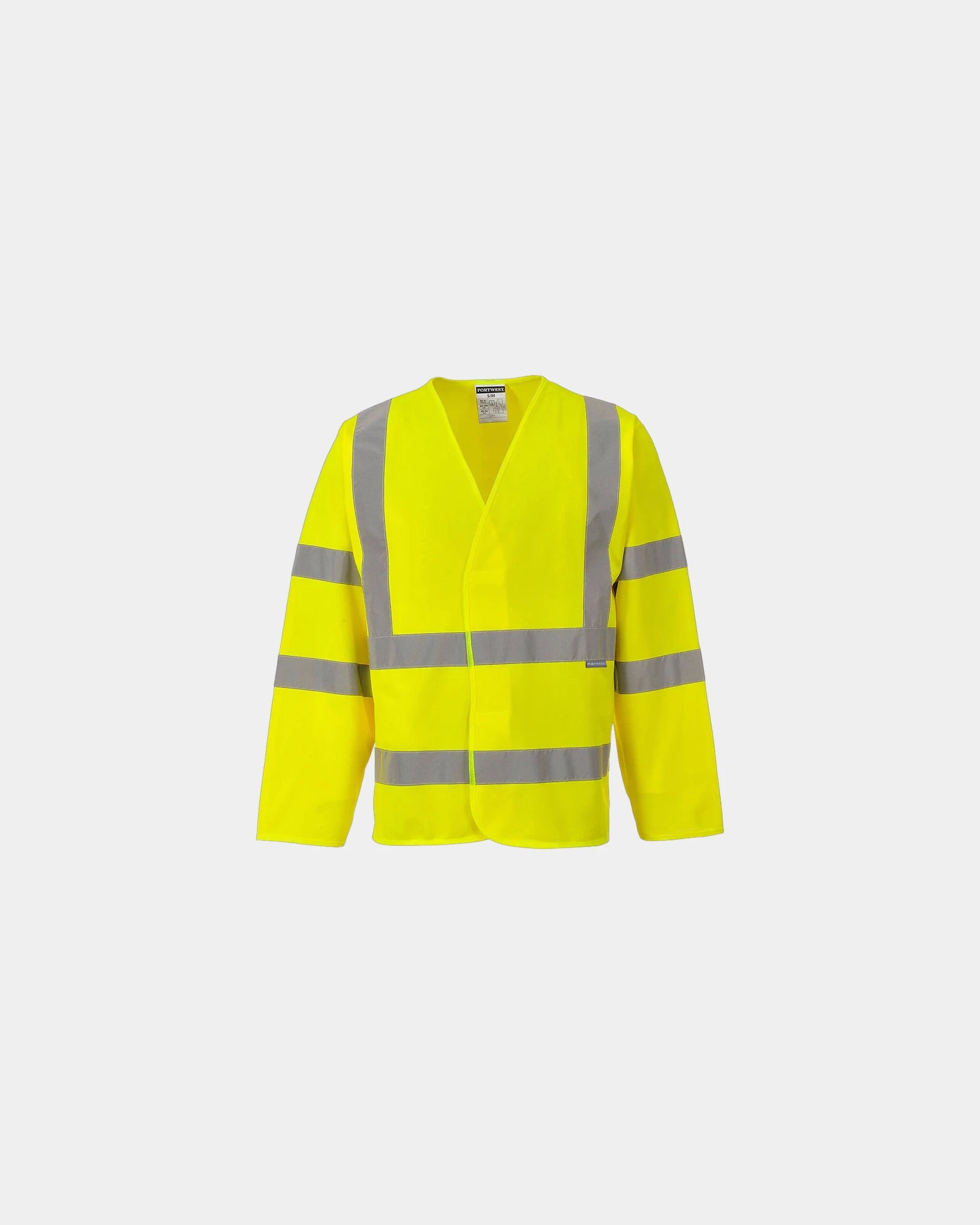
| Under hi-vis | Sweatshirt or tee | Mid-weight | Chest only, back hidden |
Office smart-casual corporate clothing: knits and tees for desk teams
Sales, support and back-office staff rarely meet a customer in person, so their corporate clothing can relax into a crew-neck sweatshirt or a quality tee in a brand colour. The goal is a coherent floor, not a formal uniform, and a soft mid-weight knit reads well on camera and in the office alike.
A founder-led team of twelve often starts here: matched crew-necks for everyone, logo small on the chest, worn over the staff's own trousers. Embroidered Sweatshirts give that desk-team layer a stitched logo that looks deliberate rather than promotional.
The tee is the lighter counterpart for warmer offices and summer rotas, holding the brand colour without the weight of a knit. It doubles as a promotional uniform for events, freshers' fairs and warehouse cover, where headcount is hard to predict and you simply over-order the common sizes.
For that flexible summer and event role, a ringspun cotton base takes a clean print and washes well at volume. Custom T-Shirts keep the desk team consistent and give you spare branded workwear stock to hand out on the day.
Choosing embroidery vs print for your branded workwear
This is the single decision that most affects how your branded workwear ages. Embroidery stitches the logo into the fabric, so it survives years of hot washes and scrubbing, but it suits simpler marks and a left-chest or sleeve position. It is the default for polos, knits and anything a customer sees up close.
Print carries fine detail, gradients and full-colour artwork that thread cannot, and it goes large across a back panel cheaply. It is the right call for detailed logos, big back marks on hoodies, and short-life event garments that will not see hundreds of washes.
| Garment & role | Best method | Typical position | Why |
|---|---|---|---|
| Front-of-house polo | Embroidery | Left chest | Survives daily wash, reads premium up close |
| Trade hoodie / jacket | Print or embroidery | Large back + chest | Print goes big and detailed for distance |
| Office sweatshirt | Embroidery | Small chest | Subtle, durable, on-camera friendly |
| Event / cover tee | Front or back | Full-colour, low cost, short service life |
Many programmes split the difference on purpose: embroidery on the daily polos and knits, print reserved for the high-visibility back marks and the disposable event stock. There is no single right answer, only the right method per garment.
Logo placement and artwork across a corporate clothing set
Where the logo sits on corporate clothing is as much a brand decision as the colour. A left-chest mark is the default across most branded workwear because it reads at conversation distance and works on every garment in the set. A back mark adds visibility for crews seen from behind on site or at an event.
Artwork prepared once should serve the whole programme. A clean vector logo and a digitised embroidery file cover polos, knits and caps without re-drawing per garment. A proof on the first order confirms thread colours and scale before any stitching starts, so the whole run matches.
Keep one small detail in mind: a logo that looks right at 90mm on a back panel can lose fine lines at 70mm on a chest. A quick scale check per position saves a reorder, especially on detailed marks that thread struggles to hold at small sizes.
Sizing a whole team in branded workwear
For a programme buyer, the size run is not a one-time form but a standing asset you keep. Treat it as a named roster against each chosen line's fit block, stored alongside the spec. The branded workwear then arrives wearable on day one, and every future intake reads off the same sheet. Guess forty polos blind and you reorder a third of them within a fortnight.
Recording a branded workwear fit block, not just a size letter
Fit varies by garment family, so the roster records a cut as well as a size. A relaxed unisex hoodie forgives a loose entry, while a fitted polo or a women's-cut shirt punishes one. Holding both a unisex and a tailored block in the same shade lets a mixed workforce stay in-brand without one cut being imposed on every body.
- Keep the roster by name and role, refreshed as the team grows
- log a fit block, not just a letter size
- carry 10-15% spare in the middle sizes for next year's starters
- map each line's own chart, since brands cut differently
- flag the women's-fit block separately
- version the sheet so a leaver drops off cleanly
| Garment | Fit forgiveness | Offer a women's cut? | Note |
|---|---|---|---|
| Unisex hoodie | High | Optional | Relaxed body hides a rough guess |
| Piqué polo | Low | Recommended | Fitted cut shows a wrong size |
| Crew-neck sweat | Medium | Optional | Sits over own clothes, some give |
| Cotton tee | Medium | Recommended | Cut varies most between brands |
An ops buyer kitting a firm that doubles its headcount over three years feels the payback here directly. With the roster versioned and held, each annual intake of starters becomes a five-minute top-up against existing data. Without it, every growth spurt restarts the whole sizing exercise from scratch, and the programme leaks budget on re-measuring people it already measured.
Caps and finishing touches for a promotional uniform set
A uniform is rarely just the torso. Outdoor crews, market stalls and event teams round out their branded workwear with a matched headwear option that carries the front logo at eye level. A cap is also the cheapest way to brand a team that otherwise wears its own coats.
Custom caps take an embroidered front panel that pairs with the polos and hoodies above, giving a drive-up crew or a stand team a finished, uniform-looking set. Match the cap colour to the dominant garment rather than the logo, so the whole kit reads as one.
Building branded workwear consistency across a workforce
The reason a branded workwear programme beats ad-hoc ordering is consistency: same shade, same logo, same place, across departments and across years. Customers register that coherence before they read a single word. It is the difference between looking like a company and looking like a group of people in similar shirts.
Consistency is a documented choice, not a hope. Lock the exact garment codes, the thread or print colour reference, and the logo position into a short spec your buyer can reorder against. That document is the programme; the garments just execute it.
The mechanism that protects it is single ownership, not goodwill. Give one named person, usually the ops or HR buyer, the authority to approve every workwear order against that spec. The moment three departments each hold their own purchasing card, the kit fragments by colour and cut, and no amount of reissuing the logo afterwards puts it back together.
Reordering corporate clothing across the life of the programme
The first corporate clothing run pays a one-off setup tax the programme never pays again: digitising the embroidery file, cutting any print screens, then approving the proof. With artwork approved within 24h and a decorated first run delivered in 3 weeks, the buyer can hand a go-live date to the team and trust it. After that, the setup is banked.
Every subsequent order inherits that banked setup, which is what makes the programme cheap to run for years. Because the stitch file and colour reference already sit on record, a top-up of the same branded workwear jumps straight to production with no fresh digitising. Locking the spec on order one is what makes order fifty a quick line item, not a project.
Recording fibre content on your branded workwear spec
When a procurement policy asks for organic or recycled fibre, the answer belongs on the programme's own spec document, garment by garment. Fibre content is shown against each line on its tech pack, and it differs across the kit. One polo may be organic cotton while the matching hoodie is a poly blend. Pin the exact composition for every chosen line into the locked spec, so an auditor reads one document rather than chasing labels.
Where the requirement is firm, the buyer builds the shortlist around the lines whose tech pack states it, then commits the workforce only once those compositions are recorded. The colour-matched options across the polo, sweat and tee ranges keep that substitution from breaking the house look.
Distinguishing this hub from a single corporate clothing range
This page is a hub: it plans the programme and points you to the right garment range for each role. It is not a product page, and it deliberately spans several ranges rather than detailing one. Treat the linked collections as the spec sheets for each layer of your branded workwear.
If your need is a single trade or PPE range rather than a whole-team programme, a dedicated product page serves you better. Come here to design the uniform across departments; go to the individual collections to choose the exact garment, fabric weight and fit.
Layering the branded workwear set across the seasons
A team works through real weather, so a programme that buys one garment per person dates fast. The smarter brief plans a layer for each season up front. A polo covers summer, a sweatshirt or fleece the shoulder months, and a softshell the cold, all carrying one chest mark.
Planning the layers together keeps the look coherent as the temperature swings. A reception team in a summer polo and in a winter fleece should still read as one company across a car park. The colourway and logo position hold across every layer rather than being re-decided per garment.
Buying the layers on one spec also smooths the budget across a hiring year. The setup is banked on the first order, so a winter top-up of fleeces inherits the same stitch file as the summer polos. We log the full layer set against each role, so a buyer reorders by season without re-specifying the brand each time.